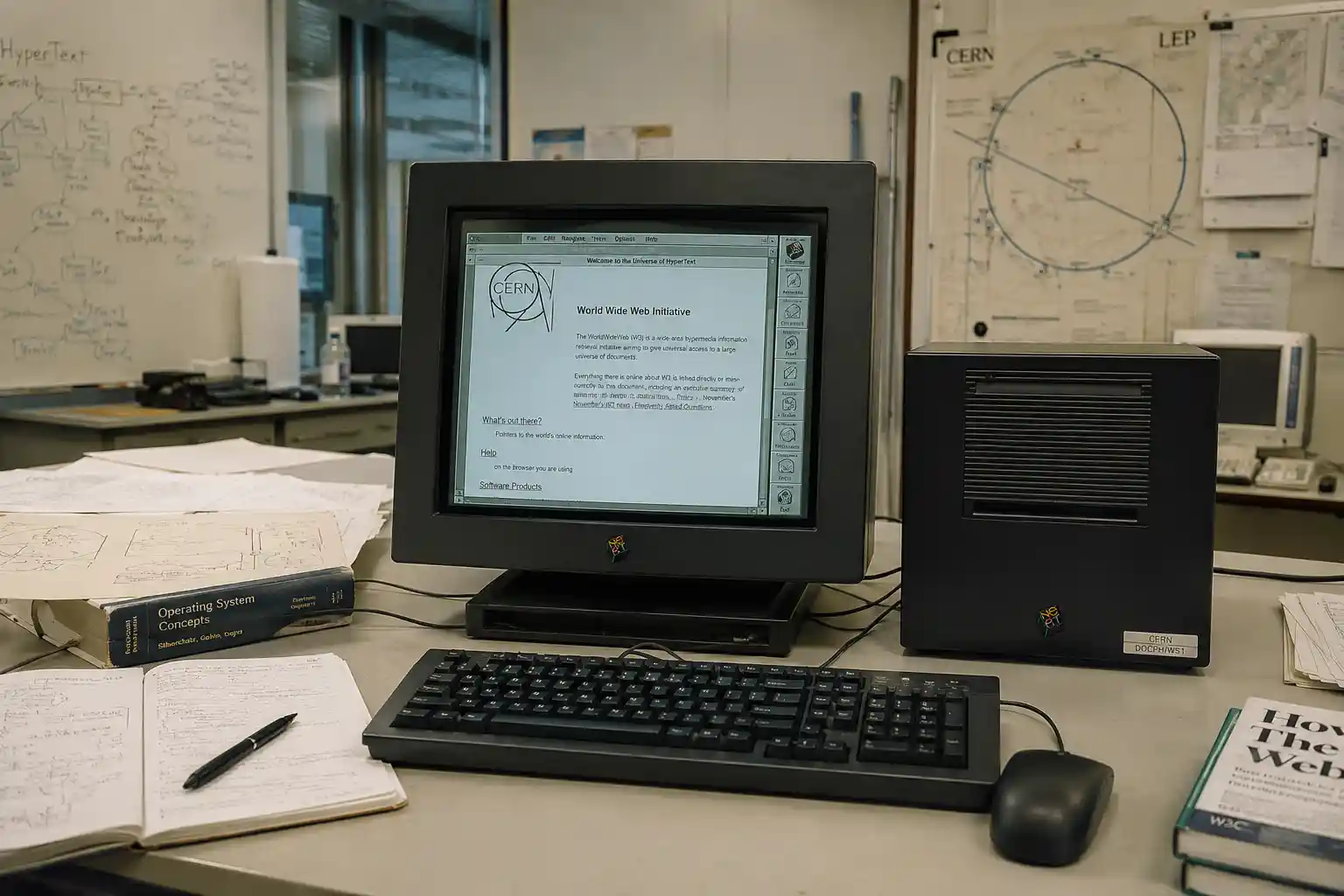
There are billions of websites on the internet today, yet one small address carries an extraordinary piece of digital history. Visit info.cern.ch and you can explore material connected with the earliest days of the World Wide Web, including information about the project, its development and the people who helped turn an ambitious idea into a working technology. CERN identifies it as the address of the world's first website and first web server.
The story begins at CERN, where British scientist Tim Berners Lee was working when he proposed a new information management system in March 1989. His idea was initially described as vague but exciting by his supervisor Mike Sendall. What followed was not an attempt to build the enormous commercial internet that exists today. Berners Lee wanted to make it easier for researchers working in different places to share information.
By the end of 1990, the first web server and browser were running on a NeXT computer at CERN. The first website was devoted to explaining the World Wide Web itself. It described how the system worked, how people could access documents and how others could create their own web servers.
The website we can visit today deserves a small clarification. It is a restored version rather than the original site remaining continuously online in exactly the same form. CERN began a restoration project in 2013 to preserve the first website and bring it back to its original address.
1. The First Website Was About the World Wide Web
Image
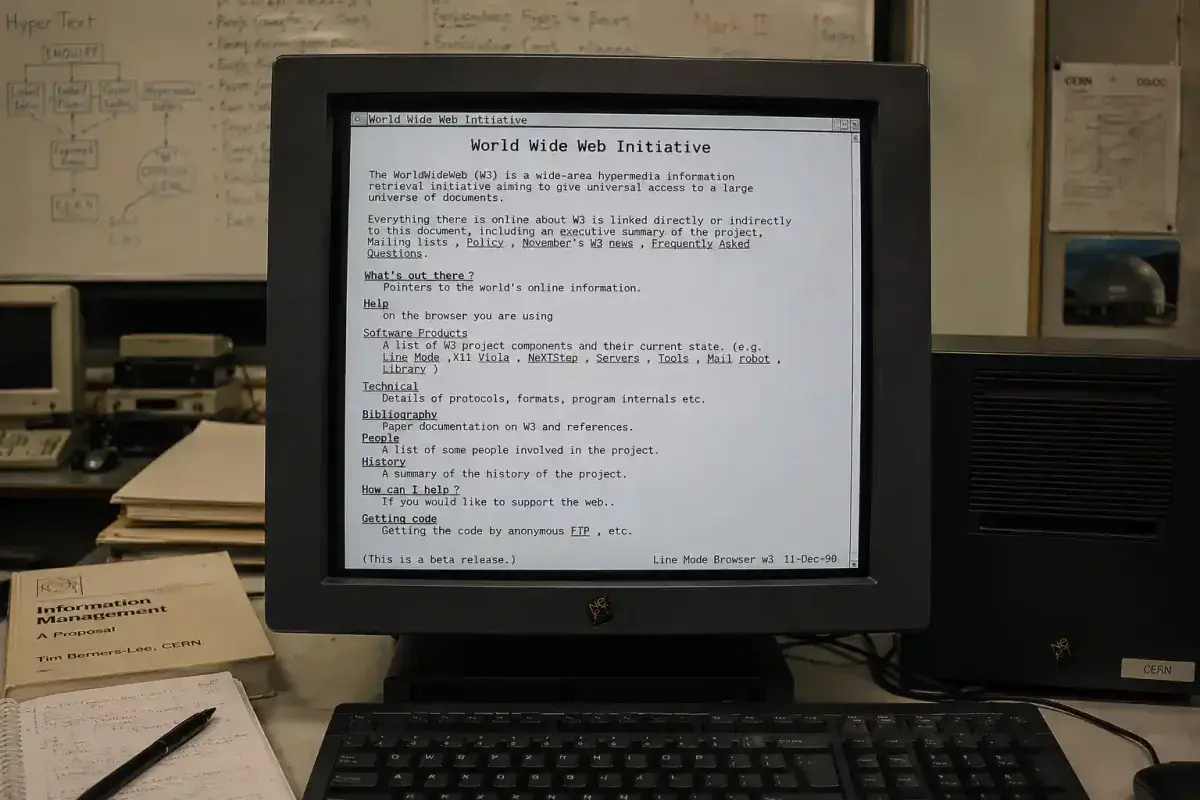
The first website was not created to sell products, publish news or entertain visitors. Its purpose was much more practical. It explained the World Wide Web project itself. According to CERN, the website described the basic features of the web, explained how people could access documents and provided information about setting up a web server.
That makes perfect sense when you consider the problem Tim Berners Lee was trying to solve. CERN brought together scientists from universities and research institutions around the world. They needed reliable ways to exchange information, but the information was often scattered across different computer systems. Berners Lee's proposal was intended to make that information easier to connect and retrieve.
The first website therefore functioned almost like a guidebook for a technology that barely existed. A visitor would not find the polished layouts, photographs, videos and interactive features that are normal today. Instead, the pages concentrated on explaining concepts and pointing users toward useful resources.
One early page included information about hypertext, technical details for creating a web server and links to other servers as they became available. The project itself was becoming an example of the idea it was describing.
There is something wonderfully appropriate about that. The first website was essentially teaching people what a website could be. It was both documentation and demonstration at the same time.
Before millions of companies, creators and communities would depend on websites, the first site simply explained the idea. That modest beginning is one of the most interesting facts about the history of the web.
2. Tim Berners Lee Built It at CERN
Image
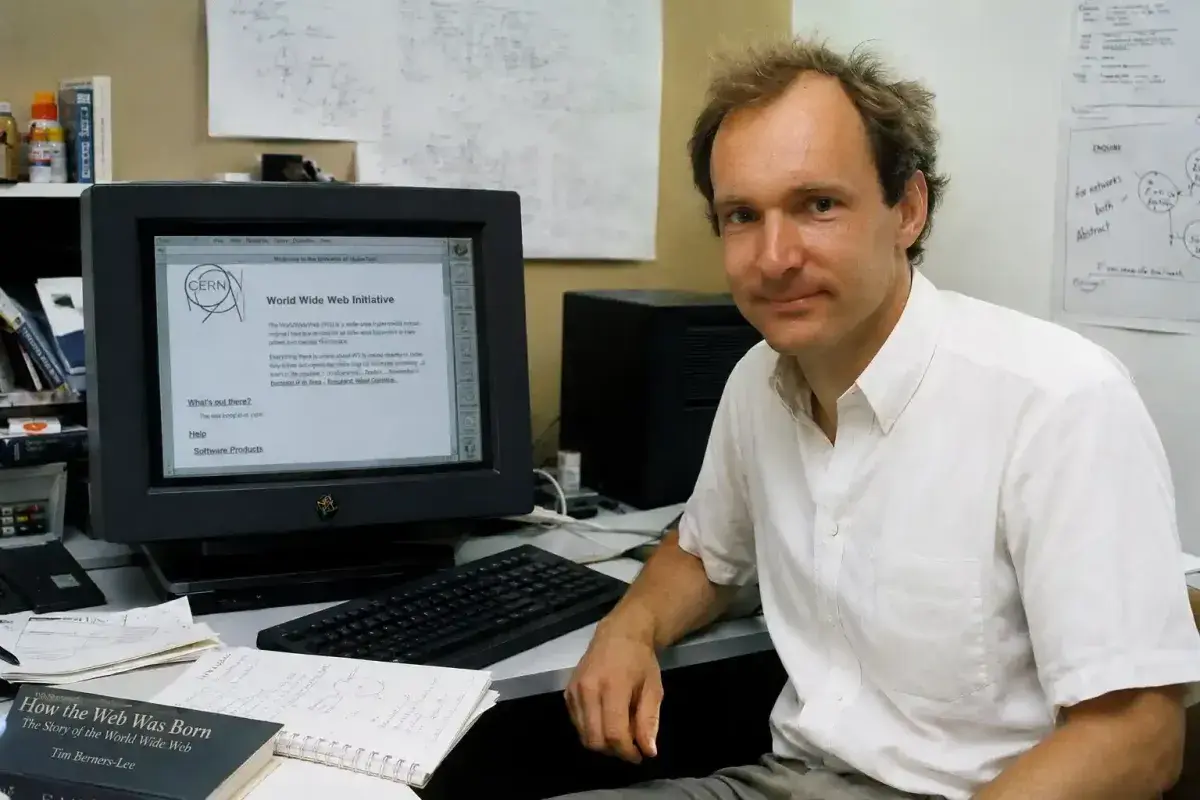
The first website is inseparable from the work of Tim Berners Lee, the British scientist who invented the World Wide Web while working at CERN. He submitted his first proposal for an information management system in March 1989. CERN records that his supervisor, Mike Sendall, famously described the proposal as vague but exciting before allowing the work to continue.
The important point is that Berners Lee was not simply trying to invent a new type of page. He was combining several existing ideas into a system that could connect information across networks. CERN describes the basic concept as bringing together computers, data networks and hypertext to create a global information system.
The project gradually moved from proposal to working system. By the end of 1990, Berners Lee had a web server and browser operating at CERN. He developed the code directly on the NeXT computer that hosted the first web server, keeping the machine in his office.
That detail gives the story an unusually personal quality. Today, major websites can rely on enormous data centers, cloud infrastructure and teams of engineers spread across multiple countries. The web began with one researcher working on a computer in a scientific laboratory.
Berners Lee also worked with other people who contributed important pieces to the project. Robert Cailliau became a coauthor of the formalized project proposal, while Nicola Pellow worked on the line mode browser that helped make the web accessible beyond the NeXT platform.
The first website was therefore not the product of a giant technology company. It emerged from a research environment where the goal was to make information sharing easier. That original motivation remains one of the most remarkable parts of its history.
3. The First Web Server Was a NeXT Computer
Image
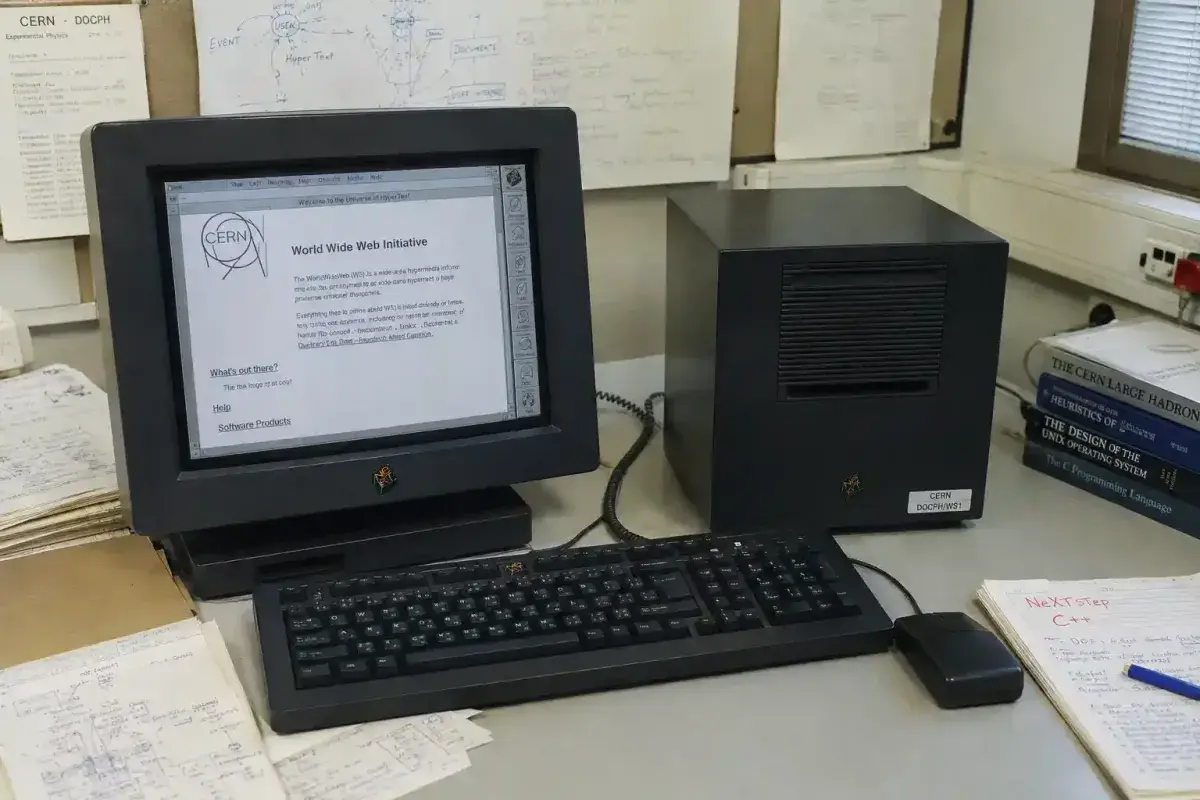
The first web server was not a specialized machine hidden inside a massive facility. It was a NeXT computer in Tim Berners Lee's office at CERN. CERN records that the first website and web server ran on this machine, making an ordinary looking workstation an important part of computing history.
The computer became so important that it received a warning label. CERN's history records that Berners Lee placed a handwritten message in red ink on the machine telling people that it was a server and should not be powered down. The label was intended to prevent someone from accidentally switching off the computer that was serving the young web.
It is difficult to imagine such an arrangement supporting a major internet service today. Modern websites may operate across many servers and data centers, with automated systems handling traffic, backups, security and failures. The first web server was much simpler.
Yet simplicity was part of the strength of the idea. The World Wide Web did not require enormous infrastructure to demonstrate its basic principle. A computer could store documents, another computer could request them and hypertext links could connect information together.
The NeXT system was also important because Berners Lee developed both the browser and server environment around it. The original WorldWideWeb browser was designed for NeXT computers and included an editing capability, meaning users could not only read pages but also modify them.
That early design reveals something interesting about the web's original philosophy. The system was imagined as a place where information could be read and created rather than simply consumed.
The little NeXT workstation therefore represents more than an old computer. It was the physical home of an idea that would eventually move from one office at CERN to practically every corner of modern life.
4. The Original Browser Could Also Edit Pages
Image
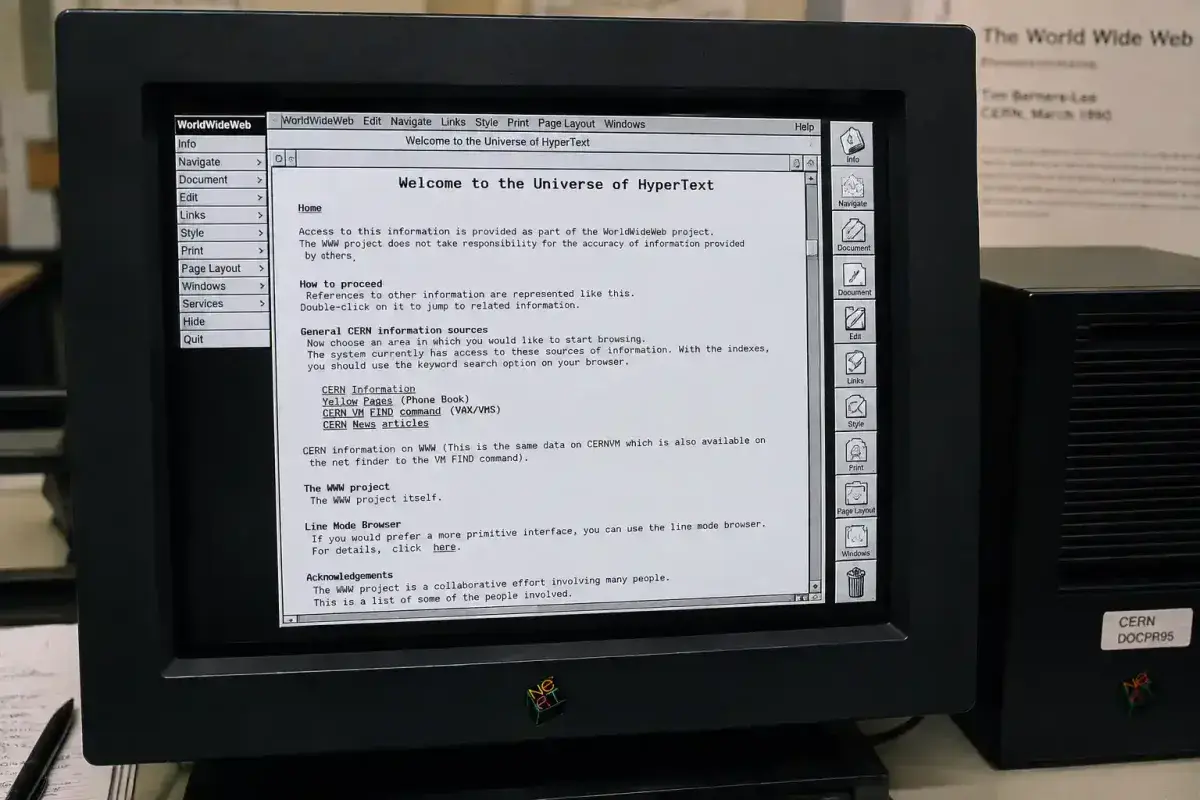
One of the most surprising facts about the earliest web browser is that it was also an editor. CERN explains that Tim Berners Lee's original WorldWideWeb browser allowed users to view web documents and modify pages directly from the browser.
That feature is easy to overlook because modern browsing has generally separated reading from publishing. We open a browser to visit websites, then use a separate content management system, application or editing tool when we want to publish something. The original web had a more integrated vision.
Berners Lee imagined the web as an interactive information environment rather than simply a collection of pages for passive consumption. The browser was therefore both a window into the network and a tool for creating information.
The idea is especially interesting when viewed alongside modern collaborative services. Blogs, wikis, shared documents and other platforms allow people to create and modify information directly through web interfaces. CERN has noted that some of these later developments resemble aspects of the collaborative nature Berners Lee had envisioned from the beginning.
There was also a practical limitation. The original browser was designed for NeXT computers, which were not common machines for ordinary computer users. This meant that the earliest browser could demonstrate the technology but could not immediately make the web accessible to everyone.
That problem encouraged the development of simpler tools. Nicola Pellow worked on the line mode browser, which could operate across a wider range of computer systems. CERN describes it as the first readily accessible browser for the web.
So the first browser was remarkable not only because it was the first. It also contained an early vision of the web as a place where people could create, edit and share information.
5. There Was No Google to Find Anything
Image
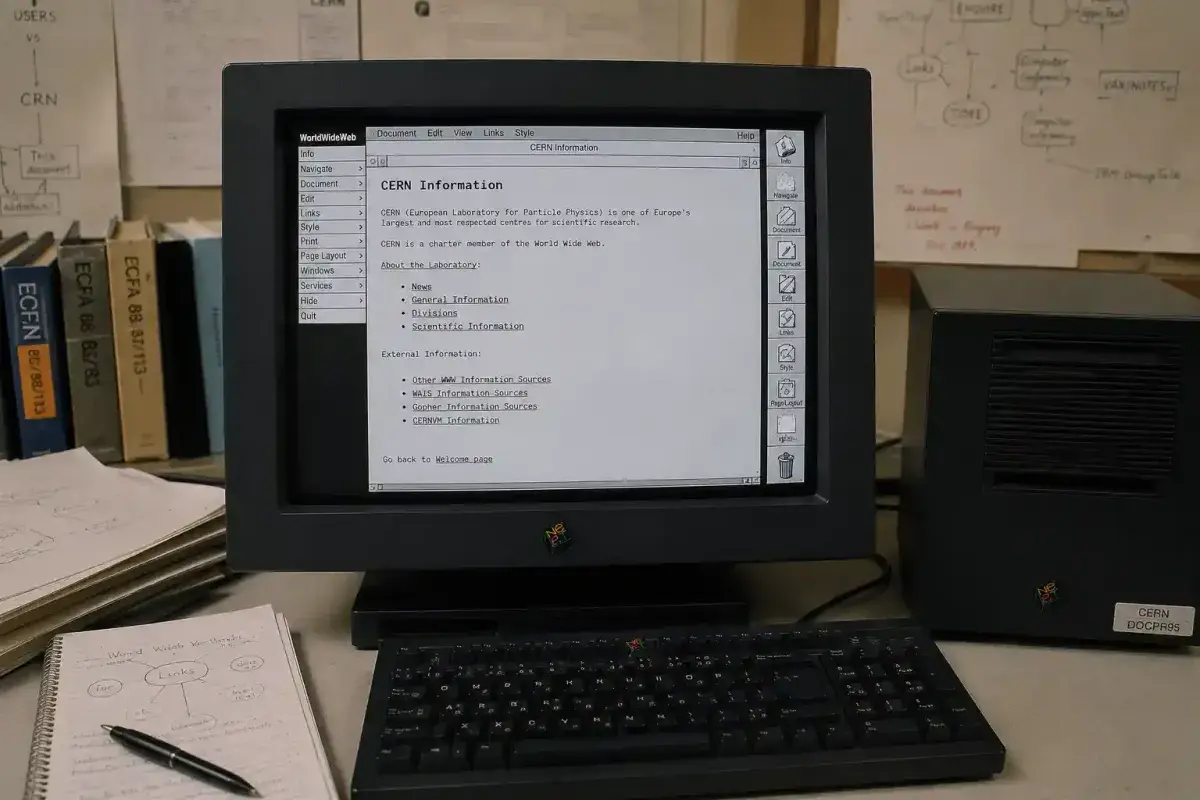
Imagine opening a browser today and trying to find information without Google, Bing or another modern search engine. That was essentially the environment of the early web. CERN explains that an early search facility relied on keywords, but search engines as we know them did not exist during the first years of the web.
This changes how we should think about those first websites. The web was initially much smaller, and information could be organized through direct links between documents. Instead of searching through billions of pages, early users followed connections created by the people building the system.
The first website itself contained links to information about the World Wide Web project and other available resources. As more servers appeared, links could lead users from one system to another. The web gradually became a growing network rather than a single central collection.
This linking system was one of the most important characteristics of the technology. A document did not need to contain everything a reader might want. It could point somewhere else. That simple concept allowed information to become connected across different computers and institutions.
CERN's historical material also mentions useful early resources such as the CERN phone book and guides for using central computers. These examples show that the web developed around practical information needs before it became a major publishing and entertainment platform.
The absence of modern search engines also meant that discovering information required more deliberate exploration. People needed to know where resources were located or follow links from pages they already knew.
Today, search engines are so deeply integrated into online life that it is easy to forget that the web existed before them. The earliest web was a much smaller landscape where links were the main roads between pieces of information.
That makes the first website especially interesting. It was created at a time when simply connecting documents was already a revolutionary achievement.
6. The Web Was Designed for Scientists
Image
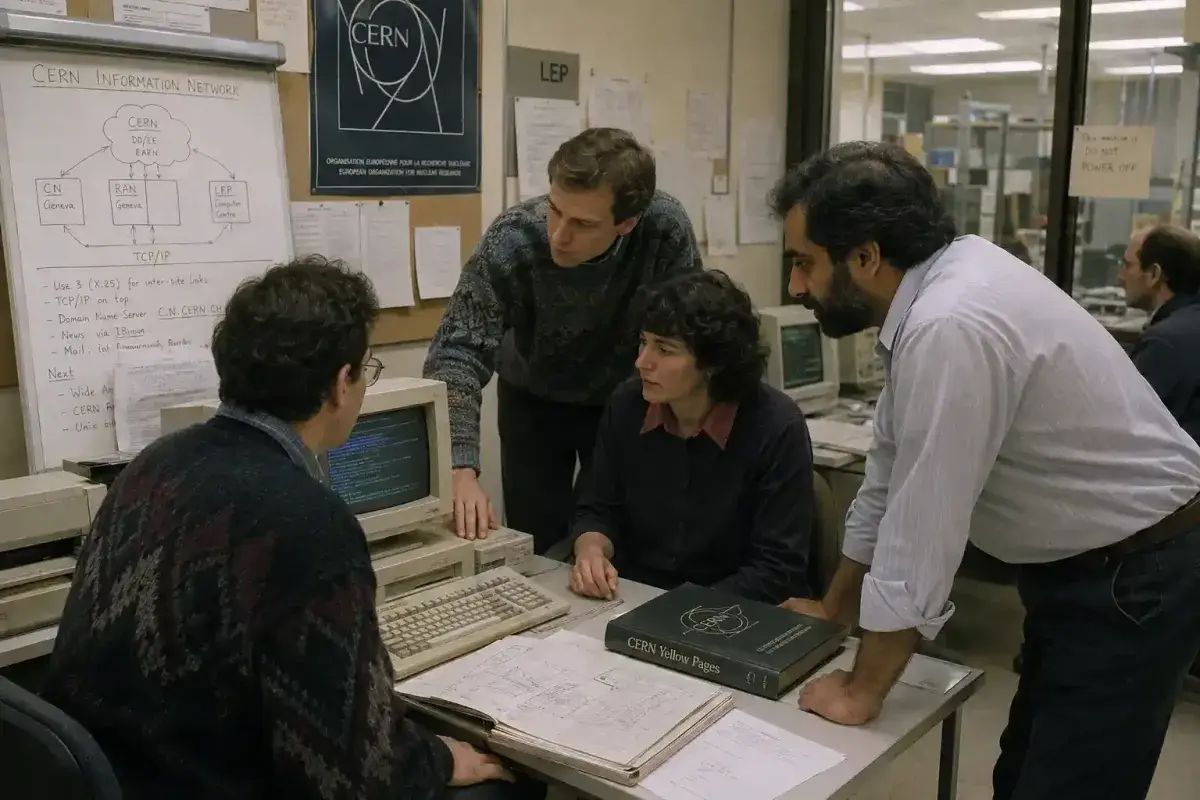
The World Wide Web did not begin as a project aimed at ordinary consumers. It was created at CERN to address a very practical problem faced by scientists working across different universities and research institutions. CERN explains that the web was originally conceived to support automated information sharing among scientists around the world.
CERN itself was an ideal environment for such an invention. Its scientific community included researchers from many countries who spent time at the laboratory but often worked at universities and national laboratories in their home countries. Reliable communication was therefore essential.
The problem was not simply a lack of information. There was already a huge amount of information stored on computers. The difficulty was connecting people with information stored on different systems.
Berners Lee's solution was to create a network of hypertext documents that could be accessed through a common system. Instead of forcing researchers to understand the details of every individual computer system, the web could provide a simpler way to move between related information.
This original purpose helps explain why the first website looks so different from websites today. It was essentially technical documentation for researchers and developers. Its audience consisted of people who wanted to understand the system and use it.
The idea quickly proved useful beyond CERN. In December 1991, the first web server in the United States came online at the Stanford Linear Accelerator Center, another particle physics laboratory.
That detail tells us something important about the early spread of the web. Its first users were not necessarily technology companies or media organizations. Scientists and research institutions were among the people who recognized its potential.
The web was born from a need for collaboration. Its later transformation into a global platform for business, entertainment, education and communication was much larger than its creators could have predicted.
7. CERN Released the Web to Everyone for Free
Image
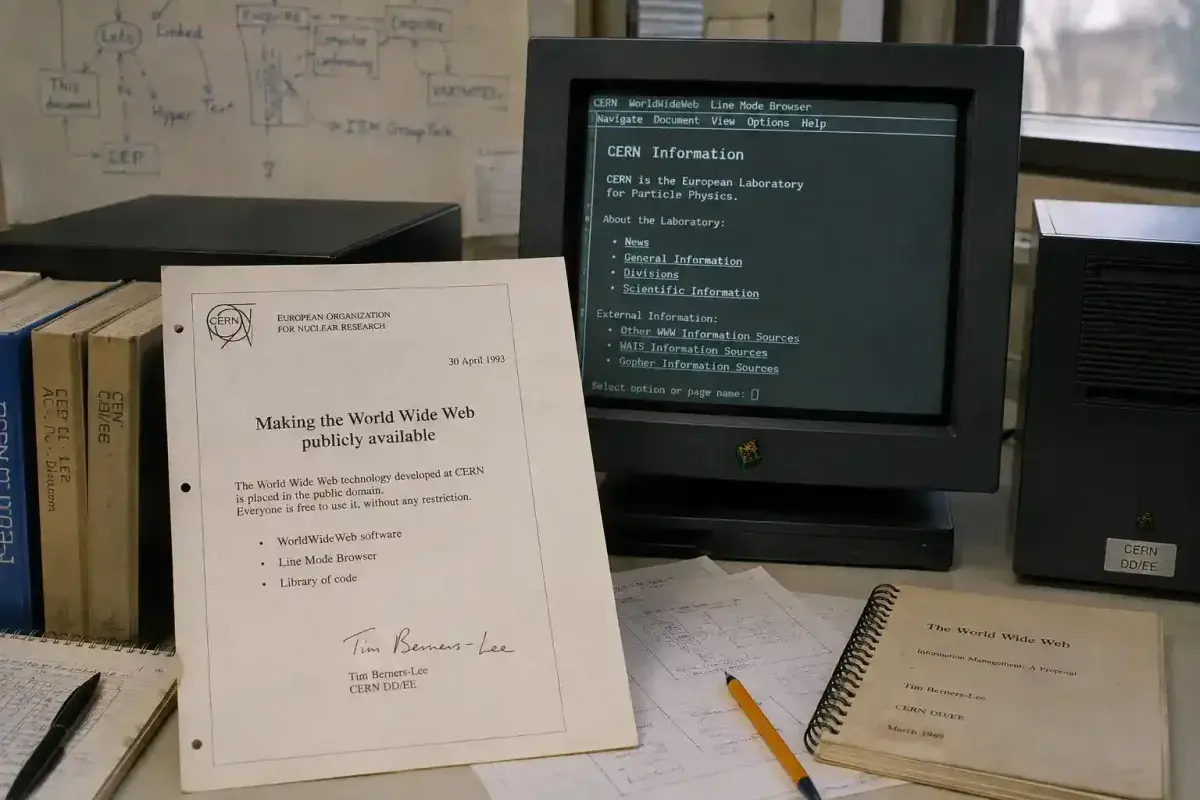
One of the most important decisions in web history happened on 30 April 1993. CERN made the World Wide Web software available to the public on a royalty free basis. The decision helped remove a major barrier to adoption and allowed people and organizations around the world to use the technology freely.
This was a defining moment because the web could have developed very differently if access to its underlying technology had been restricted. Instead, CERN chose an open approach.
The original release included the software needed to run a web server, a basic browser and a library of code for developers. CERN later made a release available under an open licence as another way to encourage broad distribution.
The decision reflected the environment in which the web was created. It was developed as a tool for sharing scientific information, and openness was central to its usefulness. If researchers could not freely connect their systems, the network would have been far less valuable.
The effects were enormous. CERN records that by late 1993 there were more than 500 known web servers and the World Wide Web represented about 1 percent of internet traffic at that time. By the end of 1994, there were around 10,000 servers and an estimated 10 million users.
Those numbers look tiny compared with the modern internet, but the growth was remarkable for a technology that had only recently been released to the public.
The first website is therefore connected to a decision that helped shape the entire digital world. The page itself was simple, but the principles surrounding the technology were powerful.
CERN's choice demonstrated that an information system could grow through openness and collaboration. That decision helped turn an experiment inside a research laboratory into a technology used across the world.
8. The Web Spread Beyond CERN Surprisingly Quickly
Image
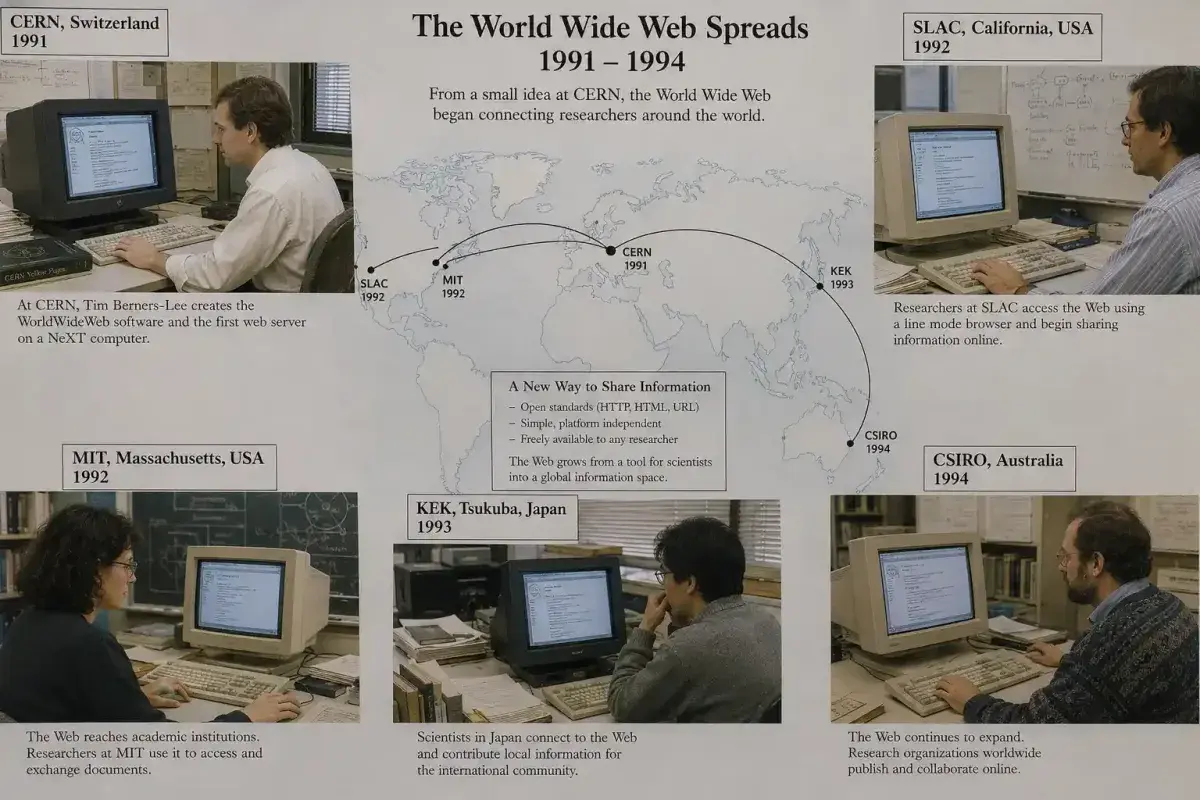
The first website may have begun in one office at CERN, but the technology did not remain there for long. The web started reaching other institutions as researchers discovered how useful the new system could be.
CERN records that the first web server in the United States came online in December 1991 at the Stanford Linear Accelerator Center in California. Paul Kunz and Louise Addis were instrumental in bringing that server online.
The choice of another particle physics laboratory is revealing. These institutions already had international networks of scientists who needed to exchange information. The web solved a problem they understood firsthand.
During this early period, there were essentially two important types of browser. Berners Lee's original browser was sophisticated but limited to NeXT computers. The line mode browser was less powerful but could run on a much wider range of systems.
That second browser helped the technology become more accessible. A revolutionary idea becomes much more useful when people do not need expensive or unusual equipment to use it.
The growth accelerated after CERN made the web software freely available in 1993. By the end of that year, CERN recorded more than 500 known web servers. In 1994, the web experienced another major increase in attention and adoption.
The first International World Wide Web conference took place at CERN in May 1994 and attracted 380 users and developers. A second conference in the United States later that year attracted 1,300 people. CERN describes 1994 as the Year of the Web.
This is remarkable when compared with the quiet origins of the project only a few years earlier.
The first website was created to explain a new system to a relatively small scientific audience. Within a few years, that system was becoming a global platform.
9. The First Website Was Restored in 2013
Image
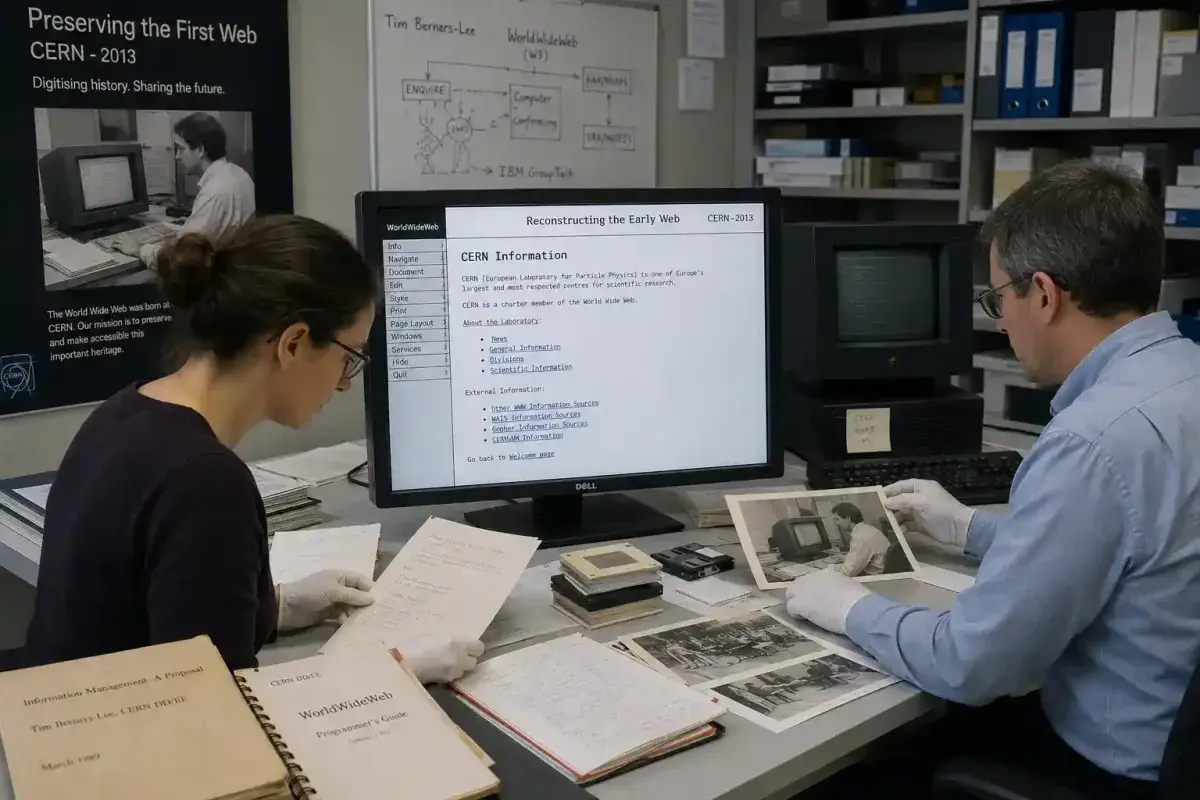
There is an important detail hidden behind the phrase first website still online. The original website did not simply remain unchanged and continuously available for decades. CERN explains that the world's first website was no longer online at its original address in its original form. In 2013, CERN began a project to restore it and preserve the digital material associated with the birth of the web.
That restoration matters because digital history is surprisingly fragile. Old websites can disappear when servers are replaced, files are lost, software becomes obsolete or organizations stop maintaining old systems.
CERN's restoration effort was therefore about more than putting a nostalgic webpage back online. It was an attempt to preserve an important part of technological history.
The project involved searching for original files, records, code and other surviving material. CERN later described how people around the world responded by sharing stories, software and information about early web technology.
The result allows visitors today to explore material associated with the earliest web through info.cern.ch. The site includes historical resources such as Tim Berners Lee's original proposal, information about his original browser and material about the first line mode browser.
This distinction is worth remembering when describing info.cern.ch as a website that is still online. It is historically connected to the first website and uses its original address, but today's accessible version is the result of preservation and restoration.
That actually makes the story more interesting. The website is not merely an old page that happened to survive. It is also an example of digital archaeology.
Every time someone visits it, they are seeing an effort to keep the earliest chapter of web history accessible.
In an age when websites can change completely overnight, the preservation of something this old shows why digital history deserves careful attention.
10. The First Website Helped Introduce a New Way of Sharing Knowledge
Image
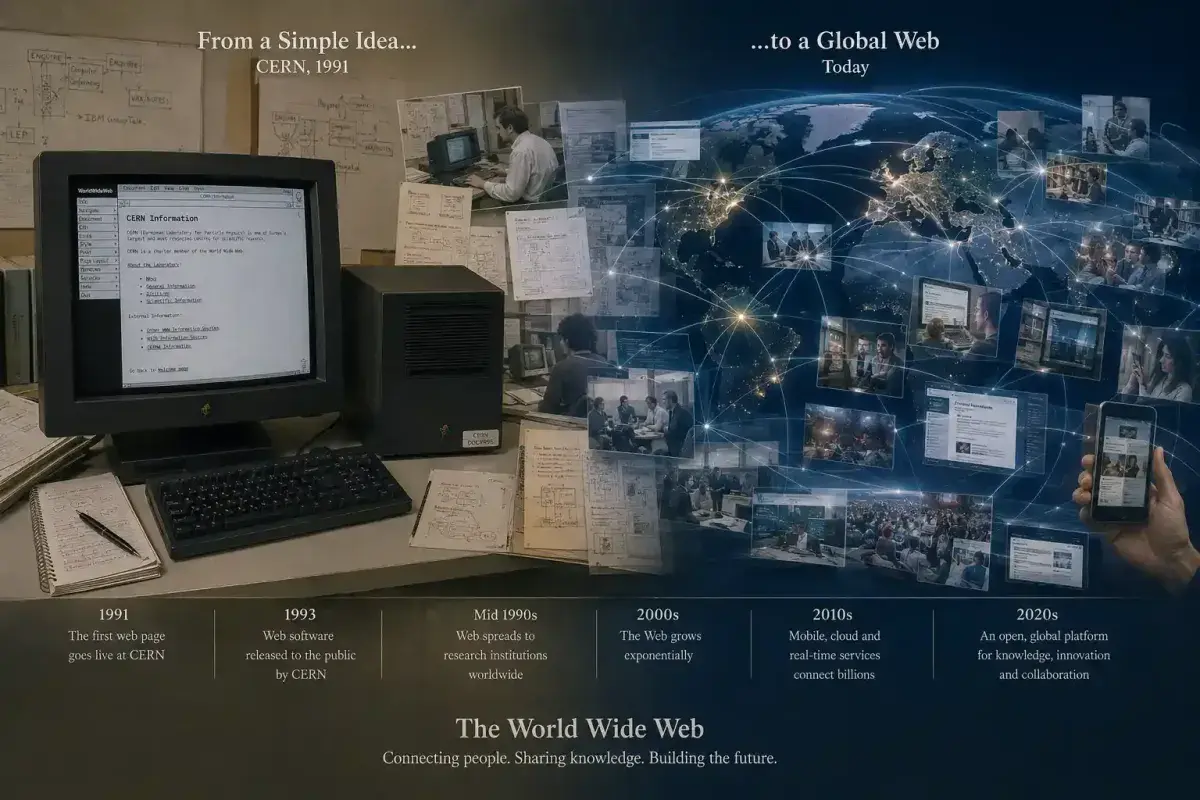
The most fascinating fact about info.cern.ch may be that its importance has little to do with how impressive the website looks. Its real significance comes from the idea it represents.
The World Wide Web created a simple way to connect information through hypertext and networked computers. CERN explains that the basic idea was to combine computers, data networks and hypertext into an easy to use global information system.
That concept eventually changed almost every part of modern communication. Websites became places where people could publish information, businesses could reach customers, universities could share knowledge and communities could communicate across borders.
Yet the original project was remarkably modest. The first website explained how the web worked. The first server ran on a NeXT computer. The first browser was also an editor. Early users were largely scientists and developers. There were no modern search engines, social networks, streaming platforms or online marketplaces.
The web's power came from its ability to scale.
One person could create a document. Another person could link to it. Another server could host related information. Over time, millions of people could participate without needing to use one central computer or organization.
The decision by CERN to make the web software freely available in 1993 was crucial to that expansion. CERN later described openness and free standards as fundamental characteristics of the web.
Today, it is easy to judge the first website by modern standards and conclude that it looks extremely basic. That misses the point.
The achievement was not visual sophistication. The achievement was creating a system that allowed information to connect.
Info.cern.ch stands as a reminder that transformative technology does not always begin with a spectacular product. Sometimes it begins with a simple page, a single computer and an idea that makes sharing knowledge easier.
The history of info.cern.ch is fascinating because it strips the modern web down to its simplest form. There was no giant technology company behind the first website, no advertising industry waiting to monetize it and no enormous audience expecting instant information. There was simply a research problem, a computer, a small group of collaborators and an idea for connecting information more effectively.
Tim Berners Lee developed the World Wide Web at CERN because scientists needed a better way to share information across institutions and computer systems. The first web server ran on a NeXT computer in his office, while the first website explained the very technology that made the site possible.
The early browser could even edit pages, reflecting a vision of the web as a place for creating and sharing knowledge rather than simply reading information. As the technology spread, simpler browsers helped more computer users access it. Other research institutions soon established their own servers, and CERN's decision to release the web software freely in 1993 removed another major barrier to adoption.
The website available at info.cern.ch today also tells an important preservation story. The original site was not continuously preserved in its original form, so CERN undertook a restoration project in 2013 to bring the historic material back to its original address.
That makes visiting it more meaningful than simply looking at an old webpage. It offers a glimpse into the moment before the web became enormous.
The first website reminds us that today's digital world grew from remarkably simple beginnings. What started as a tool for scientists became a global system for communication, learning, business and creativity.
Sometimes the most important websites are not the ones with the most features. They are the ones that changed what became possible.