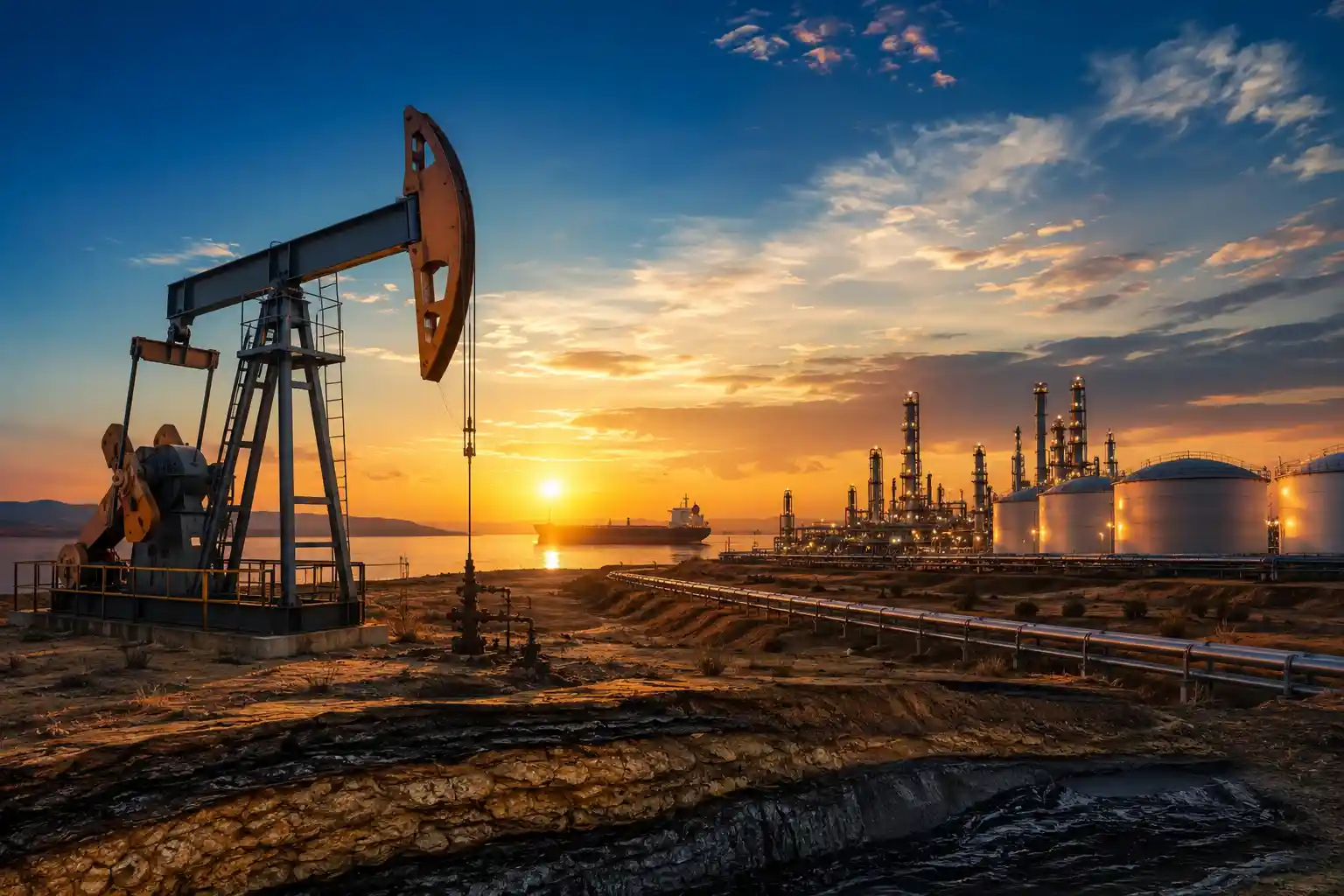
Oil is one of the most familiar natural resources in the modern world, yet many of its most interesting stories remain hidden beneath the surface. People usually connect oil with gasoline, fuel stations, drilling rigs, and large industrial facilities. Those associations are understandable, but they reveal only a small part of what petroleum actually is and how deeply it has influenced human history.
The story of oil reaches back millions of years, long before the first cities, engines, or roads existed. Ancient organisms, changing environments, buried sediments, heat, pressure, and geological movement all contributed to the formation of petroleum deposits. The material that eventually became crude oil spent an immense amount of time beneath layers of rock before humans learned how to locate and extract it.
People also discovered petroleum long before the modern energy industry appeared. Naturally occurring bitumen was useful to ancient societies for construction, waterproofing, and other practical purposes. Centuries later, advances in drilling, refining, chemistry, and mechanical engineering transformed petroleum into one of the foundations of industrial society.
What makes oil especially fascinating is that its importance does not end when it reaches a refinery. Petroleum can become transportation fuel, industrial feedstock, and a starting material for many manufactured products. Its influence reaches transportation, construction, chemistry, manufacturing, agriculture, and global commerce.
Let's look at ten facts that reveal the surprising story behind oil. Some explain where it comes from, some explore how it behaves underground, and others show how petroleum changed everyday life. Together, they offer a clearer picture of a resource that is much more complicated than the dark liquid people see at a fuel station.
1. Oil Began With Ancient Life
The oil extracted from the Earth today has an extraordinary connection to ancient life. Much of the petroleum that humans have discovered formed from organic material that accumulated millions of years ago. Tiny organisms living in ancient seas and lakes played an especially important role in this process.
When these organisms died, some of their remains settled onto the bottom of oceans or lakes. Under favorable conditions, layers of sediment gradually buried the organic material. As more sediment accumulated, the buried material became exposed to increasing pressure and temperature.
Over enormous periods of geological time, chemical changes transformed the organic material into hydrocarbons. These hydrocarbons could eventually become petroleum or natural gas depending on the original material and the geological conditions surrounding it.
This process is remarkably different from anything people experience during an ordinary lifetime. A human life may last decades, while petroleum formation can involve millions of years. The oil produced today therefore represents a natural process that began long before human civilization existed.
The exact origin of petroleum varies from one geological region to another. Different source materials, temperatures, pressures, and rock formations can produce petroleum with different characteristics.
Image
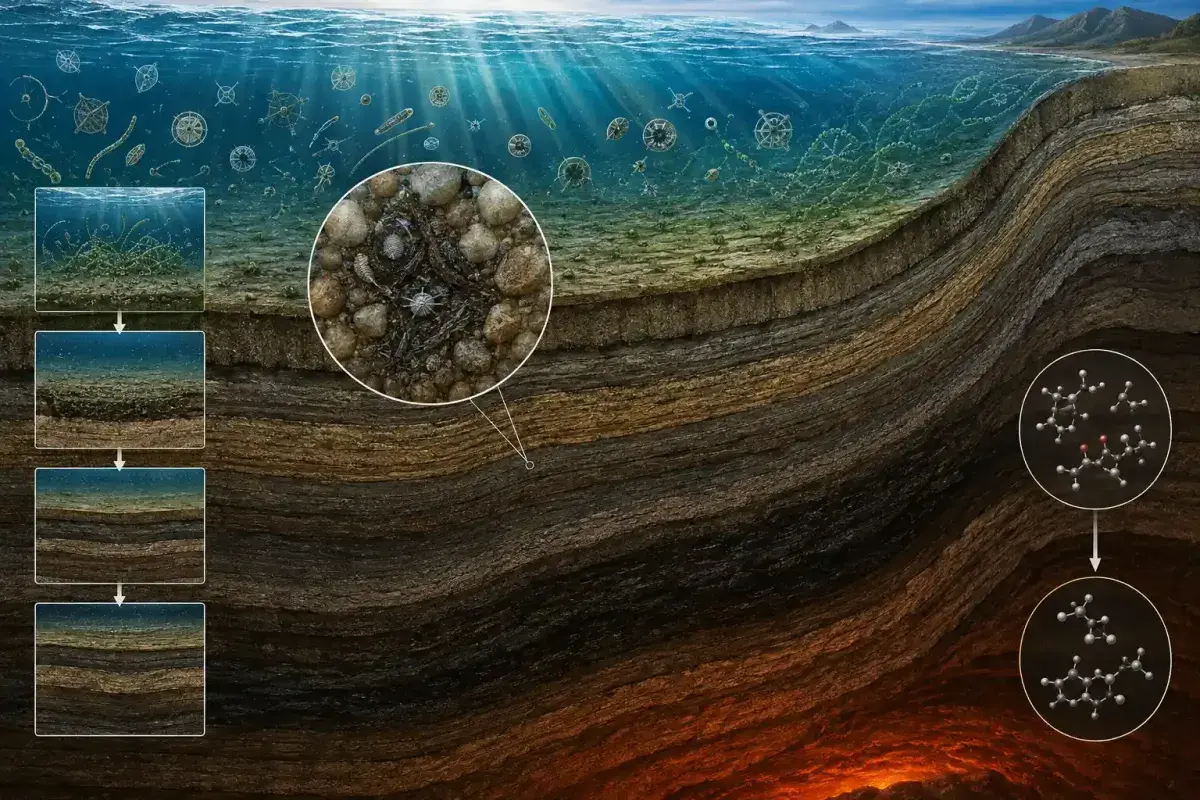
Oil is therefore not simply a substance that happens to exist underground. Its history is connected to ancient ecosystems and geological processes that unfolded over extraordinary lengths of time. Every petroleum reservoir is part of a much larger story involving the history of life and the changing Earth.
2. People Used Petroleum Long Before Cars
Petroleum is strongly associated with modern transportation, but people discovered useful forms of petroleum long before automobiles existed. In some parts of the ancient world, naturally occurring bitumen reached the surface through cracks and openings in the ground.
Ancient societies learned that this dark, sticky substance had practical properties. Bitumen could help waterproof structures, seal containers, protect certain surfaces, and assist with construction. In ancient Mesopotamia, naturally occurring bitumen became a useful material in several aspects of daily life.
This early use was very different from the petroleum industry that developed much later. Ancient people were not refining millions of barrels into standardized fuels. Instead, they were collecting naturally occurring material and using its physical properties for specific purposes.
The discovery of natural petroleum also demonstrated something important about the Earth. Unusual substances could emerge from beneath the surface, suggesting that the ground contained resources that might be useful to human communities.
Centuries later, technological advances changed the relationship between people and petroleum. Improved drilling techniques made it possible to reach deposits beneath the surface, while refining technology allowed crude oil to be separated and transformed into different products.
Image
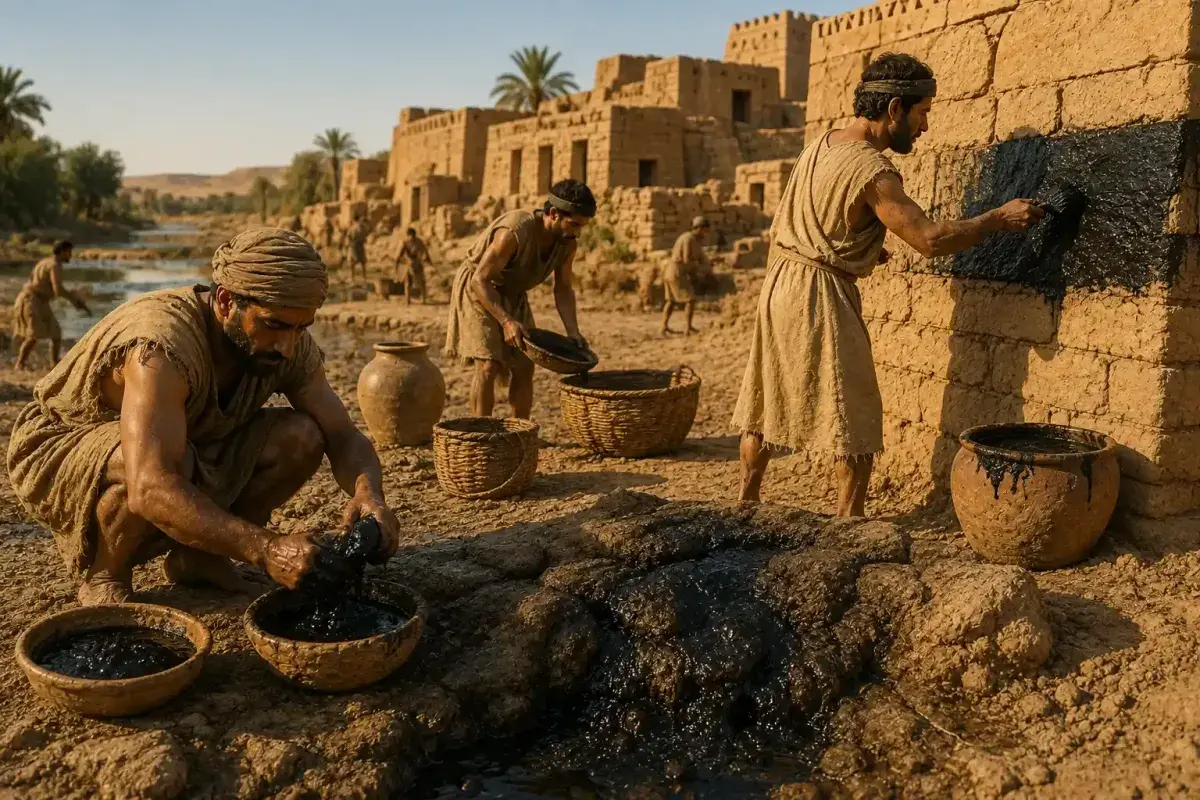
The ancient history of petroleum shows that the resource was useful before anyone understood its chemistry or imagined the enormous industries that would eventually develop around it. What began as naturally occurring material became part of human construction and practical knowledge thousands of years ago.
3. Crude Oil Is a Complex Mixture
Crude oil may look like one substance when it is collected from a well, but chemically it is far more complicated. It contains many different hydrocarbons along with smaller amounts of other compounds. The exact composition can vary significantly depending on the geological formation where the oil originated.
This variation matters because not all crude oil behaves the same way during refining. Some crude oils are relatively light, while others are heavier. Some contain greater amounts of sulfur or other compounds. Refiners need to understand these characteristics before deciding how the crude should be processed.
Inside a refinery, crude oil can be separated into different fractions based largely on differences in boiling temperatures. These fractions can then undergo additional processing to create useful fuels and chemical feedstocks.
Gasoline is only one result of this process. Other products can include diesel fuel, aviation fuel, lubricating materials, asphalt components, and feedstocks used in chemical manufacturing.
The complexity of crude oil is one reason petroleum refining requires sophisticated equipment and highly trained specialists. A refinery is not simply a place where crude oil is heated and poured into vehicles. It is a large chemical processing system where different components are separated, modified, and combined to produce materials with specific properties.
Image
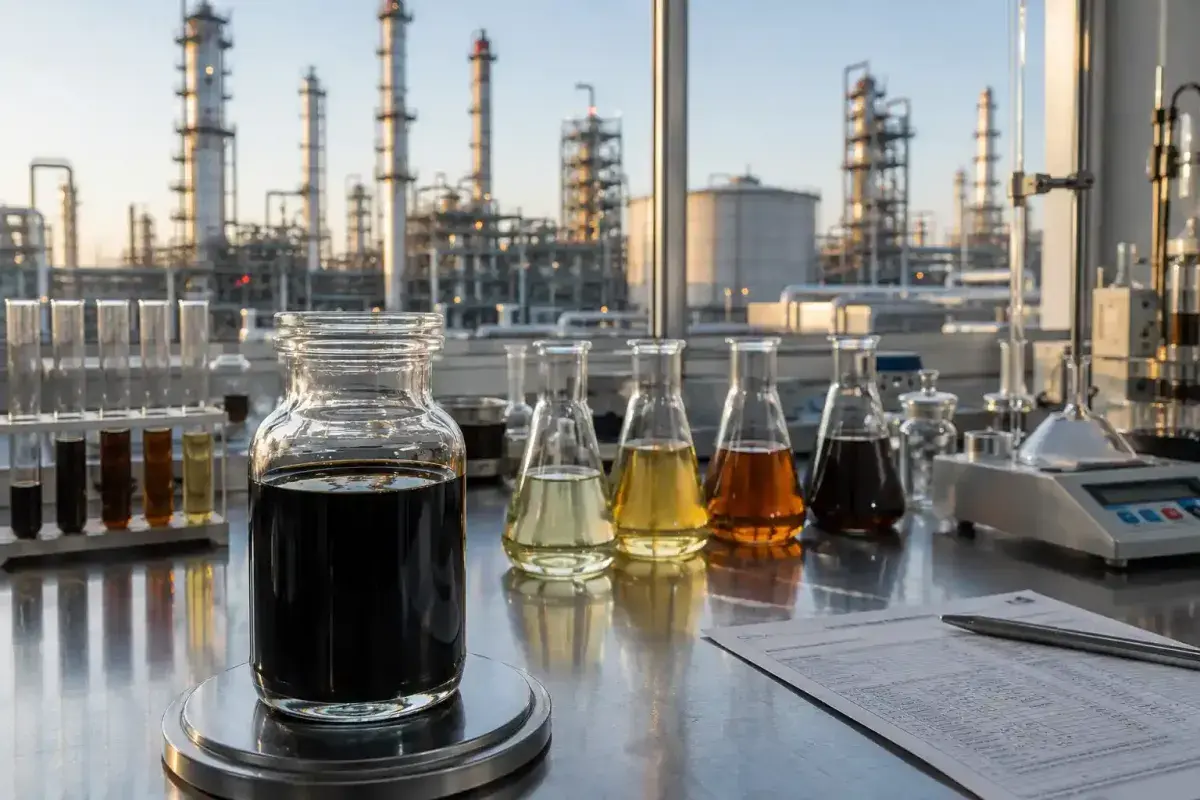
The word crude is important because crude oil is a raw natural resource rather than a finished product. Its complicated chemical composition is precisely what makes refining so important. A seemingly simple dark liquid contains a surprisingly diverse collection of compounds that can be transformed into many different materials.
4. Oil Can Become Materials That Are Not Fuel
Fuel is only one part of the petroleum story. Crude oil also contains components that can eventually become chemical feedstocks used in manufacturing. Through refining and chemical processing, these feedstocks can contribute to the production of many materials that people encounter every day.
Petroleum derived chemical processes are associated with materials such as synthetic fibers, plastics, coatings, adhesives, solvents, and various industrial products. The relationship is not usually direct. A finished product does not simply contain crude oil in its original form. Instead, petroleum components may pass through several stages of refining and chemical transformation before becoming part of a manufactured material.
This connection can be surprising because many everyday objects do not look remotely similar to petroleum. Synthetic clothing can feel soft, transparent packaging can appear completely different from crude oil, and electronic components can contain carefully engineered plastics and other materials.
The versatility of petroleum chemistry helped support the expansion of modern manufacturing. Scientists and engineers learned how to transform relatively simple hydrocarbons into materials with particular qualities such as flexibility, strength, durability, heat resistance, and chemical resistance.
Image
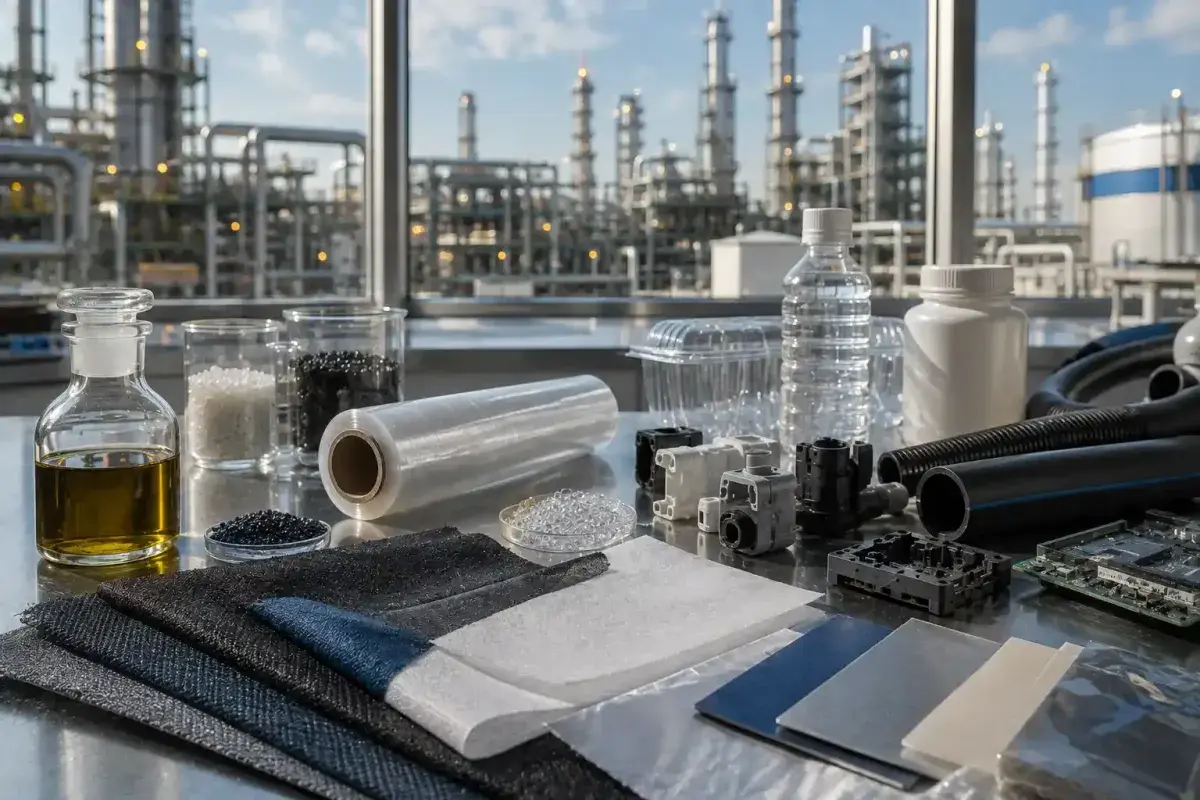
This broader role helps explain why oil became so important to industry. Its value is not limited to the energy released when fuel burns. Petroleum chemistry has also provided useful building blocks for manufacturing.
At the same time, widespread dependence on petroleum derived materials has created environmental concerns. Waste, pollution, greenhouse gas emissions, and resource consumption have encouraged researchers to explore recycling, alternative feedstocks, and materials derived from renewable sources. The story of oil therefore reaches well beyond the fuel tank.
5. Some Oil Is Far Beneath the Ocean
Oil does not exist only beneath deserts, fields, and other land based landscapes. Petroleum reservoirs can also occur beneath the seabed, sometimes under very deep water. Reaching these deposits requires sophisticated equipment and careful engineering.
Offshore exploration begins with geological studies designed to identify formations that may contain hydrocarbons. When a promising area is discovered, engineers can design wells and production systems capable of reaching the reservoir beneath the ocean floor.
Working offshore introduces challenges that do not exist in the same way on land. Waves, currents, storms, corrosion, water depth, and limited access all influence the design and operation of offshore facilities. Workers and equipment must operate within a carefully controlled environment.
Some offshore platforms are enormous structures containing drilling equipment, processing systems, living areas, cranes, storage facilities, and safety equipment. Supply vessels regularly support offshore operations by transporting equipment, materials, and personnel.
The technology involved in offshore petroleum production has changed considerably over time. Advances in drilling, navigation, materials, computer modeling, and subsea equipment have allowed engineers to reach increasingly challenging geological formations.
Image
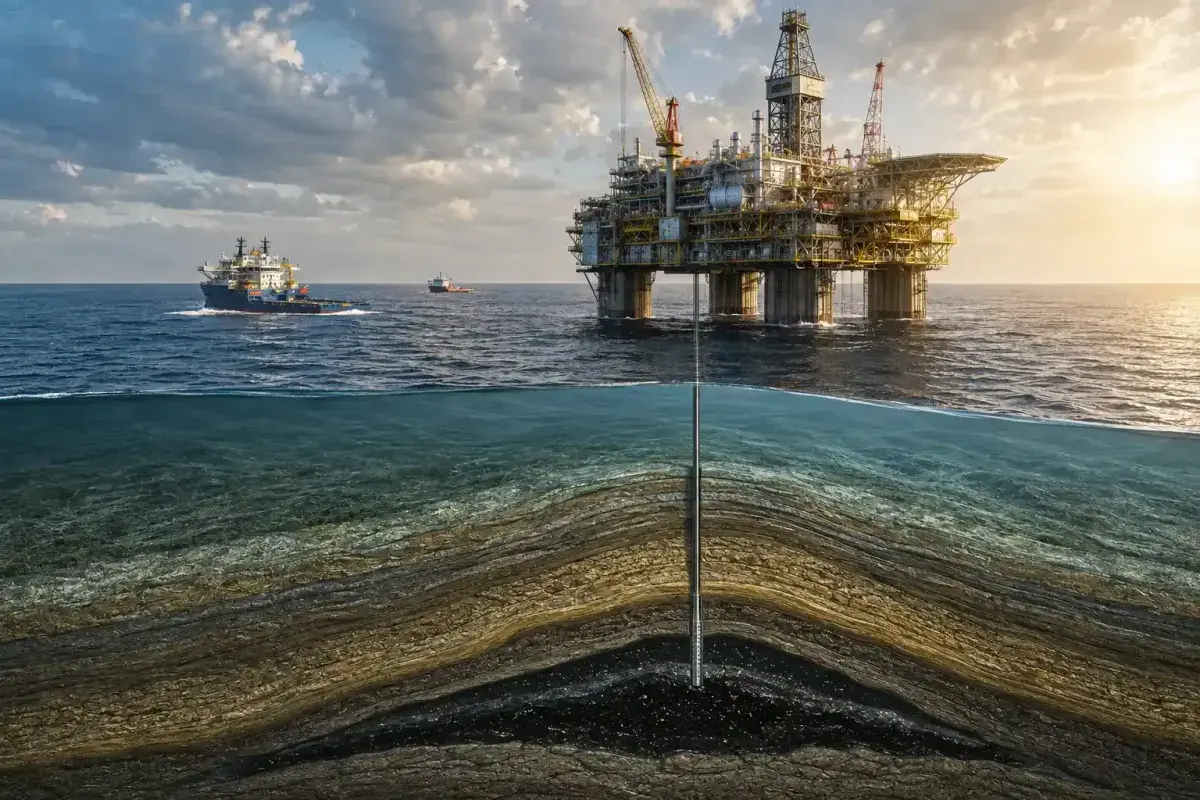
Offshore petroleum production also raises environmental questions. Marine ecosystems can be affected by industrial activity, while accidental releases can have serious consequences. These concerns have encouraged strict safety practices, monitoring systems, emergency planning, and continuing discussion about how petroleum resources should be developed.
An offshore oil platform therefore represents much more than a structure standing above the water. It is a meeting point between complex geology, advanced engineering, economics, and environmental responsibility.
6. Oil Reservoirs Are Not Underground Lakes
A common mental image of an oil field is a giant underground lake filled with petroleum. In reality, many oil reservoirs are very different. Petroleum is commonly stored within the tiny spaces found between grains of porous rock.
Reservoir rocks can contain interconnected pores that provide pathways through which fluids may move. The spaces are extremely small, but collectively they can contain significant quantities of oil, natural gas, and water.
A petroleum reservoir usually exists within a larger geological system. An impermeable layer above the reservoir can act as a seal, preventing hydrocarbons from continuing upward. Geological structures can then create traps where petroleum accumulates over long periods.
When a well reaches a productive reservoir, pressure and other physical forces can help move fluids through the rock toward the well. How easily this happens depends on factors such as permeability, reservoir pressure, rock characteristics, and the properties of the fluids.
Understanding these conditions is a major part of petroleum geology and engineering. Scientists study rock samples, seismic information, well measurements, and geological structures to develop models of what exists beneath the surface.
Image
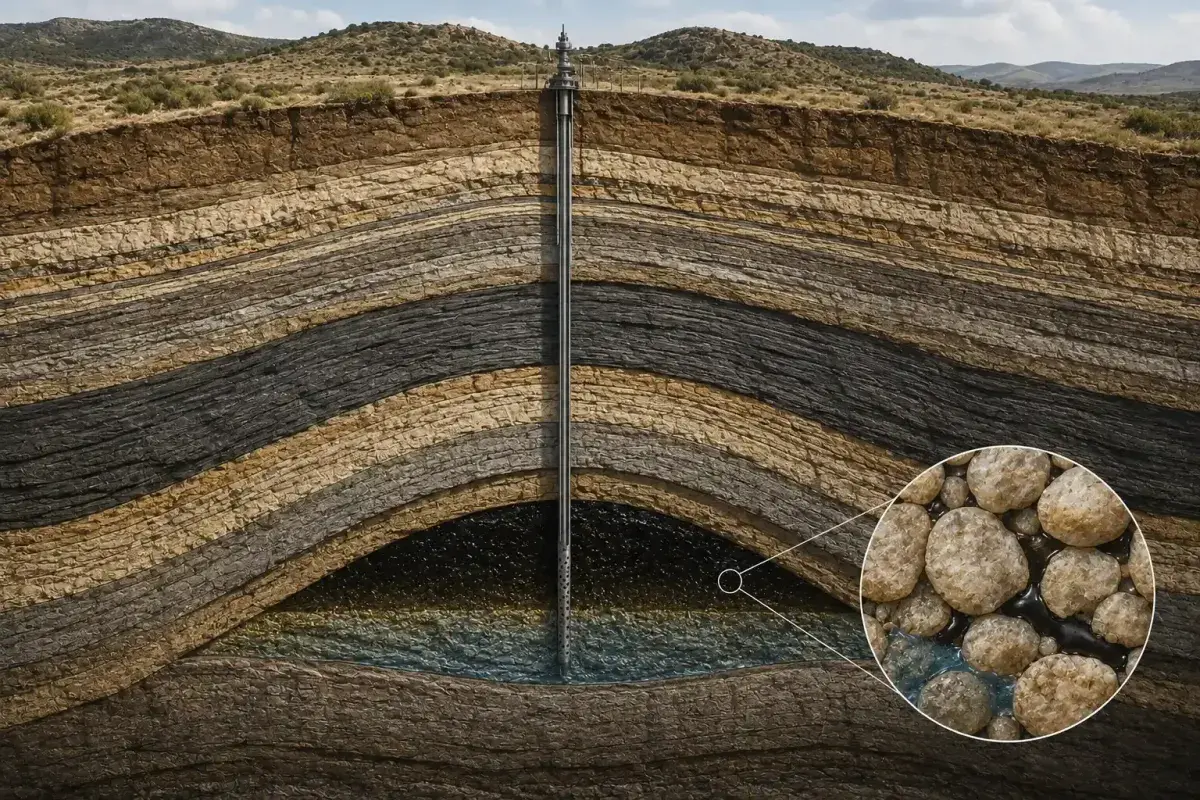
The underground reality makes petroleum extraction much more complicated than simply drilling into an empty chamber. Engineers need to understand how fluids move through rock and how the reservoir may respond as production continues.
This is also why two oil fields can behave very differently even when they appear similar from the surface. The properties of the rocks and fluids beneath the ground determine how petroleum can be recovered.
7. Oil Can Be Found Beneath Unexpected Landscapes
The landscape people see above ground does not always reveal what exists deep beneath it. Petroleum deposits can occur beneath regions that look completely ordinary, because their formation depends on geological history rather than the modern appearance of the surface.
A region that is dry land today may once have been covered by an ancient sea. A quiet basin may once have contained a lake or coastal environment. Over millions of years, sediments can accumulate, become buried, and undergo chemical and physical changes.
This long geological history can create the ingredients required for a petroleum system. Source rocks must contain suitable organic material, reservoir rocks must provide spaces where hydrocarbons can accumulate, and geological structures must allow petroleum to become trapped.
Geologists therefore do not simply look at the landscape when searching for oil. They examine rock formations, underground structures, seismic information, historical geological evidence, and data from existing wells.
Some oil producing areas may look completely unremarkable at the surface. Their importance becomes apparent only when scientists investigate the rocks beneath them.
Image
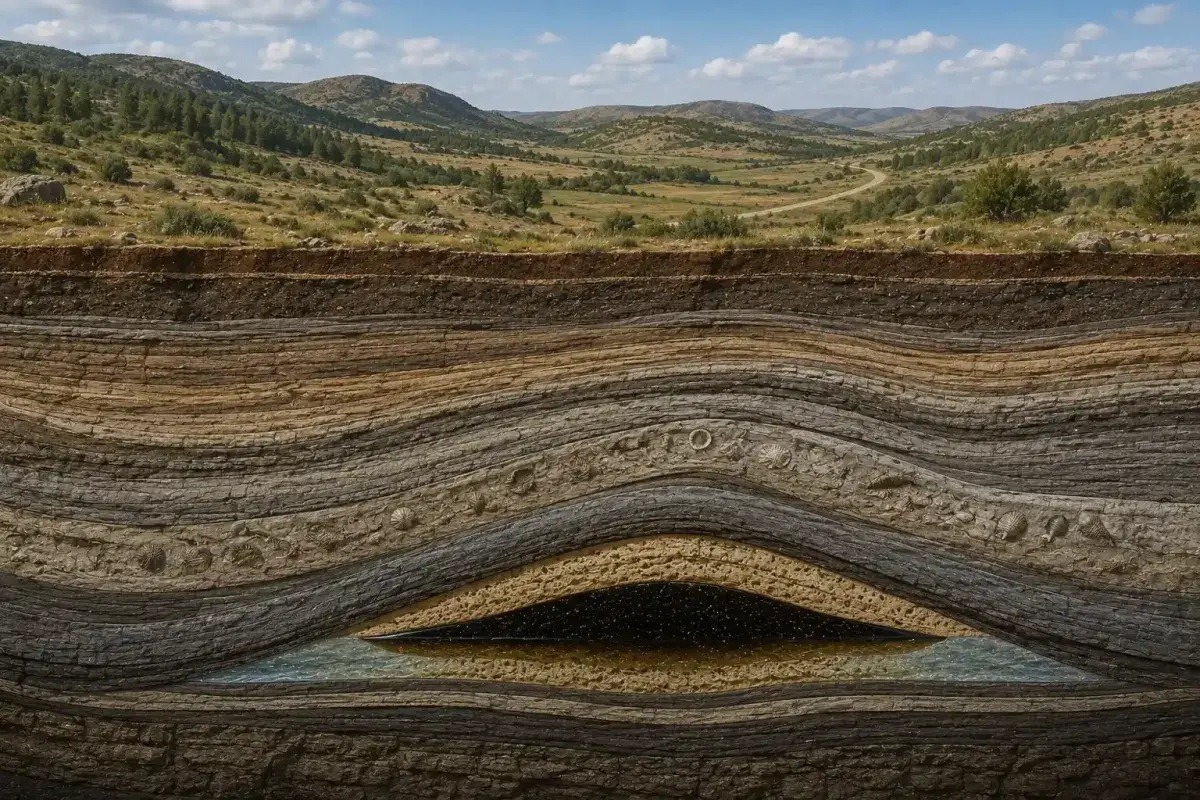
The unusual nature of some petroleum producing regions reveals just how dramatically Earth has changed. Geological formations preserve evidence of environments that disappeared long before humans arrived.
An oil field can therefore be viewed as more than a source of energy. It is also a record of ancient environmental conditions and the geological forces that reshaped the planet.
8. Oil Can Move Through Rock
Petroleum does not always remain exactly where it originally formed. Under suitable geological conditions, hydrocarbons can move through certain types of rock. This process is known as petroleum migration and is an important part of understanding how oil reservoirs develop.
After hydrocarbons form in source rocks, they can move through connected spaces within surrounding geological formations. Differences in density, pressure, and other physical properties can contribute to this movement.
Petroleum may continue moving until it encounters a geological barrier that prevents further migration. An impermeable rock layer can act as a seal, while a geological structure can create a trap where hydrocarbons accumulate.
The ability of oil to move through rock depends heavily on permeability. Rocks with connected pore spaces can allow fluids to travel more easily, while rocks with very low permeability can restrict movement.
This is one reason reservoir quality matters so much. A rock may contain hydrocarbons, but extracting them can be difficult if the fluids cannot move efficiently through the formation.
Scientists and engineers study these characteristics using geological models, well measurements, seismic information, pressure data, and laboratory analysis of rock samples.
Image
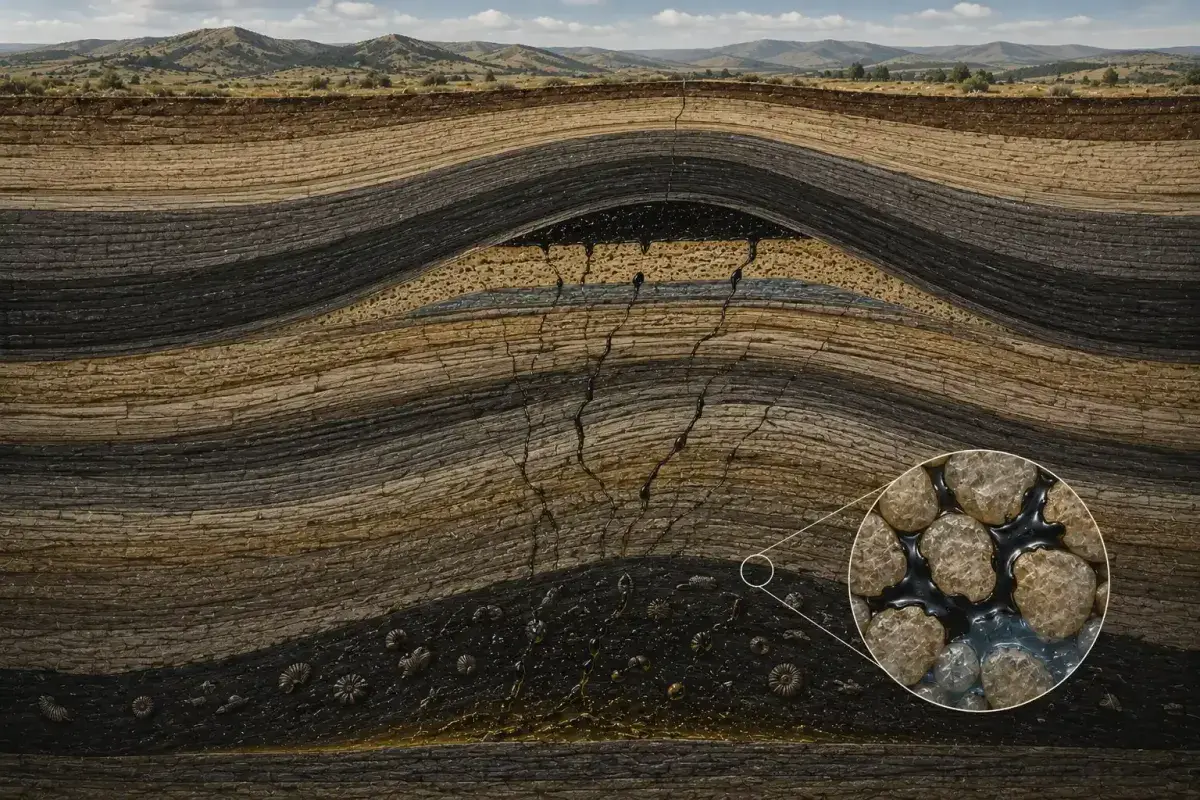
The idea that oil can migrate helps explain why the reservoir where petroleum is discovered may not be the same place where the original organic material was transformed. Geological processes can move hydrocarbons through the Earth before they become trapped.
This makes petroleum exploration a fascinating combination of detective work and Earth science. Geologists are essentially reconstructing an ancient journey that happened far below the surface over immense periods of time.
9. Oil Changed the Way People Travel
The rise of petroleum had an enormous influence on transportation. Before petroleum fuels became widely available, societies depended on combinations of animal power, steam, coal, wind, water, and human labor for transportation.
Liquid petroleum fuels offered a useful combination of energy density, portability, and convenience. Internal combustion engines could use these fuels to power vehicles, machinery, ships, and eventually aircraft.
As automobiles became more common, gasoline became closely associated with everyday travel. Diesel fuel became important for trucks, industrial equipment, ships, and other heavy applications. Aviation also developed alongside petroleum based fuels.
The effect went far beyond individual vehicles. Roads expanded, supply networks grew, goods could travel greater distances, and communities became increasingly connected.
Petroleum helped support the development of modern logistics. A product manufactured in one region could be transported across a country or shipped around the world. Agricultural machinery could operate over large areas, while commercial aviation made long distance travel increasingly accessible.
Image

The transportation revolution also created new challenges. Dependence on petroleum connected mobility with fuel prices, supply security, pollution, and environmental concerns.
Today, transportation is changing again as electric vehicles, alternative fuels, public transportation, and efficiency technologies become increasingly important. Even as the energy system evolves, petroleum remains a major part of the history that shaped modern mobility.
10. Oil Is Only One Part of the Energy Story
Oil has played an enormous role in modern society, but it is only one chapter in the much larger history of human energy use. People have relied on wood, animal power, wind, water, coal, petroleum, natural gas, nuclear energy, sunlight, and other sources at different times.
Petroleum became particularly important because liquid fuels were practical for mobile machines. They could be stored, transported, and used in engines that powered vehicles and equipment.
Its importance grew alongside industrialization, transportation, manufacturing, agriculture, and global commerce. As these systems expanded, petroleum became deeply connected to everyday life.
However, energy systems are never completely static. Concerns about air pollution, greenhouse gas emissions, energy security, resource availability, technology costs, and long term sustainability have encouraged governments, businesses, scientists, and consumers to explore alternatives.
Solar power, wind power, battery technology, electric vehicles, improved energy efficiency, and other technologies are changing the energy landscape in many parts of the world.
Image
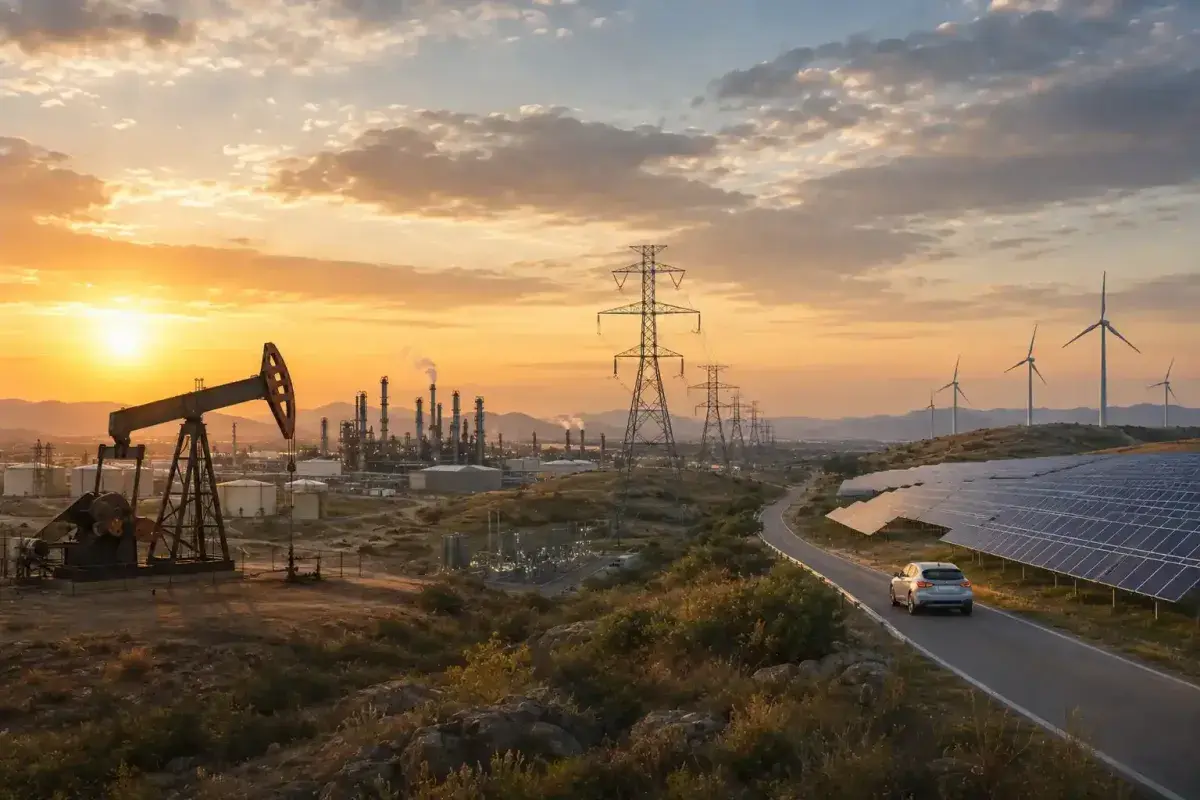
The future energy system is unlikely to depend on one resource alone. Different regions and industries may use different combinations of technologies according to geography, infrastructure, economics, and available resources.
Understanding oil within this broader energy story makes it easier to appreciate both its historical importance and the reasons society is exploring new approaches. Oil changed the world, but the way humans produce and use energy will continue to change as technology and priorities evolve.
Oil is much more than the dark liquid most people associate with fuel stations and drilling rigs. Its story begins millions of years ago with ancient organisms and geological processes, continues through layers of sediment and buried rock, and eventually reaches modern refineries, vehicles, factories, laboratories, and everyday products.
The first remarkable fact is the enormous amount of time involved. Petroleum formation is measured on a geological scale, meaning that the material extracted today may have begun its journey long before humans existed. Ancient life, sediment, pressure, temperature, and geological movement all contributed to the creation of petroleum systems.
Human use of petroleum is also much older than many people realize. Long before automobiles appeared, ancient societies found naturally occurring bitumen useful for construction, waterproofing, and other practical purposes. Modern drilling and refining later transformed petroleum from a locally useful natural material into a globally important resource.
Another surprising part of the story is what happens after crude oil is extracted. Petroleum is not a single chemical, and it is not used only for fuel. Refining and chemical processing can produce fuels and industrial feedstocks that contribute to a remarkable range of manufactured materials.
The underground world is equally fascinating. Oil reservoirs are generally not enormous underground lakes. Petroleum can occupy tiny spaces within porous rocks, move through geological formations, and become trapped beneath impermeable layers. Some reservoirs lie beneath land while others are located beneath the seabed.
Oil also helped reshape transportation and global commerce. Cars, trucks, ships, aircraft, agricultural machinery, and industrial equipment all benefited from the availability of liquid petroleum fuels. That transformation brought enormous economic opportunities while also creating environmental challenges that continue to influence decisions today.
Perhaps the most useful way to understand oil is to see it as part of a much larger story about Earth, technology, and human civilization. Petroleum has shaped the modern world, but energy systems continue to evolve. As new technologies develop, the role of oil will change, yet its remarkable geological and historical story will remain an important part of understanding how our modern world came to be.
Image
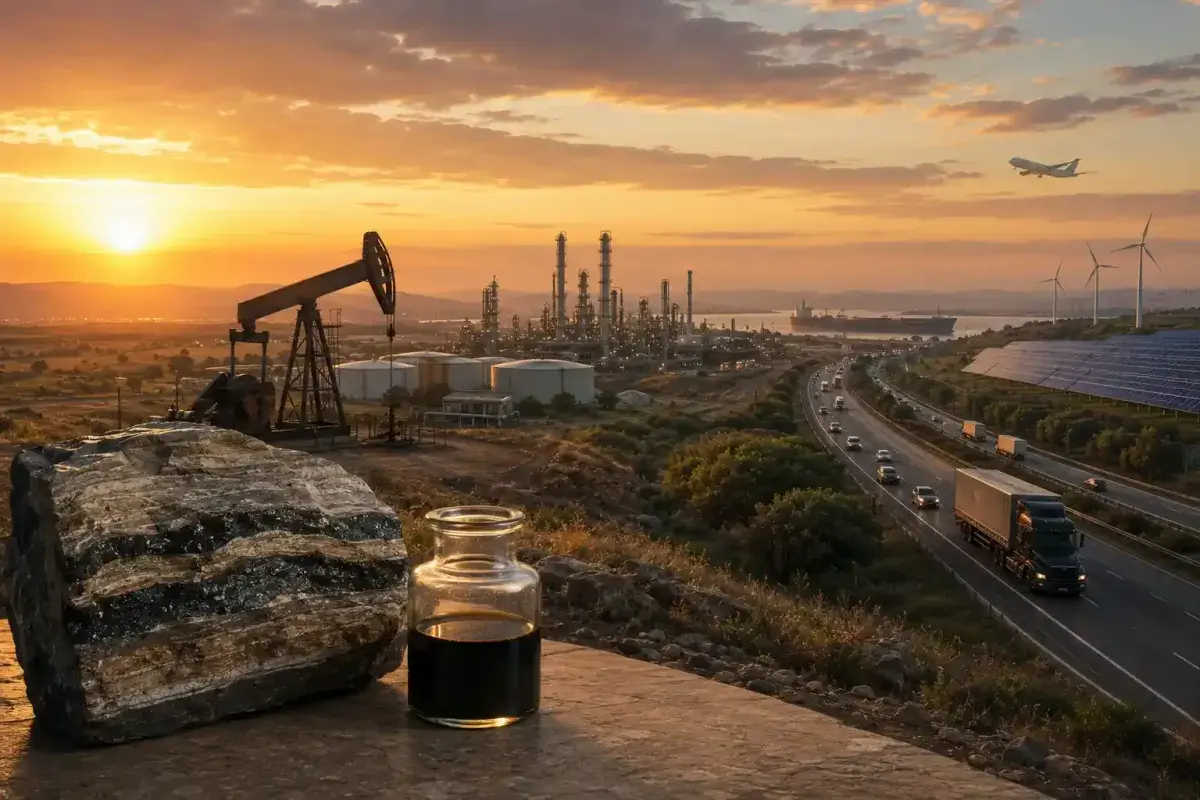
Oil has a story that stretches from ancient life beneath vanished oceans to the highly engineered systems of the modern world. Understanding that story reveals why petroleum became so valuable, why its influence reached so many areas of human life, and why its future remains an important subject of science, technology, economics, and environmental discussion. The more closely we look at oil, the clearer it becomes that this familiar resource is connected to an extraordinary history beneath our feet and an equally significant story about the choices humanity makes above ground.