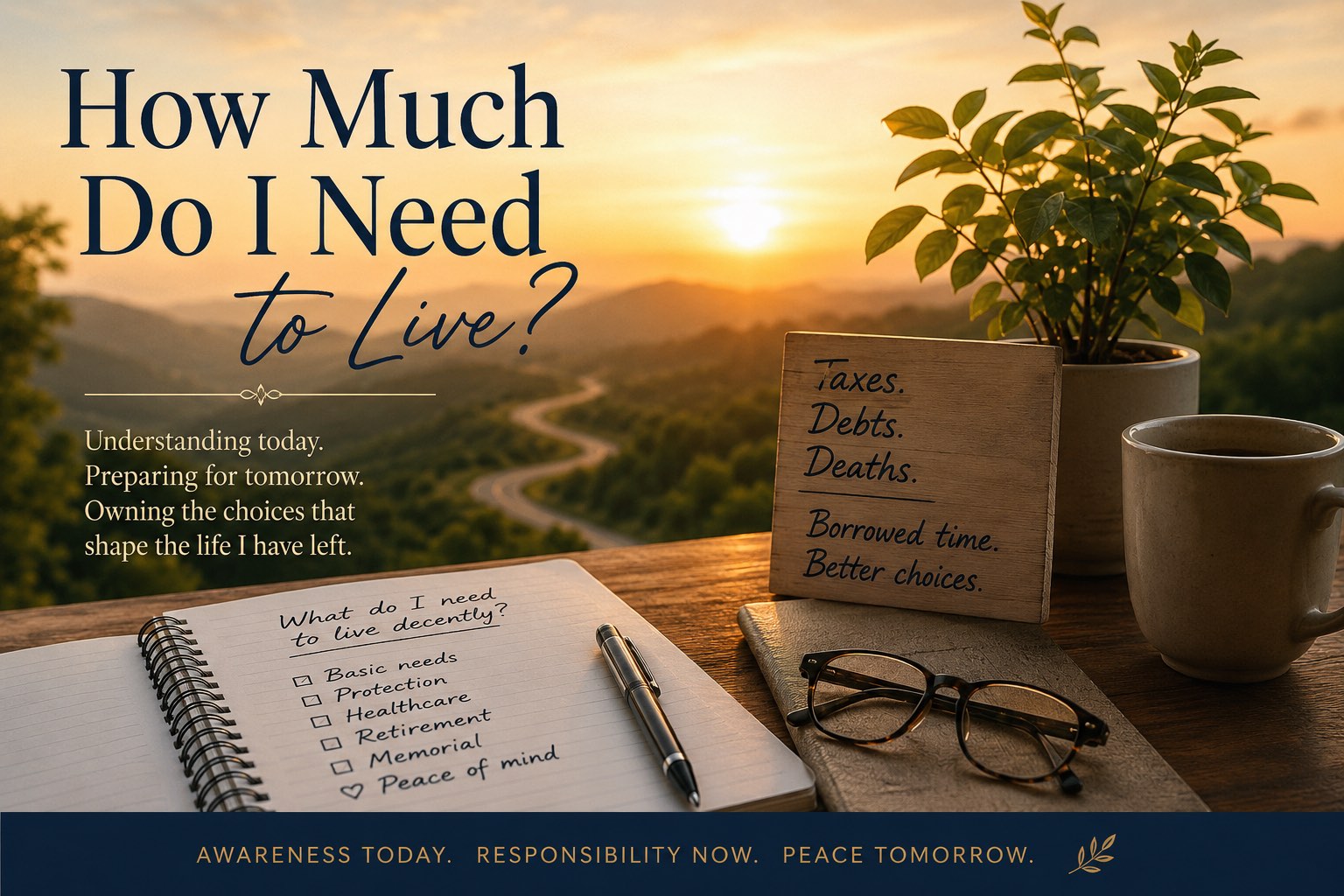
There are questions that are easy to ask until I actually try to answer them honestly. How much do I need to live? sounds simple, but the moment I ask myself seriously, I realize my brain has to stretch a little further than usual.
Maybe the reason is that I am not really asking about money alone. I am asking about today, tomorrow, and the kind of life I am trying to sustain.
So let me begin with today.
What do I actually need each month to live? When I strip everything down to the basics, the list is surprisingly simple: a place to live, utilities, food, and transportation. These are the things that keep ordinary life moving.
Then there are the things I enjoy. Hobbies, little purchases, occasional treats, things that make life more pleasant. There is nothing wrong with enjoying life, of course, but when the basics are already stretching the budget, I have to be honest enough to ask whether everything I am spending on is truly necessary.
That question can be uncomfortable, because of the difference between - what I need and what I have become accustomed to is larger than I want to admit.
Then there is tomorrow.
Tomorrow needs the same four basics, but it also asks me to prepare for things that today's budget cannot simply ignore. There is insurance, healthcare, retirement savings, and even healthy hobbies - things that help me remain engaged, active, and connected as I grow older. Suddenly, the question becomes much bigger.
How much do I need to live decently today while preparing myself to live decently tomorrow?
Whew! That is no longer just a budgeting question. It is a life question.
There is an old saying that the two surest things in life are taxes and death. But when I look at my own reality, I find myself adding two more words to that list: debts and death. They even sound as though they belong together. Taxes remind me that life comes with obligations. Debts remind me that yesterday's choices can follow me into today. Death reminds me that none of this continues forever.
Three words or perhaps four - that make me suddenly aware that I am living in borrowed time. There is an expiration.
I do not particularly enjoy thinking about that. But growing older has a way of making certain truths harder to postpone. And if my time is borrowed, then perhaps I should also ask myself how responsibly I am using the resources I have during that borrowed time.
How much do I actually need to live decently?
Life is temporary.
Money is limited.
Debt carries yesterday into tomorrow.
And the choices I make today shape the life I will have to live tomorrow.
That realization changes the conversation for me. I used to think about money mostly in terms of earning and spending. If there was enough to get through the month, I would find a way to make it work. If there was not enough, I would find another way. But maybe “making it work” is not always the same as making it sustainable, as we make today work… by borrowing from tomorrow.
Image
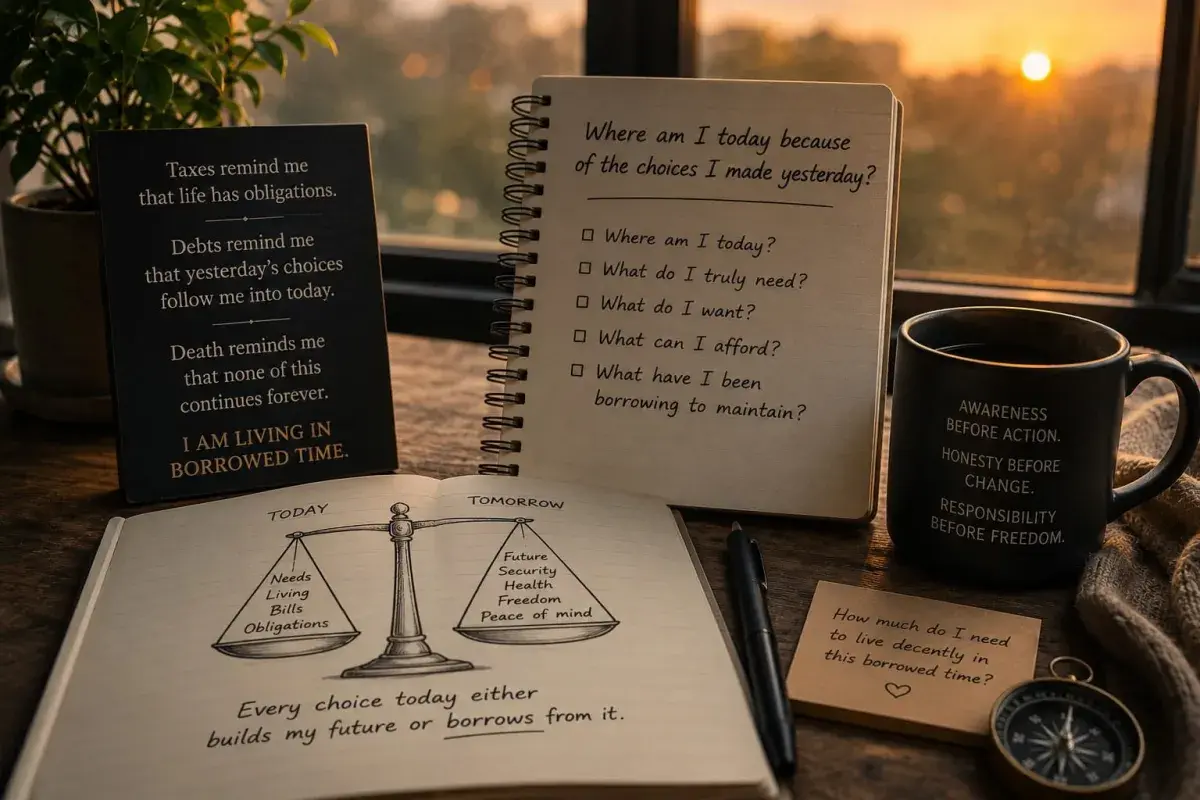
And tomorrow eventually arrives.
Debt has a peculiar way of doing this. It gives the present some breathing room while quietly asking the future to carry the weight. For a while, everything can appear manageable, until the accumulated obligations begin competing with the income that was supposed to support tomorrow.
That is when I have to stop and ask myself the question I would rather avoid:
Where am I today because of the choices I made yesterday? That question is uncomfortable, but I think it is necessary, because I need to own where I am.
There are things I did well. There are things I could have done better. There were decisions made with optimism, decisions made under pressure, and some decisions I postponed because I simply did not want to look too closely at the numbers. Whatever the reasons were, they are now part of my financial story. And pretending otherwise will not rewrite it.
So I have to look at the situation as it is.
If my income is not enough to cover my basic monthly needs, I need to acknowledge that. If my spending has repeatedly exceeded what I earn, I need to see that too. And if debt has been filling the gap, I need to stop treating that gap as though it will somehow disappear by itself.
This is where the conversation becomes a little more serious. If I have been short for one month, perhaps I can recover. But if I have been short for seven months, then I am no longer dealing with one difficult month. I am looking at seven months of accumulated shortage.
Seven months multiplied by the monthly shortfall. Ouch!
That is when I realize I may not simply be borrowing money, as I may be borrowing from my future. And that is a much harder thing to ignore. And this is the part of life where I need to own what was not done properly… with maturity.
I cannot change the spending decisions I made yesterday. I cannot recover every opportunity I missed. I cannot erase every financial mistake simply because I now understand it better. But I can stop pretending.
I can look at what is left and ask what can still be changed. That is where responsibility becomes useful. Responsibility does not mean punishing myself for being imperfect. It means becoming honest enough to stop repeating what is clearly not working.
Maybe I need to spend less. Maybe I need to earn more. Maybe I need to simplify. Maybe I need to renegotiate obligations, rebuild savings, or rethink what I have considered “normal” spending. It could be a combination of all of these. I do not need to know the entire answer today, I just need to know where I am.
Image

How much do I need to live? Not how much do I need to impress anyone, nor how much do I need to maintain an image. And also, not how much do I need to keep up with the expectations of other people.
How much do I need to live decently, responsibly, and with some measure of peace?
That distinction matters. Because living within my means does not necessarily mean living a small life. It may simply mean understanding the difference between what gives life meaning and what merely consumes resources. It means learning to recognize the difference between enough and more. And “enough” is not a number that someone else can give me. I have to discover it for myself.
There is another part of tomorrow that I cannot ignore.
Eventually, healthcare will become more important. Retirement will become more immediate. Protection will matter more. And, uncomfortable as it may be, there will eventually be expenses associated with the end of life. Even the memorial I would rather not think about belongs somewhere in tomorrow's reality. That does not mean I should live in fear of the future, but quite the opposite.
Preparing for reality can actually make the present less frightening.
When I know what I am facing, I can make choices. When I refuse to look, I leave tomorrow to deal with the consequences of today. And I would rather give my future self something better than another problem to solve.… so I pause.
Not to accuse myself of everything I did wrong, nor compare myself with someone who appears financially ahead. I don't have to panic because I do not have everything figured out. I simply ask myself:
-
Where am I today?
-
What do I truly need?
-
What am I spending because I need it, and what am I spending because I have become accustomed to it?
-
Am I earning enough for the life I am living?
-
Am I preparing for tomorrow, or am I repeatedly asking tomorrow to rescue today . . . and the hardest question of all:
-
If I continue living exactly as I am living now, where will I be five or ten years from today?
The last question is even tougher, because I relaized just now while writing that the most important financial decision is not what we buy next. It is what we finally decide to stop doing.
I do not need to solve my entire financial life in one afternoon. And I do not need to become perfect, but I truly appreciated that awareness knocked on my head. Awareness of what comes in. Awareness of what goes out. Awareness of what I owe. Awareness of what I have failed to prepare for. Awareness of what I can still change.
And this awareness is where responsibility begins. Because I cannot change where I am until I am willing to admit where I am.
Living in borrowed time is expensive when I keep borrowing from tomorrow to make today comfortable. That is the lesson I am beginning to understand. Every day is a gift, but a gift does not mean there are no responsibilities attached to it.
If I have been given another day, then I have also been given another opportunity to make a better choice. I may not be able to undo the past but I can stop adding to it. I can begin again with what I know now with this deeper question: How do I want to live with what I have, for as long as I have it?
Well, I am still figuring that out, but today, at least, I am willing to look, and that feels like a good place to begin.
This life may be borrowed, but the choices I make while living it are still mine.
Image

About the Author
Clarity Edited writes each word with intention - unfiltered, unsoftened, and without diluting thought. It does not write to please, persuade, or decorate the truth, but to bring clarity to what deserves to be seen, understood, and faced. Where life becomes uncertain or difficult to see through, the writing seeks to bring light—not by making the truth easier, but by making it clearer.