


Happy New Year, and welcome to 2026.
This year begins not with abrupt shifts, but with a clearer understanding of the choices ahead. Across outlooks from the International Monetary Fund, the World Bank, and the Asian Development Bank, the message entering 2026 is consistent and measured. Growth is expected to continue, but under tighter financial conditions, narrower fiscal space, and greater exposure to climate and demographic pressures. The era of easy stimulus and uniform expansion has passed. What remains is the more demanding work of adjustment.
This shift does not reflect pessimism. It reflects a recalibration of expectations. Economies are no longer judged primarily by how fast they expand, but by how credible, resilient, and adaptive their policies prove to be over time. For Asia still the world’s fastest-growing region this distinction matters deeply. The defining task of 2026 is not to recover speed, but to choose direction with care and foresight.
What Institutions Are Actually Saying About 2026
To understand what this means in practice, it is worth looking more closely at how these institutions frame the year ahead. Their forecasts are not identical, but they converge on several core themes: moderation rather than acceleration, targeted support instead of broad stimulus, and a stronger emphasis on policy credibility, productivity, and resilience. Reading these signals carefully helps explain not only where Asia is headed in 2026, but why the decisions made this year will carry consequences well beyond the next economic cycle.
When the outlooks of the International Monetary Fund, the World Bank, and the Asian Development Bank are considered together, a clear pattern emerges. While the language differs, the substance aligns. None foresee a return to the high-octane growth that defined earlier cycles. At the same time, none are forecasting collapse. What they describe instead is a year shaped by constraint and by choice.
Growth across Asia is expected to continue in 2026, but at a moderated pace. This reflects tighter global financial conditions, reduced fiscal room, and the cumulative effects of demographic and climate pressures. In institutional terms, this moderation is framed not as weakness, but as normalization. The post-pandemic period of extraordinary policy support has largely run its course. What replaces it is a more disciplined environment in which trade-offs are unavoidable and sequencing matters.
A second point of alignment is the shift away from broad-based stimulus. Across multilateral assessments, there is little appetite for large, untargeted fiscal or monetary expansion. Instead, the emphasis is on precision: targeted support for vulnerable households, careful management of public debt, and reforms that raise productivity rather than inflate demand. This reflects a growing recognition that policy credibility now carries as much weight as policy scale.
Perhaps most telling is how risks are framed. Climate exposure and debt sustainability are no longer treated as background concerns or long-term caveats. They are now embedded directly into growth and inflation outlooks, shaping forecasts in real time. Faster growth that undermines resilience is increasingly viewed as a liability rather than an achievement.
These signals point to a simple but demanding reality for 2026: success will not be measured by acceleration alone, but by how well economies adapt to limits. For Asia, the year ahead will test not ambition, but judgment and the willingness to make decisions whose benefits may outlast their immediate appeal.
Image

The Real Opportunities in 2026
The opportunities Asia faces in 2026 are not the kind that announce themselves loudly. They are quieter, more conditional, and more demanding than in previous growth cycles. Across assessments from leading multilateral institutions, one message is consistent: opportunity remains, but it now favors economies prepared to earn it.
The first opportunity lies in productivity rather than expansion. With fiscal space limited and financial conditions tight, growth driven simply by spending or borrowing is less viable. Institutions increasingly emphasize gains from skills development, digital capacity, logistics efficiency, and institutional quality. These investments are less visible than stimulus programs and slower to deliver results, but they offer something more durable: the ability to grow without amplifying risk. In 2026, productivity is not a technical concern it is the main engine of sustainable progress.
A second opportunity emerges from Asia’s diversity itself. While the region no longer moves as a single economic bloc, this divergence creates space for specialization and adaptation. Economies that are flexible, well-governed, and open to selective integration stand to benefit from continued supply-chain realignment and regional trade. This is not about capturing everything, but about capturing what fits. In a more fragmented global environment, countries that understand their comparative strengths are better positioned than those chasing scale alone.
A third opportunity centers on domestic demand as a stabilizing force. With external conditions uncertain, institutions increasingly highlight the role of household consumption, services, and small- and medium-enterprise activity in cushioning volatility. This does not imply rapid growth, but it does offer resilience. Economies that protect purchasing power, maintain employment pathways, and invest in basic services are better able to sustain momentum through global fluctuations.
Finally, there is a growing opportunity in credibility itself. As capital becomes more selective, markets and businesses are paying closer attention to policy consistency, regulatory clarity, and long-term planning. In 2026, trust has measurable economic value. Economies that communicate clearly, act predictably, and align policy with long-term objectives are more likely to attract investment and retain confidence even in the absence of rapid growth. These opportunities point to a defining feature of 2026: progress will favor patience over urgency. The gains available this year are real, but they are earned through discipline, adaptation, and choices that prioritize durability over display.
Image
The Disruptions Most Likely to Surprise People in 2026
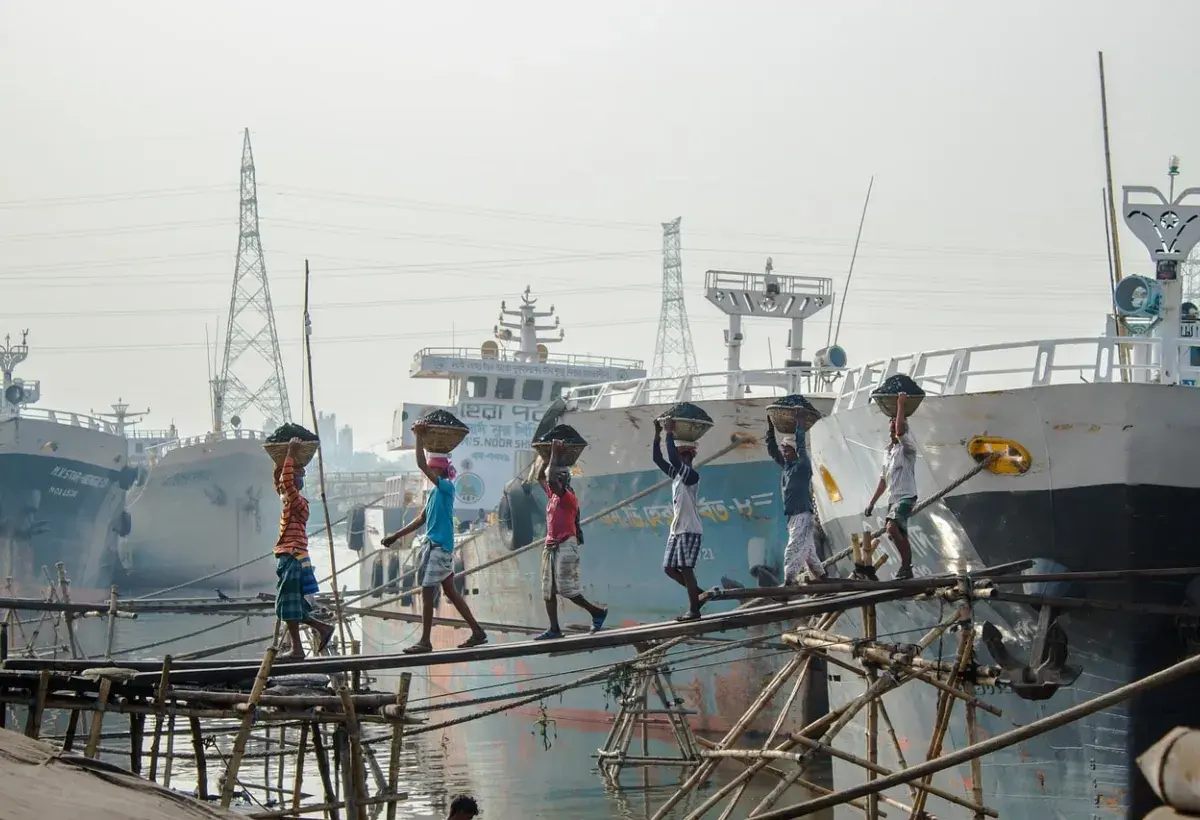
The disruptions likely to define 2026 are not expected to arrive as sudden shocks. According to multilateral outlooks, the greater risks ahead are slower, quieter, and easier to underestimate. They stem less from unexpected crises than from delayed responses to pressures that are already visible.
One such disruption is policy hesitation. As fiscal space narrows and political cycles continue, the temptation to postpone difficult reforms remains strong. Yet institutional assessments repeatedly warn that delay itself has economic consequences. When adjustment is deferred, the costs do not disappear; they accumulate. Over time, this shows up in weaker job creation, strained public services, and reduced confidence among investors and households. In 2026, disruption is more likely to emerge from gradual erosion than from abrupt breakdown.
A second source of disruption lies in climate exposure. Extreme weather events are no longer treated as isolated shocks but as recurring economic forces that affect food prices, infrastructure, insurance costs, and public budgets. Climate risk increasingly acts as a multiplier, amplifying existing vulnerabilities. The surprise in 2026 may not be the occurrence of climate shocks, but how quickly they translate into inflationary pressure and fiscal strain.
Financial conditions present a third, often misunderstood risk. While markets may adjust to higher interest rates in theory, their prolonged persistence reshapes behavior in practice. Credit becomes more selective, refinancing more expensive, and tolerance for policy ambiguity lower. For households, this can mean slower access to housing and credit. For businesses, it raises the cost of expansion and increases sensitivity to regulatory uncertainty. The disruption here is subtle: not a credit freeze, but a steady tightening that rewards discipline and penalizes miscalculation.
Finally, there is the risk of misreading moderation as weakness. As growth stabilizes rather than accelerates, public frustration can grow, especially where expectations were shaped by earlier high-growth periods. Institutions caution that managing expectations is itself a policy challenge. Failure to communicate the reasons for moderation and the long-term benefits of resilience can undermine trust even when macroeconomic conditions remain stable.
Taken together, these disruptions share a common feature: they are predictable, but not always anticipated. The challenge of 2026 is therefore not simply to respond to shocks, but to recognize slow-moving risks before they harden into constraints.
Author’s Reflection
This article was written not to predict outcomes, but to frame responsibility. As a citizen observing Asia at the start of 2026, what stands out is not fragility, but choice. The region enters this year with less room for error, yet greater clarity about what no longer works. Growth remains possible, but only where judgment keeps pace with ambition. My hope for 2026 is not rooted in speed or scale, but in steadier leadership one willing to prioritize resilience, fairness, and long-term capacity over short-term approval. In a more demanding global environment, progress will belong to those who govern, invest, and participate with patience and purpose.
References: This analysis draws exclusively from outlooks and databases published by the International Monetary Fund (IMF, 2025); World Bank, 2025; and Asian Development Bank (ADB, 2025).
Image