


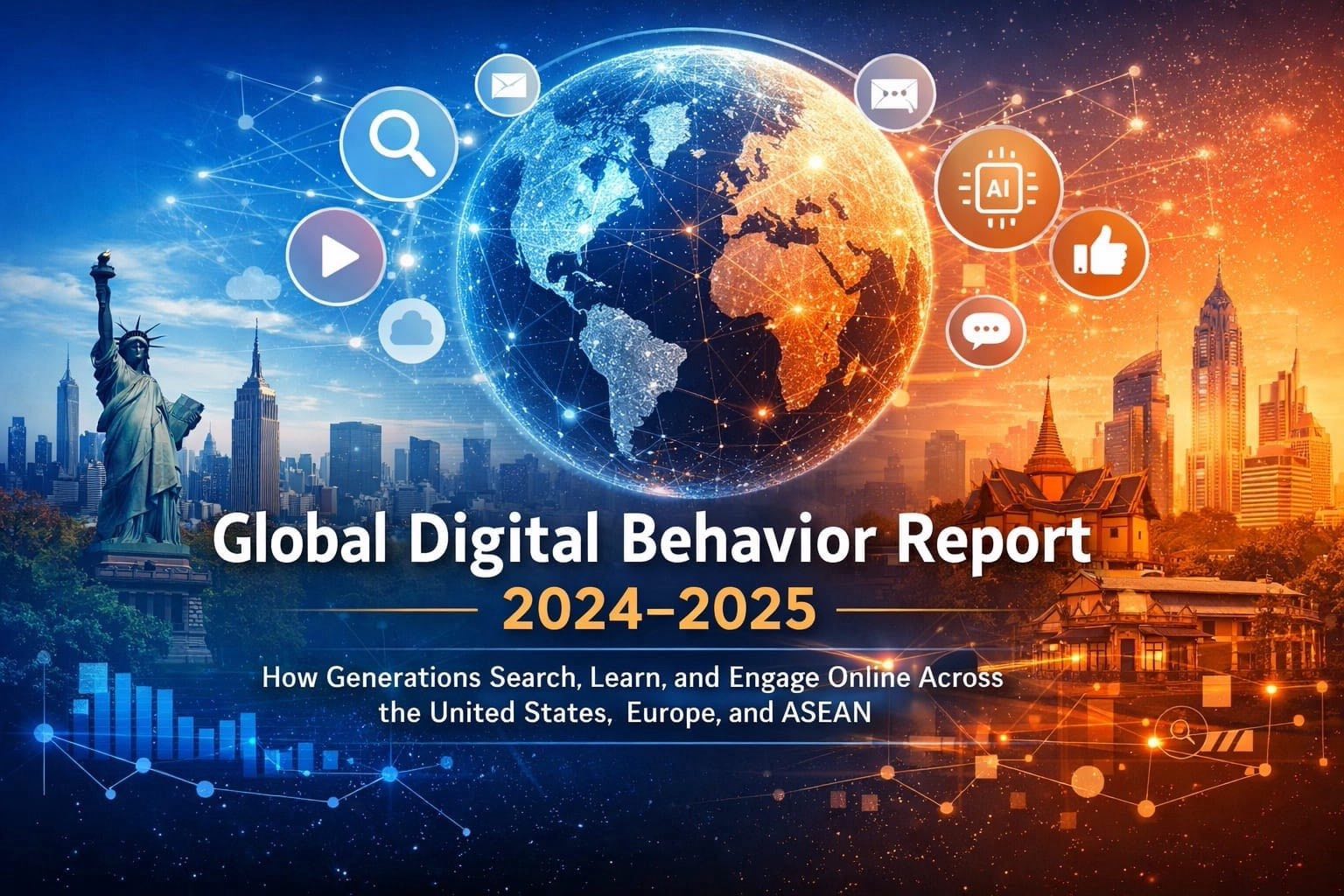
Introduction: Understanding the Digital Rhythm of Society
In the past two decades, the internet has evolved from a technological novelty into the central nervous system of modern society. How people search for information, communicate ideas, and explore opportunities online now reflects broader patterns in economics, politics, culture, and generational identity.
By 2025, global connectivity has reached unprecedented levels. According to the International Telecommunication Union, roughly three-quarters of the world’s population now has access to the internet, representing nearly six billion connected individuals. At the same time, more than two billion people remain offline, reminding policymakers that the digital divide remains one of the defining challenges of the modern era.
The rapid expansion of digital connectivity has created an entirely new environment for information discovery. Traditional search engines such as Google continue to serve as the backbone of the global information system. Yet alongside them, social media platforms, video networks, and emerging artificial intelligence tools are transforming how people encounter and evaluate knowledge.
Understanding these changes is essential not only for technology companies and marketers but also for governments, educators, researchers, and media institutions that rely on digital communication to inform and engage the public.
The Expanding Global Digital Landscape
Digital participation is now one of the most powerful drivers of economic and social transformation. The World Bank estimates that digital technologies account for roughly 15 percent of global economic output, and their influence continues to grow as more services move online.
In highly developed economies such as the United States and many European countries, internet penetration has reached near universal levels. In several European nations, household connectivity now exceeds 95 percent, allowing citizens to rely heavily on digital platforms for news, banking, education, and civic engagement.
Meanwhile, emerging regions particularly Southeast Asia are experiencing some of the fastest digital growth in the world. Mobile connectivity and smartphone adoption have accelerated digital participation across ASEAN, enabling millions of people to access online services for the first time. The World Bank and the ASEAN Secretariat both identify the region’s digital economy as one of the fastest expanding globally, driven by entrepreneurship, e-commerce, and mobile technology.
These structural developments form the foundation of the changing patterns of search and digital behavior observed between 2024 and 2025.
A New Era of Information Discovery
For much of the internet’s history, information discovery followed a predictable path: users opened a search engine, entered a query, and explored a list of websites. That model is now evolving.
Today’s internet users increasingly encounter information through multiple channels simultaneously. A person may begin researching a topic through a search engine, encounter explanations through a short video on a social platform, and later explore deeper analysis through news outlets or academic articles.
This multi-platform discovery process reflects the changing nature of digital communication. Information no longer flows only through traditional websites. It now circulates through video creators, online communities, social networks, and increasingly through artificial intelligence systems capable of synthesizing information from multiple sources.
While this transformation offers unprecedented access to knowledge, it also raises new challenges regarding credibility, verification, and digital literacy.
Image

Generations and the Digital Experience
One of the most important insights from the 2024-2025 data is that people do not experience the digital world in the same way. Age plays a powerful role in shaping how individuals seek information, whom they trust, and which platforms they prefer.
For younger generations, particularly Gen Z, the internet is often experienced through video and community-driven content. Short-form videos, creator explanations, and peer recommendations allow information to be delivered quickly and in a highly visual format. This style of learning reflects a generation raised in an environment where speed, creativity, and social connection are central to communication.
Millennials, who came of age during the expansion of the internet, often combine several methods of discovery. They continue to rely on search engines when researching professional, financial, or educational topics, but they also engage heavily with social media platforms for lifestyle ideas, product recommendations, and cultural trends.
For Gen X and Baby Boomers, the digital environment remains more structured. These generations frequently prefer traditional search engines and established media institutions when seeking information related to healthcare, finance, or public policy. Their approach reflects a strong emphasis on credibility, reliability, and depth of information.
It is important to recognize that this preference for reliability makes senior adults a vital audience in the digital ecosystem. As more public services, healthcare resources, and financial tools move online, ensuring that digital platforms remain accessible and trustworthy for older users becomes a key policy priority.
Regional Differences in Digital Behavior
Digital behavior is also shaped by regional economic and cultural realities.
In the United States, search patterns often reflect a mixture of technological innovation and economic concern. Topics related to artificial intelligence, job mobility, inflation, and financial planning frequently dominate digital conversations.
Across Europe, search activity tends to reflect the continent’s political and social environment. Energy policy, geopolitical tensions, climate initiatives, and public policy debates are common themes in digital search data.
In the ASEAN region, digital engagement is strongly influenced by mobile connectivity and youthful populations. Online searches frequently center on entrepreneurship, e-commerce opportunities, entertainment culture, and cross-border employment.
The Philippines provides a clear example of this mobile-driven digital ecosystem. Recent digital reports indicate that the country has more than 95 million active social media identities and internet penetration exceeding 80 percent, demonstrating how deeply digital communication has become embedded in daily life.
The Emerging Role of Artificial Intelligence
Perhaps the most significant technological development shaping digital behavior between 2024 and 2025 is the rapid integration of artificial intelligence into search systems. AI-assisted tools are increasingly capable of summarizing complex information, answering detailed questions, and synthesizing knowledge from multiple sources. This capability has the potential to transform how individuals interact with the internet.
However, it also raises important questions for policymakers and researchers. As automated systems play a larger role in shaping digital information flows, societies must consider how to ensure transparency, accountability, and accuracy within these technologies. Governments, international organizations, and technology companies are therefore beginning to develop frameworks that promote responsible AI development and trustworthy digital ecosystems.
Image

Implications for Policymakers and Institutions
The transformation of digital behavior carries important implications for governments, educational institutions, and media organizations.
Public communication strategies must recognize that citizens now receive information through multiple digital environments rather than a single platform. Messages designed for traditional search engines may not reach audiences who primarily consume information through social media or video platforms.
Educational institutions must also adapt to evolving learning habits. Younger audiences often absorb knowledge through short-form explanations, while older learners may prefer detailed written analysis. Effective education therefore requires a balance between accessibility and intellectual rigor.
Media institutions face similar challenges. Journalism must remain credible and evidence-based while adapting to new distribution channels where audiences encounter news in a wide range of formats.
Conclusion: A Shared Digital Future
The digital landscape of 2024-2025 reveals a world that is more connected than ever before, yet increasingly diverse in how people interact with information.
Billions of individuals now participate in the global digital ecosystem, but their paths to knowledge differ depending on generation, geography, and technological access. Younger users navigate visual and creator-driven environments. Older generations continue to rely on trusted sources and structured search systems. Meanwhile, artificial intelligence is reshaping the very architecture of digital knowledge.
For policymakers, scholars, and institutions, the challenge ahead is clear: societies must ensure that the expanding digital world remains inclusive, trustworthy, and accessible to people of all ages. Understanding how people search for information today is not merely a technological question. It is a window into how societies learn, communicate, and shape the future.
Looking Toward the Digital World of 2030
As the global digital ecosystem continues to evolve, the trends observed between 2024 and 2025 offer an early glimpse into the direction of the next decade. By 2030, the internet will not simply be a network of websites or social platforms it will function as an integrated knowledge environment where artificial intelligence, digital infrastructure, and human creativity converge.
International projections from organizations such as the International Telecommunication Union, World Bank, and United Nations Conference on Trade and Development suggest that global internet adoption will continue to expand, potentially connecting nearly 90 percent of the world’s population by the end of the decade. This expansion will be driven largely by improvements in mobile connectivity, satellite internet systems, and digital infrastructure investments across developing regions.
At the same time, artificial intelligence is expected to become deeply embedded in everyday digital interactions. Search engines will increasingly function as intelligent assistants, capable of synthesizing information, providing contextual insights, and guiding users through complex decision-making processes. Rather than navigating lists of websites, users may increasingly engage in conversational interactions with AI systems that interpret questions, evaluate data, and generate informed responses.
Yet the expansion of digital technology will also raise important societal questions. Policymakers and institutions will face growing responsibilities to ensure that digital systems remain transparent, trustworthy, and inclusive. The challenge will not only be technological but ethical: ensuring that algorithms respect privacy, prevent misinformation, and protect the integrity of public discourse.
Another defining issue for the coming decade will be digital inclusion across generations. As societies age, particularly in Europe, North America, and parts of Asia, governments will need to ensure that older adults are not left behind in an increasingly digital world. Accessible design, digital literacy programs, and trusted online services will become essential to maintaining social participation for senior populations.
At the same time, younger generations will continue to shape the cultural landscape of the internet. Their preference for visual communication, community interaction, and creator-driven knowledge sharing is likely to redefine how information spreads globally. Educational institutions and knowledge platforms may increasingly adopt hybrid formats that combine traditional scholarship with dynamic digital storytelling.
By 2030, the internet will likely function as a global knowledge infrastructure, supporting economic development, innovation, education, and civic participation on a scale never before seen in human history. The choices made today by governments, institutions, and technology leaders will determine whether that infrastructure strengthens democratic societies and inclusive growth or deepens existing inequalities.
Ultimately, the evolution of digital behavior is not merely about technology. It reflects the deeper ways in which humanity seeks knowledge, builds communities, and navigates an increasingly complex world. Understanding these patterns today allows societies to prepare for the opportunities and responsibilities that will define the digital decade ahead.
Suggested Citation
Dr. Mariza Lendez, DBA. (2025). Global digital behavior report 2024-2025: How generations search, learn, and engage online across the United States, Europe, and ASEAN. Independent research report.
Image

Acknowledgment to the contributors on FreePik for these photos.
References
International Telecommunication Union (2025). Facts and Figures: Global Internet Connectivity.
World Bank (2024). Digital Progress and Trends Report.
UNCTAD (2024). Digital Economy Report.
Eurostat (2024). Digital Economy and Society Statistics.
ASEAN Secretariat (2024). ASEAN Digital Economy Framework.
DataReportal / We Are Social (2025). Digital 2025 Global Overview Report.
Pew Research Center (2025). Social Media Use Across Generations.