Rethinking Retirement in the Longevity Era Series: Why Retirement Needs Reinvention | The Purpose Gap in Aging Societies | The Untapped Intelligence of Retirees | What Ikigai and Bayanihan Can Teach the World About Purpose After Retirement | Designing Communities for the Re-Tire Generation
“Rethinking Retirement in the Longevity Era" is a series exploring how longer lifespans are reshaping the meaning of retirement, purpose, and community in aging societies.
The Silent Departure of Experience
Every year, millions of professionals across the world leave the workforce upon reaching retirement age. For many, this transition represents a well-earned opportunity to rest after decades of dedication and labor. Yet from a societal perspective, something remarkable happens during this transition: a vast reservoir of knowledge quietly disappears from active circulation.
Retirees carry with them decades of accumulated expertise practical knowledge gained through experience, decision-making, and problem-solving across complex situations. Economists and sociologists often refer to this type of experience-based understanding as tacit knowledge, a form of intelligence that is difficult to document but invaluable in practice. When individuals retire, this knowledge rarely vanishes. Instead, it simply becomes less visible.
Tacit Knowledge: The Invisible Asset
Unlike technical skills that can be recorded in manuals or training programs, tacit knowledge develops through lived experience. It includes judgment, intuition, leadership insight, and the ability to navigate uncertainty. Organizations often rely heavily on this form of intelligence, particularly in professions that require mentorship, negotiation, or complex decision-making.
Research in organizational studies has long recognized the importance of tacit knowledge transfer between generations of workers. Without deliberate mechanisms for sharing this knowledge, institutions risk losing valuable insight when experienced individuals leave their roles (Nonaka & Takeuchi, 1995).
Contemporary research on aging workforces similarly emphasizes the need for structured intergenerational knowledge exchange to preserve institutional expertise and social capital (OECD, 2023). In aging societies, this challenge becomes more significant as larger cohorts of experienced workers transition into retirement.
Image

The Longevity Paradox
The world today is experiencing a demographic transformation often referred to as the longevity revolution. According to the United Nations, the global population aged sixty-five and older is expected to more than double by 2050 (United Nations Department of Economic and Social Affairs, 2023).
Yet many social systems still treat retirement as a sharp boundary between productivity and inactivity. This creates what some researchers describe as a longevity paradox: societies are gaining decades of life expectancy while simultaneously removing experienced individuals from meaningful roles. The result is a growing gap between the capabilities of older adults and the opportunities available for them to contribut
Lifespan Intelligence as a Social Resource
Beyond professional expertise, retirees often possess another valuable quality: perspective.
Psychologists studying adult development note that life experience contributes to forms of lifespan intelligence that include emotional regulation, ethical reasoning, and the ability to view complex issues from multiple perspectives (Baltes & Staudinger, 2000). In addition, recent research similarly suggests that lifespan intelligence-related capacities such as reflective judgment and emotional resilience tend to strengthen through accumulated life experience (Ardelt, 2022; Grossmann et al., 2023).
These qualities become particularly valuable in mentoring relationships, community leadership, and intergenerational collaboration. In many traditional societies, elders historically played important roles as advisers, storytellers, teachers, and guardians of cultural knowledge.
While modern societies have evolved in many ways, the need for guidance and perspective has not disappeared. If anything, the complexity of contemporary challenges from technological disruption to social fragmentation may make these forms of lifespan intelligence more relevant than ever.
Image

Reimagining the Role of Retirees
Recognizing retirees as holders of valuable knowledge invites a shift in perspective. Instead of viewing retirement solely as an exit from productivity, societies may begin to view it as a transition into different forms of contribution. Examples already exist in various contexts:
• retired professionals mentoring young entrepreneurs
• former educators tutoring students
• experienced engineers advising innovation projects
• retired civil servants guiding public policy discussions
• community elders supporting local governance initiatives
These roles allow retirees to remain engaged while sharing the insights gained through decades of lived experience. Such participation benefits not only the individuals involved but also the communities and institutions that gain access to this accumulated knowledge.
The Untapped Potential of Aging Societies
As populations continue to age, societies face an important decision. They can either treat retirement as a period of disengagement, allowing valuable knowledge to fade quietly into the background. Or they can recognize older adults as a powerful resource individuals whose experience, judgment, and mentorship can contribute meaningfully to social and economic life.
Harnessing this potential requires creativity in designing new opportunities for participation, whether through community programs, mentorship networks, advisory roles, or intergenerational collaboration. These efforts not only benefit younger generations but also support the well-being of retirees themselves by reinforcing purpose, connection, and dignity in later life.
Image
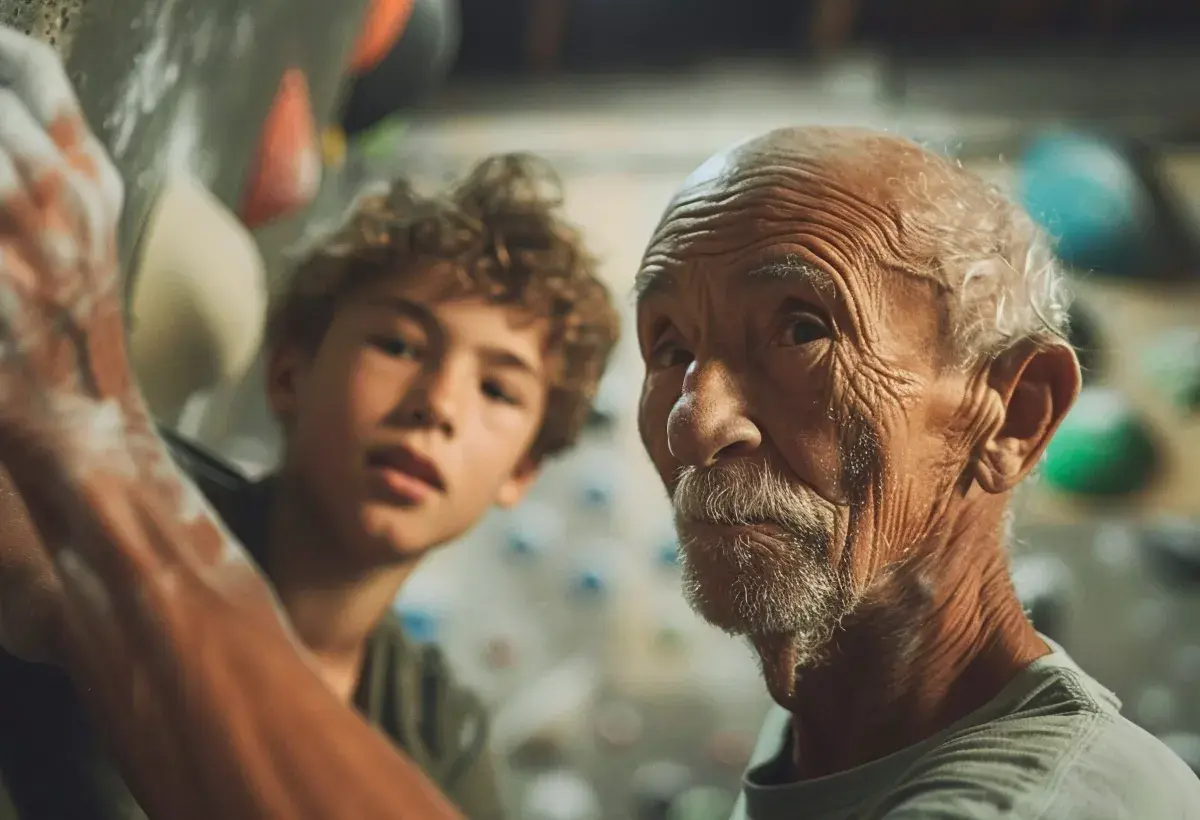
Looking Ahead: From Experience to Contribution
Recognizing the intelligence carried by retirees invites a deeper reflection.
For decades, these individuals have navigated workplaces, families, and communities. They have solved problems, made difficult decisions, adapted to changing technologies, and witnessed social transformations across generations. The knowledge accumulated through such lived experience often referred to as tacit knowledge cannot easily be replaced by manuals, algorithms, or training programs.
Yet in many societies, this reservoir of insight quietly withdraws from public life the moment individuals step away from formal employment. It is worth pausing to consider the scale of what is being set aside. Entire careers sometimes spanning forty or fifty years contain lessons learned through trial and error, judgment sharpened through experience, and wisdom developed through confronting real-world complexity.
When millions of individuals reach retirement each year, societies are not simply losing workers. They are shelving decades of lived intelligence. If experience is one of humanity’s most valuable resources, why do so many systems allow it to fade into the background precisely when it has reached its greatest depth?
The challenge facing aging societies is therefore not only about supporting retirees, but about reimagining how experience continues to circulate within communities. Creating meaningful pathways for older adults to mentor, advise, teach, and participate may transform retirement from a moment of departure into a stage of renewed contribution.
In the next article, we will explore how communities themselves can play a crucial role in making this possible through the intentional design of environments that support participation, purpose, and intergenerational connection.
Because the future of aging may depend not only on how long we live, but on how we continue to belong, contribute, and share the wisdom accumulated across a lifetime.
Image

Acknowledgment to the Contributors on Pixabay, thank you for these photos.
Suggested Citation: Lendez, M. (2026). Silver economy. Rethinking retirement in the Longevity Era: The Untapped Intelligence of Retirees. Developer of Ikigai-Bayanihan purpose-driven retirement framework.
About the Author:
Dr. Mariza Lendez, DBA, is a researcher in aging studies and the Silver Economy. She is the developer of the Ikigai-Bayanihan Purpose-Driven Retirement Model and founder of Global Retirement Radar, a platform exploring retirement, longevity, and aging societies.
Explore the Ikigai-Bayanihan Retirement Model presented by Chikicha Co-founder:
https://www.chikicha.com/chikicha-co-founder-present-ikigai-bayanihan-retirement-model-iafor-egen-2026
Rethinking Retirement in the Longevity Era Series:
- Why Retirement Needs Reinvention
- The Purpose Gap in Aging Societies
- The Untapped Intelligence of Retirees
- What Ikigai and Bayanihan Can Teach the World About Purpose After Retirement
- Designing Communities for the Re-Tire Generation
References
Baltes, P. B., & Staudinger, U. M. (2000). Wisdom: A metaheuristic for orchestrating mind and virtue. American Psychologist.
Ardelt, M. (2022). Wisdom and well-being in later life. The Journals of Gerontology: Psychological Sciences.
Grossmann, I., et al. (2023). Wisdom and reasoning across the lifespan. Nature Human Behaviour.
Nonaka, I., & Takeuchi, H. (1995). The Knowledge-Creating Company. Oxford University Press.
Organisation for Economic Co-operation and Development (OECD). (2023). Promoting an Age-Inclusive Workforce. Paris: OECD Publishing.
United Nations Department of Economic and Social Affairs (UNDESA). (2023). World Social Report 2023: Leaving No One Behind in an Ageing World.
World Health Organization. (2021). Decade of Healthy Ageing 2021–2030.