From Bahay Kubo Harmony to Urban Compression
Part 1 of the SILVER CHALLENGES AND OPPORTUNITIES Series
The Compression of Togetherness
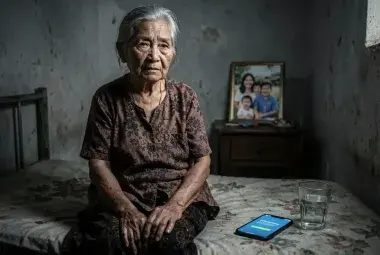
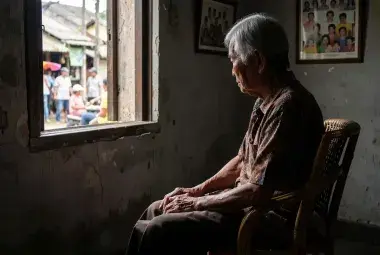
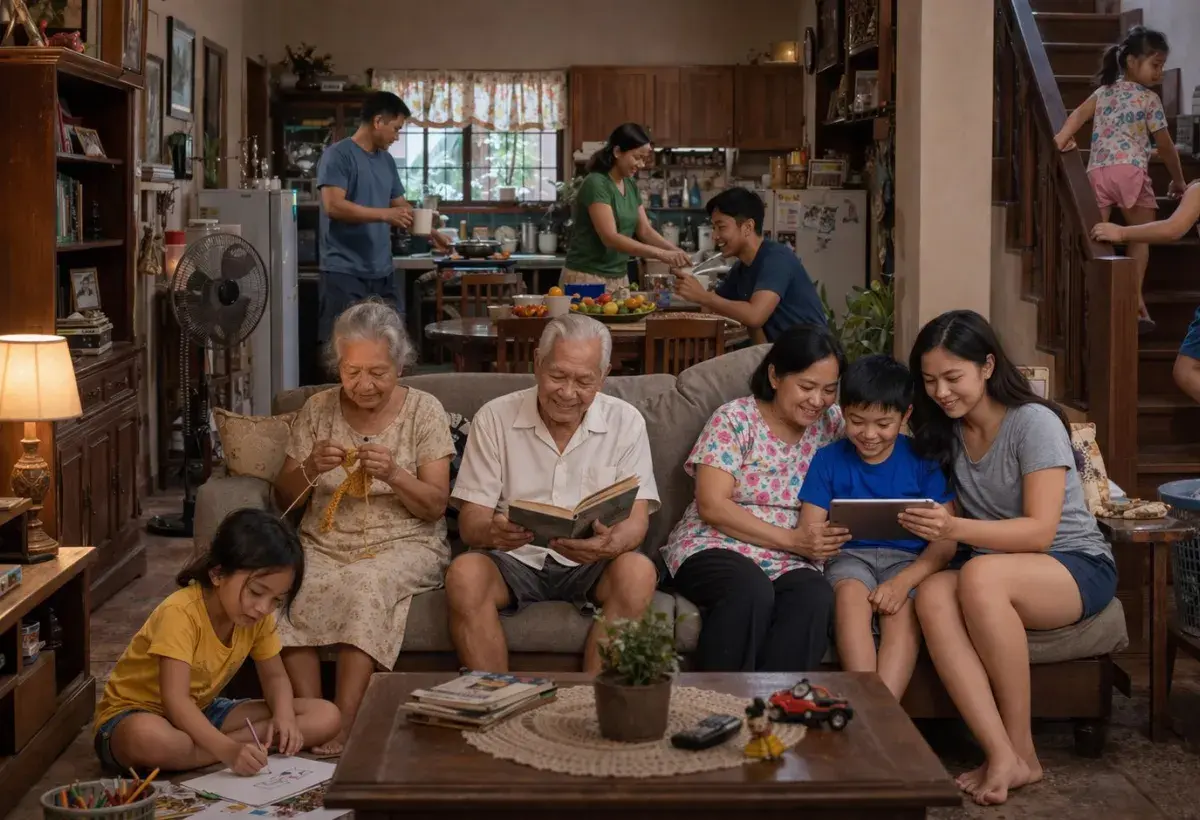
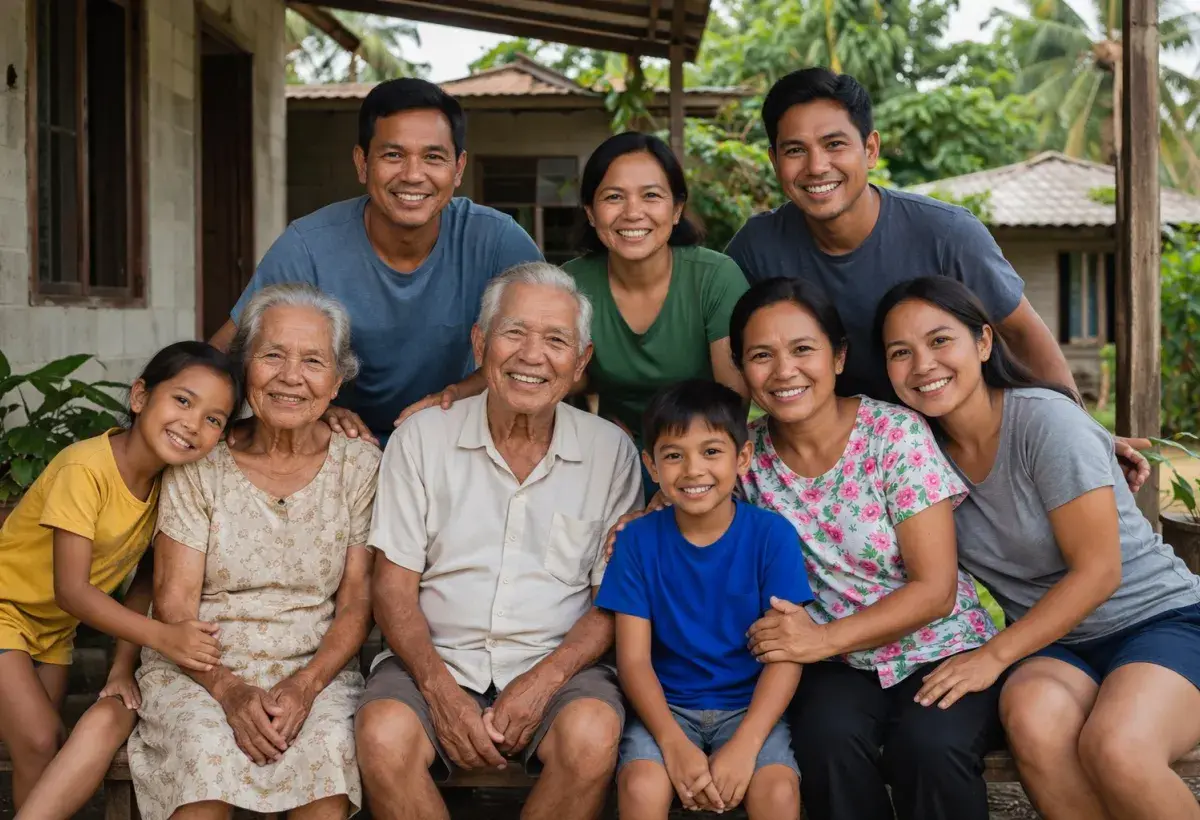
Multigenerational living has long been a defining feature of Filipino society, rooted in values of pagmamahal, utang na loob, and collective responsibility. Historically, the bahay kubo symbolized openness, it is a shared space balanced by natural ventilation, fluid boundaries, and a rhythm of life that allowed both interaction and solitude.
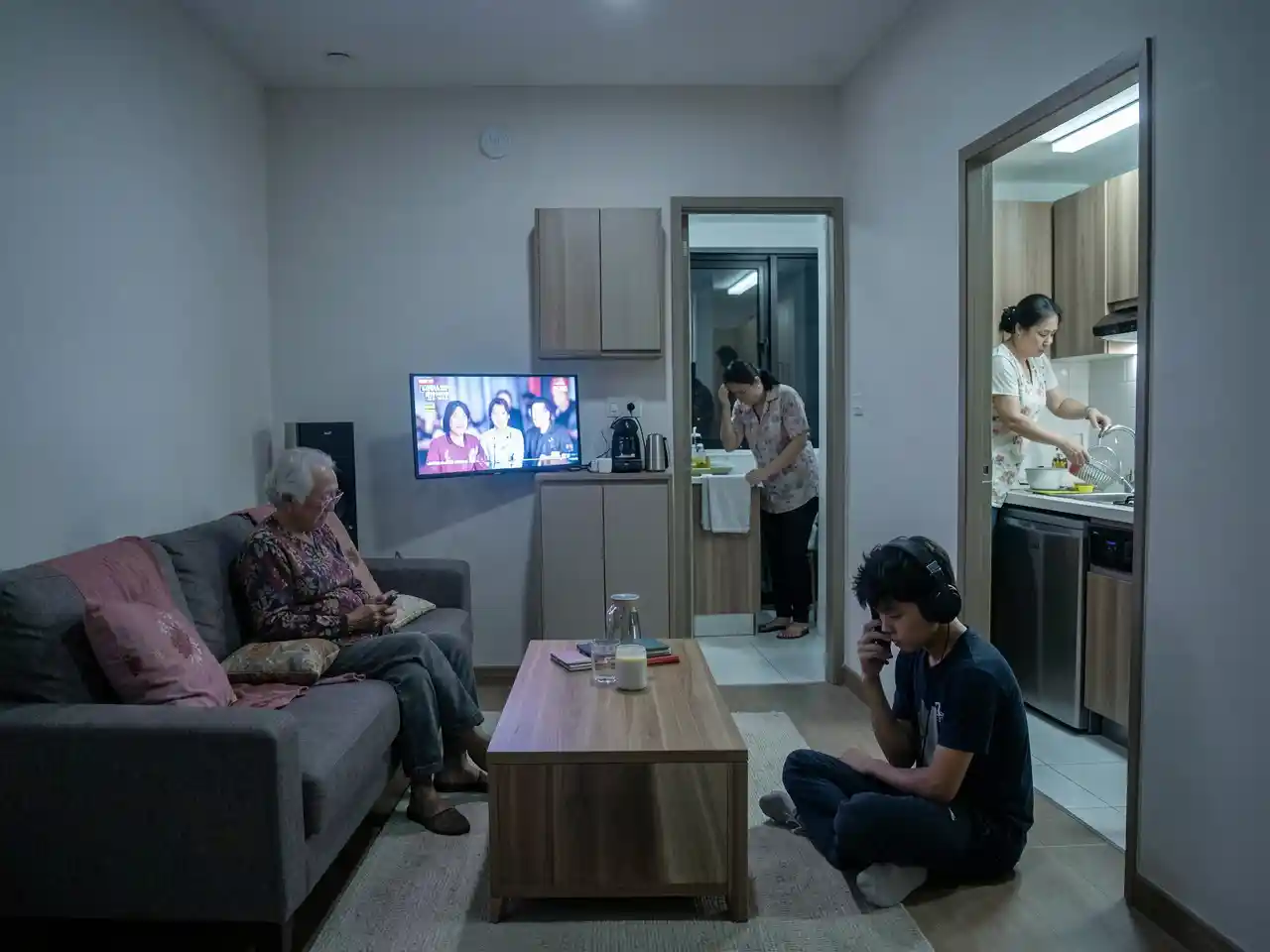
In contemporary urban settings, this model has been compressed into high-density housing environments. Condominium units designed for nuclear families now accommodate three generations, fundamentally altering the experience of shared living. What was once organic coexistence has, in many cases, become structural strain.
Evidence from housing and urban development studies supported by the Asian Development Bank (2023) highlights the increasing prevalence of overcrowded living conditions in Metro Manila, driven by rising housing costs and limited urban space. This shift suggests that multigenerational living is no longer purely cultural—it is increasingly economic.
The Mental Health-Privacy Tension
The convergence of multiple generations within confined spaces introduces a critical tension between cultural expectations and psychological needs. Privacy, once accommodated through spatial design and lifestyle patterns, is now constrained by physical limitations.
Emerging research from leading Philippine institutions, including the University of the Philippines, underscores the importance of personal space and uninterrupted time for emotional regulation and mental well-being, particularly among younger populations navigating academic, digital, and social pressures.
Globally, the World Health Organization (2021) identifies overcrowding and lack of personal space as contributing factors to stress, anxiety, and interpersonal conflict within households. These findings indicate that the challenge is not cultural breakdown, but environmental mismatch.
Intergenerational Friction and Evolving Norms
As social values evolve, so do expectations within the household. Younger generations are increasingly vocal about boundaries, autonomy, and mental health—concepts that were historically secondary to collective harmony.
This shift has created friction, not necessarily due to disrespect, but due to misaligned frameworks of understanding. Older generations may interpret assertion as defiance, while younger individuals perceive traditional expectations as restrictive.
Studies on intergenerational dynamics in Southeast Asia suggest that these tensions are common in rapidly modernizing societies, where cultural continuity intersects with globalized values. The challenge, therefore, is not generational opposition, but the absence of structured dialogue and adaptive norms.
Image
The Hidden Cost of Invisible Labor
Within multigenerational households, caregiving responsibilities often concentrate disproportionately on women. This includes elder care, childcare, household management, and increasingly, participation in the formal workforce.
Data from the World Bank (2023) confirms that women in the Philippines perform a significantly higher share of unpaid care work compared to men. While multigenerational living can distribute economic burdens, it may simultaneously intensify invisible labor, leading to physical exhaustion and emotional burnout.
This dynamic reveals a critical imbalance: while the household functions as a support system, it can also become a site of unequal responsibility if roles are not clearly defined and shared.
Rethinking the Structure of “Family First”
The tension within modern Filipino households does not stem from the failure of values, but from the misalignment between traditional ideals and contemporary realities.
Examples of adaptive practices are emerging. Some families implement structured routines, shared responsibilities, and designated quiet periods to manage space and reduce conflict. These are not rejections of tradition, but evolutions of it - aligning cultural values with present-day constraints.
The principle of “family first” must therefore be reframed. It cannot be sustained through sacrifice alone. It must be supported by systems that ensure:
- equitable distribution of responsibilities
- respect for individual boundaries
- and intentional communication across generations
Without these, collective living risks becoming unsustainable.
Toward a Sustainable Model of Filipino Coexistence
Multigenerational living remains a potential strength of Filipino society. It fosters resilience, continuity, and mutual support. However, its sustainability depends on structural adaptation.
Urban planning, housing policy, and social norms must evolve to reflect changing demographic and economic realities. At the household level, families must transition from implicit expectations to explicit agreements where roles, space, and boundaries are clearly negotiated.
The question is no longer whether families should live together, but how they can live together without compromising well-being.
A redefined model of coexistence, one that balances connection with autonomy offers a path forward. In this model, “pagmamahal” is not measured by endurance alone, but by the ability to create an environment where each member can function with dignity.
Image
Suggested Citation
Lendez, M. (2026). Multigenerational living in the Philippines: When “family first” becomes structural strain. Part of the Silver Challenges and Opportunities Series. Developed within the Ikigai-Bayanihan Purpose-Driven Retirement Framework.
References
Asian Development Bank. (2023). Addressing urban housing challenges in Metro Manila.
World Bank. (2023). Unpaid care and domestic work in the Philippines.
World Health Organization. (2021). Global report on ageism.
University of the Philippines. (2024). Studies on mental health and spatial stress in urban households. (Note: Ensure exact paper title upon final submission)
Philippine Statistics Authority. (2023). Family income and expenditure survey.
Cast Your Vote
Image