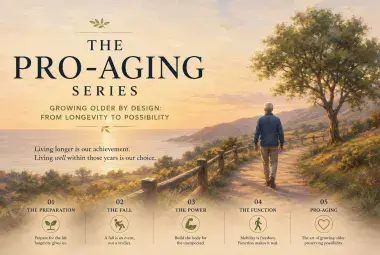
Rethinking Retirement in the Longevity Era Series: Why Retirement Needs Reinvention | The Purpose Gap in Aging Societies | The Untapped Intelligence of Retirees | What Ikigai and Bayanihan Can Teach the World About Purpose After Retirement | Designing Communities for the Re-Tire Generation
“Rethinking Retirement in the Longevity Era" is a series exploring how longer lifespans are reshaping the meaning of retirement, purpose, and community in aging societies.
The Longevity Era Has Arrived
Human life expectancy has increased dramatically over the past century. According to the United Nations Department of Economic and Social Affairs, the global population aged 60 and above is expected to exceed 2.1 billion by 2050, more than double the number recorded in 2020.
This demographic transformation marks the arrival of what many researchers now describe as the longevity era a period in human history where living into one’s seventies, eighties, and beyond is becoming increasingly common. While longer lives represent one of humanity’s greatest achievements, they also raise important questions about how societies organize the later stages of life.
Most retirement systems, after all, were designed in a very different era.
A Model Built for a Different Century
The traditional retirement model emerged during the industrial age when life expectancy was significantly shorter and retirement typically lasted only a few years.
The structure was simple:
Education → Employment → Retirement → Dependency
Under this model, individuals spent most of their adult lives working, followed by a relatively brief period of retirement supported by pensions or family. Today, however, this structure no longer reflects demographic reality. In many countries, individuals may spend 20 to 30 years in retirement, raising fundamental questions about identity, purpose, and participation in later life.
The Growing Challenges of the Current System
Several emerging challenges suggest that the traditional retirement model may be increasingly misaligned with modern longevity.
-
Loss of Identity After Career Transition
For many individuals, professional life provides not only income but also structure, social interaction, and a sense of identity. When employment ends abruptly, some retirees struggle to redefine their role in society.
Image

-
Social Isolation and Loneliness
Research from the World Health Organization and the National Academies of Sciences has identified social isolation as a growing public-health concern among older adults. Loneliness is associated with increased risks of depression, cognitive decline, and other health challenges.
-
Underutilization of Experience and Knowledge
Retirees often possess decades of professional experience and practical knowledge. Yet many societies lack systems that allow older adults to continue sharing these insights in meaningful ways.
-
Economic Pressures on Pension Systems
Population aging also places significant pressure on pension systems, particularly in countries where the ratio between working-age populations and retirees is declining. These trends suggest that societies may need to reconsider how retirement is defined and structured.
Rethinking the Role of Older Adults
In response to these challenges, researchers and international organizations are increasingly exploring new ways of understanding aging and later life. Concepts such as active aging, productive aging, and the silver economy emphasize the continued participation of older adults in social, economic, and community life.
Rather than viewing retirement solely as a period of withdrawal, these perspectives highlight the potential for older adults to remain engaged through mentoring, volunteering, community leadership, and knowledge sharing.
Such approaches recognize that longer lives can create opportunities for new forms of contribution and participation.
Image

A Transition, Not an Ending
One of the most important shifts in thinking about retirement involves reframing it as a transition rather than an endpoint.
Instead of marking the end of productive life, retirement may increasingly represent a change in roles and priorities a movement from the pressures of full-time employment toward activities that emphasize meaning, community engagement, and personal fulfillment.
This perspective aligns with emerging discussions within the fields of gerontology, public policy, and urban planning, all of which are beginning to explore how societies can adapt to the realities of longer lives.
The Opportunity of the Longevity Era
The challenge facing modern societies is not simply how to support aging populations, but how to design systems that allow longer lives to remain meaningful and socially connected.
If retirement continues to be viewed primarily as a period of dependency, the social and economic pressures associated with aging populations may intensify. However, if retirement is reimagined as a second phase of life with opportunities for contribution, learning, and community engagement, the longevity era may offer new possibilities for individuals and societies alike.
Looking Ahead
As the global population continues to age, policymakers, communities, and families will increasingly need to reconsider how the later stages of life are structured. The conversation about retirement is therefore shifting from one focused solely on financial security toward a broader discussion about purpose, participation, and the evolving role of older adults in society.
In the longevity era, the question may no longer be whether people retire. The more important question may be what retirement becomes.
Image

Conclusion: A New Conversation About Retirement
The longevity era is quietly reshaping one of the most familiar milestones of human life. Retirement, once understood as a short period of rest after decades of work, now stretches across decades for many people. Yet the systems and expectations surrounding retirement have not fully adapted to this new reality.
As populations age and life expectancy increases, the question facing societies is no longer simply how to support people financially after they stop working. The deeper question is how individuals can continue to live meaningful, connected, and purposeful lives during the second half of the human lifespan.
Reimagining retirement does not necessarily mean abandoning the idea of rest or personal freedom. Rather, it invites a broader conversation about how later life can remain socially engaged, intellectually active, and connected to community. Across cultures and disciplines, researchers and policymakers are beginning to explore new perspectives on aging ones that emphasize participation, contribution, and purpose rather than withdrawal. But this shift raises another important question.
If traditional career roles often provide structure, identity, and meaning during the first half of life, what replaces that sense of purpose once those roles come to an end? This emerging challenge is sometimes described as the “purpose gap” in aging societies a quiet but growing issue that affects many retirees around the world.
In the next article, we will explore this question more deeply: “why many retirees struggle to find purpose after leaving the workforce, and why purpose may be one of the most important ingredients of healthy and fulfilling aging”
Image

Suggested citation
Lendez, M. (2026). Rethinking Retirement in the Longevity Era: Why Retirement Needs Reinvention. Developer of Ikigai-Bayanihan purpose-driven retirement framework.
About the Author
Dr. Mariza Lendez, DBA, is a researcher in aging studies and the Silver Economy. She is the developer of the Ikigai-Bayanihan Purpose-Driven Retirement Model and founder of Global Retirement Radar, a platform exploring retirement, longevity, and aging societies.
Explore the Ikigai-Bayanihan Retirement Model presented by Chikicha Co-founder:
https://www.chikicha.com/chikicha-co-founder-present-ikigai-bayanihan-retirement-model-iafor-egen-2026
Acknowledgment to the Contributors on Pixabay, thank you for your photos.
Rethinking Retirement in the Longevity Era Series:
- Why Retirement Needs Reinvention
- The Purpose Gap in Aging Societies
- The Untapped Intelligence of Retirees
- What Ikigai and Bayanihan Can Teach the World About Purpose After Retirement
- Designing Communities for the Re-Tire Generation
References
AARP Public Policy Institute. (2023). The Longevity Economy Outlook. Washington, DC: AARP.
Butler, R. N. (1982). The concept of productive aging. The Gerontologist.
European Commission. (2021). The Silver Economy Study: How to stimulate the economy by serving the needs of older people. Brussels: European Commission.
Holt-Lunstad, J. (2022). Social connection as a public health issue: The evidence and a systemic framework. Annual Review of Public Health.
Murthy, V. H. (2023). Our Epidemic of Loneliness and Isolation: The U.S. Surgeon General’s Advisory on the Healing Effects of Social Connection and Community. Washington, DC: U.S. Department of Health and Human Services.
National Academies of Sciences, Engineering, and Medicine. (2023). Addressing Social Isolation and Loneliness in Older Adults. Washington, DC: National Academies Press.
Organisation for Economic Co-operation and Development (OECD). (2023). Pensions at a Glance 2023. Paris: OECD Publishing.
Organisation for Economic Co-operation and Development (OECD). (2024). Promoting an Age-Inclusive Workforce.Paris: OECD Publishing.
United Nations Department of Economic and Social Affairs (UNDESA). (2023). World Population Prospects 2022: Summary of Results. New York: United Nations.
United Nations Department of Economic and Social Affairs (UNDESA). (2023). World Social Report 2023: Leaving No One Behind in an Ageing World. New York: United Nations.
United Nations. (2022). Madrid International Plan of Action on Ageing (MIPAA)+20 Review and Appraisal. New York: United Nations.
World Health Organization. (2021). Decade of Healthy Ageing 2021–2030. Geneva: WHO.
World Health Organization. (2022). Global Report on Ageism. Geneva: WHO.
World Health Organization. (2023). Ageing and Health Fact Sheet. Geneva: WHO.