Part 2 of the SILVER MIGRATION Series
A Model Under Pressure
Europe has long been regarded as one of the most advanced regions in safeguarding the dignity and well-being of older adults. Across the continent, systems have been built on principles of universal access, social protection, and autonomy. Models such as Sweden’s “aging in place” approach and the Netherlands’ community-based care systems demonstrate how policy, infrastructure, and culture can align to support meaningful aging.
The European Commission (2021) emphasized that inclusive urban design, accessible services, and lifelong participation are central to sustaining quality of life in older age. Similarly, the World Health Organization (2023) reported that integrated care systems and community-based services significantly improved independence and well-being among older populations.
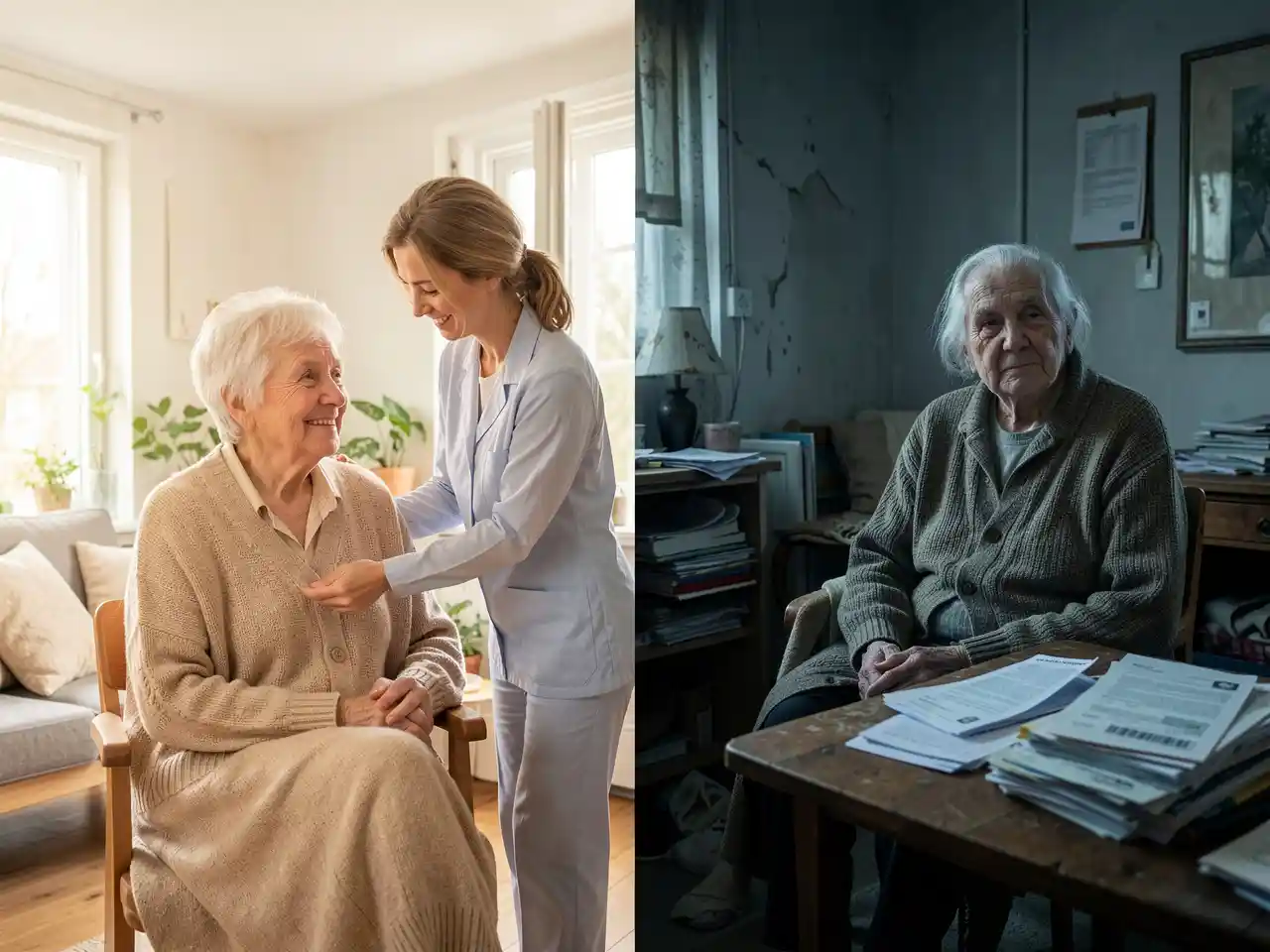
Yet beneath these achievements lies a growing imbalance. Europe’s elder care systems, while advanced, are increasingly strained by demographic shifts, workforce shortages, and uneven policy implementation across regions.
Diverging Models Across the Continent
Across Europe, several countries continue to serve as global benchmarks. The Nordic model exemplified by Sweden, Norway, and Denmark has been characterized by universal access to care services, strong municipal responsibility, and sustained public investment. These systems enabled older adults to remain active participants in society while receiving structured support (European Commission, 2021; World Health Organization, 2023).
Germany’s long-term care insurance system, introduced in 1995, provided a hybrid model that balanced public responsibility with individual choice. The World Health Organization (2023) noted that allowing beneficiaries to choose between cash benefits and in-kind services increased flexibility and family involvement in care decisions.
The Netherlands has distinguished itself through its emphasis on community-based care, particularly through models such as Buurtzorg, which rely on small, self-managed care teams. The European Commission (2021) highlighted that integrating healthcare with local community networks improved responsiveness and patient satisfaction.
However, these successes are not uniformly distributed. In Southern Europe particularly Spain, Italy, and Greece, elder care systems have remained heavily dependent on unpaid family caregivers, with limited public infrastructure and delayed policy implementation. The United Nations (2023) reported that fiscal constraints and demographic pressures slowed the expansion of formal care services in these regions.
In Eastern Europe, including countries such as Poland, Romania, and Bulgaria, formal long-term care systems remain underdeveloped. The World Health Organization (2023) found that caregiving continues to be treated largely as a private family responsibility, with limited institutional support and workforce capacity.
Image

Systemic Pressures and Emerging Risks
Despite its reputation for excellence, Europe’s elder care system is facing mounting structural challenges. One of the most critical concerns is the projected shortage of long-term care workers. The World Health Organization (2023) estimated that millions of additional care workers will be needed by 2030 to meet growing demand.
At the same time, mobility within the European Union has exposed gaps in cross-border social protection. The European Commission (2021) acknowledged that differences in national systems can create inconsistencies in access to pensions, healthcare, and long-term care for older migrants.
These pressures reveal a critical vulnerability: even well-established systems can become fragile when demographic change outpaces policy adaptation.Key EU and National Aging Policies
| Country/Policy | Year | What It Offers | Status |
| Netherlands (ABWZ) | 1967 | Universal long-term care insurance, elder housing, home support | Highly accessible and inclusive |
| Sweden (Elder Care Reform) | 1992 | Decentralized municipal care, home-first policy, family caregiver compensation | Best-practice model |
| Germany (Long-Term Care Insurance) | 1995 | Mandatory contributions from all workers; cash or in-kind LTC benefits | Scalable and resilient |
| Spain (Dependency Law) | 2006 | Legal right to long-term care support | Implementation delays, funding shortages |
| EU Care Strategy | 2022 | Framework for access, affordability, and workforce support | Recently launched, uneven national compliance |
Assessment for Senior Migrants
| Factor | Scandinavia | Germany | Southern Europe | Eastern Europe |
| Health & LTC Coverage | Excellent | Strong | Patchy | Minimal |
| Cost of Living | High | Moderate | Lower | Lower |
| Senior Care Infrastructure | Top-tier | Strong | Underbuilt | Weak |
| Support for Informal Caregivers | Stipends and services | Expanding | Cultural only | Lacking |
| Age-Friendly Environment | Inclusive cities | Advancing | Mixed | Sparse |
| Migration and Residency Access | Moderate restrictions | Visa-based | Easier for EU citizens | Difficult |
Policy Frameworks and the Path Forward
Recognizing these challenges, European institutions have introduced frameworks aimed at strengthening long-term care systems. The European Care Strategy (2022) outlined a regional commitment to improving access, affordability, and workforce sustainability across member states. The World Health Organization (2023) emphasized that achieving universal access to long-term care will require coordinated investment and policy alignment.
In parallel, the United Nations (2023) advanced the Decade of Healthy Ageing (2021–2030), calling for systemic reforms that prioritize independence, dignity, and social inclusion among older adults.
These frameworks provide direction, but their effectiveness depends on national implementation. Without sustained funding, workforce development, and accountability mechanisms, progress will remain uneven
A Benchmark at a Crossroads
Europe’s elder care system stands as both a global model and a cautionary case. Its most advanced programs demonstrate that dignified aging is achievable through universal coverage, strong governance, and community integration. At the same time, disparities across regions and emerging workforce shortages highlight the limits of even the most developed systems.
The coming decade will be decisive. Europe must determine whether it will reinforce its social care foundations or allow structural gaps to widen under demographic pressure. Its response will not only shape outcomes within the continent but also influence how other aging societies design their own systems of care.
Image

Suggested Citation
Lendez, M. (2026). Europe’s elder care crisis: Are we prepared? Part of the Silver Migration Series. Developed within the Ikigai-Bayanihan Purpose-Driven Retirement Framework.
About the Author
Written by Dr. Mariza Lendez, the developer of the Ikigai-Bayanihan Purpose-Driven Retirement Framework, a model that redefines aging through purpose, dignity, and community-centered living.
References
European Commission. (2021). Green paper on ageing: Fostering solidarity and responsibility between generations.Brussels: European Commission.
European Commission. (2022). A European care strategy for caregivers and care receivers. Brussels: European Commission.
World Health Organization. (2023). Providing access to long-term care for older people. Geneva: WHO.
United Nations. (2023). Decade of Healthy Ageing 2021–2030: Global status report. New York: UN.
Joint Research Centre. (2021). Demographic scenarios for the EU: 2021 edition. Luxembourg: Publications Office of the European Union.
Cast Your Vote
Image