The MIPAA Series - Rethinking Aging in the 21st Century: Part 1 - Older Persons and Development: Reframing Aging as an Economic Opportunity | Part 2 - Advancing Health and Well-being: Building Systems for Longer, Healthier Lives | Part 3 - Enabling Environments: Designing Age-Inclusive Communities and Economies
MIPAA Series (Part 3 of 3) Enabling Environments: Designing Age-Inclusive Communities and EconomiesEnabling Environments: Designing Age-Inclusive Communities and Economies
A Policy Perspective on Where and How We Age
The United Nations Madrid International Plan of Action on Ageing (MIPAA) recognizes that the experience of aging is shaped not only by economic policies or health systems, but by the environments in which people live. Its third pillar Ensuring Enabling and Supportive Environments, calls for a rethinking of how societies design physical spaces, social systems, and communities for longer lives.
Yet this dimension of aging policy is often the least developed. While governments invest in pensions and healthcare, far less attention is given to the environments that determine whether older adults can remain independent, engaged, and connected in everyday life. This is where the conversation shifts from policy to lived reality.
Where We Age Determines How We Age
The effectiveness of economic and health systems ultimately depends on the environments in which individuals operate.
An older adult may be physically healthy and financially secure, yet still experience isolation, limited mobility, or reduced participation if their environment is not supportive. Conversely, well-designed communities can extend independence, improve well-being, and sustain engagement even in the presence of age-related limitations.
Aging, therefore, is not only a biological process, it is a spatial and social experience.
The Structural Gap in Aging Societies
Despite decades of policy development, most societies remain structurally misaligned with the realities of aging populations.
Urban environments are often built for speed, efficiency, and younger demographics. Transportation systems may not accommodate reduced mobility. Housing is frequently designed without considering accessibility or proximity to essential services. Social systems, meanwhile, tend to separate rather than integrate generations.
These structural gaps generate systemic barriers that limit participation, even among individuals who are capable and willing to remain active. The resulting exclusion is not primarily a failure of policy presence, but of policy design where environments remain misaligned with the functional realities of aging societies.
Beyond Care: Designing for Participation
Traditional approaches to aging have focused heavily on care, how to support individuals as they become dependent. While care systems are essential, they represent only one part of the equation. A more forward-looking approach is to design environments that enable continued participation.
This includes creating spaces where older adults can:
- move safely and independently
- access services without difficulty
- engage in meaningful work or community roles
- maintain social connections
The World Health Organization has long emphasized the importance of age-friendly environments, noting that physical and social contexts can either enable or restrict functional ability. Design, in this sense, becomes policy in action.
Social Infrastructure and the Power of Connection
Aging is not only shaped by physical environments but also by social infrastructure - the networks, relationships, and community systems that support daily life.
Social isolation has emerged as a significant risk in aging societies, with implications for both mental and physical health. Environments that lack opportunities for interaction, purpose, and belonging can accelerate decline, regardless of economic or health status.
Conversely, communities that prioritize shared spaces, intergenerational interaction, and inclusive programs can strengthen well-being and sustain active participation. The central policy question is no longer how to support older adults, but how to ensure their continued integration into the social and economic fabric of society
Integrating the Three Pillars
The third pillar of the United Nations Madrid International Plan of Action on Ageing (MIPAA) represents the point at which the framework converges into a coherent system. It brings into focus the interdependence of economic participation, health, and the environments in which people live.
Economic participation is shaped by the availability of opportunity, while health determines an individual’s capacity to engage. Yet it is the environment that ultimately determines whether such participation is accessible and sustainable in everyday life.
Without enabling environments, the benefits derived from economic and health policies remain incomplete.
Image

Toward a New Model of Aging
As societies confront the structural realities of demographic change, the limitations of fragmented, sector-based approaches to aging are becoming increasingly evident. Addressing the complexities of longer life spans requires a transition toward integrated models that align economic, health, and environmental systems within a unified framework.
Such models recognize that aging does not occur within isolated domains. The ability to live, work, and engage socially is shaped by how these domains intersect in everyday life. Living environments must be connected to opportunities for economic participation and social interaction.
Healthcare systems must be embedded within communities, extending beyond institutional settings to support continuity of care. At the same time, pathways for contribution should remain accessible across the life course, reflecting the evolving capacities and preferences of individuals as they age. These integrated approaches also acknowledge the dual importance of independence and interdependence.
While maintaining autonomy remains a central objective, sustainable aging societies must also foster systems of mutual support within families, communities, and institutions. This shift reflects a broader reconceptualization of aging. It is no longer sufficient to treat aging as a sectoral concern addressed through isolated policies.
Rather, it must be understood as a systems challenge, one that requires coordinated design across economic structures, health systems, and the built environment to support longer, more engaged, and more meaningful lives.
From Concept to Application: A Living Model
The evolution of aging policy now demands more than conceptual alignment; it requires translation into tangible, lived realities. Frameworks such as those advanced by the United Nations have established the principles, but their true value lies in how they are operationalized within the environments people inhabit daily.
Aging is ultimately experienced not through policy documents, but through the design of communities, the accessibility of systems, and the quality of interactions that shape everyday life. The challenge, therefore, is not merely to articulate what aging should look like, but to construct environments where these principles are continuously realized in practice.
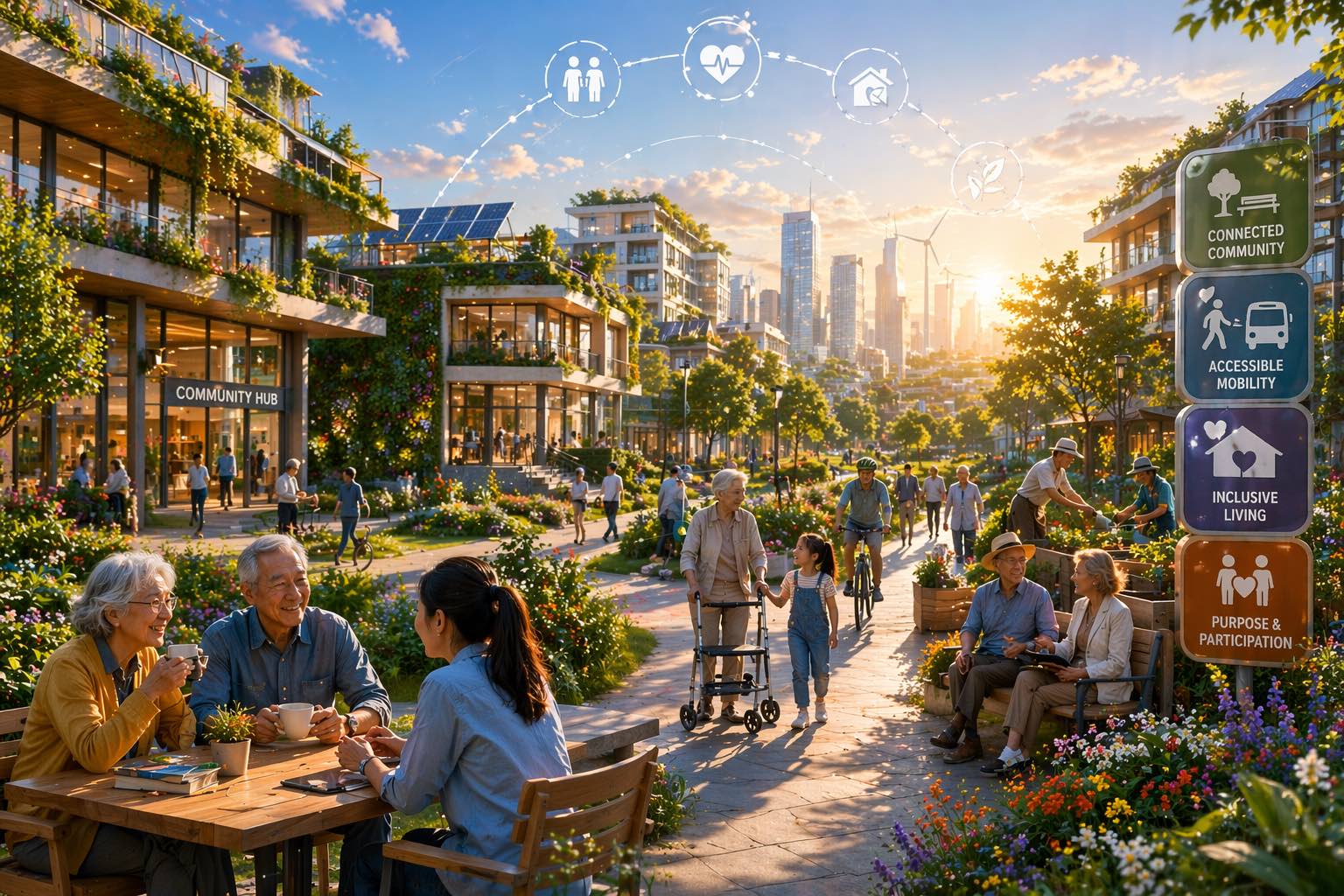
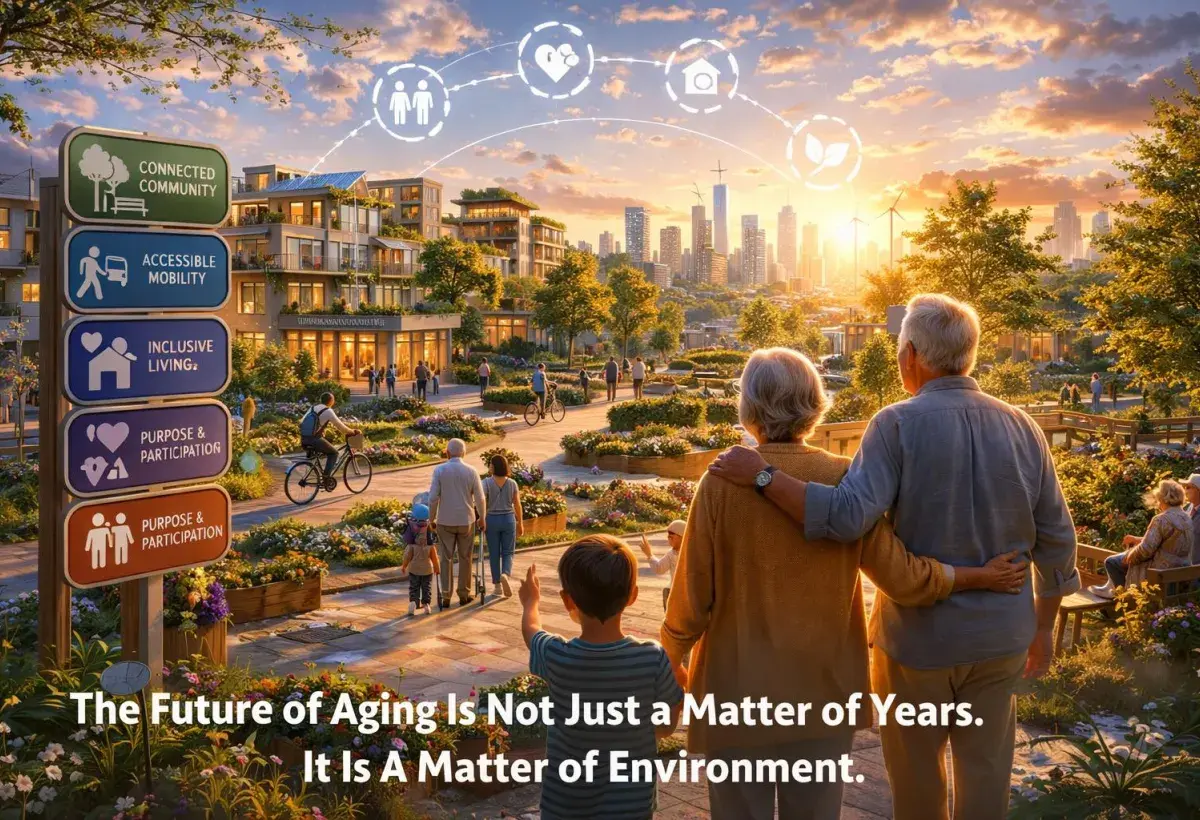
Emerging models of community design are beginning to respond to this challenge by integrating economic participation, health support, and social engagement into cohesive ecosystems.
These environments are structured not around dependency, but around sustained purpose; not around isolation, but around meaningful connection, and around continuity of life roles and identity. In this shift, aging moves from abstraction to embodiment, from policy to place where the success of frameworks is ultimately measured by how well individuals are able to live with dignity, autonomy, and ongoing relevance within the fabric of everyday society.
Consultant Perspective
The central challenge is no longer conceptual alignment but institutional adoption. While frameworks such as the United Nations Madrid International Plan of Action on Ageing (MIPAA) provide clear direction, their impact ultimately depends on how effectively they are operationalized across sectors. This requires moving from voluntary alignment to structured implementation.
One approach is the establishment of independent, cross-sector implementation bodies tasked with monitoring how public institutions, private developers, healthcare systems, and urban planners integrate age-inclusive principles into practice. Such mechanisms would not merely assess compliance, but evaluate performance embedding aging metrics into broader measures of institutional effectiveness and long-term sustainability.
Equally important is the introduction of calibrated incentives and accountability structures. Organizations that actively adopt age-inclusive policies through accessible design, integrated care systems, and inclusive workforce practices could benefit from enhanced recognition, preferential access to funding, or regulatory support. Conversely, the absence of such integration may increasingly carry measurable costs, whether through reduced institutional ratings, limited access to public-private partnerships, or diminished competitiveness in a demographic landscape defined by aging populations.
In this context, aging policy shifts from a social obligation to a strategic differentiator. The institutions that move early to align with these frameworks will not only strengthen their social impact but also position themselves more competitively within an economy where longevity is becoming a defining structural force.
Image
Suggested Citation
Lendez, M. (2026). MIPAA Series (Part 3 of 3). Enabling Environments: Designing Age-Inclusive Communities and EconomiesEnabling Environments: Designing Age-Inclusive Communities and Economies. Chikicha.
About the Author
Dr. Mariza Lendez is a researcher, social entrepreneur, and creator of the Ikigai-Bayanihan (Purpose + Collective Ethos) Retirement Model, an innovative framework that integrates purpose, community engagement, and sustainability to support meaningful aging and later-life well-being.
The MIPAA Series: Rethinking Aging in the 21st Century
👉 Part 1 - Older Persons and Development: Reframing Aging as an Economic Opportunity
👉 Part 2 - Advancing Health and Well-being: Building Systems for Longer, Healthier Lives
👉 Part 3 - Enabling Environments: Designing Age-Inclusive Communities and Economies
References
- United Nations. 2002. Madrid International Plan of Action on Ageing.https://www.un.org/development/desa/ageing/madrid-plan-of-action-and-its-implementation.html
- World Health Organization. 2007. Global Age-friendly Cities: A Guide.https://www.who.int/publications/i/item/9789241547307
- World Health Organization. 2020. Decade of Healthy Ageing 2021–2030. https://www.who.int/initiatives/decade-of-healthy-ageing
- Organisation for Economic Co-operation and Development. 2022. Ageing and Housing Policies. OECD Publishing. https://www.oecd.org
- World Bank. 2024. Aging, Urbanization, and Sustainable Development. World Bank Group.https://www.worldbank.org