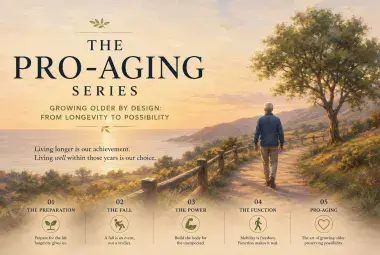
Aging Before Modern Gerontology: When Old Age Was Associated with Dependency
The Historical Conditions That Shaped Early Aging Perceptions
Aging frameworks did not emerge in isolation. They developed in response to changing demographic realities, economic structures, healthcare advancements, labor systems, and evolving societal expectations regarding old age. Across much of human history, aging was commonly associated with frailty, dependency, reduced productivity, and social withdrawal. Earlier societies often interpreted old age through a survival-oriented lens in which declining physical capacity limited participation in economic and community life. Life expectancy itself remained relatively short, and relatively few individuals survived long enough to experience prolonged later-life stages.
Before the emergence of modern gerontology, aging was largely treated as a biological inevitability rather than a multidimensional social experience. Older adults were frequently viewed through frameworks of dependency, illness, and decline, particularly within industrial societies where productivity increasingly became associated with economic value. As industrialization expanded during the nineteenth and early twentieth centuries, retirement systems and labor succession models reinforced assumptions that older adults would gradually withdraw from active social and economic participation.
The twentieth century fundamentally altered these historical conditions. Improvements in sanitation, public health, medicine, nutrition, and healthcare systems significantly extended human longevity. Declining mortality rates and increasing survival into later life stages created new demographic realities that industrial societies had not previously encountered. As populations aged and retirement systems expanded, scholars increasingly confronted new questions concerning the role, wellbeing, identity, and societal participation of older adults. These demographic transformations ultimately contributed to the birth of formal aging theories designed to explain how individuals and societies adapt to extended later life.
The First Generation of Aging Theories: Withdrawal, Adaptation, and Social Stability
Disengagement Theory and the Logic of Industrial Aging
One of the earliest influential frameworks within modern gerontology was Disengagement Theory, developed by Elaine Cumming and William Henry in 1961. Emerging during a post-war industrial era characterized by rigid retirement systems, shorter life expectancy, and highly structured labor succession, the theory proposed that aging involved a gradual and mutually beneficial withdrawal from social roles and responsibilities (Cumming & Henry, 1961).
Disengagement Theory reflected the prevailing demographic and economic realities of mid-twentieth-century industrial societies. At the time, older adults were generally expected to transition out of active labor participation to allow younger generations to assume productive economic roles. Withdrawal was therefore conceptualized not as social failure, but as a functional process contributing to social equilibrium and generational succession. The framework assumed that aging naturally involved declining participation, reduced productivity, and increasing dependency.
Historically, the theory represented one of the first formal attempts to systematically explain aging within sociology and gerontology. However, as healthcare improvements extended life expectancy and older adults remained active for significantly longer periods, the assumptions underlying disengagement increasingly became inadequate. The theory failed to account for the diversity of aging experiences and overlooked the possibility that many older adults continued to maintain meaningful social, psychological, and economic engagement beyond traditional retirement age.
Activity Theory and the Rejection of Passive Aging
The limitations of disengagement perspectives contributed to the emergence of Activity Theory, advanced by Robert Havighurst and contemporaries during the same period. In contrast to withdrawal-oriented models, Activity Theory argued that life satisfaction and psychological wellbeing were strengthened through continued social, cognitive, and physical participation in later life (Havighurst, 1961).
This represented a major conceptual shift within aging discourse. Rather than viewing old age as inevitable retreat from society, Activity Theory proposed that successful adaptation depended on maintaining meaningful engagement, social relationships, and active participation. Aging was increasingly understood not as passive decline, but as a stage requiring adjustment, continuity, and involvement.
The emergence of Activity Theory reflected broader societal changes occurring during the post-war period. As longevity improved and retirement periods lengthened, researchers increasingly observed that active older adults often demonstrated better emotional wellbeing, stronger social integration, and improved quality of life compared to those experiencing isolation or withdrawal.
Nevertheless, Activity Theory also reflected the limitations of its historical context. While the framework emphasized participation and engagement, it largely focused on maintaining activity itself without deeply addressing existential meaning, psychosocial identity, structural inequality, or cultural diversity in aging experiences. Participation was valued primarily as behavioral continuation rather than as a broader search for meaning and fulfillment across extended later life.
Successful Aging and the Rise of Wellness-Oriented Gerontology
By the late twentieth century, continued advances in healthcare, preventive medicine, and chronic disease management further transformed demographic realities. Increasing longevity shifted scholarly attention toward questions not merely of participation, but of maintaining health, functionality, and independence across prolonged later life stages. These developments contributed to the emergence of Rowe and Kahn’s Successful Aging Model in 1997.
Rowe and Kahn conceptualized successful aging through three interconnected dimensions: low probability of disease and disability, high cognitive and physical functional capacity, and active engagement with life (Rowe & Kahn, 1997). Their framework significantly reshaped gerontological discourse by reframing aging away from inevitability of decline and toward adaptability, wellness, resilience, and functional longevity.
The model emerged during a period when aging populations increasingly became associated with healthcare sustainability, preventive medicine, and quality-of-life concerns. Aging was no longer viewed solely through institutional dependency models; instead, older adults were increasingly encouraged to maintain health, activity, and independence for as long as possible.
Despite its influence, the Successful Aging framework also generated important criticism. Scholars argued that the model risked idealizing aging by privileging productivity, independence, and physical functionality while potentially marginalizing frail, disabled, or economically vulnerable populations. Critics further noted that definitions of “successful” aging often reflected Western assumptions emphasizing autonomy and performance rather than relational wellbeing, collective identity, or cultural diversity.
Image
Contemporary Aging Frameworks: From Longevity to Meaning and Purpose
Active Ageing and the Globalization of Aging Policy
As demographic aging accelerated globally, aging discourse increasingly moved beyond individual adaptation toward large-scale public policy concerns. Governments and international institutions became increasingly confronted with rising healthcare expenditures, pension sustainability pressures, labor shortages, and expanding eldercare needs associated with longer life expectancy and declining fertility rates.
Within this context, the World Health Organization introduced the Active Ageing Framework in 2002. The framework emphasized optimizing opportunities for health, participation, and security to enhance quality of life as populations age (World Health Organization, 2002). Unlike earlier gerontological theories focused primarily on individual adaptation, Active Ageing repositioned aging as a multidimensional societal and policy issue involving healthcare systems, labor participation, social inclusion, and age-friendly environments.
The Active Ageing Framework significantly influenced global aging policy discourse and contributed to broader international initiatives concerning healthy longevity and age-inclusive societies. Aging increasingly became understood as a structural societal transformation requiring coordinated institutional responses rather than merely individual adaptation to old age.
However, important conceptual gaps remained. Much of the framework focused on institutional adaptation, healthcare optimization, productivity, and participation while comparatively limited attention was given to existential wellbeing, meaning, dignity, and psychosocial fulfillment across extended later life. Aging was increasingly managed as a policy challenge, yet the deeper human dimensions of purpose and identity often remained secondary within formal institutional discourse.
Blue Zones and the Search for Healthy Longevity
During the early twenty-first century, aging research evolved further beyond biomedical and policy-oriented perspectives. Scholars increasingly investigated why certain populations experienced exceptional longevity and higher quality of life throughout later adulthood. This led to growing international interest in Blue Zone regions—communities characterized by unusually high concentrations of centenarians and healthy older adults.
Research on Blue Zones suggested that longevity was influenced not only by healthcare access or genetics, but also by lifestyle patterns, natural movement, social connectedness, intergenerational relationships, dietary practices, and purposeful living (Buettner & Skemp, 2016; Herbert et al., 2022). These findings represented another major conceptual shift within aging discourse. Longevity increasingly became associated with social integration, belonging, emotional wellbeing, and lifestyle environments rather than merely disease prevention or institutional care systems.
Importantly, Blue Zone research helped expand aging discussions toward more holistic understandings of wellbeing. The findings suggested that long life alone was insufficient; quality of life, social relationships, emotional support, and meaning-centered living were equally significant dimensions of healthy aging.
Ikigai and the Emergence of Purpose-Centered Aging
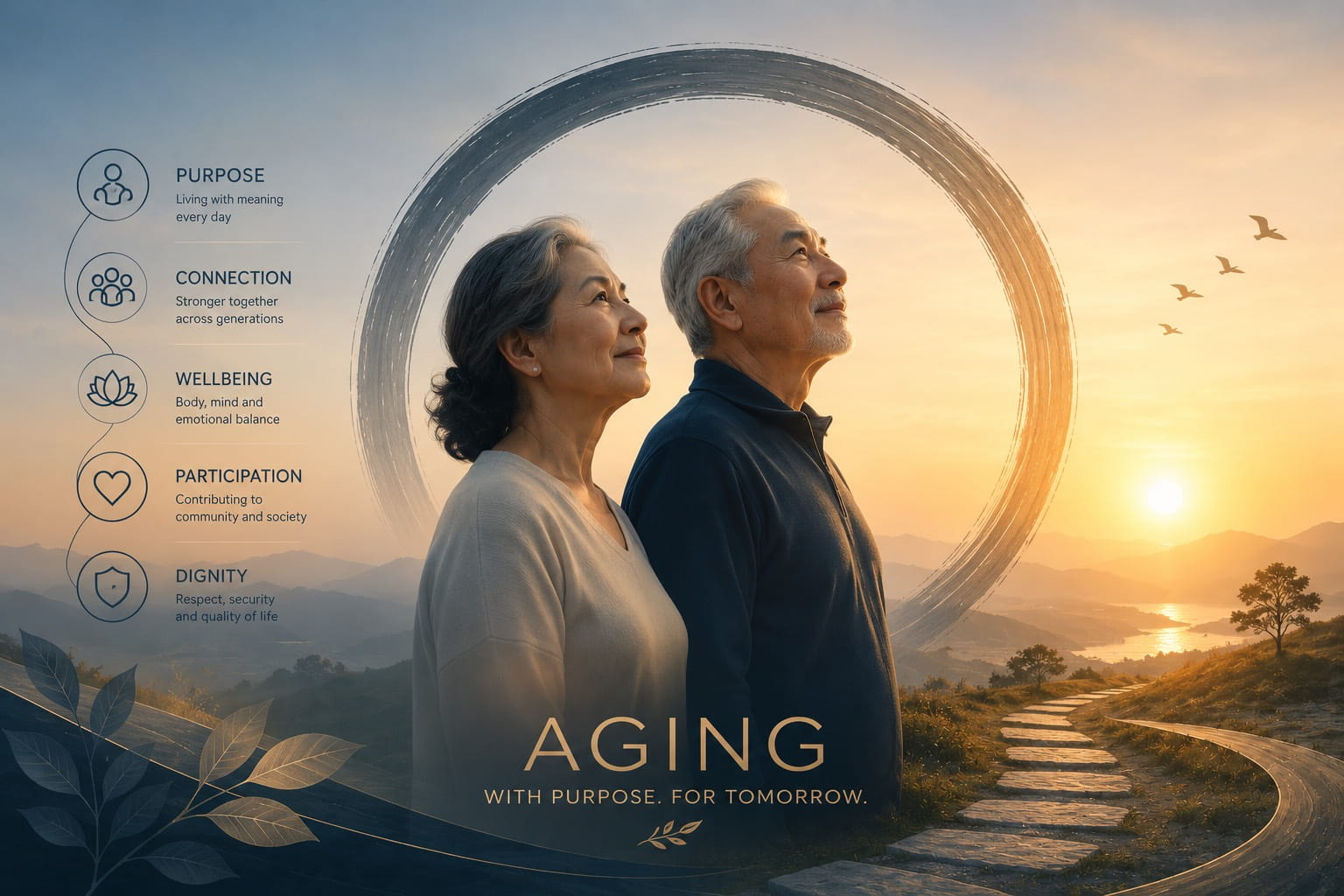
Within this evolving intellectual landscape, the Japanese concept of Ikigai emerged as an increasingly influential framework for understanding purpose-centered aging. Commonly translated as “reason for being,” Ikigai emphasizes the integration of meaning, fulfillment, social contribution, and personal purpose across the life course (García & Miralles, 2017).
Unlike earlier aging frameworks that emphasized withdrawal, activity, or functionality alone, Ikigai introduced a more holistic understanding of later life by integrating existential wellbeing with community participation, identity, and social connectedness. The framework reflects broader societal changes associated with longevity societies, where individuals increasingly live substantially longer than previous generations and therefore confront extended later-life stages requiring not only survival, but meaning and psychosocial fulfillment.
Contemporary gerontological studies increasingly support this direction. Research suggests that stronger senses of ikigai are associated with improved psychological wellbeing, lower depressive symptoms, greater life satisfaction, and stronger emotional resilience among older adults (Tsuzishita & Wakui, 2021; Hajek et al., 2024). These findings indicate that purpose and meaning may increasingly function as central dimensions of healthy aging within longevity societies.
The rise of purpose-centered frameworks also reflects deeper shifts in societal expectations regarding old age itself. Earlier industrial-era models frequently interpreted aging through dependency and withdrawal. Contemporary longevity societies, however, increasingly recognize older adults as continuing social actors capable of contribution, wisdom transmission, relational engagement, adaptation, and meaningful participation.
The Remaining Gap in Contemporary Aging Frameworks
Despite the substantial evolution of aging frameworks across the past century, important conceptual and structural limitations remain. Many contemporary models continue to approach aging through fragmented biomedical, economic, or policy-oriented perspectives. Healthcare systems often prioritize disease management without fully integrating psychosocial wellbeing and existential fulfillment. Labor systems continue to value productivity while underrecognizing purpose, dignity, and intergenerational contribution. Public policy frameworks increasingly focus on pension sustainability and healthcare expenditure, yet often insufficiently address meaning-centered living and culturally grounded understandings of later-life wellbeing.
These limitations become increasingly significant within rapidly aging societies where millions of individuals now experience decades of post-retirement and post-menopausal life. The challenge confronting contemporary societies is therefore no longer limited to helping populations live longer, but understanding how populations may live meaningfully, sustainably, and with dignity across extended later life stages.
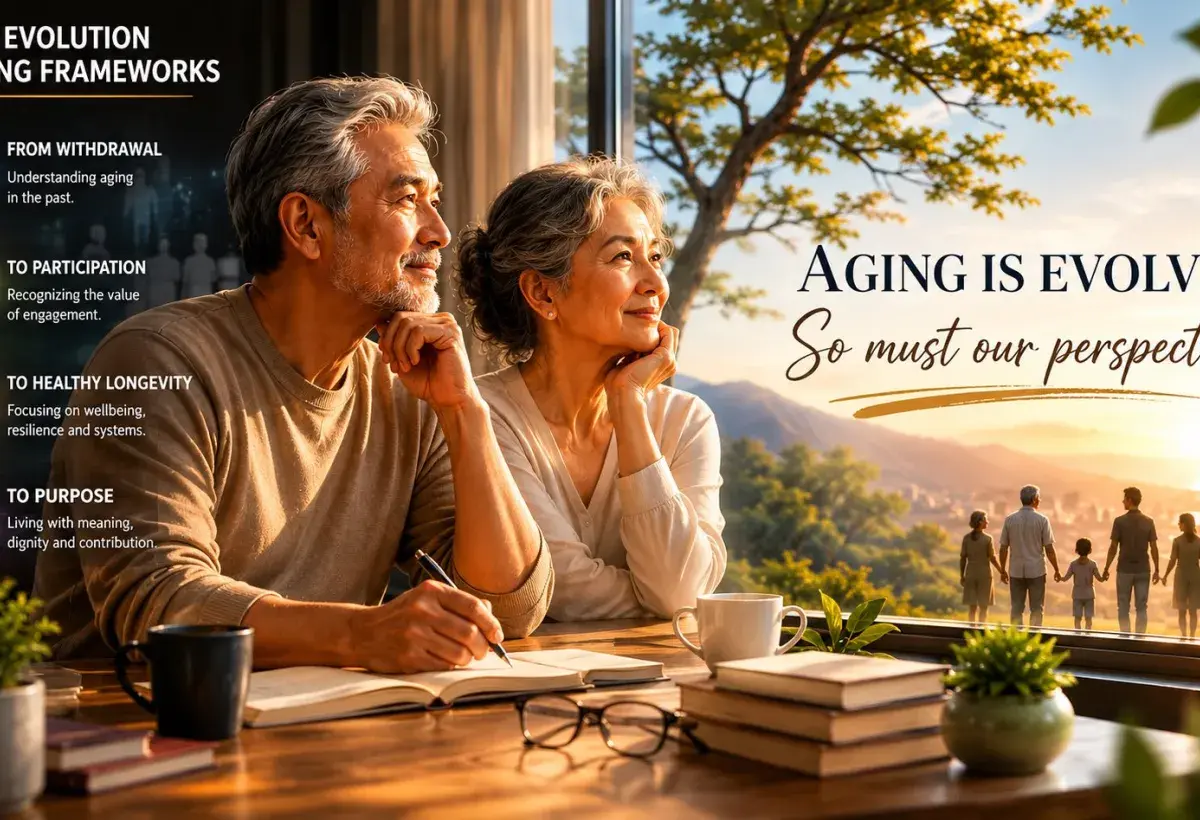
Ultimately, the evolution of aging frameworks reveals a broader intellectual transformation within gerontology itself: from understanding aging as withdrawal, toward conceptualizing aging as participation, adaptation, healthy longevity, and increasingly, as a lifelong search for meaning, dignity, and purpose within extended human life. As societies continue to extend lifespan through medical and technological advancement, the central challenge of aging may no longer be merely how long human beings can live, but how human beings are expected to live meaningfully across increasingly prolonged later life stages.
In rapidly aging societies where longevity continues to expand faster than institutional adaptation, a deeper question now emerges: if humanity succeeds in extending life far beyond previous generations, are societies equally prepared to sustain purpose, dignity, belonging, and human value across the very years they have helped create?
Image
Suggested Citation
Lendez, M. (2026). The Evolution of Aging Frameworks: From Withdrawal to Purpose-Centered Aging. Chikicha. (Lendez, M., the developer of Ikigai-Bayanihan Framework).
About the Author: Written by Dr. Mariza Lendez, the developer of Ikigai-Bayanihan Framework, a model that redefines aging through purpose, dignity, and community-centered living.
Explore the Ikigai-Bayanihan Retirement Model presented by Chikicha Co-founder:
https://www.chikicha.com/chikicha-co-founder-present-ikigai-bayanihan-retirement-model-iafor-egen-2026
References
Asher, M. G., & Nandy, A. (2022). Social protection in ASEAN economies: Challenges and opportunities. Asian Economic Policy Review, 17(2), 210–229. https://doi.org/10.1111/aepr.12379
Bengtson, V. L., & Roberts, R. E. L. (1991). Intergenerational solidarity in aging families: An example of formal theory construction. Journal of Marriage and the Family, 53(4), 856–870. https://doi.org/10.2307/352993
Buettner, D., & Skemp, S. (2016). Blue Zones: Lessons from the world’s longest lived. American Journal of Lifestyle Medicine, 10(5), 318–321. https://doi.org/10.1177/1559827616637066
Cumming, E., & Henry, W. E. (1961). Growing old: The process of disengagement. Basic Books.
European Commission. (2024). Ageing Europe: 2024 interim report. https://ec.europa.eu/eurostat
Fukuzawa, A., & Sugawara, I. (2023). Social support and participation as factors relating to ikigai and life satisfaction in lonely older Japanese. Ageing International, 48(2), 465–481. https://doi.org/10.1007/s12126-022-09486-6
García, H., & Miralles, F. (2017). Ikigai: The Japanese secret to a long and happy life. Penguin Books.
Hajek, A., Imai, T., Zwar, L., & König, H. (2024). Translation and validation of the German version of the Ikigai-9. Societies, 14(3), 39. https://doi.org/10.3390/soc14030039
Havighurst, R. J. (1961). Successful aging. The Gerontologist, 1(1), 8–13. https://doi.org/10.1093/geront/1.1.8
Herbert, C., House, M., Dietzman, R., Climstein, M., & Furness, J. (2022). Blue Zones: Centenarian modes of physical activity: A scoping review. Journal of Population Ageing, 18, 5–41. https://doi.org/10.1007/s12062-022-09396-0
Organisation for Economic Co-operation and Development. (2023). Social protection in Asia: Building inclusive systems for ageing societies. OECD Publishing. https://www.oecd-ilibrary.org/social-issues-migration-health/social-protection-in-asia_a3e8e9f7-en
Rowe, J. W., & Kahn, R. L. (1997). Successful aging. The Gerontologist, 37(4), 433–440. https://doi.org/10.1093/geront/37.4.433
Trudel-Fitzgerald, C., Millstein, R. A., Christiana, V. H., Howe, C. J., Linda, P. T., Wagner, G. R., & VanderWeele, T. J. (2019). Psychological well-being as part of the public health debate? Insight into dimensions, interventions, and policy. BMC Public Health, 19, 1–11. https://doi.org/10.1186/s12889-019-8029-x
Tsuzishita, S., & Wakui, T. (2021). The effect of high and low life purpose on ikigai among community-dwelling older people: A cross-sectional study. Geriatrics, 6(3), 73. https://doi.org/10.3390/geriatrics6030073
United Nations Economic and Social Commission for Asia and the Pacific. (2022). Asia-Pacific report on population ageing 2022: Trends, policies and good practices regarding older persons and population ageing.https://www.unescap.org/sites/default/d8files/knowledge-products/AP-Ageing-2022-report.pdf
World Bank. (2021). Live long and prosper: Aging in East Asia and Pacific. World Bank Group.
World Health Organization. (2002). Active ageing: A policy framework. World Health Organization. https://apps.who.int/iris/handle/10665/67215
World Health Organization. (2020). Decade of healthy ageing: Baseline report. World Health Organization. https://www.who.int/publications/i/item/9789240017900