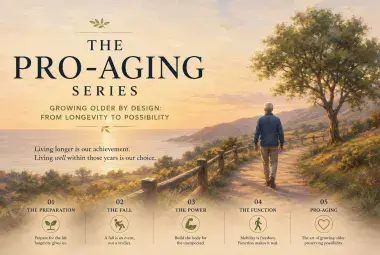
Aging is no longer a distant demographic trend as it is a present and accelerating reality that is silently reshaping the foundations of economies and societies.
What once appeared as national concerns has now converged into a shared global condition, where longevity intersects with labor, finance, and care systems in complex and often strained ways. This discussion unfolds across two critical dimensions: first, the structural pressures confronting aging societies, and second, the comparative policy responses that attempt, yet often struggle to reconcile sustainability with human dignity.
Systemic Pressures in Aging Societies
Globally, aging societies confront profound structural challenges that threaten economic stability and social cohesion. Declining working-age populations, rising old-age dependency ratios, and tightening labor markets have contributed to workforce shortages and productivity bottlenecks, particularly in labor-intensive sectors (Organisation for Economic Co-operation and Development [OECD], 2023; World Bank, 2022). As contributor-to-beneficiary ratios shrink, pay-as-you-go pension systems face heightened solvency risks, prompting urgent policy responses across Europe and East Asia (European Commission, 2023; Statistics Korea, 2023).
Health and long-term care systems are similarly under mounting pressure. In Germany, the number of individuals requiring long-term care is projected to increase by 37% by 2055 (Destatis, 2023). Comparable trends are observed across aging economies, where caregiver shortages and persistent rural-urban disparities in care provision continue to strain service delivery (World Health Organization [WHO], 2020). These pressures are further intensified by persistently low fertility rates, which deepen demographic imbalances and constrain the capacity of younger cohorts to support aging populations (United Nations [UN], 2022; The Lancet, 2024).
The cumulative effects of these structural constraints have heightened vulnerability among older persons across diverse national contexts. In Japan, rural depopulation has coincided with a growing number of older adults living alone; in South Korea, elderly suicide mortality remains disproportionately high; and in Greece, prolonged austerity has elevated poverty risks among pensioners. Together, these cases underscore the limits of incremental policy adjustments and highlight the need for comprehensive, systemic responses to aging-related challenges (OECD, 2023; World Bank, 2022; European Commission, 2023; Statistics Japan, 2023; Statistics Korea, 2023; Hellenic Statistical Authority, 2023).
If the very systems designed to support longevity are themselves becoming unsustainable, what kind of future are we truly building for those who live longer?
These systemic strains are deeply embedded in how societies design and govern their pension and welfare systems. As nations attempt to respond, a wide spectrum of policy models has emerged, each reflecting different assumptions about responsibility, equity, and the value of aging lives. Understanding these models is essential not only to assess their financial soundness, but to question whether they truly serve the people they are meant to protect.
Image

Comparative Pension and Policy Models
Globally, comparative analyses of pension systems reveal a persistent tension between actuarial sustainability and human well-being. Esping-Andersen’s (1990) welfare regime typology remains foundational in explaining how welfare states allocate social risks and structure support for aging populations. Subsequent gerontological research has expanded this framework to examine the intersections of aging, labor, and inequality under globalized economies. Van Dyk (2014) argued that neoliberal narratives frequently conflate productivity with value, marginalizing older adults unable to participate in formal labor markets. More recently, Phillipson (2025) advanced the concept of an “emancipatory gerontology,” calling for systemic reform that restores dignity, autonomy, and participation among aging populations. Collectively, these perspectives underscore that sustainable pension systems must balance fiscal prudence with social inclusion, integrating economic design with the moral and cultural dimensions of aging.
In the United States, hybrid pension structures have increasingly shifted financial risk from institutions to individuals, leaving minorities and informal workers under protected (Walczak et al., 2021). Sweden’s Notional Defined Contribution (NDC) model, while demographically adaptive and fiscally transparent, imposes high contribution rates on active workers, raising concerns regarding long-term equity (Holzmann & Palmer, 2023; Organisation for Economic Co-operation and Development [OECD], 2022). Across Asia, savings-based pension systems such as Singapore’s Central Provident Fund (CPF) and Malaysia’s Employees Provident Fund (EPF) provide strong financial coverage for formal employees but continue to exclude informal-sector workers, reinforcing income inequality and gender gaps in retirement protection (Asher & Nandy, 2022; International Labour Organization [ILO], 2023). Emerging innovations, including micro-pension pilots in Vietnam supported by the International Labour Organization, demonstrate the potential of contributory pension flexibility but remain fragmented and limited in scale (ILO, 2023).
Taken together, these cases reveal a structural paradox: while many pension systems are financially robust and actuarially sound, they remain socially and psychologically incomplete, optimizing fiscal solvency while neglecting older adults’ needs for purpose, engagement, and dignity in later life.
Conclusion
The global discourse on aging has made one reality unmistakably clear: the pressures are systemic, persistent, and shared. Workforce shortages, productivity constraints, and the fragility of pay-as-you-go pension systems reveal economic models struggling to keep pace with longer lifespans. At the same time, health and long-term care systems face deepening strain, marked by caregiver shortages and widening inequalities, particularly across rural and vulnerable populations. Across countries, the patterns repeat older adults living in isolation, rising mental health risks, and growing financial insecurity signaling that the issue is not confined to policy design, but rooted in how societies value aging itself.
More than three decades ago, the foundations of this challenge were already articulated, emphasizing that social protection systems must evolve alongside human longevity. Yet today, many systems remain either financially efficient but socially incomplete, or inclusive in intent but limited in reach. From hybrid pension structures that shift risk to individuals, to provident funds that exclude informal workers, and emerging innovations that remain small in scale, the gap between sustainability and dignity persists.
What stands before us now is not a lack of knowledge, but a question of collective will. Frameworks such as MIPAA+, the Sustainable Development Goals, and the Decade of Healthy Ageing have already reframed aging as a developmental priority rather than a burden. The responsibility therefore extends beyond institutions as it calls on the present workforce, the very beneficiaries of longevity, to actively engage in shaping and supporting these transformations.
Because longevity is not merely about living longer. it is about redefining how life is lived, supported, and valued across time. And the choices made today will determine whether extended years become a period of vulnerability, or a stage of continued purpose, security, and human fulfillment.
And so the urgent question remains for those who are building their lives and careers today:
When your time comes, and the generation before you is no longer here to shape the systems you inherit, what kind of society will be waiting for you, and what have you done to help build it?
Image

Suggested Citation
Lendez, M. (2026). Aging Beyond Capacity: The Structural Crisis Behind Modern Longevity. Chikicha. (Lendez, M. developer of Ikigai-Bayanihan Framework).
About the Author: Written by Dr. Mariza Lendez, the developer of Ikigai-Bayanihan Framework, a model that redefines aging through purpose, dignity, and community-centered living.
References
Asher, M. G., & Nandy, A. (2022). Social protection in ASEAN economies: Challenges and opportunities. Asian Economic Policy Review, 17(2), 210–229.https://doi.org/10.1111/aepr.12379
Destatis. (2023). Long-term care in Germany: Key figures and trends. German Federal Statistical Office. https://www.destatis.de/EN/Themes/Society-Environment/Health/Long-Term-Care/_node.html
Esping-Andersen, G. (1990). The three worlds of welfare capitalism. Princeton University Press.
European Commission. (2024). Ageing Europe: 2024 interim report.https://ec.europa.eu/eurostat
Eurostat. (2022). Ageing Europe: Statistics on population projections. European Commission.https://ec.europa.eu/eurostat
Holzmann, R., & Palmer, E. (2023). Rethinking the Design and Implementation of Pension Reforms: International Lessons. World Bank Group.https://documents.worldbank.org/en/publication/documents-reports/documentdetail/
International Labour Organization [ILO]. (2023). Extending social protection to workers in the informal economy: Lessons from Asia and the Pacific. Geneva, Switzerland: Internation. https://www.ilo.org/global/publications/books/WCMS_862536/lang--en/index.htm
Organisation for Economic Co-operation and Development (OECD). (2024). Pensions at a glance Asia/Pacific 2024.OECD Publishing.https://doi.org/10.1787/d4146d12-en
Organisation for Economic Co-operation and Development [OECD]. (2023). Social protection in Asia: Building inclusive systems for ageing societies. Paris, France: OECD Publishing.
Retrieved from https://www.oecd-ilibrary.org/social-issues-migration-health/social-protection-in-asia_a3e8e9f7-en
Phillipson, C. (2025). The political economy of ageing and the second coming of neoliberalism: Building an emancipatory gerontology. Springer. https://doi.org/10.1007/s11577-025-01012-1
Statistics Korea. (2023). Population Projections and Summary Indicators (Korea) 1960-2072 [Data set]. KOSTAT.
United Nations. (2022). World population prospects 2022. United Nations Department of Economic and Social Affairs.https://population.un.org/wpp
United Nations, Economic and Social Commission for Asia and the Pacific. (2022). *Asia-Pacific report on population ageing 2022: Trends, policies and good practices regarding older persons and population ageing (ST/ESCAP/3041).https://www.unescap.org/sites/default/d8files/knowledge-products/AP-Ageing-2022-report.pdf
Van Dyk, S. (2014). The appraisal of difference: Critical gerontology and the active-ageing-paradigm. Journal of Aging Studies, 31, 93–103. https://doi.org/10.1016/j.jaging.2014.08.008
Walczak, D., Wantoch-Rekowski, J., & Marczak, R. (2021). Impact of income on life expectancy: A challenge for pension policy. Risks, 9(4), 65.https://doi.org/10.3390/risks9040065
World Health Organization [WHO]. (2020). Decade of healthy ageing: Baseline report. Geneva, Switzerland: World Health Organization.
Retrieved from https://www.who.int/publications/i/item/9789240017900
World Bank. (2021). Silver tsunamipan: East Asia’s aging crisis.https://www.worldbank.org