The Wisdom Economy: A New Framework for Understanding Ageing, Wisdom, and Societal Value

The Wisdom Economy introduces a new framework for understanding ageing populations as reservoirs of accumulated wisdom, knowledge, mentorship, resilience, and societal value. Exploring wealth, crisis, and contribution, this three-part series reimagines ageing as an untapped asset for future generations.
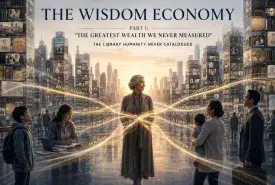
The Wisdom Economy - Part 1 of 3: The Greatest Wealth We Never Measured
As populations age and longevity increases, society continues to measure productivity, wealth, and human capital while overlooking one of its most valuable assets: wisdom. This article introduces the Wisdom Economy Framework, exploring how accumulated wisdom, tacit knowledge, mentorship capacity, generativity, and intergenerational learning contribute to societal resilience, continuity, and adaptive capacity. Drawing on insights from the United Nations, World Health Organization, World Bank, OECD, and leading scholars, it challenges traditional ageing narratives and proposes a new lens for understanding the hidden value embedded within aging populations.
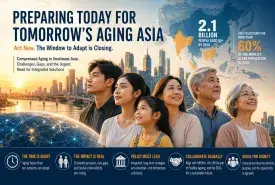
Compressed Aging in Southeast Asia: A Defining Demographic Shift
Southeast Asia faces a rapid “compressed aging” crisis as populations grow older faster than systems can adapt. With 2.1 billion people aged 60+ by 2050—many of them today’s younger generation, this article highlights the urgent need for governments to redesign aging frameworks, align with global initiatives, and act now before the policy window closes
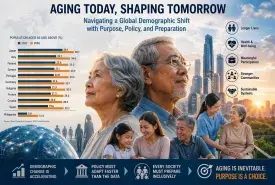
The Global Aging Condition
Aging is reshaping the global economy, straining labor markets, pensions, and healthcare systems. This article examines the rapid demographic transition across Asia-Pacific and Europe, the growing gap between policy and reality, and the urgent need to redefine retirement through purpose-driven, integrated frameworks such as ikigai.
Global Fertility Decline: Structural Drivers, Policy Limits, and the Future of Human Society
Global fertility is declining worldwide, reshaping economies and societies. This article examines the structural causes behind falling birth rates and presents the IKIGAI Framework as a sustainable, policy-driven solution for aging populations and human system redesign.
Start Here: Asia Is Aging First (Series)
Asia is aging faster than any region in the world. This introduction explores why longevity is becoming a global concern and guides readers through a three-part series on ageing, active ageing, and how societies must adapt to longer lives.
Asia Is Aging First: Why the World’s Longest Lives Are Becoming Everyone’s Concern (Part 1 of 3)
Asia is ageing faster than any region in the world, reshaping economies, health systems, and everyday life. Drawing on insights from global institutions, this article explains why longevity is no longer just a demographic trend - but a defining challenge that affects individuals, societies, and the future of how we live and age.
The Menoverse: Navigating the Future for Over 1.1 Billion Women
By 2050, over 1.1 billion women will be aged sixty and above. Supporting their health, particularly through menopause, is critical for global economic stability, workforce participation, and social well-being. Explore the societal, economic, and health imperatives of this demographic shift.
Health Economic: Menopause at a Global Scale
By 2030, 774 million women will be post-menopausal, creating significant health, economic, and social implications. Explore why menopause is a population-level phenomenon and the systemic solutions required to support aging women.
Menopause in a Low-Fertility World: Why It Matters More Than You Think
As global fertility rates decline and life expectancy rises, menopause is becoming a critical societal and economic issue. Explore why supporting midlife women is essential for the future of balanced communities.
Designing the Ideal Aging Nation: What Should Retirement Really Look Like?
Part 4 of the Silver Migration Series explores how nations can reinvent aging with dignity, purpose, and care. Drawing lessons from Japan, Sweden, Singapore, and New Zealand, this deep-dive reveals what retirees truly need and what policies must evolve to build a humane, sustainable future for aging populations.
ASIAN Rising: Retirement Haven or Policy Mirage? (Part 4 of 6)
Explore Southeast Asia's readiness for retirees. This article evaluates visas, long-term care, elder protections, and healthcare infrastructure across ASEAN nations, highlighting opportunities and challenges for aging populations.