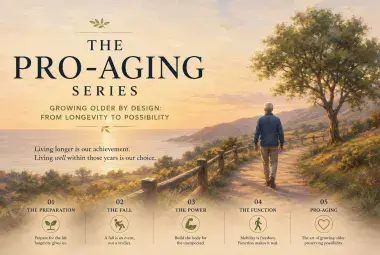
What Should Retirement Really Look Like?
The Global Search for Dignified Aging
Modern medicine has gifted humanity with longer lives, but longevity alone does not guarantee a good life. Across cultures and borders, one question now echoes with increasing urgency: “where can we grow old with dignity?”
By 2030, one in six people globally will be over the age of 60, a demographic shift unprecedented in scale and speed (United Nations, 2022). Yet most societies have not adapted their institutions, cities, or social contracts to reflect this reality. Longevity has advanced faster than the systems meant to support it.
Retirement today is no longer defined by withdrawal. For many, it marks a search for continued relevance for environments that offer safety, healthcare, affordability, and human connection. Older adults are not merely seeking comfort; they are seeking assurance that they will not become invisible once their working years end.
The global picture, however, remains uneven. In the United States, nearly 40 percent of older adults report anxiety about outliving their savings (National Council on Aging, 2023). Across parts of Europe, fragmented long-term care systems leave families to absorb responsibilities once carried by the state. In many developing countries, attractive retirement narratives often conceal weak elder protections, uneven healthcare access, and social isolation.
The paradox is clear. Humanity has learned how to extend life, but it has yet to master how to support it well.
What Retirees Are Really Looking For
Despite differences in culture and income, retirees across the world tend to converge on remarkably similar priorities. A 2022 international survey by AARP across fifteen countries found five recurring factors shaping retirement decisions:
Affordability paired with accessible healthcare;
Strong social protections, including pensions and long-term care;
Safe, walkable, and age-friendly communities;
Clear and stable residency or visa status for those aging abroad;
A sense of cultural inclusion and belonging.
These findings point to a fundamental truth: aging well is not about luxury, but about security and connection. Yet few countries consistently deliver across all five dimensions. Most fall short in at least two critical areas healthcare affordability and long-term care leaving retirees exposed to uncertainty precisely when resilience may be limited.
Image

What the Ideal Aging Nation Must Offer
Encouragingly, the world already holds fragments of success. Countries such as Japan, Sweden, New Zealand, and Singapore have each developed elements of a strong aging framework. The challenge is not invention, but integration.
1. A Universal Long-Term Care System
At the heart of any age-ready nation lies a comprehensive long-term care (LTC) system. Such systems ensure that older adults can remain at home or within their communities, rather than aging in isolation or cycling through hospitals.
Japan’s Long-Term Care Insurance Act of 1997 remains a global benchmark. Funded through a mix of public financing and insurance contributions, it offers seniors choice between home-based services and residential care while professionalizing caregiving. Similar home-centered approaches in Scandinavian countries demonstrate that dignity is often best preserved in familiar environments.
2. Portable and Reliable Income Security
Retirement has become increasingly transnational. Many older adults divide their time across countries or relocate entirely. An ideal aging nation recognizes this mobility through portable pensions and bilateral agreements that protect income security beyond borders.
New Zealand’s universal superannuation system offers a notable example, allowing pension benefits to remain accessible under international portability arrangements. Such models reflect an understanding that financial stability should follow the person not remain confined to geography.
3. Clear and Humane Residency Pathways
Legal uncertainty undermines well-being. Age-ready nations provide transparent, stable residency options that balance national interests with the realities of aging.
Programs such as Thailand’s retirement visa and the Special Resident Retiree’s Visa (SRRV) in the Philippines illustrate how clarity fosters trust. When retirees understand their legal standing, they are more likely to invest socially and economically in their host communities.
Image

4. Integrated Health and Digital Infrastructure
Healthcare remains the cornerstone of dignified aging. Singapore’s Smart Nation Initiative illustrates how digital tools telemedicine, remote monitoring, and AI-assisted fall detection can extend independence while reducing system strain.
In an ideal model, healthcare access does not hinge on wealth or citizenship alone. When thoughtfully deployed, digital health technologies expand reach, lower costs, and bring care closer to those who need it most, particularly in rural or underserved areas.
5. Age-Friendly Urban Design
Urban design quietly shapes daily life. The World Health Organization’s Age-Friendly Cities Framework highlights the importance of walkable streets, accessible transport, safe housing, and inclusive public spaces.
Cities such as Stockholm and Wellington demonstrate how thoughtful design benches, ramps, readable signage, and inclusive technology supports independence. When cities are built for older adults, they become better for everyone.
Who Is Closest to the Ideal?
No country has perfected the model, but several come close in specific areas. The table below offers a comparative snapshot of how selected nations align with key elements of an age-ready society.The table that follows compares selected countries across key dimensions of retirement readiness, revealing where policy alignment has translated into tangible outcomes.
| Country | LTC Access | Retirement Visa | Pension Portability | Age-Friendly Cities | Health Tech |
| Sweden | Full | No Specific | Yes | Yes | E-Health |
| Japan | Full | No Specific | Limited | Yes | Advanced |
| Thailand | Partial | Yes | No | Yes | Limited |
| New Zealand | Yes | No Specific | Yes | Yes | Yes |
| Singapore | Yes | No (for retirees) | Limited | Yes | High-tech |
| Philippines | Partial | Yes (SRRV) | No | Improving | Moderate |
These comparisons reveal that leadership in aging policy is rarely comprehensive.
Some nations excel in healthcare and urban design, others in income security or technology. The ideal aging nation remains a synthesis one that integrates these strengths into a coherent whole rather than isolated successes.
Reimagining Retirement
The future of retirement will not be defined by where people stop working, but by where they continue to live fully. Designing an ideal aging nation is not a utopian exercise; it is a practical necessity as longevity reshapes societies everywhere.
The question is no longer whether populations will age. They already are. The more consequential question is whether nations will rise to meet aging with intention creating systems that protect dignity, sustain purpose, and recognize that a longer life deserves to be a better one.
Image

The Fear Factor: Why Many Retirees Remain Hesitant
Despite the growing range of possibilities, millions of older adults hesitate to relocate or to fully embrace new models of retirement. This hesitation is not rooted in resistance to change, but in fear quiet, reasonable, and deeply human.
For many retirees, uncertainty surrounding foreign healthcare systems remains the most immediate concern. Questions about continuity of care, language barriers, and access during medical emergencies often outweigh the appeal of affordability or climate. Financial anxiety follows closely behind. The fear of exhausting savings in an unfamiliar system where costs, currencies, and protections may differ can render even well-planned retirements emotionally fragile.
Equally powerful is the fear of disconnection. Leaving behind family, familiar customs, and lifelong social networks can feel like a personal rupture, particularly in later life. Compounding this are the practical complexities of navigating residency rules, taxation, insurance coverage, and inheritance laws systems that are often opaque even to seasoned professionals.
Together, these concerns create paralysis. Instead of entering a period of renewal, many retirees remain suspended between work and rest, stability and aspiration. Their later years, intended to be marked by peace and fulfillment, are instead accompanied by lingering uncertainty.
If nations wish to move retirees beyond fear, reassurance must be institutional not anecdotal. Education, transparent policy, and guided pathways are essential. Retirement migration should not feel like a gamble taken at personal risk; it should feel like a supported transition anchored in clarity and compassio
Toward a Retirement-Ready Future
The ideal aging nation is not a utopian abstraction. Its components already exist scattered across countries that have responded thoughtfully to longevity.
Elements of this future can be seen in Japan’s long-term care system, Sweden’s comprehensive welfare architecture, Singapore’s digitally integrated elder networks, and Portugal’s retiree-friendly tax frameworks. The challenge ahead is not to invent new models, but to weave these proven ideas into a coherent and humane whole. To do so, governments must demonstrate three forms of commitment.
First, is policy courage the willingness to invest in long-term care, preventive health, and digital infrastructure for aging populations, even when returns are not immediate. Second, is public-private collaboration, recognizing that sustainable aging systems emerge when governments, civil society, and the private sector work together to deliver housing, wellness services, and accessible technology. Third, is cultural redefinition: a shift away from viewing aging as decline, toward recognizing older adults as contributors mentors, caregivers, volunteers, and holders of institutional memory.
This redefinition is no longer optional. By 2030, more than 1.4 billion people globally will be aged 60 and above, with the fastest growth occurring in regions least prepared to absorb it (United Nations Department of Economic and Social Affairs [UN DESA], 2023). Retirees will increasingly choose nations that treat aging not as a fiscal burden, but as a strategic and social opportunity. Those nations will benefit from stability, experience, and intergenerational cohesion. Those that delay will face rising care deficits and social strain.
In the end, a society’s maturity is revealed not by its economic output alone, but by how it treats those who have already given their working lives. The question confronting every nation is therefore not abstract: “will it lead the silver transformation or be defined by its consequences?”
Image

Suggested citation:
Lendez, M. (2026). Mindful aging. Designing the Ideal Aging Nation: What Should Retirement Really Look Like? Ikigai-Bayanihan Purpose-Driven Retirement Framework.
About the Author
Written by Dr. Mariza Lendez, the developer of the Ikigai-Bayanihan Purpose-Driven Retirement Framework, a model that redefines aging through purpose, dignity, and community-centered living.
References
AARP International. (2022). Global attitudes toward aging survey. Washington, DC: AARP International.
Japan Ministry of Health. (1997). Long-term care insurance act. Tokyo: Ministry of Health, Labour and Welfare.
Ministry of Health, Singapore. (2023). SG Age Well initiative. Singapore: Government of Singapore.
New Zealand Ministry of Social Development. (2024). Superannuation and retirement income policy. Wellington: Ministry of Social Development.
World Health Organization. (2023). Decade of healthy ageing progress report. Geneva: World Health Organization.
Acknowledgment: The author gratefully acknowledge Freepik and Pixabay for the use of royalty-free images.