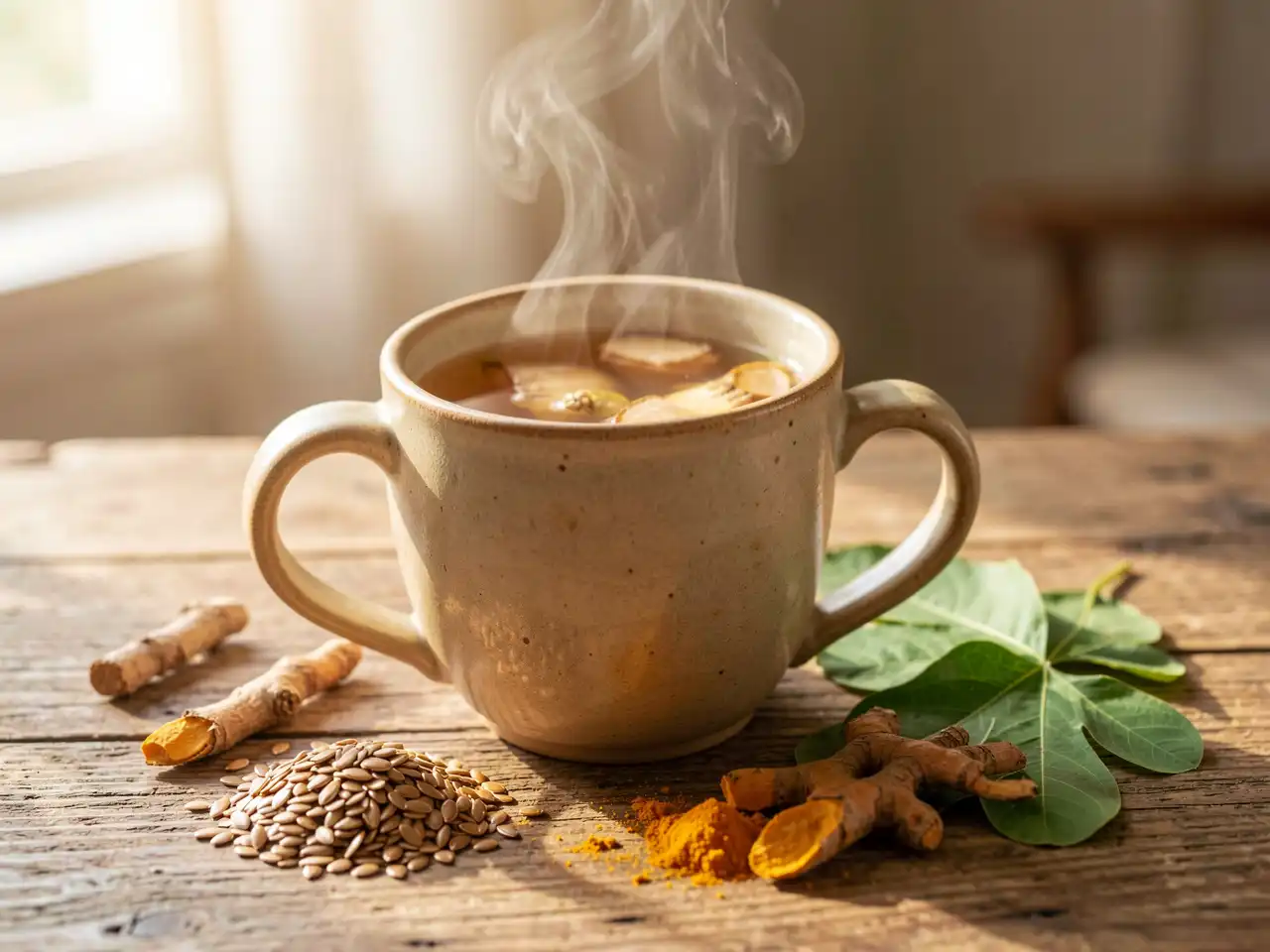
Menopause, When Understood, Becomes More Manageable
Menopause is a natural phase of life. That is the clinical truth, but in lived experience, the symptoms can feel far from natural.
Hot flashes, night sweats, disrupted sleep, mood shifts, and mental fog are not imagined, they are physiological responses to hormonal changes, particularly the decline of estrogen. These changes affect multiple systems at once: temperature regulation, bone density, brain function, and emotional stability.
For some women, hormone replacement therapy (HRT) provides relief. For others, a more natural and integrative approach is preferred, one that supports the body rather than overrides it.
The important point is this: menopause does not need to be managed through extremes. With the right support, the body can adjust more steadily. Below are natural approaches grounded in both traditional use and emerging research that can help stabilize the transition.
1. Flaxseeds (Linum usitatissimum)
Flaxseeds are one of the most studied plant-based supports during menopause. They contain lignans, a type of phytoestrogen that can gently mimic estrogen activity in the body.
This does not replace estrogen, but it can help moderate the drop reducing the frequency of hot flashes and supporting skin hydration and elasticity, which often decline during this stage.
For practical use, ground flaxseed is more effective than whole seeds, as it allows better absorption. Consistency matters more than quantity. Research has shown that regular intake may reduce both the intensity and frequency of vasomotor symptoms.
2. Malunggay (Moringa oleifera)
Malunggay is not new. It has long been part of daily nutrition in many households, but its relevance during menopause is often underestimated.
It is dense in micronutrients - calcium, iron, and vitamins A, C, and E, all of which become increasingly important as bone density declines and oxidative stress increases.
Menopause places additional strain on the body’s internal balance. Malunggay supports this by addressing fatigue, improving nutritional status, and contributing to long-term bone and immune health. Its role is not immediate symptom relief, but systemic support—helping the body maintain stability over time.
3. Black Cohosh (Cimicifuga racemosa)
Black cohosh has been widely used for managing vasomotor symptoms such as hot flashes and night sweats. Its mechanism is still being studied, but evidence suggests it interacts with serotonin receptors, which influence temperature regulation and mood.
This makes it particularly relevant for women experiencing both physical and emotional symptoms. Clinical reviews indicate that it may reduce the severity of hot flashes in some individuals. However, response varies, and it is best used with proper guidance, especially for long-term use.
4. Ginger (Salabat)
Ginger works less on hormones directly and more on the body’s response systems. It supports circulation, reduces inflammation, and aids digestion, all of which tend to become less efficient during menopause. It is particularly helpful for joint discomfort, bloating, and general fatigue.
There is also evidence suggesting that ginger may contribute to mood stabilization and reduction in hot flash frequency. Its strength lies in its consistency as it supports multiple systems without overstimulating any single one.
5. Lagundi (Vitex negundo)
Lagundi is commonly recognized for respiratory support, but its broader properties are often overlooked.
It has mild estrogenic activity and may assist in regulating hormonal fluctuations, particularly during perimenopause. It also has calming effects on the nervous system, which can help manage irritability and mood variability. While not a primary intervention, it can serve as supportive care within a broader routine.
6. Turmeric (Curcuma longa)
Turmeric addresses one of the underlying contributors to menopausal discomfort: inflammation.
As estrogen declines, inflammatory responses tend to increase. This can affect joints, mood, and overall energy levels. Curcumin, the active compound in turmeric, helps modulate this response.
There is also evidence linking turmeric to improved mood regulation, which is particularly relevant for women experiencing anxiety or low mood during menopause. Its effect is gradual, but cumulative.
7. Movement and Regulation Practices
No supplement replaces movement.
Regular physical activity whether walking, structured exercise, or low-impact practices like yoga plays a central role in managing menopause. It supports bone density, improves circulation, stabilizes mood, and enhances sleep quality.
Equally important is stress regulation. Techniques that reduce nervous system strain such as controlled breathing, stretching, or traditional bodywork help stabilize hormonal fluctuations indirectly. Menopause is not only a hormonal shift. It is also a stress-sensitive phase. Managing both is necessary.
A Grounded Approach to Menopause
There is a tendency to overcomplicate this stage through excessive supplementation, expensive regimens, or fragmented advice. A more effective approach is structured and consistent:
Support the body nutritionally.
Reduce inflammation.
Maintain movement.
Stabilize the nervous system.
These are not quick fixes. They are steady interventions that work over time. It is also important to remain practical. Not every remedy works the same for everyone. Monitoring response and adjusting accordingly is part of the process. Consultation with a healthcare professional remains essential, especially when combining approaches.
Final Position
Menopause is not the end of vitality. It is a transition that requires recalibration. When managed properly, it does not reduce quality of life. It shifts it.
The body is asking for a different kind of support, more consistent, more intentional, and more aligned with its current state. This is not a phase to endure passively. It is a phase to manage actively.
And within that, one factor stands out for its reliability and impact: lifestyle - especially regular, sustained movement. Exercise is not optional at this stage as it supports bone density, stabilizes mood, improves sleep, and helps regulate many of the symptoms associated with hormonal changes. Done consistently, it does more than relieve discomfort as it does preserves function.
Menopause, when approached with clarity and discipline, becomes less disruptive and more stable.
Image
About the Author
The author is a registered nurse with both clinical and personal experience in caregiving. Guided by the belief that prevention is always better than cure, she advocates for early awareness, intentional living, and informed decision-making to reduce long-term burdens, whether in health or in life. She is also a strong believer in a natural remedy–first approach, valuing the body’s innate ability to heal when supported by proper nutrition, lifestyle, and holistic care.
References:
-
Franco OH, et al. (2005). Effects of flaxseed on menopausal symptoms. Menopause, 12(5): 456–461.
-
Leone A, et al. (2014). Nutritional and antioxidant properties of Moringa oleifera leaves. Journal of Food Science and Technology, 52(9): 5222–5230.
-
Leach MJ, Moore V. (2012). Black cohosh for menopausal symptoms. Cochrane Database Syst Rev.
-
Jenabi E, et al. (2014). The effect of ginger on hot flashes in menopausal women. Complementary Therapies in Medicine, 22(6): 994–999.
-
George K, et al. (2016). Curcumin and mood improvement in menopause. Journal of Clinical Psychopharmacology, 36(3): 235–240.
-
Cramer H, et al. (2012). Yoga for menopausal symptoms: a systematic review. Menopause, 19(8): 825–832.