What Really Happens to Your Skin After 40: Part 1 | Part 2 | Part 3 | Part 4 | Part 5 | Part 6 | Part 7
Article 7 of 7 in the “Aging Skin After 40” Series
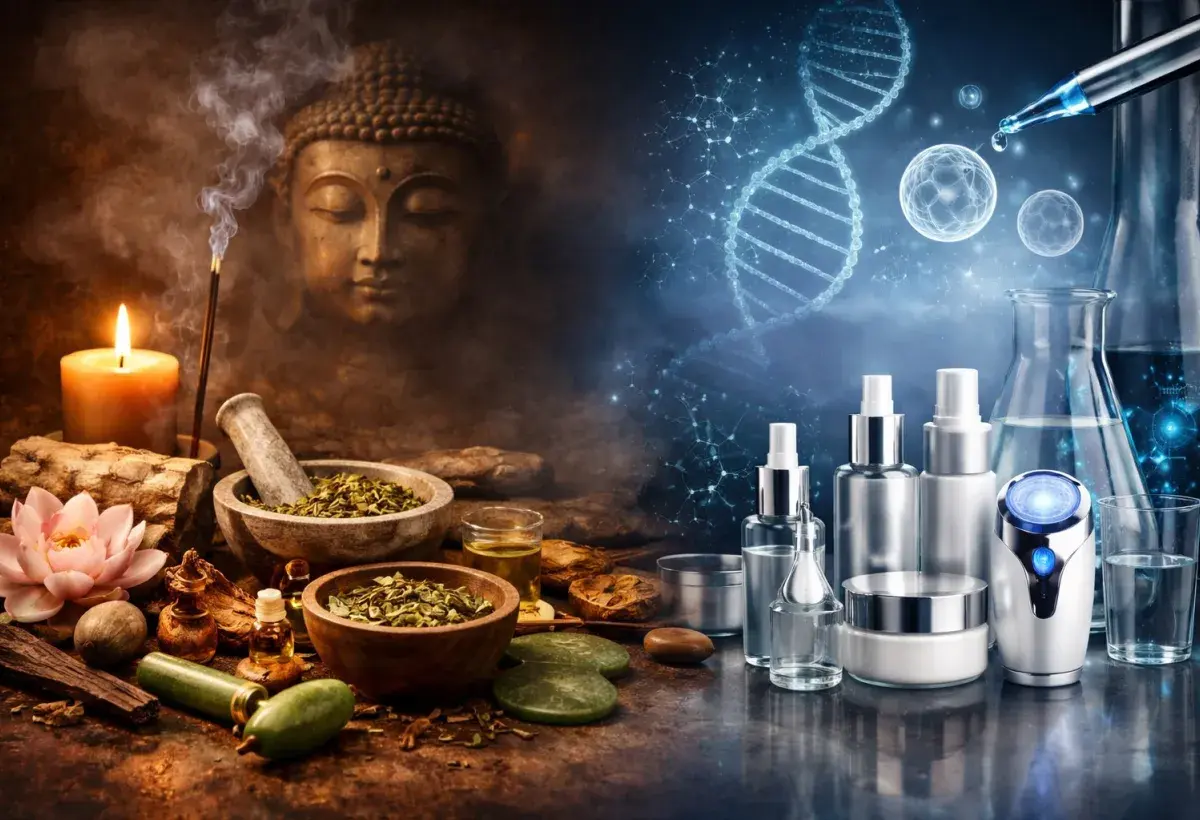
Where Ancient Practice Meets Modern Skin Science
Facial yoga and Gua Sha represent the convergence of traditional self-care practices and contemporary scientific inquiry. Once regarded as anecdotal, these techniques have increasingly been examined through dermatological and physiological research, revealing measurable effects on circulation, muscle activity, and skin appearance. Rather than functioning as substitutes for medical interventions, they offer a complementary approach that engages the skin’s intrinsic repair mechanisms (Vaughan & Morrow, 2020; Xie et al., 2021).
After the age of forty, the skin undergoes structural changes characterized by declining collagen production, reduced elasticity, and shifts in facial musculature. These changes are not isolated to the surface but involve deeper interactions between connective tissue, circulation, and muscle tone. In this context, manual techniques such as facial yoga and Gua Sha introduce controlled mechanical stimulation that may support these underlying systems when practiced consistently and correctly.
The Biological Basis of Mechanical Stimulation
The effects of facial manipulation can be understood through mechanotransduction, a process in which cells convert mechanical stimuli into biochemical signals. Fibroblasts, the primary cells responsible for collagen production, respond to controlled mechanical stress by altering extracellular matrix activity and supporting tissue maintenance (Wang, 2021).
Recent studies in physiology and dermatology have reinforced that manual stimulation, including massage and structured movement, can enhance local microcirculation and improve tissue oxygenation. Increased blood flow supports nutrient delivery and metabolic exchange, both of which are essential for maintaining skin vitality (Xie et al., 2021). While these interventions do not directly replace collagen, they contribute to the biological environment necessary for its maintenance.
Image
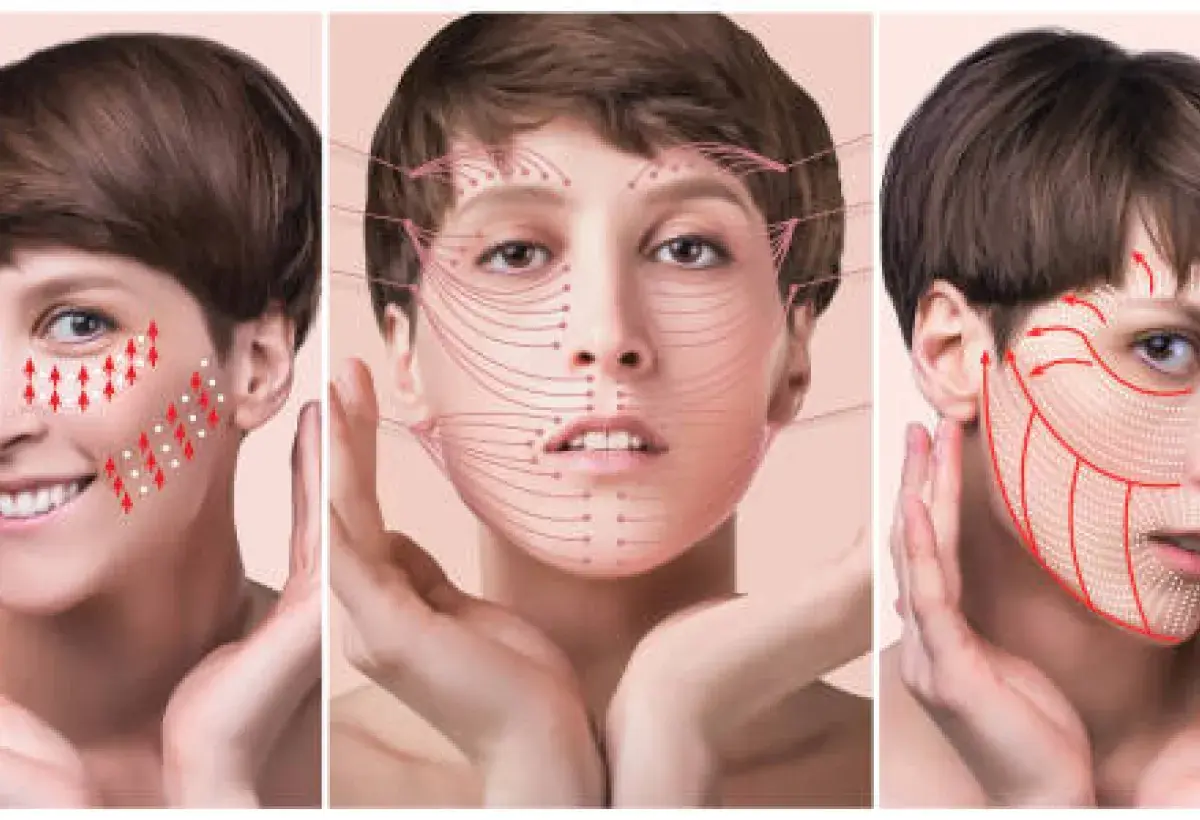
Gua Sha and Microcirculation
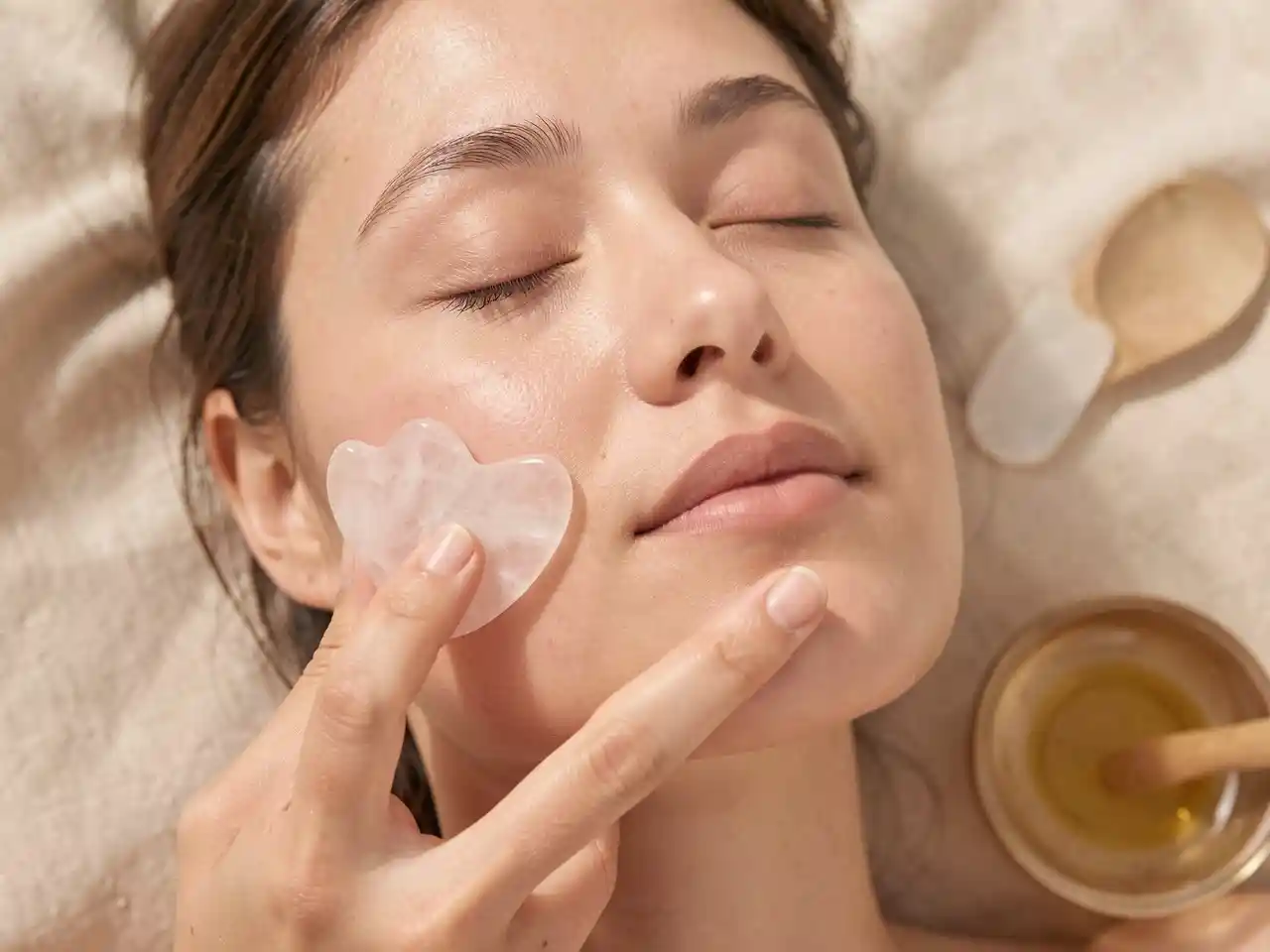
Gua Sha, a traditional East Asian technique involving gentle scraping of the skin with a smooth-edged tool, has been studied for its effects on circulation and inflammation. Clinical observations have shown that Gua Sha increases local microcirculation, which may contribute to improved skin tone and reduced puffiness (Nielsen et al., 2007; Braun et al., 2011).
More recent analyses have supported these findings, suggesting that Gua Sha enhances blood flow and lymphatic movement, both of which play roles in maintaining skin clarity and reducing fluid retention (Xie et al., 2021). Rather than directly “creating” collagen, the technique appears to optimize the environment in which collagen synthesis occurs by improving nutrient delivery and reducing localized stagnation.
When performed with appropriate pressure and lubrication, Gua Sha can support the skin’s natural processes without disrupting the barrier. However, excessive force or frequency may lead to irritation, reinforcing the importance of controlled and mindful application.
Facial Yoga and Muscle Adaptation
Facial yoga operates on a different but complementary principle: the activation and strengthening of underlying facial muscles. With age, muscle tone diminishes, contributing to sagging and loss of definition. Targeted exercises aim to restore tone and improve structural support beneath the skin.
Emerging evidence suggests that facial exercises may influence muscle thickness and tone, contributing to structural support beneath the skin. A clinical study demonstrated that consistent facial exercise improved mid-face fullness and perceived facial appearance over time (Alam et al., 2018). More recent analyses have continued to explore how muscle engagement interacts with circulation and connective tissue dynamics, particularly in non-invasive aesthetic approaches (Wang, 2021).
The effect is not purely muscular. Increased muscle activity promotes localized circulation and may indirectly support skin firmness. However, moderation remains essential. Excessive or forceful movements can strain delicate tissues, emphasizing that effectiveness lies in controlled, consistent practice rather than intensity.
Image
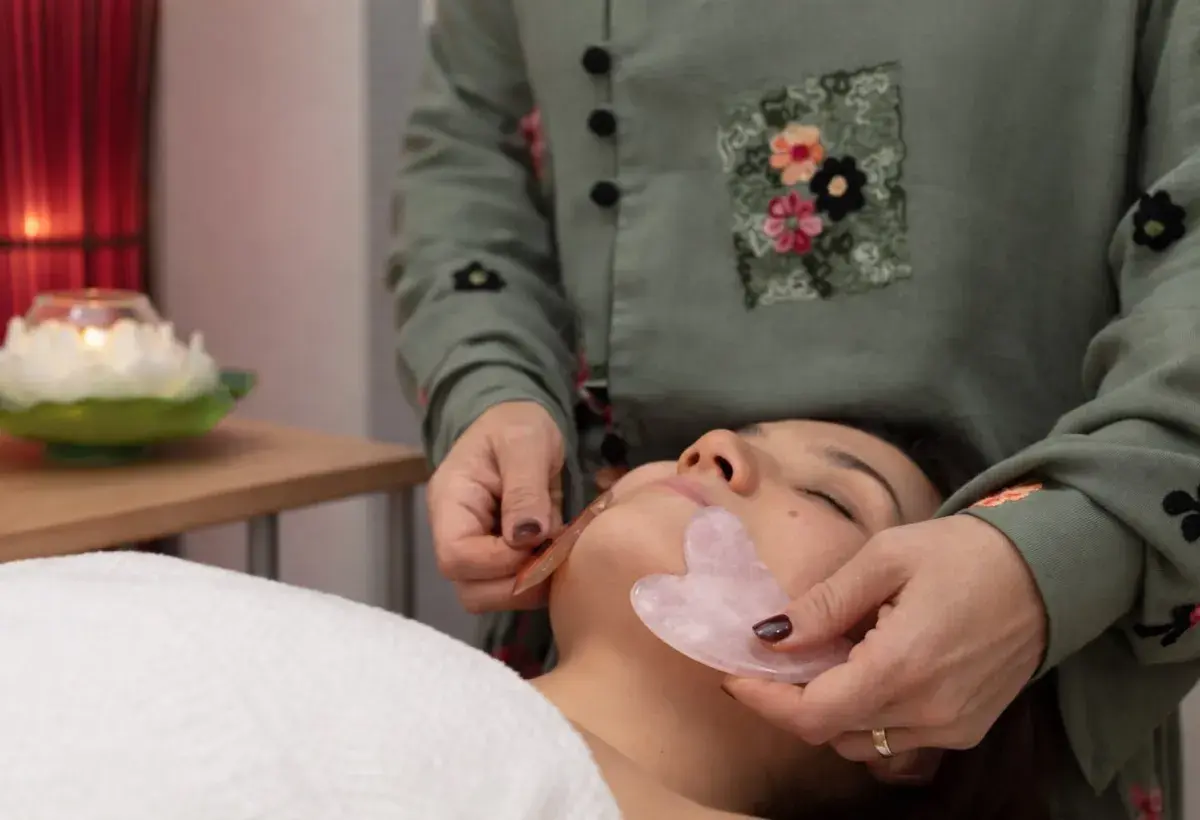
Gua Sha and Microcirculation
Gua Sha, a traditional East Asian technique involving gentle scraping of the skin with a smooth-edged tool, has been studied for its effects on circulation and inflammation. Clinical observations have shown that Gua Sha increases local microcirculation, which may contribute to improved skin tone and reduced puffiness (Nielsen et al., 2007; Braun et al., 2011).
Gua Sha has been examined for its effects on microcirculation and tissue response. Studies have shown that this technique increases surface blood flow, which may contribute to improved skin appearance and reduced tension in treated areas (Braun et al., 2011). Contemporary physiological research has supported the role of circulation in maintaining tissue health, reinforcing the relevance of such techniques when applied appropriately (Xie et al., 2021).
When performed with appropriate pressure and lubrication, Gua Sha can support the skin’s natural processes without disrupting the barrier. However, excessive force or frequency may lead to irritation, reinforcing the importance of controlled and mindful application.
Facial Yoga and Muscle Adaptation
Facial yoga operates on a different but complementary principle: the activation and strengthening of underlying facial muscles. With age, muscle tone diminishes, contributing to sagging and loss of definition. Targeted exercises aim to restore tone and improve structural support beneath the skin.
A clinical study conducted at Northwestern University found that a structured facial exercise program led to improved mid-face fullness and perceived reduction in age over time (Alam et al., 2018). Although this study predates 2020, more recent discussions in dermatological literature have continued to explore the role of muscle engagement in facial aesthetics, particularly in relation to non-invasive interventions (Wang, 2021).
The effect is not purely muscular. Increased muscle activity promotes localized circulation and may indirectly support skin firmness. However, moderation remains essential. Excessive or forceful movements can strain delicate tissues, emphasizing that effectiveness lies in controlled, consistent practice rather than intensity.
Conclusion
Facial yoga and Gua Sha do not function as shortcuts to youth, but as practices that engage the body’s inherent capacity for maintenance and repair. They reflect a shift away from purely external solutions toward methods that involve participation, awareness, and consistency.
For individuals over forty, these techniques offer a non-invasive pathway to support skin structure, improve circulation, and maintain muscle tone. Their value lies not in exaggerated claims, but in their alignment with how the body naturally responds to stimulation and care.
Beauty, in this sense, becomes less about intervention and more about interaction, an ongoing dialogue between the body and the habits that shape it.
Image
Suggested Citation
Lendez, M. (2026). Facial yoga and Gua Sha: Non-invasive lifting and the science of collagen stimulation (Article 4 of 7 in the “Aging Skin After 40” series). Chikicha Skin & Healthy Aging.
About the Author
Dr. Mariza Lendez is the developer of the Ikigai-Bayanihan Purpose-Driven Retirement Framework, a model that redefines aging through purpose, dignity, and community-centered living.
Aging Skin After 40 Series
👉 The Science of Aging, Elasticity Loss, and Wrinkles
👉 Top 10 Botanical Extracts That Firm and Repair Aging Skin: 2024 Science-Backed Guide
👉 The Gut-Skin Axis: How Probiotics Are Clinically Proven to Reduce Wrinkles from Within
👉 The Collagen Diet: 12 Science-Backed Foods to Rebuild Aging Skin from Within
👉 Acid Mantle Repair: The Hidden Key to Plumper, Wrinkle-Resistant Skin
👉 Beauty Sleep Redefined: How Your 2AM Melatonin Surge Rebuilds Collagen and Smooths Wrinkles
👉 Facial Yoga and Gua Sha: 2024 Science on Non-Invasive Lifting and Collagen Boosting
Disclaimer
Chikicha does not sell or promote any of the products mentioned in this article. The content is intended solely for educational and informational purposes.
The author, Mariza Lendez, is not a medical practitioner. This article does not provide medical advice, diagnosis, or treatment. Readers are encouraged to consult a qualified healthcare professional.
REFERENCES
Alam, M., et al. (2018). Effect of facial exercise on facial appearance. JAMA Dermatology. https://doi.org/10.1001/jamadermatol.2017.5212
Braun, M., Schwickert, M., Nielsen, A., et al. (2011). Effect of Gua Sha on microcirculation. Explore. https://doi.org/10.1016/j.explore.2011.04.001
Wang, J. H. C. (2021). Mechanobiology of connective tissues. Journal of Biomechanics. https://doi.org/10.1016/j.jbiomech.2020.109557
Xie, Y., et al. (2021). Effects of mechanical stimulation on microcirculation. Frontiers in Physiology. https://doi.org/10.3389/fphys.2021.682491