The MIPAA Series - Rethinking Aging in the 21st Century: Part 1 - Older Persons and Development: Reframing Aging as an Economic Opportunity | Part 2 - Advancing Health and Well-being: Building Systems for Longer, Healthier Lives | Part 3 - Enabling Environments: Designing Age-Inclusive Communities and Economies
MIPAA Series: Rethinking Aging in the 21st Century (Part 2 of 3) Health and Well-being: Building Systems for Longer, Healthier Lives
A Policy Perspective on Aging, Care Systems, and Longevity
The United Nations Madrid International Plan of Action on Ageing (MIPAA) emphasizes that longevity must be accompanied by health, dignity, and quality of life.
Under its second pillar Advancing Health and Well-being into Old Age, the framework calls for a shift from reactive healthcare systems toward preventive, integrated, and person-centered approaches to aging.
Yet despite significant progress in life expectancy, many societies remain unprepared for the health realities of aging populations. Longer lives do not automatically translate into healthier years. In many countries, additional years are often accompanied by chronic illness, reduced mobility, and increasing dependence on fragmented care systems.
This gap between longevity and health outcomes presents one of the most pressing challenges of the silver economy.
The Longevity-Health Gap
Over the past decades, advances in medicine, nutrition, and public health have significantly extended life expectancy. However, what has not kept pace is healthy life expectancy, it is the number of years individuals live free from serious illness or disability.
This divergence creates a structural strain on healthcare systems. As populations age, the prevalence of non-communicable diseases, including cardiovascular conditions, diabetes, and neurodegenerative disorders continues to rise. These conditions require long-term management rather than episodic treatment, placing sustained pressure on healthcare infrastructure, families, and public finances.
The issue is not longevity itself. It is the quality of those additional years and the systems designed to support them.
Rethinking Health Systems for Aging Societies
Traditional healthcare models are largely designed to respond to acute conditions. Aging populations, however, require systems capable of managing chronic conditions over extended periods while maintaining quality of life.
This requires a fundamental shift in how health systems are structured. Preventive care must become a central priority. Early detection, lifestyle interventions, and community-based health programs can delay the onset of chronic diseases and reduce long-term healthcare costs.
At the same time, integrated care models are essential. Coordinating primary care, specialized treatment, rehabilitation, and social services ensures that older individuals receive continuous and coherent support rather than fragmented interventions.
The World Health Organization has emphasized this approach through its framework on healthy aging, advocating for systems that focus not only on treating illness but also on maintaining functional ability and independence.
The Growing Importance of Long-Term Care
As populations age, the demand for long-term care services is increasing rapidly. This includes support for individuals who require assistance with daily activities, whether due to physical limitations, cognitive decline, or chronic illness.
In many countries, long-term care systems remain underdeveloped or heavily reliant on informal caregiving by families. While family support plays a vital role, demographic changes, including smaller household sizes and increased workforce participation are making this model increasingly unsustainable.
Developing formal long-term care systems is therefore essential. This includes:
- home-based care services
- community care centers
- assisted living facilities
- nursing and specialized care institutions
Equally important is the recognition and support of caregivers, both formal and informal. Without adequate policies, training, and financial support, caregiving systems risk becoming strained, affecting both care quality and caregiver well-being.
Technology, Innovation, and Healthy Aging
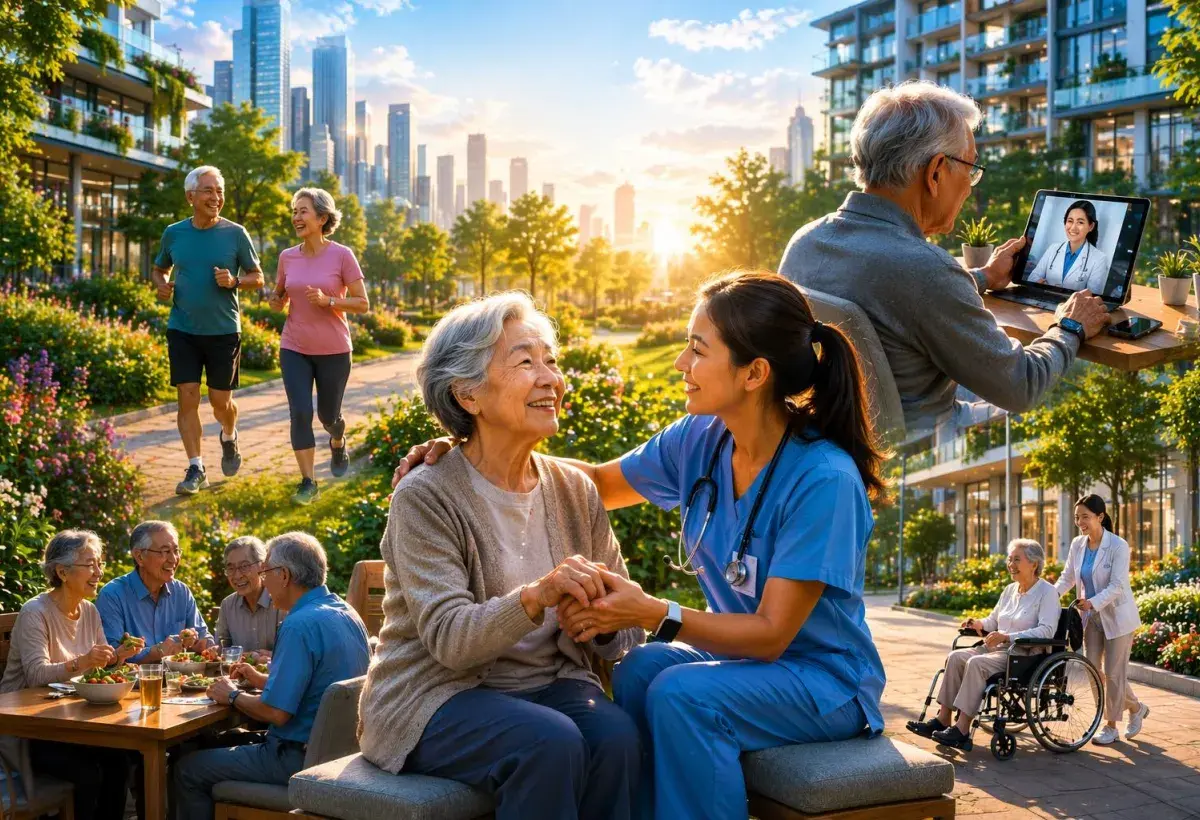
Technological innovation offers new opportunities to improve health outcomes in aging societies. Digital health tools, telemedicine, wearable devices, and assistive technologies can support early diagnosis, continuous monitoring, and independent living.
However, technology must be implemented thoughtfully. Access, affordability, and digital literacy remain critical barriers, particularly among older populations. Ensuring inclusive access to innovation is essential to avoid widening health inequalities.
When integrated effectively, technology can enhance, not replace, human-centered care systems, improving both efficiency and quality of life.
Image
Policy Gaps and Systemic Challenges
Despite growing awareness of the need for reform, several challenges persist. Healthcare systems in many regions remain fragmented, with limited coordination between medical services and social care. Funding structures often prioritize treatment over prevention, reinforcing reactive rather than proactive models of care.
Workforce shortages in healthcare and caregiving sectors further complicate the situation. As demand increases, the availability of trained professionals becomes a critical constraint.
In addition, health inequalities continue to shape outcomes in aging populations. Socioeconomic status, geographic location, and access to services significantly influence both longevity and quality of life. Addressing these gaps requires not only increased investment but also systemic redesign.
Advancing the MIPAA Agenda: Strategic Directions
Building healthier aging societies requires a coordinated and forward-looking policy approach. Strengthening preventive health systems can reduce the long-term burden of disease while promoting active and independent living. Investments in public health, nutrition, and early intervention play a critical role in extending healthy life expectancy.
Developing integrated care models ensures that health and social services work together to support individuals across the life course. This approach improves both efficiency and patient outcomes. Expanding long-term care infrastructure is equally essential. Sustainable systems must combine public support, private sector participation, and community-based solutions to meet growing demand.
At the same time, investing in the health and care workforce is critical. Training, retention, and professionalization of caregiving roles will determine the capacity of systems to deliver quality care.
Finally, promoting age-friendly environments including accessible housing, transportation, and public spaces, supports both physical and mental well-being.
Health as the Foundation of the Silver Economy
Health is not only a social objective but also an economic one. Without healthy populations, the potential of the silver economy cannot be fully realized. Healthy older adults are more likely to remain active in the workforce, participate in communities, and contribute to economic activity.
Conversely, poor health outcomes increase dependency, reduce productivity, and place greater strain on public systems. Investing in health is therefore an investment in economic resilience.
Conclusion: From Longevity to Quality of Life
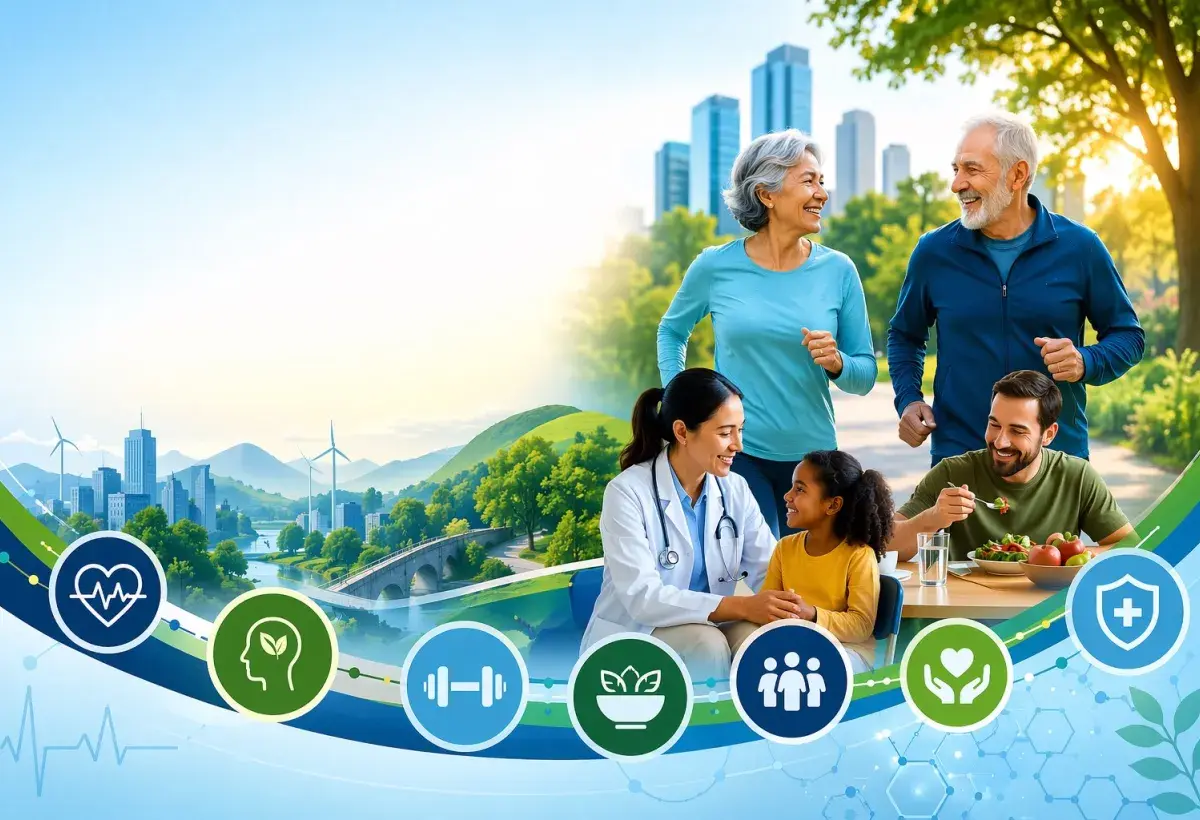
The second pillar of MIPAA highlights a critical truth: extending life is not enough. The goal must be to ensure that longer lives are also healthier, more independent, and more fulfilling.
Achieving this requires a shift from fragmented, reactive systems to integrated, preventive, and person-centered models of care. It also demands a broader understanding of health, not merely as the absence of disease, but as the ability to live with dignity, purpose, and autonomy.
As societies continue to age, the success of the silver economy will depend not only on how long people live, but on how well they live.
Consultant Perspective
From a policy standpoint, the sustainability of aging societies is anchored in how health systems are designed but not in isolation. While investments in preventive care, integrated services, and long-term care infrastructure are essential, service provision alone is insufficient to sustain well-being in the context of longer, more active lives. Today’s older adults are healthier, more educated, and increasingly capable of continued participation, requiring systems that do not only support them, but actively include them.
Frameworks such as the United Nations Madrid International Plan of Action on Ageing (MIPAA) and the World Health Organization Decade of Healthy Ageing have already established the direction, integrated, person-centered, and inclusive systems that extend beyond healthcare into the broader social environment. The policy challenge now lies in achieving synergy across these domains, where health systems, community structures, and everyday environments function as a cohesive ecosystem.
In this context, inclusion becomes the critical differentiator. The objective is no longer limited to delivering care, but to enabling continued participation, socially, economically, and within community life. Aging policy, therefore, must evolve from service provision to system integration, ensuring that longer lives are not only supported, but meaningfully lived within the fabric of society.
Image
Suggested Citation
Lendez, M. (20206). MIPAA Series: Part 2 of 3) Advancing Health and Well-being: Building Systems for Longer Healthier Lives. Chikicha.
About the Author
Dr. Mariza Lendez is a researcher, social entrepreneur, and creator of the Ikigai-Bayanihan (Purpose + Collective Ethos) Retirement Model, an innovative framework that integrates purpose, community engagement, and sustainability to support meaningful aging and later-life well-being.
The MIPAA Series: Rethinking Aging in the 21st Century
👉 Part 1 - Older Persons and Development: Reframing Aging as an Economic Opportunity
👉 Part 2 - Advancing Health and Well-being: Building Systems for Longer, Healthier Lives
👉 Part 3 - Enabling Environments: Designing Age-Inclusive Communities and Economies
References
- United Nations. 2002. Madrid International Plan of Action on Ageing. United Nations Second World Assembly on Ageing. https://www.un.org/development/desa/ageing/madrid-plan-of-action-and-its-implementation.html
- World Health Organization. 2015. World Report on Ageing and Health. World Health Organization.https://www.who.int/publications/i/item/9789241565042
- World Health Organization. 2020. Decade of Healthy Ageing 2021–2030. https://www.who.int/initiatives/decade-of-healthy-ageing
- World Health Organization. 2017. Integrated Care for Older People (ICOPE): Guidelines on Community-Level Interventions to Manage Declines in Intrinsic Capacity. https://www.who.int/publications/i/item/9789241550109
- World Bank. 2024. Aging and Social Protection Systems. World Bank Group. https://www.worldbank.org
- Organisation for Economic Co-operation and Development. 2023. Health at a Glance. OECD Publishing. https://www.oecd.org/health/health-at-a-glance/
- Organisation for Economic Co-operation and Development. 2023. Long-Term Care and Health Systems: Reforming Care for Aging Populations. OECD Publishing. https://www.oecd.org/health/long-term-care/