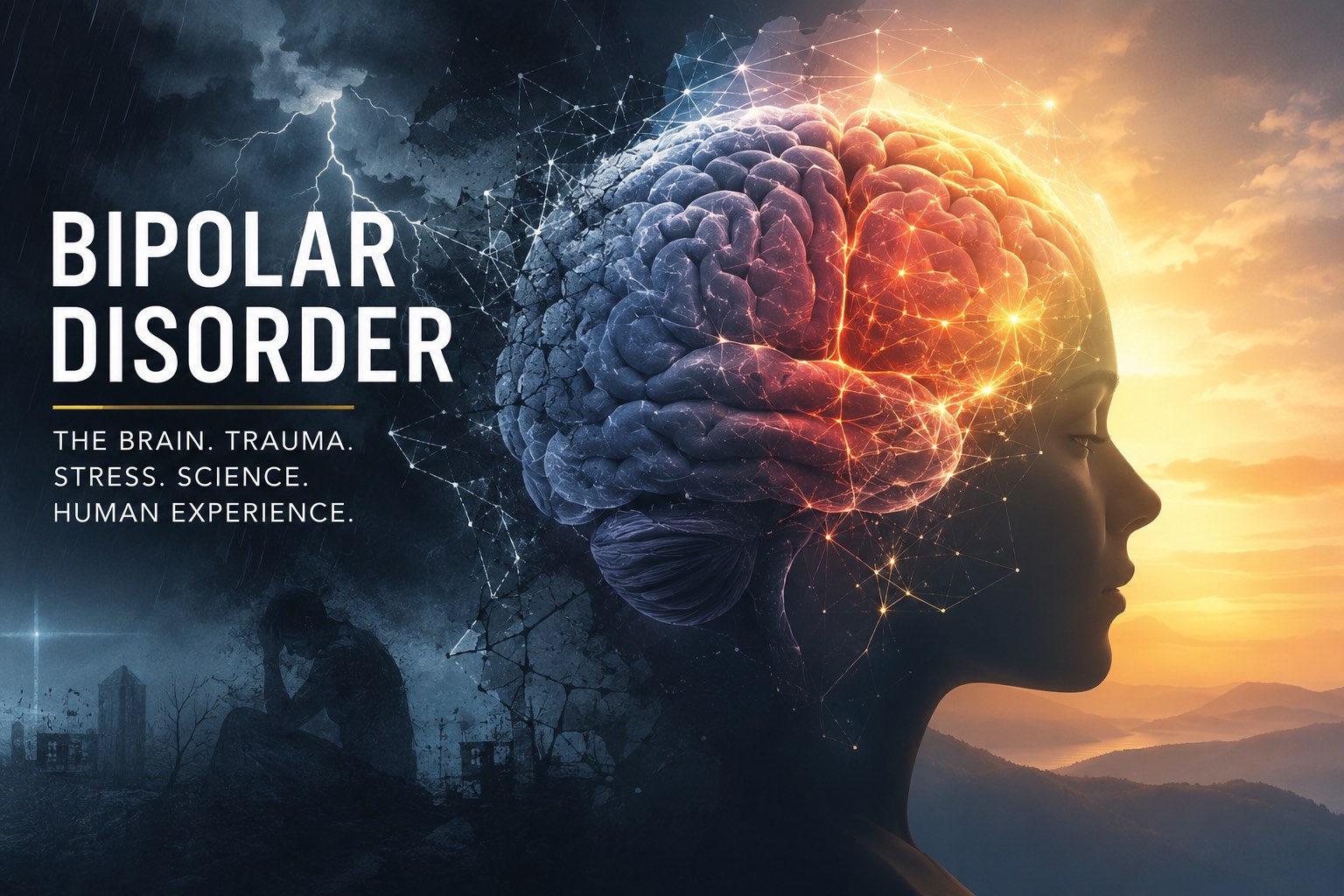
Bipolar disorder is more than emotional highs and lows.
How Does It Develop, What Science Now Understands
Bipolar disorder is often discussed only when its symptoms become visible during emotional breakdowns, severe mood swings, impulsive behavior, or public episodes that society finds difficult to understand. Yet modern psychiatric science increasingly suggests that bipolar disorder does not suddenly appear from nowhere, nor does it emerge from a single cause. Contemporary research now describes it as a highly complex condition shaped through the interaction of biology, environment, emotional stress, neurological regulation, trauma exposure, sleep patterns, and lived human experience.
According to the World Health Organization (WHO), bipolar disorder develops through a combination of biological, psychological, social, and environmental factors rather than a singular identifiable source (WHO, 2025). Similarly, the National Institute of Mental Health (NIMH) explains that while genetics may increase vulnerability, inherited predisposition alone does not fully determine whether an individual will develop the condition (NIMH, 2025).
This distinction is important because older public interpretations frequently reduced bipolar disorder to personality weakness, emotional instability, or flawed behavior. Modern psychiatric science now rejects these oversimplifications. Research increasingly demonstrates that bipolar disorder involves dysregulation within brain systems responsible for mood regulation, cognition, energy balance, stress response, and sleep-wake rhythms. Consequently, the condition is now approached as both neurological and psychosocial in nature rather than purely emotional.
One of the strongest scientific findings involves the role of genetics. Contemporary psychiatric literature consistently shows that individuals with close family members living with bipolar disorder may possess higher vulnerability compared to the general population. However, psychiatric authorities emphasize that genetics alone are insufficient to explain onset. Many individuals with genetic predisposition never develop bipolar disorder, while others without known family history may still experience the condition. This suggests that biology interacts continuously with environmental and psychological conditions rather than functioning independently.
Trauma and Prolonged Psychological Stress
WHO identifies adverse experiences such as violence, bereavement, chronic stress, instability, social disruption, and emotional trauma as factors that may contribute to the development or worsening of bipolar symptoms (WHO, 2025). Modern psychiatric frameworks therefore increasingly recognize that the human nervous system does not operate separately from lived experience. Emotional trauma, unresolved stress, and prolonged instability may influence how vulnerable neurological systems respond over time.
Equally significant is the growing scientific focus on sleep and circadian rhythm disruption. Earlier psychiatric models rarely treated sleep regulation as central to bipolar disorder. Contemporary research now strongly associates irregular sleep patterns, exhaustion, disrupted routines, and circadian instability with the triggering of manic or depressive episodes. The Cleveland Clinic notes that sleep changes, stress, medications, and substance use may significantly influence mood episodes and symptom recurrence. This emerging understanding explains why modern treatment plans increasingly emphasize regular sleep, structured daily routines, stress reduction, and behavioral stability alongside medication and psychotherapy.
Scientific understanding has also evolved regarding the diversity of bipolar presentations. Earlier psychiatry often focused primarily on severe manic episodes requiring hospitalization. Contemporary psychiatric science now recognizes a broader bipolar spectrum involving Bipolar I Disorder, Bipolar II Disorder, cyclothymia, mixed episodes, and varying intensities of mood dysregulation. This broader framework partly explains why bipolar disorder remains frequently misunderstood and misdiagnosed. Many individuals initially seek help during depressive episodes, while hypomanic states may appear temporarily productive, energetic, or socially functional rather than clinically concerning.
Research additionally demonstrates that untreated bipolar disorder may significantly affect long-term quality of life. NIMH and other psychiatric authorities associate unmanaged bipolar disorder with occupational instability, relationship difficulties, substance misuse, financial problems, impaired judgment, emotional suffering, and increased suicide risk. However, contemporary psychiatric science simultaneously emphasizes that long-term stability and meaningful functioning remain possible through sustained treatment, early intervention, supportive environments, and proper management strategies.
Image
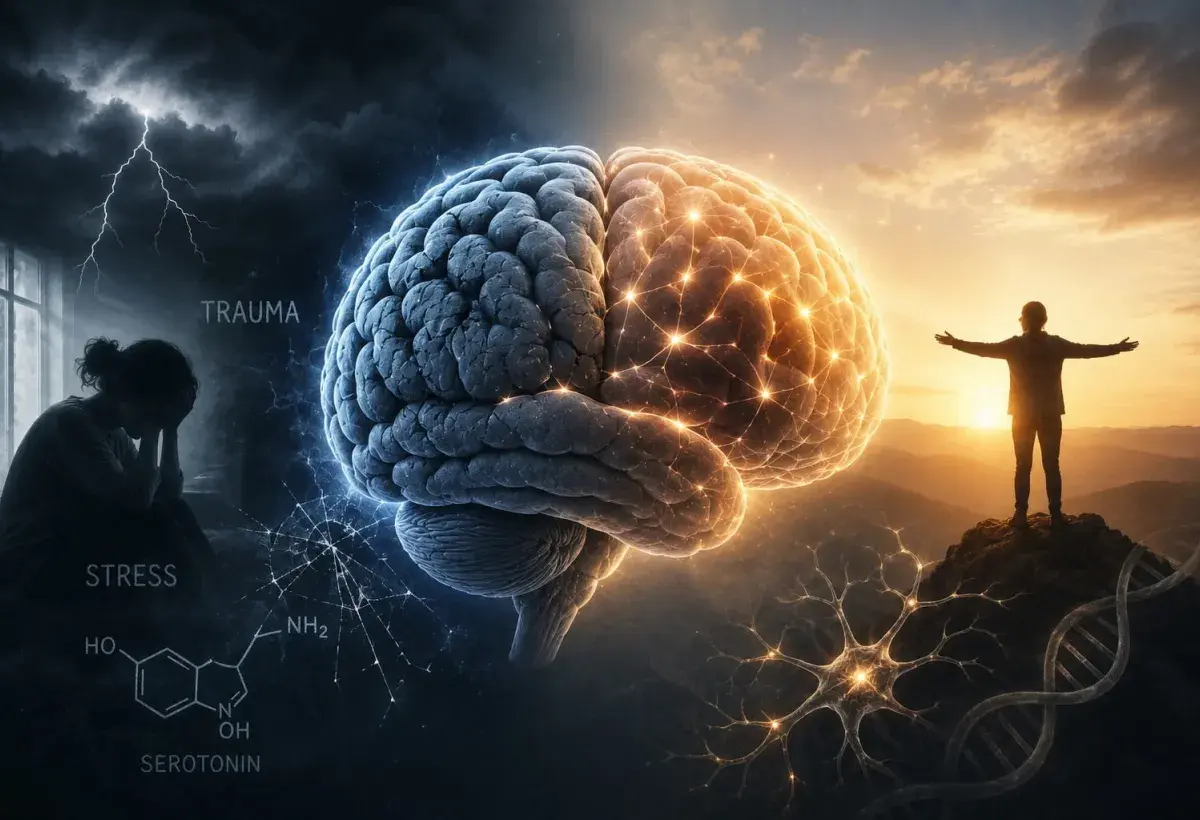
Identify Warning Signs Before Severe Psychiatric Deterioration Occurs
This shift toward earlier detection represents one of the most important developments in modern mental health science. Psychiatry is increasingly attempting to identify warning signs before severe psychiatric deterioration occurs. Authorities now encourage closer attention to persistent sleep disruption, prolonged emotional instability, impulsive behavior, racing thoughts, unusual energy surges, emotional crashes, risk-taking behavior, and periods of depression following elevated mood states. Early psychiatric evaluation may reduce long-term complications and improve treatment outcomes.
Consequently, modern mental health recommendations now extend beyond medication alone. WHO, NIMH, NHS, and major psychiatric institutions increasingly advocate integrated treatment approaches involving psychotherapy, psychoeducation, medication management, family support systems, emotional awareness, stress reduction, healthy routines, and social stability. The role of family and social environment has become particularly important because research repeatedly shows that supportive relationships may improve recovery outcomes, while chronic hostility, ridicule, instability, and social isolation may worsen symptoms and treatment adherence.
At the same time, science continues moving forward. Emerging psychiatric research now explores digital mood monitoring, wearable technologies, artificial intelligence-assisted symptom tracking, neuroinflammatory markers, and precision psychiatry approaches designed to personalize treatment according to biological and behavioral patterns. The future direction of bipolar science increasingly focuses on prevention, adaptation, and long-term quality of life rather than merely responding to psychiatric crises after they occur.
Maybe the deeper question is no longer simply what bipolar disorder is, but how society chooses to respond once science has already expanded its understanding of it.
If modern research now recognizes bipolar disorder as involving biology, stress, trauma, sleep, cognition, and environmental systems, then public ridicule, oversimplified judgment, and social stigma may no longer represent ignorance alone as they may become part of the very environment that worsens suffering itself.
Conclusion
This leads to an uncomfortable reflection for society: if prolonged emotional suffering can gradually alter the human mind over time, what then happens when misunderstanding itself becomes part of the environment surrounding the person already struggling to regulate it?
For individuals living with bipolar disorder, modern psychiatric authorities consistently emphasize the importance of self-awareness, treatment consistency, emotional regulation, structured routines, sleep stability, and strong support systems. Yet the challenge often extends beyond surviving emotional episodes alone. It becomes a continuous effort to manage the internal language shaping fear, perception, thought patterns, stress response, and emotional interpretation.
The mind speaks continuously.
The body listens continuously.
And the heart that is beating approximately 60 to 100 times every minute in order to sustain human life, physiologically responds to what prolonged stress, fear, thought, and emotion repeatedly communicate to it over time.
The future of mental health awareness is not solely about identifying disorders earlier, but about teaching society how to become less psychologically destructive toward the people already attempting to manage them.
Because beyond every diagnosis remains a human being trying to preserve dignity while carrying a battle that most people will never fully hear except in silence.
Read 👉️ Bipolar Disorder - Article 1 of 3: Beyond the Labels, Into the Science https://www.chikicha.com/bipolar-disorder-article-1-3-beyond-labels-science
Read 👉️ Bipolar Disorder, Article 3 of 3: Aging, and the Human Systems Surrounding It https://www.chikicha.com/bipolar-disorder-aging-and-human-systems-surrounding-it
Image

Suggested Citation
Lendez, M. (2026). Bipolar Disorder: How Does It Develop, What Science Now Understands. Chikicha. (Lendez, M. is the developer of Ikigai-Bayanihan Framework).
About the Author: Written by Dr. Mariza Lendez, the developer of Ikigai-Bayanihan Framework, a model that redefines aging through purpose, dignity, and community-centered living.
Disclaimer:
The author is not a licensed medical doctor, psychiatrist, or healthcare professional. This article is written for educational and public awareness purposes only, based on scientific literature, peer-reviewed studies, and information from recognized international health authorities. It is not intended to replace professional medical advice, diagnosis, or treatment. Readers experiencing mental health concerns are strongly encouraged to consult a qualified physician or licensed mental health professional.
Note: Developed with the assistance of AI-supported deep research and evidence-based scientific sources.
References
World Health Organization. (2025). Bipolar disorder. World Health Organization. https://www.who.int/news-room/fact-sheets/detail/bipolar-disorder
National Institute of Mental Health. (2025). Bipolar disorder. U.S. Department of Health and Human Services, National Institutes of Health. https://www.nimh.nih.gov/health/topics/bipolar-disorder
National Institute of Mental Health. (2025). Bipolar disorder publication. U.S. Department of Health and Human Services, National Institutes of Health. https://www.nimh.nih.gov/sites/default/files/documents/health/publications/bipolar-disorder/bipolar-disorder.pdf
National Health Service. (2025). Bipolar disorder. NHS. https://www.nhs.uk/mental-health/conditions/bipolar-disorder/
Cleveland Clinic. (2024). Bipolar disorder (manic depression): Symptoms & treatment. Cleveland Clinic. https://my.clevelandclinic.org/health/diseases/9294-bipolar-disorder
Mayo Clinic. (2024). Bipolar disorder - Symptoms and causes. Mayo Foundation for Medical Education and Research. https://www.mayoclinic.org/diseases-conditions/bipolar-disorder/symptoms-causes/syc-20355955
Mayo Clinic. (2024). Heart rate: What’s normal? Mayo Foundation for Medical Education and Research. https://www.mayoclinic.org/healthy-lifestyle/fitness/expert-answers/heart-rate/faq-20057979
Sajatovic, M., Strejilevich, S. A., Gildengers, A. G., Dols, A., Al Jurdi, R. K., Forester, B. P., Kessing, L. V., Beyer, J. L., Rej, S., Schouws, S., & Tsai, S.-Y. (2024). Older-age bipolar disorder: A comprehensive review. Bipolar Disorders, 26(2), 113–134. National Library of Medicine, PubMed Central. https://pmc.ncbi.nlm.nih.gov/articles/PMC11058954/
Yale Medicine. (2024). Bipolar disorder. Yale School of Medicine. https://www.yalemedicine.org/conditions/bipolar-disorder