The MIPAA Series - Rethinking Aging in the 21st Century: Part 1 - Older Persons and Development: Reframing Aging as an Economic Opportunity | Part 2 - Advancing Health and Well-being: Building Systems for Longer, Healthier Lives | Part 3 - Enabling Environments: Designing Age-Inclusive Communities and Economies
MIPAA Series (Part 1 of 3) Older Persons and Development: Reframing Aging as an Economic Opportunity in the Silver Economy
A Policy Perspective on Unlocking the Value of Longer Lives
The United Nations Madrid International Plan of Action on Ageing (MIPAA) calls for a fundamental shift in how societies understand aging - not as a period of dependency, but as a stage of life where health, dignity, and meaningful participation can be sustained.
Yet more than two decades after its adoption, this vision remains only partially realized. Across many economies, older persons are still positioned at the margins of economic life, despite possessing experience, skills, and institutional knowledge that are increasingly scarce in aging societies.
This disconnect reflects a deeper structural issue. While demographic change has extended life expectancy, economic systems have not fully adapted to longer lives. Retirement models, labor market structures, and social protection systems continue to operate on assumptions shaped by shorter life spans and different economic conditions.
As a result, a growing segment of the population remains underutilized, not due to lack of capability, but due to outdated institutional design.
The Underutilization of Human Capital
One of the central concerns addressed by MIPAA under the pillar of Older Persons and Development is the limited economic participation of older adults. In many countries, retirement is still treated as a definitive exit from productive life, rather than a transition into new forms of contribution.
This approach carries significant economic consequences. As labor shortages intensify and dependency ratios rise, economies are simultaneously sidelining a demographic group capable of contributing meaningfully to productivity, mentorship, entrepreneurship, and knowledge transfer.
The issue is not that societies are aging. The issue is that economies have not yet learned how to fully utilize the value of longer lives. The issue is misalignment.
Older adults today are healthier, more educated, and more capable than previous generations. Many possess decades of experience that cannot be easily replaced by younger workers alone. Yet rigid retirement policies, age discrimination, and limited opportunities for reskilling continue to restrict their participation.
The Economic Case for Active Aging
Reframing aging as an economic opportunity requires recognizing older persons as active participants in development rather than passive recipients of support. From a macroeconomic perspective, extending workforce participation among older adults can:
- increase overall labor supply
- reduce pressure on pension systems
- sustain consumption and economic activity
- support intergenerational knowledge transfer
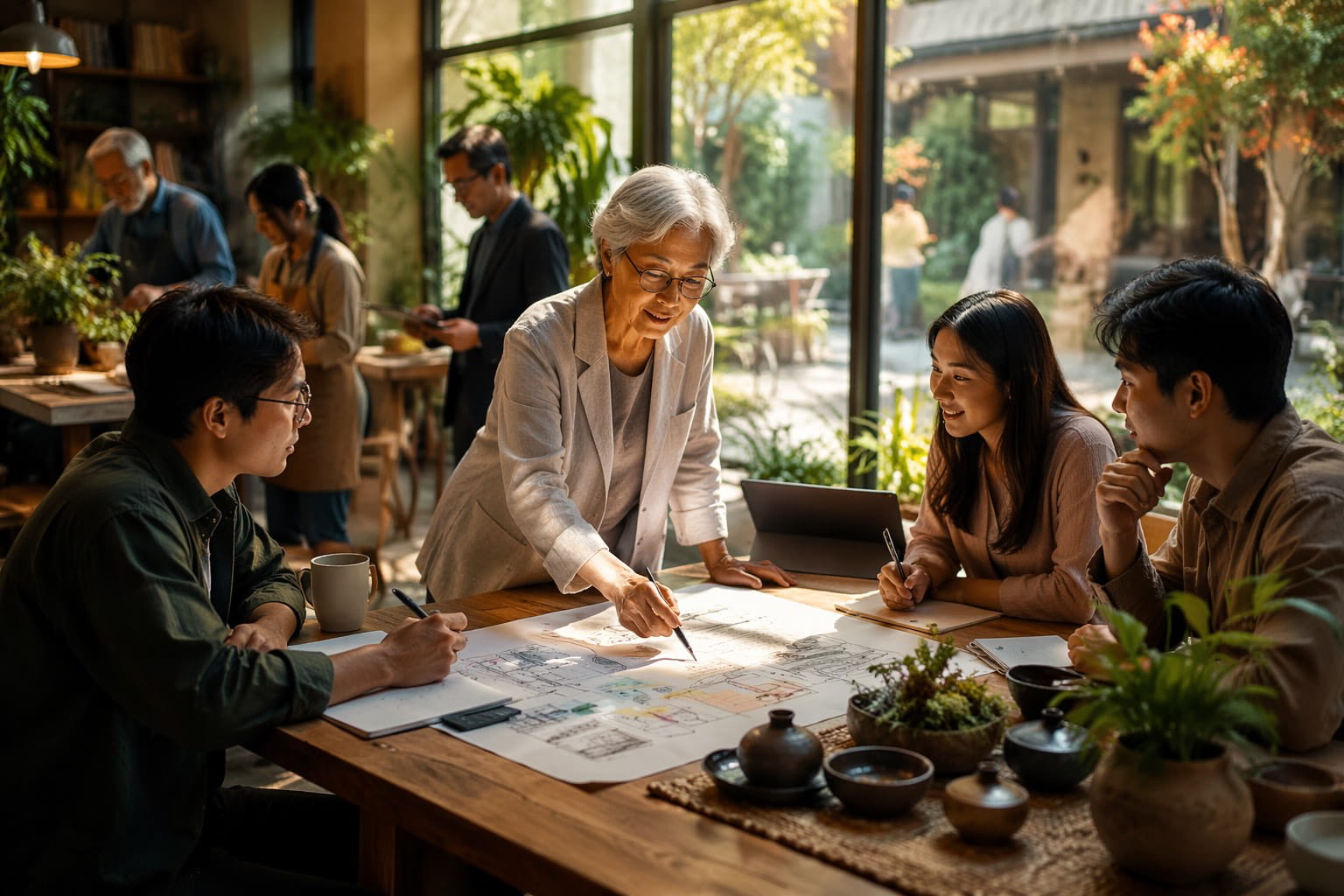
Beyond formal employment, older individuals contribute through entrepreneurship, advisory roles, caregiving, and community leadership. These contributions, while often undervalued in traditional economic metrics, play a critical role in maintaining social and economic resilience.
The emerging concept of the silver economy reflects this shift. It recognizes that aging populations are not merely a fiscal challenge but also a source of demand, innovation, and human capital.
However, unlocking this potential requires intentional policy design.
Image

Policy Gaps in Current Systems
Despite growing recognition of the importance of active aging, several structural barriers continue to limit progress.
Labor markets in many economies remain insufficiently adaptable to the needs of older workers. Opportunities for flexible or phased retirement are still limited, and age-inclusive workplace practices are not yet widely institutionalized. Education and training systems also tend to focus on early-life learning, with insufficient emphasis on lifelong skill development.
As industries evolve due to technological change, older workers often face challenges in accessing reskilling opportunities that would allow them to remain competitive. In addition, social norms and institutional biases continue to reinforce the perception of older persons as dependents rather than contributors. This perception influences hiring practices, policy priorities, and investment decisions, further constraining participation.
These gaps highlight the need for a more integrated and forward-looking policy approach.
Advancing the MIPAA Agenda: Strategic Directions
Realizing the vision of Older Persons and Development requires a coordinated set of policy interventions that align economic systems with demographic realities. Extending working lives through gradual adjustments in retirement policies can help maintain a balance between active participation and financial sustainability.
At the same time, flexible work arrangements enable older individuals to continue contributing in ways that reflect their capacities and preferences.
Investing in lifelong learning systems is equally critical. Continuous access to education and skills development allows workers to adapt to changing labor market demands and remain productive across longer life spans.
Pension systems must also evolve to support this transition. Sustainable models that combine public provision with individual savings and incentives for continued participation can help ensure both fiscal stability and personal security.
In parallel, labor market policies should actively promote age-inclusive employment practices. Reducing barriers to hiring older workers and recognizing their value within organizations can help shift both economic outcomes and societal perceptions. Together, these strategies reflect a broader transition, from managing aging as a cost to integrating aging as a component of economic development.
From Dependency to Contribution
At its core, the MIPAA framework challenges societies to rethink the role of older persons within economic systems. The shift required is not merely policy-driven but conceptual. Older adults should not be viewed primarily as beneficiaries of pensions and healthcare systems.
They are, increasingly, contributors to economic productivity, social cohesion, and knowledge continuity.
This perspective is particularly important in the context of aging societies facing labor shortages and fiscal constraints. By enabling older persons to remain active and engaged, economies can strengthen resilience while enhancing individual well-being.
Conclusion: A Structural Transition
The transformation envisioned by MIPAA is not a short-term adjustment but a structural transition. It requires aligning institutions, policies, and cultural attitudes with the realities of longer life spans.
The future of aging societies will depend not on the pace of demographic change, but on the ability of economies to adapt to it. When supported by inclusive labor markets, sustainable pension systems, and lifelong learning frameworks, aging can become a driver of economic vitality rather than decline.
The real challenge is not longevity itself. It is whether societies are prepared to fully recognize and utilize the value that longer lives can offer.
Consultant Perspective
Recognizing aging as a structural shift requires more than policy acknowledgment as it demands active alignment across institutions, industries, and households. Frameworks such as the United Nations Madrid International Plan of Action on Ageing (MIPAA) already provide the architecture. The immediate priority is ensuring that these principles are translated into operational standards within labor markets, education systems, and retirement structures, rather than remaining as high-level policy commitments.
At the same time, implementation cannot remain solely within the domain of governments and institutions. Families and older adults themselves play a critical role in shaping outcomes. Awareness and understanding of aging policy frameworks enable individuals to make informed decisions about work, health, and financial planning, while also strengthening their ability to advocate for inclusive practices within their communities and workplaces.
Economies that actively embed age-inclusive labor systems, continuous skills development, and adaptive retirement pathways will be better positioned to convert demographic change into long-term economic strength. However, the full realization of this transition depends on a shared level of policy literacy where institutions implement, and individuals engage. In this context, aging policy becomes not only a governance tool, but a means of protecting interests, expanding opportunities, and ensuring that longer lives are both productive and secure.
Image

Suggested Citation
Lendez, M. (2026). Older Persons and Development: Reframing Aging as an Economic Opportunity in the Silver Economy. Chikicha.
About the Author
Dr. Mariza Lendez is a researcher, social entrepreneur, and creator of the Ikigai-Bayanihan (Purpose + Collective Ethos) Retirement Model, an innovative framework that integrates purpose, community engagement, and sustainability to support meaningful aging and later-life well-being.
The MIPAA Series: Rethinking Aging in the 21st Century
👉 Part 1 - Older Persons and Development: Reframing Aging as an Economic Opportunity
👉 Part 2 - Advancing Health and Well-being: Building Systems for Longer, Healthier Lives
👉 Part 3 - Enabling Environments: Designing Age-Inclusive Communities and Economies
References
- United Nations. 1982. Vienna International Plan of Action on Ageing. United Nations Department of Economic and Social Affairs (UN DESA). https://www.un.org/development/desa/ageing/resources/vienna-international-plan-of-action.html
- United Nations General Assembly. 1991. United Nations Principles for Older Persons (Resolution 46/91).https://www.un.org/development/desa/ageing/resources/united-nations-principles-for-older-persons.html
- United Nations. 2002. Madrid International Plan of Action on Ageing. United Nations Second World Assembly on Ageing. https://www.un.org/development/desa/ageing/madrid-plan-of-action-and-its-implementation.html
- United Nations. 2015. Transforming Our World: The 2030 Agenda for Sustainable Development.https://sdgs.un.org/2030agenda
- World Health Organization. 2020. Decade of Healthy Ageing 2021–2030. https://www.who.int/initiatives/decade-of-healthy-ageing
- Organisation for Economic Co-operation and Development (OECD). 2023. OECD Economic Outlook. OECD Publishing. https://www.oecd.org/economic-outlook/
- World Bank. 2024. Aging and Social Protection Systems. World Bank Group. https://www.worldbank.org
- International Monetary Fund. 2025. World Economic Outlook. International Monetary Fund. https://www.imf.org