The Longevity Framework Series: Okinawa Longevity Model | Nicoya Longevity Model | Icaria Longevity Model | Sardinia Longevity Model | Loma Linda Longevity Model
Introduction: From Choice to Structure
In the city of Loma Linda, longevity is not left to chance; it is practiced. Unlike other longevity regions shaped primarily by geography or inherited tradition, Loma Linda represents a distinct configuration of ageing, one in which long life emerges from conscious, sustained choice. Here, individuals adhere to a shared system of values that guide how they eat, move, rest, and relate to others across the lifespan.
Ageing, in this context, is not approached passively but with intention. Daily life is structured around patterns that reinforce health rather than disrupt it. What distinguishes Loma Linda is not the presence of isolated healthy behaviors, but the consistency with which those behaviors are collectively sustained. Longevity, therefore, is not incidental. It is organized.
In a world increasingly oriented toward reactive health interventions, Loma Linda offers a different proposition. It suggests that longevity is not achieved through episodic correction, but through the alignment of daily choices with enduring principles of living.
Scientific Positioning
Loma Linda is recognized as one of the world’s Blue Zones, largely due to the lifestyle patterns of the Seventh-day Adventist community. Epidemiological evidence from the Adventist Health Studies demonstrated that Adventists experience significantly longer life expectancy compared to the general population, with gains of approximately seven to ten years (Fraser & Shavlik, 2001; Orlich et al., 2013).
These outcomes have been consistently associated with plant-based dietary patterns, abstinence from tobacco and alcohol, regular physical activity, and strong social and spiritual engagement. More recent evidence has continued to show that plant-forward diets are associated with reduced risk of cardiovascular disease, metabolic disorders, and mortality (Orlich et al., 2013; World Health Organization, 2023).
Moreover, these findings indicate that longevity in Loma Linda is not the result of a single protective factor, but of a structured system in which multiple behaviors operate in alignment over time.
Core Thesis: Longevity as Intentional System Design
Longevity in Loma Linda is not merely biological. It is structural, behavioral, and intentional. It emerges from a system in which daily practices are guided by shared values and sustained through collective reinforcement. Health, in this model, is not pursued intermittently but embedded within the organization of everyday life.
This perspective shifts the analytical focus from individual behavior to systemic consistency. The question is no longer which habits extend life, but how those habits are maintained over decades. Loma Linda demonstrates that when behavior is anchored in values and reinforced through community, health-supportive patterns become durable rather than episodic.
Image

Social Structure: Faith as Cohesive Infrastructure
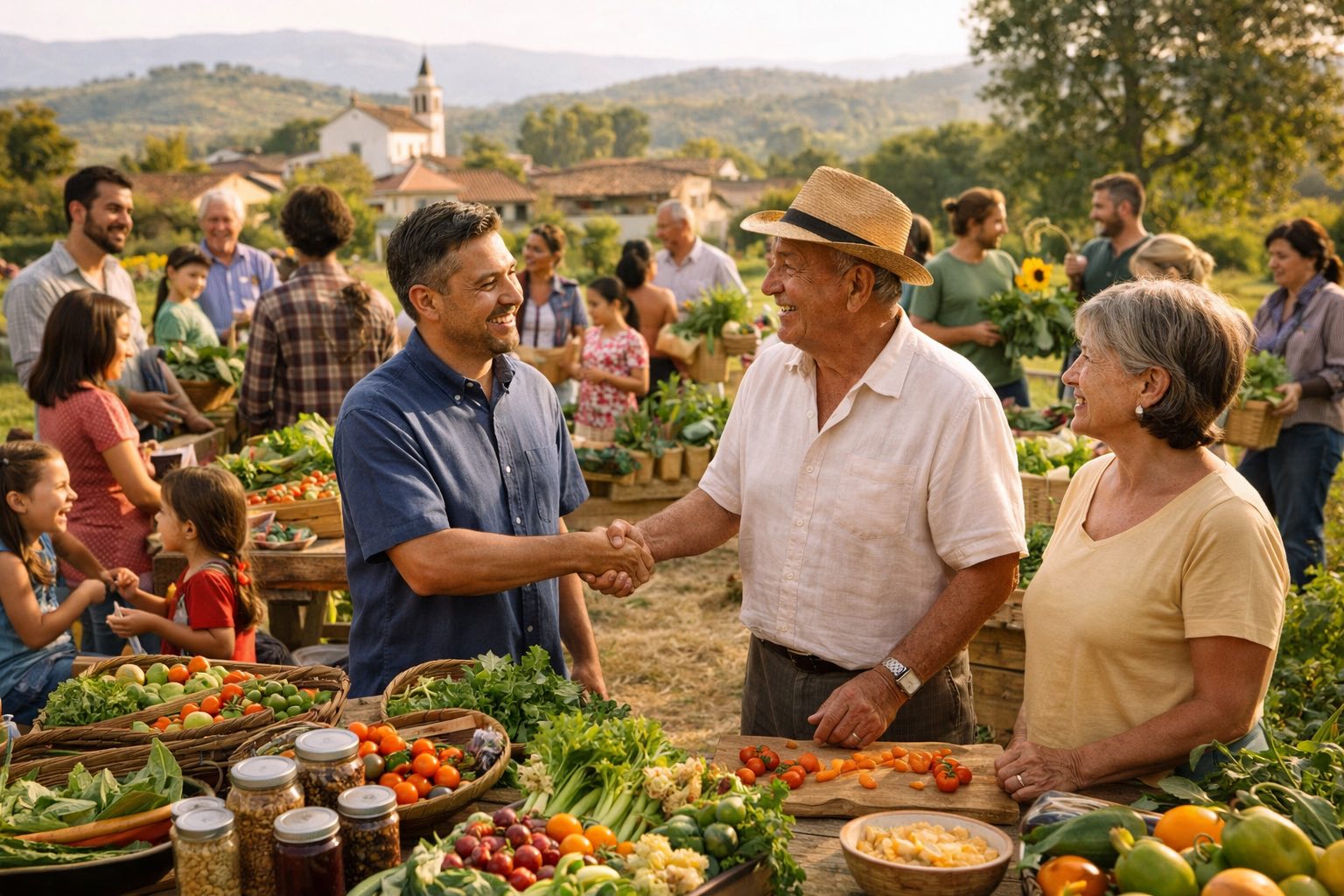
In Loma Linda, social life is anchored in faith. The Seventh-day Adventist tradition provides not only a belief system but a framework for social cohesion, shaping patterns of interaction, support, and accountability. Regular gatherings, shared rituals, and collective practices create an environment in which individuals remain connected across the lifespan.
Religious participation has been associated with improved mental health, lower mortality risk, and stronger social support networks (Koenig, 2012; World Health Organization, 2023). These outcomes reflect the role of structured social belonging in stabilizing both psychological well-being and behavioral consistency.
Within Loma Linda, connection is not incidental; it is institutionalized. Social relationships are sustained not through chance interaction but through shared commitment, reinforcing identity, belonging, and continuity over time.
Lifestyle and Environment: Discipline as Daily Regulation
A defining characteristic of Loma Linda is disciplined living. Health-supportive behaviors are not adopted sporadically but maintained consistently across decades. Many residents adhere to plant-based diets, abstain from harmful substances, and engage in regular physical activity, creating a stable behavioral environment that reduces long-term risk.
Vegetarian dietary patterns have been associated with lower incidence of cardiovascular disease, hypertension, and metabolic disorders (Orlich et al., 2013). However, the significance of these findings lies not in the behaviors themselves, but in their sustained practice.
Equally important is the structured incorporation of rest through the observance of a weekly Sabbath. This intentional pause functions as a mechanism for stress regulation and psychological restoration. In Loma Linda, health is not reactive but regulated through disciplined patterns of living. Stability, rather than intensity, becomes the organizing principle.
Image

Purpose and Psychological Continuity: Meaning Through Service
Purpose in Loma Linda is closely tied to faith and service. Individuals are encouraged to live with intention, contribute to others, and maintain a sense of meaning that extends beyond individual outcomes. This orientation fosters continuity of identity and reinforces engagement across the lifespan.
Research showed that a strong sense of purpose is associated with reduced mortality risk and improved cognitive outcomes (Alimujiang et al., 2019; Sutin et al., 2021). In Loma Linda, purpose is not constructed in isolation but sustained through shared values, service, and participation in community life.
Identity, therefore, does not diminish with age. It is preserved and reinforced within a system that continues to value contribution, creating a psychological environment that supports resilience and continuity.
The Biological Interface: Why the System Holds
The Loma Linda model functions as a biologically protective system in which multiple mechanisms converge to reduce long-term health risk. Plant-based dietary patterns support cardiovascular and metabolic regulation (Orlich et al., 2013; World Health Organization, 2023), while abstinence from harmful substances reduces cumulative physiological burden.
Social and religious engagement contribute to improved mental health and survival outcomes (Koenig, 2012), while structured rest supports stress regulation and physiological recovery. These factors operate not in isolation, but as an interconnected system.
Biological outcomes, in this context, are the result of sustained behavioral alignment. The body responds not only to individual actions, but to the consistency with which those actions are maintained. Biology, therefore, follows intention.
System Vulnerability: The Limits of Continuity
Despite its structural strength, the Loma Linda model is not immune to change. Broader societal influences, including shifts in dietary patterns, technological lifestyles, and cultural norms, introduce variability into previously stable systems.
Emerging differences among younger populations suggest that longevity advantages are not guaranteed by identity alone, but depend on sustained adherence to underlying principles. This reinforces a critical insight: longevity is not inherited. It is maintained.
As consistency declines, the protective effects of the system may weaken. The durability of longevity outcomes, therefore, depends on the continued alignment between values, behavior, and environme
Policy and Global Relevance
The Loma Linda model aligns closely with global ageing frameworks that emphasize functional ability, autonomy, and continued participation as core dimensions of healthy ageing. The World Health Organization defines healthy ageing as the process of maintaining functional capacity and well-being across the lifespan (World Health Organization, 2020).
Similarly, the United Nations Madrid International Plan of Action on Ageing and its subsequent reviews highlight the importance of dignity, participation, and sustained contribution in later life (United Nations, 2002; United Nations Economic Commission for Europe, 2022).
Loma Linda provides empirical support for these frameworks. It demonstrates that when values, behavior, and social structures are aligned, healthy ageing is not only achievable but sustainable.
Conclusion: Longevity as Intentional Alignment
Loma Linda does not offer a formula. It reveals a structure in which discipline shapes behavior, faith reinforces connection, and purpose is sustained through service. Longevity emerges not from isolated habits, but from the consistent alignment of values and daily life.
These are not independent behaviors but components of a coherent system that protects health by preserving stability, continuity, and meaning. Longevity, in this context, is not accidental. It is intentional.
The relevance of the Loma Linda model extends beyond its geographic and cultural boundaries. Its underlying principles are not confined to a specific community, but to the structure of how life is organized. In practical terms, this involves the sustained adoption of plant-forward dietary patterns, the avoidance of harmful habits, the cultivation of value-driven social relationships, the protection of time for rest and reflection, and the integration of purpose into daily life. When these elements are maintained with disciplined consistency, the conditions that support longevity begin to emerge.
What Loma Linda demonstrates is not a lifestyle to replicate, but a system to understand. The translation of these principles into modern contexts does not require imitation, but alignment. Longevity, therefore, becomes not an outcome to be pursued, but a consequence of how life is consistently lived.
And in a world increasingly shaped by disruption and excess, Loma Linda offers a clear and enduring proposition: longevity is not determined by time alone, but by the consistency with which individuals live in alignment with the conditions that sustain life.
Image

Suggested Citation: Lendez, M. (2026). Loma Linda Longevity Model: Discipline, faith, and the structure of healthy ageing. Developed within the Ikigai-Bayanihan Purpose-Driven Retirement Framework.
About the Author: Written by Dr. Mariza Lendez, the developer of the Ikigai-Bayanihan Purpose-Driven Retirement Framework, a model that redefines aging through purpose, dignity, and community-centered living.
The Longevity Framework Series
👉 Okinawa Longevity Model
👉 Nicoya Longevity Model
👉 Icaria Longevity Model
👉 Sardinia Longevity Model
👉 Loma Linda Longevity Model
REFERENCES
Core Evidence
Orlich, M. J., et al. (2013).
Vegetarian dietary patterns and mortality in Adventist Health Study 2.
JAMA Internal Medicine.
https://jamanetwork.com/journals/jamainternalmedicine/fullarticle/1710093
Fraser, G. E. (2014).
Associations between diet and cancer, ischemic heart disease, and all-cause mortality in non-Hispanic white California Seventh-day Adventists.
American Journal of Clinical Nutrition.
https://academic.oup.com/ajcn/article/100/suppl_1/353S/4576453
Plant-Based Diet & Health Outcomes
Satija, A., & Hu, F. B. (2018).
Plant-based diets and cardiovascular health.
Trends in Cardiovascular Medicine.
https://www.sciencedirect.com/science/article/pii/S1050173817301055
Lifestyle Factors
World Health Organization (2023).
World report on social determinants of health equity
https://www.who.int/publications/i/item/9789240080973
Physical Activity & Routine
World Health Organization (2022).
Global Status Report on Physical Activity
https://www.who.int/publications/i/item/9789240059153
Faith, Purpose & Longevity
Koenig, H. G. (2012).
Religion, spirituality, and health: The research and clinical implications.
ISRN Psychiatry.
https://www.hindawi.com/journals/isrn/2012/278730/
Alimujiang, A., et al. (2019).
Association between life purpose and mortality.
JAMA Network Open.
https://jamanetwork.com/journals/jamanetworkopen/fullarticle/2734064
Social Cohesion & Community
Holt-Lunstad, J., et al. (2015).
Loneliness and social isolation as risk factors for mortality.
Perspectives on Psychological Science.
https://journals.sagepub.com/doi/10.1177/1745691614568352
Global Ageing Frameworks
World Health Organization (2020).
Decade of Healthy Ageing: Baseline Report
https://www.who.int/publications/i/item/9789240017900
United Nations (2002).
Madrid International Plan of Action on Ageing (MIPAA)
United Nations Economic Commission for Europe (2022).
Rome Ministerial Declaration (MIPAA+20)
https://unece.org/population/publications/2022-rome-ministerial-declaration
Dan Buettner (2012).
The Blue Zones
National Geographic