The Longevity Framework Series: Okinawa Longevity Model | Nicoya Longevity Model | Icaria Longevity Model | Sardinia Longevity Model | Loma Linda Longevity Model
Introduction: From Observation to Structure
In the rugged highlands of Sardinia, longevity is not shaped by ease, but by endurance. This mountainous Mediterranean region has been the focus of sustained scientific interest due to its unusually high concentration of centenarians, particularly among men, an uncommon pattern in global ageing (Pes et al., 2021).
Life in Sardinia is physically demanding, socially grounded, and deeply rooted in tradition. Older adults are not removed from daily life; they remain visible, respected, and actively engaged in family and community. Ageing, in this context, does not represent withdrawal but continuity, where individuals maintain roles, identity, and participation across the lifespan.
What distinguishes Sardinia is not the presence of exceptional individuals, but the persistence of a way of life. Longevity emerges not as an outcome of intervention, but as a function of how life is organized. In this sense, Sardinia offers not an anomaly, but a structure.
Scientific Positioning
Sardinia is one of the original regions identified in longevity research as exhibiting exceptional lifespan patterns. Early demographic studies documented unusually high concentrations of centenarians in the mountainous Barbagia region, with a rare balance between male and female longevity (Poulain et al., 2004).
These patterns cannot be explained by healthcare access or economic advantage alone. Rather, they reflect the interaction of sustained physical activity, traditional dietary patterns, and strong social integration. Mediterranean dietary patterns, in particular, have been consistently associated with reduced cardiovascular risk and improved longevity outcomes (Estruch et al., 2018; World Health Organization, 2023).
The Sardinian case reinforces the view that longevity is not determined by isolated variables, but by the continuity of environmental, behavioral, and social conditions that support health across time.
Image
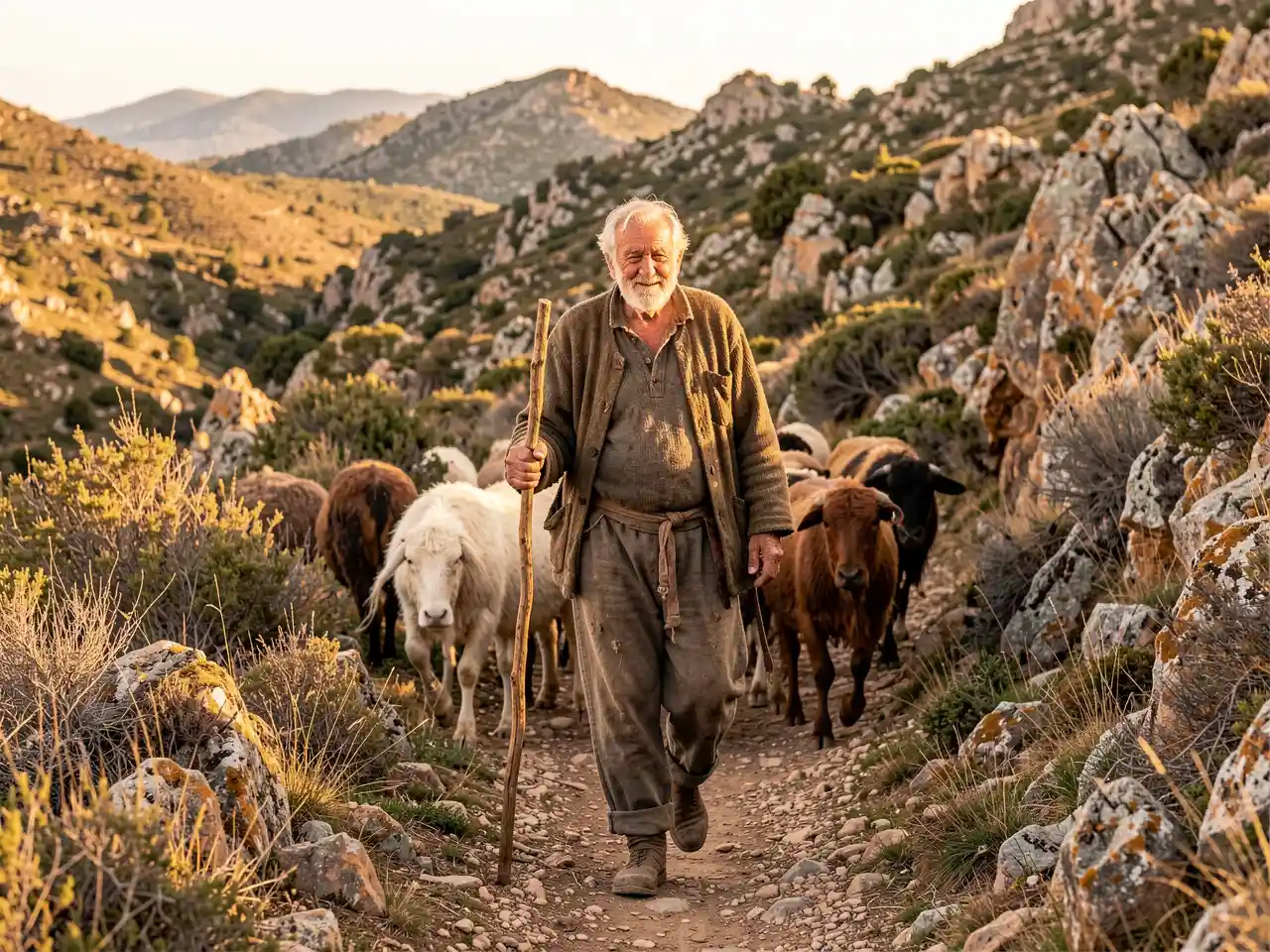
Core Thesis: Longevity as Strength and Continuity
Longevity in Sardinia is not merely biological. It is structural, cultural, and physical. It emerges from a way of life in which strength, social value, and daily practice reinforce one another across the lifespan.
This model reframes longevity as continuity rather than intervention. Physical vitality is not cultivated episodically but sustained through daily living. Social identity is not diminished with age but reinforced through ongoing participation. Strength, in this context, is not an outcome of training, but a condition of life itself.
Longevity, therefore, reflects the persistence of a system in which movement, connection, and purpose remain integrated across time.
Social Structure: Honor as a System of Value
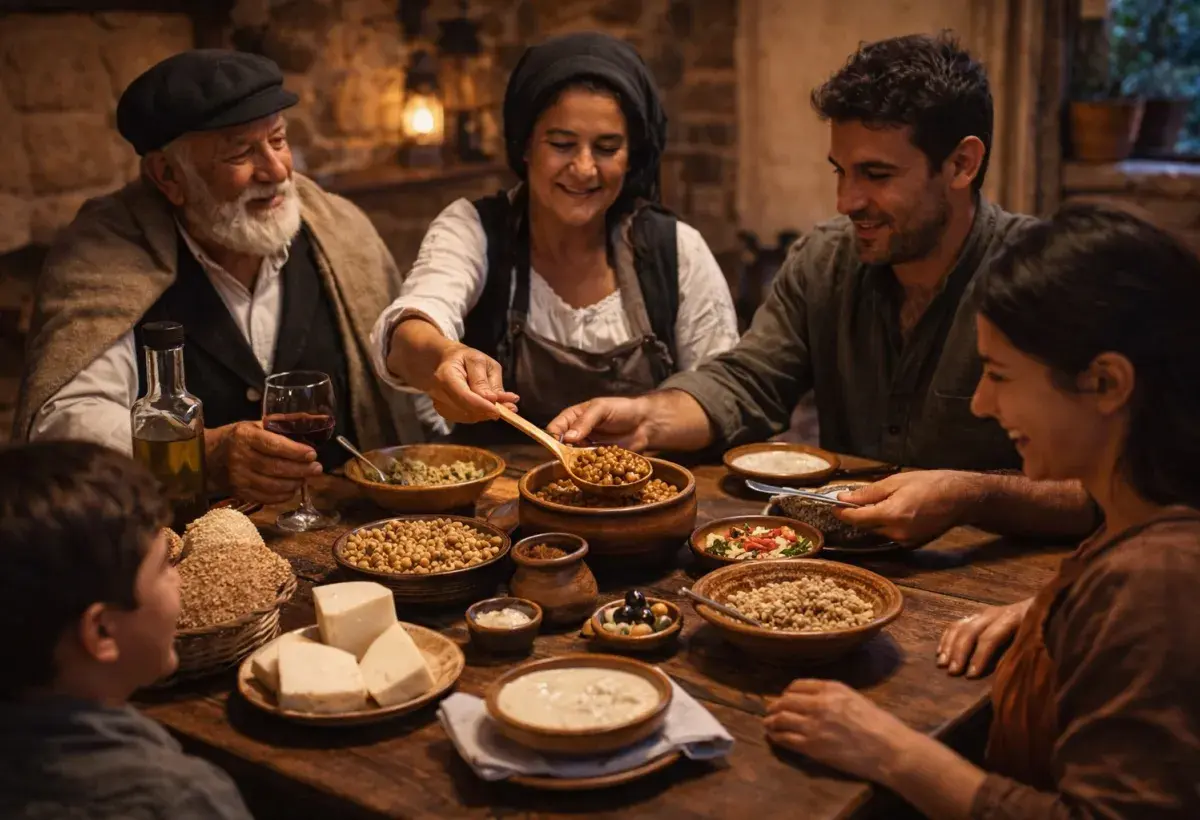
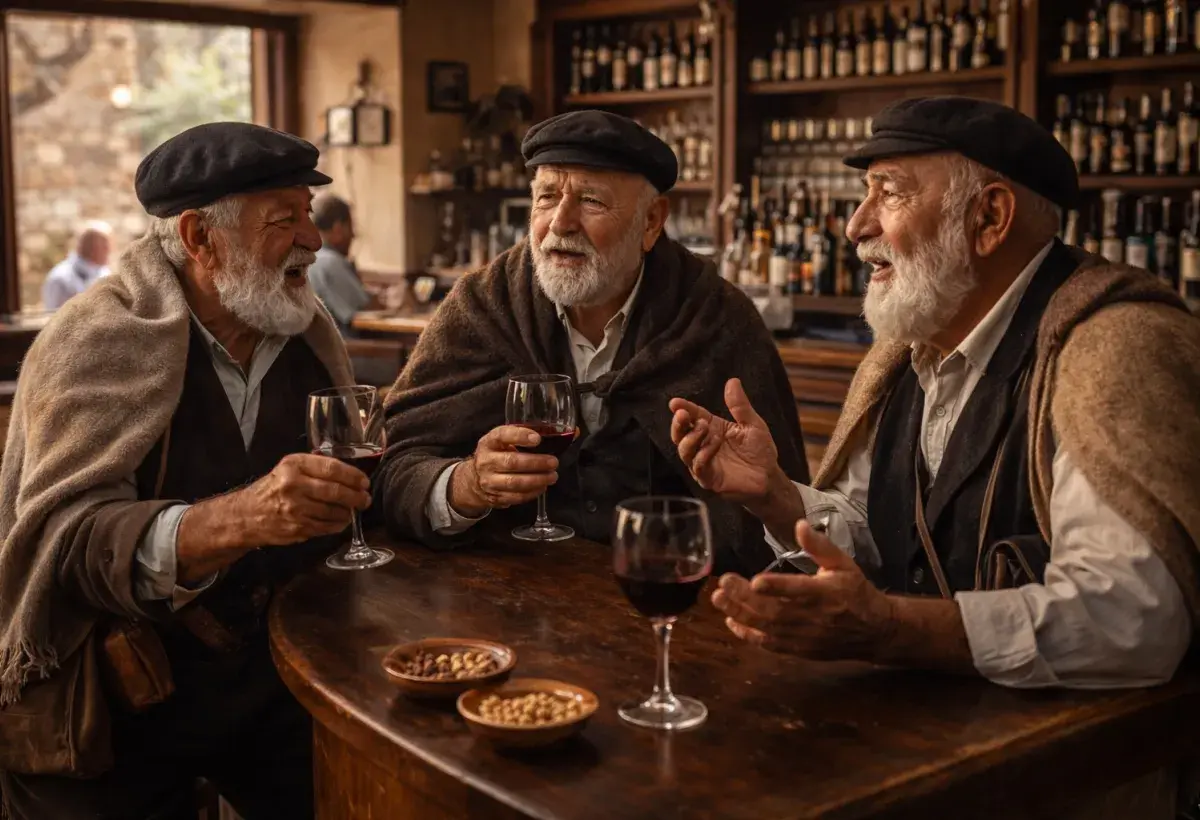
In Sardinian communities, social life is organized around shared spaces and intergenerational relationships. Local gathering places function as environments where individuals remain socially engaged through conversation, storytelling, and daily interaction.
Older adults retain social visibility and authority. Age does not diminish status; it reinforces it. Elders are respected, consulted, and integrated into family and community life, serving as carriers of memory, continuity, and cultural identity.
Empirical research has consistently shown that strong social relationships are associated with increased survival and improved health outcomes (Holt-Lunstad et al., 2015; World Health Organization, 2023), while social isolation increases the risk of cognitive decline and mortality (Livingston et al., 2020).
In Sardinia, connection is not incidental. It is embedded within a system of honor that sustains both psychological stability and social cohesion.
Image
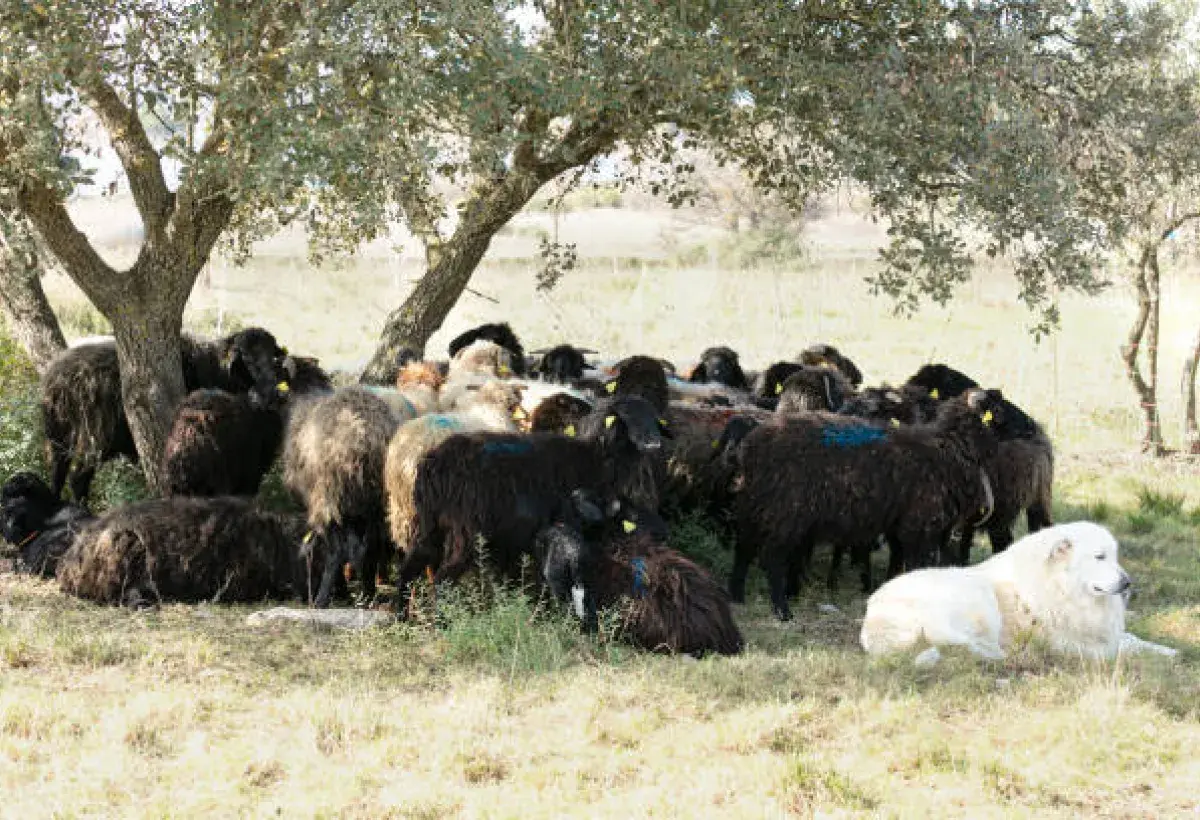
Lifestyle and Environment: Strength Through Daily Living
Daily life in Sardinia is physically grounded. The mountainous terrain requires continuous movement, including walking, climbing, and manual labor. Physical activity is not structured as exercise but embedded within routine life, creating sustained functional strength.
Dietary patterns reflect traditional Mediterranean principles, including whole grains, legumes, vegetables, olive oil, and dairy derived from sheep or goats. These patterns have been associated with reduced inflammation and improved cardiovascular health (Estruch et al., 2018).
Moderate consumption of locally produced wine, such as Cannonau, occurs within a social context, where its effects are shaped by moderation, timing, and communal engagement rather than excess.
In Sardinia, strength is not cultivated through intervention but sustained through continuity. Physical vitality is lived rather than engineered.
Purpose and Psychological Continuity: Identity Through Participation
Purpose in Sardinia is closely tied to identity, role, and continuity. Individuals remain engaged in meaningful activities across the lifespan through work, family responsibilities, and community participation.
This sustained engagement reinforces both psychological resilience and social relevance. Identity is preserved through participation rather than diminished through withdrawal.
Research showed that a strong sense of purpose is associated with reduced mortality and improved cognitive outcomes (Alimujiang et al., 2019; Sutin et al., 2021). In Sardinia, purpose is not abstract; it is expressed through lived roles that sustain meaning and continuity.
The Biological Interface: Why the System Holds
The Sardinian system reflects a convergence of protective mechanisms. Continuous physical activity supports cardiovascular and musculoskeletal health, while Mediterranean dietary patterns contribute to metabolic regulation and reduced inflammation (Estruch et al., 2018; World Health Organization, 2023).
Strong social ties enhance survival and reduce mortality risk (Holt-Lunstad et al., 2015), and sustained psychological purpose contributes to long-term resilience (Sutin et al., 2021).
These elements operate as an interconnected system. Biological outcomes, in this context, reflect the cumulative effect of sustained patterns of living. Biology follows structure.
Image
System Vulnerability: Disruption of Continuity
Despite its historical resilience, the Sardinian system is not immune to change. Modernization has altered dietary habits, reduced physical activity, and weakened traditional social structures. Increased reliance on processed foods and sedentary lifestyles reflects broader global patterns associated with rising chronic disease risk.
Observational evidence suggests that individuals who transition away from traditional village life toward more urbanized environments experience diminished longevity outcomes. These shifts reinforce a critical insight: longevity is not fixed. It is sustained.
As continuity is disrupted, the systems that once protected health may gradually weaken.
Policy and Global Relevance
The Sardinian model aligns closely with global ageing frameworks advanced by the World Health Organization and the United Nations. Healthy ageing is defined as maintaining functional ability and the capacity to live with autonomy and purpose (World Health Organization, 2020).
Similarly, the Madrid International Plan of Action on Ageing and its subsequent reviews emphasize the importance of social participation and continued contribution across the lifespan (United Nations, 2002; United Nations Economic Commission for Europe, 2022).
Sardinia demonstrates that these outcomes are not aspirational but achievable when supported by stable social and cultural systems.
Conclusion: Longevity as Enduring Strength
Sardinia does not offer a formula. It reveals a structure in which strength is sustained through daily life, elders are honored rather than marginalized, and purpose is reinforced through continued participation.
These are not isolated behaviors but components of a coherent system that protects health by preserving physical vitality, social value, and identity across the lifespan. Longevity, in Sardinia, is not accidental. It is sustained.
The relevance of the Sardinian model extends beyond its geographic context. Its principles are not confined to place, but to the structure of how life is organized. In practical terms, this involves the integration of natural movement into daily routines, the preservation of strong intergenerational relationships, the continuation of balanced and traditional dietary patterns, and the sustained engagement in meaningful roles. When these elements are maintained over time, the conditions that support healthy ageing begin to emerge.
What Sardinia demonstrates is not a lifestyle to replicate, but a system to understand. The translation of these principles into modern contexts does not require imitation, but reconstruction of continuity. Longevity, therefore, becomes not an aspiration, but a consequence of how life is consistently lived.
And in a world increasingly shaped by convenience and disconnection, Sardinia offers a grounded and enduring proposition: longevity is not built on comfort, but on a life that continues to demand movement, sustain connection, and affirm one’s place within a shared human experience.
Image

Suggested Citation
Lendez, M. (2026). Sardinia Longevity Model: Strength, tradition, and the structure of healthy ageing. Developed within the Ikigai-Bayanihan Purpose-Driven Retirement Framework.
About the Author: Written by Dr. Mariza Lendez, the developer of the Ikigai-Bayanihan Purpose-Driven Retirement Framework, a model that redefines aging through purpose, dignity, and community-centered living.
Explore the Ikigai-Bayanihan Retirement Model presented by Chikicha Co-founder:
https://www.chikicha.com/chikicha-co-founder-present-ikigai-bayanihan-retirement-model-iafor-egen-2026
The Longevity Framework Series
👉 Okinawa Longevity Model
👉 Nicoya Longevity Model
👉 Icaria Longevity Model
👉 Sardinia Longevity Model
👉 Loma Linda Longevity Model
REFERENCES
Core Demographic Evidence
Poulain, M., Pes, G. M., & Grasland, C. (2004).
Identification of a geographic area characterized by extreme longevity in the Sardinia island: The AKEA study.
Experimental Gerontology, 39(9), 1423–1429.
https://www.sciencedirect.com/science/article/pii/S0531556504001697
Pes, G. M., et al. (2013).
Male longevity in Sardinia: A review of historical and biological evidence.
Experimental Gerontology.
https://www.sciencedirect.com/science/article/pii/S053155651300081X
Diet (Mediterranean Pattern)
Estruch, R., et al. (2018).
Primary Prevention of Cardiovascular Disease with a Mediterranean Diet.
New England Journal of Medicine.
https://www.nejm.org/doi/full/10.1056/NEJMoa1800389
Trichopoulou, A., et al. (2003).
Adherence to a Mediterranean diet and survival in a Greek population.
New England Journal of Medicine.
https://www.nejm.org/doi/full/10.1056/NEJMoa025039
Physical Activity & Lifestyle
World Health Organization (2022).
Global Status Report on Physical Activity
https://www.who.int/publications/i/item/9789240059153
Social Structure & Longevity
Holt-Lunstad, J., et al. (2015).
Loneliness and social isolation as risk factors for mortality.
Perspectives on Psychological Science.
https://journals.sagepub.com/doi/10.1177/1745691614568352
World Health Organization (2023).
World report on social determinants of health equity
https://www.who.int/publications/i/item/9789240080973
Purpose & Psychological Meaning
Alimujiang, A., et al. (2019).
Association between life purpose and mortality among US adults.
JAMA Network Open.https://jamanetwork.com/journals/jamanetworkopen/fullarticle/2734064
Sutin, A. R., Stephan, Y., & Terracciano, A. (2021).
Psychological well-being and risk of dementia.
JAMA Network Open.
https://jamanetwork.com/journals/jamanetworkopen/fullarticle/2784169
Global Ageing Frameworks
World Health Organization (2020).
Decade of Healthy Ageing: Baseline Report
https://www.who.int/publications/i/item/9789240017900
United Nations (2002).
Madrid International Plan of Action on Ageing (MIPAA)
United Nations Economic Commission for Europe (2022).
Rome Ministerial Declaration (MIPAA+20)
https://unece.org/population/publications/2022-rome-ministerial-declaration
Contextual
Dan Buettner (2012).
The Blue Zones
National Geographic