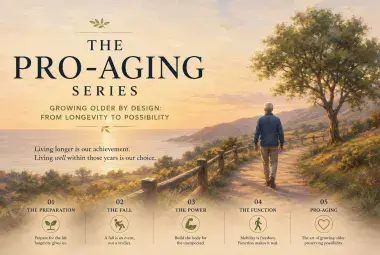
The Longevity Framework Series: Okinawa Longevity Model | Nicoya Longevity Model | Icaria Longevity Model | Sardinia Longevity Model | Loma Linda Longevity Model
Introduction: From Observation to Structure
In the northwestern region of Costa Rica lies the Nicoya Peninsula, a landscape defined by environmental simplicity and an unusually high concentration of long-lived individuals. Longevity in this region is not characterized by extended survival alone, but by the continuity of life across the lifespan. Older adults remain active, socially integrated, and purpose-driven well into advanced age, participating in daily routines that reinforce both identity and function.
They wake early, engage in physical work, contribute to family life, and remain embedded within their communities. Ageing, in this context, is not a transition into withdrawal, but a continuation of participation. What emerges is not a collection of healthy habits, but a structured way of living in which health-supportive behaviors are sustained through everyday life.
In a world increasingly shaped by demographic ageing, Nicoya offers more than an anomaly. It offers a system.
Scientific Positioning
Nicoya has been identified as one of the world’s recognized Blue Zones, where the probability of reaching age 90 and beyond is significantly higher than global averages. Demographic research demonstrated that older adults in Nicoya exhibit lower mortality at advanced ages, particularly among men over 90 (Rosero-Bixby, 2008).
Subsequent analyses showed that this pattern persisted even after controlling for socioeconomic variables, indicating that longevity in Nicoya cannot be explained by wealth or access to advanced healthcare alone (Rosero-Bixby & Dow, 2009; World Bank, 2022). Despite relatively modest healthcare expenditure, Costa Rica continues to demonstrate strong longevity outcomes (World Bank, 2022).
These findings suggest that the drivers of longevity in Nicoya extend beyond biomedical systems into the structure of daily life, social relationships, and environmental conditions.
Image

Core Thesis: Longevity as a Resilient System
Longevity in Nicoya is not merely biological. It is structural, cultural, and psychological. It emerges from a system in which daily activity, social integration, and a sustained sense of purpose reinforce one another across the lifespan.
This perspective shifts the analytical focus from isolated behaviors to systemic continuity. Rather than identifying individual habits associated with long life, the Nicoya model demonstrates how those habits are sustained through repetition, environment, and social structure. Health, in this context, is not maintained through intervention, but through consistency.
Social Structure: Family as a Living System
In Nicoya, connection is not optional; it is embedded within family and community life. Relationships are sustained across generations, creating a social structure in which individuals remain integrated throughout the lifespan.
Older adults are not separated from daily life. They remain central to it. Multigenerational households are common, and elders continue to contribute through caregiving, storytelling, and shared responsibilities. This continuity reinforces identity, belonging, and psychological stability.
Empirical evidence has consistently shown that strong social relationships are associated with increased survival and reduced health risks (Holt-Lunstad et al., 2015; World Health Organization, 2023). Social integration reduces stress, supports emotional regulation, and strengthens resilience. In Nicoya, these benefits are not externally introduced; they are structurally embedded.
Image

Lifestyle and Environment: Activity and Nutritional Simplicity
Health in Nicoya is not engineered; it emerges from daily activity, nutritional simplicity, and an environment that supports sustained engagement. Physical movement is continuous and low-intensity, embedded in routine tasks such as farming, walking, and household labor.
The traditional diet is simple yet nutrient-dense, centered on beans, corn, tropical fruits, and locally sourced foods. These dietary patterns support metabolic stability without reliance on complex interventions. In addition, regional water sources have been found to contain high levels of calcium and magnesium, contributing to bone health and reduced fracture risk (Rosero-Bixby et al., 2013; National Institutes of Health, 2021).
Adequate calcium intake has been associated with improved skeletal health and reduced osteoporosis risk in ageing populations (National Institutes of Health, 2021). These environmental and dietary factors operate together, supporting long-term physiological resilience.
Purpose and Psychological Continuity: Plan de Vida
A defining feature of Nicoya is the concept of plan de vida, or a sustained sense of purpose that provides direction across the lifespan. Life continues to hold meaning in advanced age, expressed through daily roles, family responsibilities, and community participation.
Research showed that individuals with a strong sense of purpose exhibit lower mortality risk and improved health outcomes (Boyle et al., 2009; Hill & Turiano, 2014; Alimujiang et al., 2019; Sutin et al., 2021). Purpose functions not only as a psychological construct, but as a protective factor influencing long-term health trajectories.
In Nicoya, purpose is not abstract. It is lived. Identity is sustained through participation, reinforcing both psychological continuity and social integration.
Image
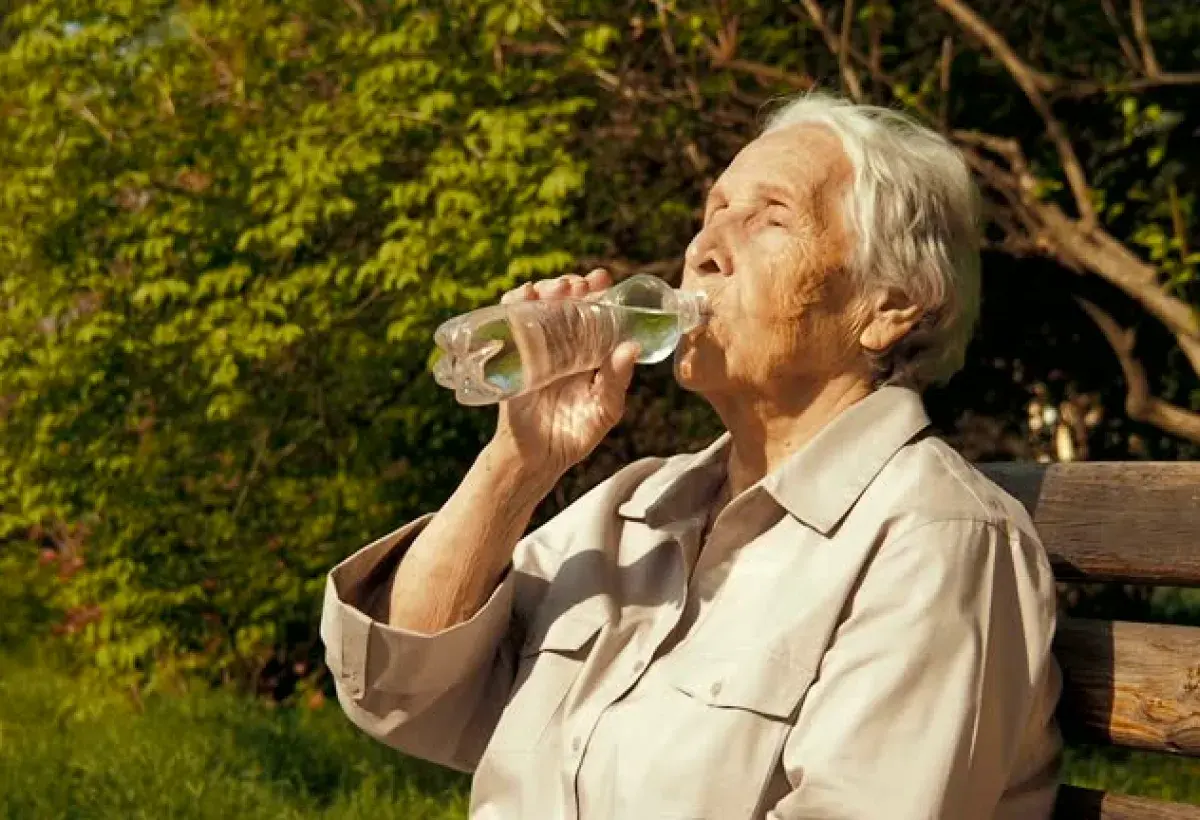
The Biological Interface: Why the System Holds
The Nicoya model operates through interconnected biological and psychosocial mechanisms. Strong social relationships enhance survival and reduce mortality risk (Holt-Lunstad et al., 2015; World Health Organization, 2023), while psychological purpose contributes to improved health outcomes and longevity (Sutin et al., 2021).
Nutrient-rich diets and mineral intake support bone and metabolic health (National Institutes of Health, 2021; Rosero-Bixby et al., 2013), and reduced chronic stress supports immune and cardiovascular function (McEwen, 2007; World Health Organization, 2023).
These factors do not function independently. They operate synergistically, reinforcing one another over time. Biological outcomes, in this context, reflect the cumulative effect of sustained patterns of living. Biology follows structure.
System Vulnerability: Continuity Under Pressure
Despite its resilience, the Nicoya system is not immune to change. As globalization expands and lifestyles modernize, traditional dietary patterns and daily activity levels are gradually shifting. Increased access to processed foods and reduced physical labor introduce variability into previously stable systems.
These changes highlight a critical insight: longevity is not fixed. It is sustained. When environmental and social conditions shift, the structures that support health may weaken, altering long-term outcomes.
Nicoya demonstrates that longevity is environmentally maintained rather than inherently guaranteed.
Policy and Global Relevance
The longevity patterns observed in Nicoya align closely with global ageing frameworks advanced by the World Health Organization and the United Nations. Healthy ageing is defined as the ability to maintain functional capacity and live with autonomy and purpose (World Health Organization, 2020).
Similarly, the Madrid International Plan of Action on Ageing and its subsequent reviews emphasize the importance of social participation and continued contribution across the lifespan (United Nations, 2002; United Nations Economic Commission for Europe, 2022).
Nicoya provides empirical evidence that these outcomes are achievable not through complexity, but through consistent social and environmental design.
Conclusion: Longevity as Continuity of Living
Nicoya does not offer a formula. It reveals a structure in which community sustains identity, daily activity supports physical vitality, and purpose provides direction across the lifespan. Older adults are not removed from life; they remain part of it.
These are not isolated practices but components of a coherent system that protects health by preserving connection, activity, and meaning. Longevity, in Nicoya, is not accidental. It is lived.
The relevance of the Nicoya model extends beyond its geographic boundaries. Its principles are not confined to place, but to the structure of how life is organized. In practical terms, this involves the strengthening of family and community relationships, the integration of natural movement into daily routines, the prioritization of simple and nutrient-dense diets, and the cultivation of a sustained sense of purpose. When these elements are maintained with continuity, the conditions that support healthy ageing begin to emerge.
What Nicoya demonstrates is not a lifestyle to replicate, but a system to understand. The translation of these principles into modern contexts does not require imitation, but reconstruction of patterns. Longevity, therefore, becomes not an aspiration, but a consequence of how life is consistently lived.
And in a world increasingly defined by complexity and acceleration, Nicoya offers a grounded and enduring proposition: longevity is not sustained through complexity, but through the continuity of simple living, strong relationships, and a clear sense of purpose carried across the years.
Image

Images used in this article are sourced from Freepik and Pixabay. Grateful thanks to the photographers and contributors who generously share their work for public use.
Suggested Citation
Lendez, M. (2026). Nicoya Longevity Model: Resilience, simplicity, and the structure of healthy ageing. Developed within the Ikigai-Bayanihan Purpose-Driven Retirement Framework
About the Author
Written by Dr. Mariza Lendez, the developer of the Ikigai-Bayanihan Purpose-Driven Retirement Framework, a model that redefines aging through purpose, dignity, and community-centered living.
The Longevity Framework Series
👉 Okinawa Longevity Model
👉 Nicoya Longevity Model
👉 Icaria Longevity Model
👉 Sardinia Longevity Model
👉 Loma Linda Longevity Model
REFERENCES
Core Demographic Evidence
Rosero-Bixby, L. (2008).
The exceptionally high life expectancy of Costa Rican nonagenarians.
Demography, 45(3), 673–691.
https://link.springer.com/article/10.1353/dem.0.0011
Rosero-Bixby, L., & Dow, W. H. (2009).
Surprising SES gradients in mortality, health, and biomarkers.
The Journals of Gerontology: Series B, 64B(1), 105–117.
https://academic.oup.com/psychsocgerontology/article/64B/1/105/603283
Water Minerals
Rosero-Bixby, L., Dow, W. H., & Rehkopf, D. H. (2013).
The Nicoya region of Costa Rica: A high longevity region.
Vienna Yearbook of Population Research.
https://www.jstor.org/stable/41940986
National Institutes of Health (2021).
Calcium and magnesium in human health (Fact Sheets)
https://ods.od.nih.gov/factsheets/Calcium-HealthProfessional/
https://ods.od.nih.gov/factsheets/Magnesium-HealthProfessional/
Purpose (Plan de Vida)
Alimujiang, A., et al. (2019).
Association between life purpose and mortality.
JAMA Network Open.
https://jamanetwork.com/journals/jamanetworkopen/fullarticle/2734064
Sutin, A. R., Stephan, Y., & Terracciano, A. (2021).
Psychological well-being and risk of dementia.
JAMA Network Open.
https://jamanetwork.com/journals/jamanetworkopen/fullarticle/2784169
Lifestyle & Physical Activity
World Health Organization (2022).
Global Status Report on Physical Activity
https://www.who.int/publications/i/item/9789240059153
Macro Context
World Bank (2022).
World Development Indicators – Costa Rica
https://data.worldbank.org/country/costa-rica
World Health Organization (2023).
World report on social determinants of health equity
https://www.who.int/publications/i/item/9789240080973
Blue Zone Context
Dan Buettner (2012).
The Blue Zones
National Geographic