I. Intoduction: A Misread Generation
As populations age across the globe, public discourse continues to frame aging in terms of cost, dependency, and decline. Older adults are frequently positioned as economic burdens, particularly in relation to healthcare expenditure and pension systems. While these concerns are not unfounded, they represent only a partial view of a far more complex reality. Beneath these narratives lies a generation rich in experience, resilience, and accumulated knowledge.
This imbalance in perception reflects a deeper structural oversight. Societies have become increasingly efficient at measuring productivity in economic terms, yet far less capable of valuing non-market contributions such as mentorship, social cohesion, and experiential judgment. As a result, older adults are often excluded from conversations about innovation and future development. This exclusion is not only unjust, it is strategically limiting.
Reframing aging requires a shift from deficit-based thinking to asset-based recognition. When viewed through this lens, older populations emerge not as dependents but as reservoirs of insight and stability. The question is no longer whether aging presents challenges, but whether societies are prepared to recognize and mobilize the value embedded within it.
II. Tacit Knowledge: The Invisible Capital of Aging
One of the most underappreciated assets of older adults is tacit knowledge, deep, experience-based understanding that cannot be easily codified. This form of knowledge develops over time through lived experience, reflection, and repeated engagement with complex situations. Unlike formal knowledge, it is often intuitive, context-sensitive, and difficult to articulate (Nonaka & Takeuchi, 1995; Polanyi, 1966).
Recent research continues to affirm its importance. Studies in knowledge management and organizational behavior showed that tacit knowledge plays a critical role in decision-making, problem-solving, and adaptive leadership, particularly in uncertain environments (OECD, 2021; World Bank, 2022). It is this type of knowledge that enables individuals to navigate ambiguity and respond effectively to real-world complexity.
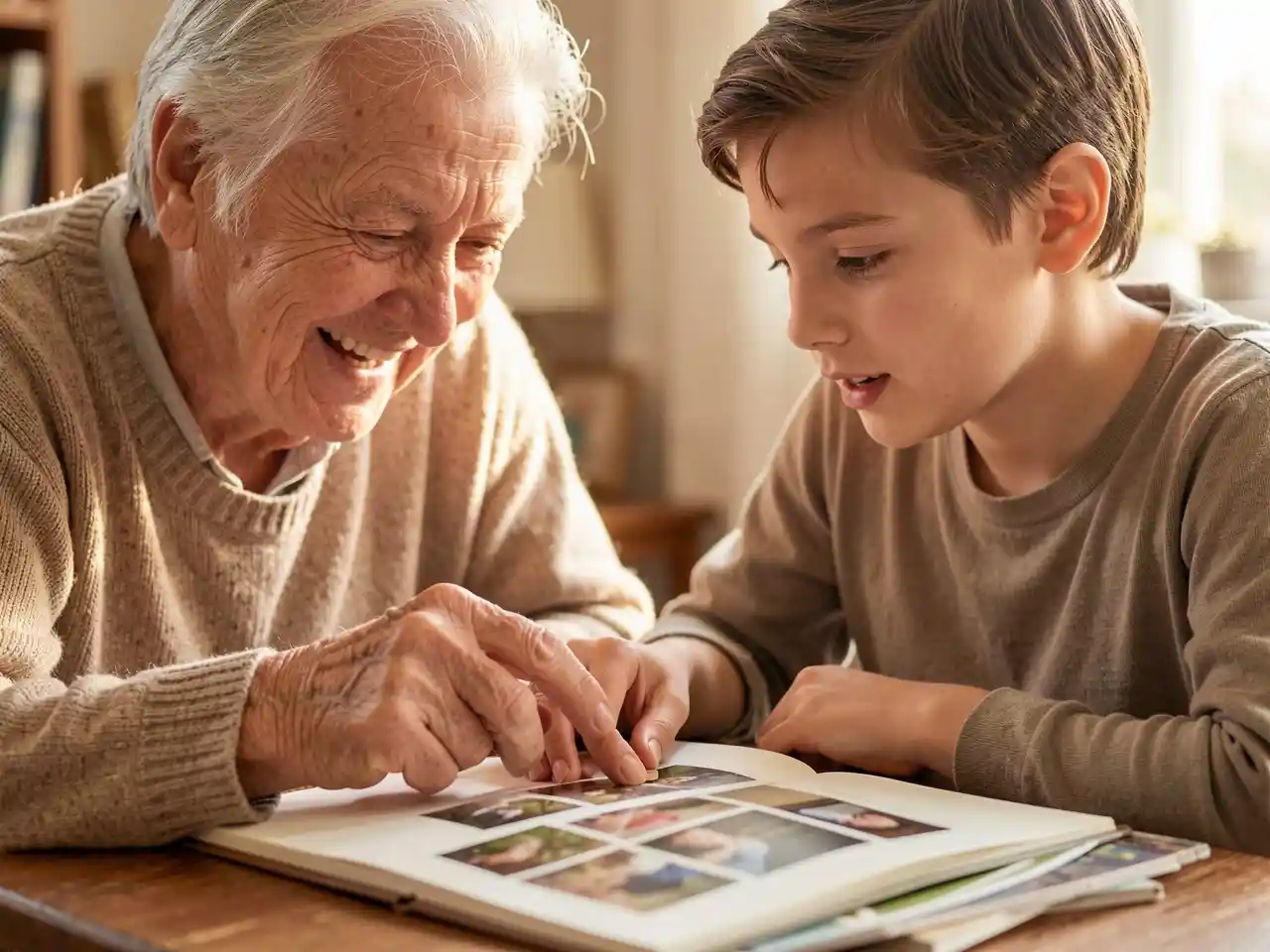
When shared across generations, tacit knowledge becomes a powerful driver of innovation. Younger individuals gain access to practical wisdom, while older adults refine and reinterpret their experience through dialogue. This exchange strengthens not only individual capability but also institutional memory and societal resilience.
Image

III. Intergenerational Engagement: Evidence Beyond Intuition
The value of intergenerational connection is increasingly supported by empirical research. Structured programs that bring younger and older individuals together have demonstrated measurable benefits across psychological, cognitive, and social dimensions. A growing body of evidence showed that such interactions enhance empathy, communication skills, and sense of purpose among participants (Pillemer et al., 2022; WHO, 2021).
For older adults, these programs were associated with improved mental health, reduced loneliness, and even better cognitive functioning. For younger participants, exposure to lived experience fosters emotional intelligence and a more grounded understanding of societal realities. These outcomes suggest that intergenerational engagement is not merely beneficial, it is essential for balanced human development.
The implications extend beyond individuals. Intergenerational programs challenge age-based stereotypes and rebuild social trust across generations. In doing so, they contribute to more cohesive communities and more inclusive social systems, reinforcing the idea that aging and youth are not opposing forces but complementary strengths.
IV. Communities as Engines of Intergenerational Strength
Communities that intentionally integrate multiple generations tend to demonstrate stronger social cohesion and resilience. Initiatives such as the Experience Corps in the United States illustrate how older adults can contribute meaningfully to education by mentoring and tutoring younger students. These programs were shown to improve academic outcomes while simultaneously enhancing the physical and mental health of participating seniors (Fried et al., 2004; updated findings in Glass et al., 2013).
Globally, urban planners and policymakers are beginning to explore age-integrated environments. Shared spaces such as community gardens, learning hubs, and cultural centers create opportunities for everyday interaction across generations. These environments facilitate informal knowledge exchange and strengthen relational bonds that are often absent in age-segregated societies.
The design of physical and social spaces plays a crucial role in shaping these interactions. When communities are structured to encourage participation across age groups, they become ecosystems of continuous learning and mutual support. In this context, aging becomes embedded within community life rather than isolated from it.
From Burden to Bridge, A Playbook for Action
| Opportunity Area | Framework or Finding | Recommended Action |
| Tacit Knowledge Sharing | Based on Nonaka and Takeuchi’s SECI model | Create mentorship platforms connecting elders with students, entrepreneurs, and community groups. |
| Intergenerational Learning | Inspired by Pillemer and colleagues | Convert public halls into shared learning hubs for storytelling nights, creative workshops, and planning forums. |
| Civic Engagement | Guided by Empowerment Theory | Offer advocacy and leadership training for seniors to initiate and manage community projects. |
| Technology and Creativity | Based on intergenerational lab models | Support collaborative technology projects where seniors contribute experience-based insight. |
| Community Design | From studies on age-integrated neighborhoods | Build inclusive spaces that combine education, creativity, and social connection across all ages. |
Image

V. From Participation to Empowerment
Beyond participation lies a deeper dimension: empowerment. Older adults do not merely benefit from inclusion, they thrive when given opportunities to lead, contribute, and influence outcomes. Empowerment-based approaches shift the role of older individuals from passive recipients to active agents of change.
Research in adult education and community development highlights the transformative effects of such engagement. Studies by Narushima (2005) and more recent work on active aging frameworks (WHO, 2021) showed that when older adults engage in leadership, advocacy, and civic participation, they experience increased purpose, confidence, and overall well-being. These outcomes extend beyond individuals, influencing the communities they serve.
Empowerment also challenges prevailing narratives about aging. It reframes later life as a period of contribution rather than withdrawal. In doing so, it creates pathways for older adults to shape policy, mentor future generations, and address community challenges with a depth of insight that only experience can provide.
VI. Technology Meets Wisdom
Contrary to common assumptions, older adults are not excluded from technological innovation they are increasingly becoming part of it. When supported appropriately, digital engagement among older populations was shown to improve cognitive function, social connectivity, and emotional well-being (Zhang & Kaufman, 2017; updated support from Chen et al., 2021).
Intergenerational technology initiatives offer particularly strong outcomes. When younger individuals assist older adults in navigating digital tools, while older adults share life experience and perspective, a reciprocal learning dynamic emerges. This exchange strengthens both technological literacy and human understanding.
The intersection of technology and experience presents new possibilities for innovation. From virtual storytelling platforms to collaborative digital design projects, these interactions demonstrate that progress is most effective when it integrates both curiosity and wisdom. Technology, in this sense, becomes not a divider but a bridge.
VII. From Burden to Bridge: A Strategic Reframing
The collective evidence points toward a necessary reframing of aging populations. Rather than viewing older adults as a fiscal burden, societies must begin to recognize them as strategic assets. This shift is not merely conceptual, it has practical implications for policy, education, and economic development.
Frameworks such as the WHO Decade of Healthy Ageing (2021–2030) emphasize active participation, age-friendly environments, and integrated care systems. Similarly, reports from the OECD and World Bank highlight the role of older adults in sustaining economic productivity and social stability. Together, these perspectives reflect a broader shift toward inclusive, lifespan-oriented policy design.
Transforming aging into an asset requires intentional systems. Mentorship platforms, intergenerational learning spaces, and community-driven initiatives must be designed to facilitate knowledge exchange and participation. When these systems are in place, aging populations become not a constraint but a source of strength.
VIII. Why This Matters Now
The relevance of this shift cannot be overstated. In a world marked by rapid technological change, social fragmentation, and economic uncertainty, the stabilizing influence of experience becomes increasingly valuable. Older adults carry historical perspective, adaptive resilience, and contextual understanding qualities that are difficult to replicate in fast-moving systems.
Ignoring this resource represents a significant missed opportunity. Societies risk becoming efficient yet disconnected, informed yet lacking wisdom. By contrast, integrating the contributions of older generations creates a more balanced and sustainable model of development.
Recognizing the value of aging populations is not an act of sentimentality. It is a strategic decision grounded in evidence. It reflects an understanding that progress is strongest when it is informed by experience as well as innovation.
IX. Conclusion: The Treasure We Have Yet to Fully See
The narrative surrounding aging is at a critical juncture. Societies can continue to frame older adults as a growing burden, focusing primarily on cost and dependency. Or they can recognize the deeper reality that within aging populations lies one of the most underutilized resources of our time.
The silver lining is not theoretical. It is already present in communities, organizations, and families where older adults remain engaged, valued, and heard. The challenge is not in creating this resource, but in recognizing and integrating it.
Ultimately, the question is one of perspective and intention. Will societies continue to overlook the wealth embedded in aging, or will they choose to harness it? The answer will shape not only the future of older generations, but the resilience and cohesion of society as a whole.
Image
Suggested Citation: Lendez, M. (2026). Silver lining or hidden weight? Unlocking the treasure within aging generations. Developed within the IKIGAI-Bayanihan Purpose-Driven Retirement Framework.
About the Author
Written by Dr. Mariza Lendez, the developer of the Ikigai-Bayanihan Purpose-Driven Retirement Framework, a model that redefines aging through purpose, dignity, and community-centered living
References
Foundational Theoretical Works (Retained for Academic Integrity)
Polanyi, M. (1966). The tacit dimension.
Nonaka, I., & Takeuchi, H. (1995). The knowledge-creating company.
Recent Global Policy & Economic Sources
World Health Organization (2021). Decade of Healthy Ageing 2021–2030.
Core global framework on active aging, participation, and age-inclusive systems.
Organisation for Economic Co-operation and Development (2021). Promoting an Age-Inclusive Workforce.
Strong evidence on productivity, labor participation, and aging workforce dynamics.
World Bank (2022). Aging and the Future of Work.
Links aging populations to labor markets, productivity, and policy adaptation.
International Monetary Fund (2023). Aging and Long-Term Growth Prospects.
Demonstrates macroeconomic impact of aging on growth and fiscal sustainability.
Intergenerational & Social Impact
Pillemer, K., et al. (2022). Intergenerational programs and their impact on health and well-being.
Strong empirical support for youth–elder engagement benefits.
World Health Organization (2022). Global Report on Ageism.
Evidence on societal bias and importance of intergenerational integration.
Technology, Aging, and Cognitive Health
Chen, Y., et al. (2021). Digital inclusion and healthy aging outcomes.
Links digital participation with improved well-being in older adults.
National Institute on Aging (2023). Technology Use and Older Adults.
Updated research on cognition, engagement, and digital literacy.
Community, Engagement, and Longevity Research
Stanford Center on Longevity (2022). The New Map of Life.
One of the strongest modern frameworks on redesigning life stages and aging.
AARP (2021). Longevity Economy Outlook.
Demonstrates economic contribution of older adults (very powerful for policy framing).
Civic Engagement & Purpose in Aging
World Economic Forum (2020). Shaping the Future of Aging.
Positions aging as an economic and societal opportunity.
United Nations (2023). World Social Report: Leaving No One Behind in Aging Societies.
Strong global framing on inclusion, dignity, and structural adaptation.