The World is Aging Fast With Longer Life Expectancy
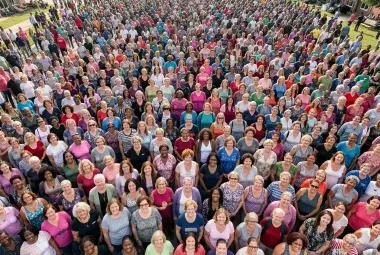
The world is advancing rapidly in science, medicine, and technology, yet it is simultaneously undergoing one of the most profound demographic shifts in human history. Fewer children are being born each year, while more people particularly womenare living longer lives. According to population projections from the United Nations, the number of people aged 60 and older is expected to reach approximately 2.1 billion by 2050, nearly double the figure recorded in 2020 (UN DESA, 2022).
At first glance, this appears to be a success story. Longer life expectancy reflects improvements in healthcare, nutrition, and public health. Yet beneath this progress lies a structural challenge that is often overlooked. Women are not only living longer; they are also spending a growing portion of their lives in postmenopause. A biological transition once framed as a private health milestone is now unfolding at population scale, intersecting with declining fertility and reshaping the balance between generations.
This is not a distant scenario. It is already underway, with implications for health systems, labor markets, families, and social institutions.
A World with Fewer Births and More Postmenopausal Women
For much of the twentieth century, demographic debates focused on overpopulation. Today, the concern has shifted sharply in the opposite direction. Many countries are now experiencing persistently low fertility, well below the replacement level of 2.1 births per woman.
Recent data from the World Bank show fertility rates falling to historically low levels in several major economies: South Korea at 0.72, Japan at 1.2, Italy at 1.24, and China at 1.09 (World Bank, 2024). At the same time, the number of women entering midlife and postmenopause continues to rise. By 2030, global estimates suggest that more than 1.2 billion women will be postmenopausal (UN DESA, 2023).
This convergence fewer births alongside a rapidly expanding older female population defines what demographers increasingly describe as a low-fertility world. It is not merely a women’s health issue. It is a structural transformation affecting economic productivity, caregiving capacity, and the sustainability of social systems.
Image

Why Menopause Becomes a Societal Issue
Menopause is a universal biological transition for women who reach midlife, yet its implications extend far beyond individual health. As the World Health Organization has emphasized, population aging changes the demand profile of health systems, shifting care needs toward chronic disease management, functional health, and long-term support (WHO, 2024).
With more women living decades beyond menopause, health systems face rising demand for midlife and later-life care. Primary care and public health infrastructures in many countries remain oriented toward acute illness rather than long-duration life-stage transitions. This gap becomes more pronounced as the postmenopausal population grows.
The implications extend into labor markets as well. In aging societies with fewer young workers, midlife and older women increasingly represent a critical segment of the workforce. When menopausal health is unsupported or poorly understood, it can affect participation, retention, and productivity outcomes that carry macroeconomic consequences rather than merely personal ones.
Families, Caregiving, and the Shrinking Base
Declining fertility also reshapes family structures. With fewer children, the pool of potential caregivers for aging populations narrows. At the same time, women continue to shoulder a disproportionate share of unpaid caregiving responsibilities, a pattern documented across regions and income levels (UN Women & HelpAge International, 2022).
As women age into postmenopause while simultaneously providing care for older relatives, spouses, or grandchildren, caregiving pressures intensify. This dynamic has implications for income security, labor participation, and intergenerational support systems. In low-fertility contexts, the traditional assumption that younger generations will absorb caregiving roles becomes increasingly fragile. Consider the following numbers below;
| Country / Region | Fertility Rate (2024) | % of Women Over 50 (Projected 2030) | Median Age 2030 |
| South Korea | 0.72 | 37% | 56 |
| Japan | 1.2 | 39% | 54 |
| Italy | 1.24 | 35% | 52 |
| China | 1.09 | 30% | 48 |
| Global Average | 2.3 → falling to 2.0 | 28% | 40 |
Sources: World Bank 2024, UN DESA 2023, WHO 2021
A Demographic Equation Under Strain
Globally, fertility has declined from an average of five births per woman in the 1950s to approximately 2.3 in 2023, with projections indicating further decline toward 2.0 in the coming decades (UN DESA, 2023). At the same time, the population aged 60 and above is expanding from roughly 1.1 billion in 2023 to 1.4 billion by 2030, and 2.1 billion by 2050.
This demographic equation a shrinking base of younger people supporting a rapidly growing older population helps explain why menopause and women’s midlife health are no longer peripheral concerns. They sit at the center of discussions about economic resilience, care systems, and social sustainability.
Image

Looking Ahead
Understanding menopause within a low-fertility world is not about assigning responsibility or prescribing solutions. It is about recognizing context. As societies age and fertility declines, the health and functional capacity of midlife women become increasingly consequential. Menopause, once treated as a private matter, now intersects with national demographics, workforce stability, and caregiving systems. Ignoring it does not halt its effects; it merely delays preparedness.
This article opens a broader conversation. Subsequent discussions will examine how menopause intersects with healthcare capacity, labor participation, and economic stability. In a world defined by declining fertility and rising longevity, women’s health in midlife may prove to be one of the quiet determinants of societal balance.
This article forms part of a broader research inquiry based on verified data, peer-reviewed literature, and reports from global institutions. It is intended to support informed reflection and discussion by presenting evidence from authoritative sources, without offering medical, personal, or policy advice.
Author’s Reflection
This article reflects an emerging reality in which menopause can no longer be viewed solely as an individual health transition. In a low-fertility, aging world, menopause intersects with demographic change, economic stability, and social structure. Understanding this context is essential for informed reflection on how societies prepare for longevity, workforce shifts, and intergenerational balance.
Image

suggested Citation
Lendez, M. (2026). Menopause in a low-fertility world: Implications for aging, women’s health, and the Ikigai-Bayanihan purpose-driven retirement framework.
About the Author
Dr. Mariza Lendez, DBA, is the developer of the Ikigai–Bayanihan Purpose-Driven Retirement Framework, a community-centered model that redefines aging through purpose, connection, and sustainable living. Her work focuses on helping individuals navigate aging with clarity, dignity, and informed decision making.
References
-
United Nations Department of Economic and Social Affairs. World Population Prospects 2022.
-
United Nations Department of Economic and Social Affairs. World Population Ageing 1950–2050.
-
World Health Organization. Ageing and Health Fact Sheet (2024).
-
World Health Organization. Progress Report on the UN Decade of Healthy Ageing (2024).
-
World Bank. World Development Indicators (2024).
-
UN Women & HelpAge International. Recognising Older Women: Gender Equality for All Ages (2022).