Silver Migration Series: Part 1: The Silver Migration Series – An Opening Manifesto | Part 2: Global Retirement Checklist | Part 3: Silver at a Cost: Aging in the Land of Independence | Part 4: ASIAN Rising: Retirement Haven or Policy Mirage? | Part 5: The Countries Left Behind: Who Is Failing to Protect Their Aging Citizens? | Part 6: The Silver Blueprint: Redesigning Systems with the Strength of Age
The Silver Blueprint: Redesigning Systems with the Strength of Age (Part 6 of 6) reframes aging as a structural advantage, examining how societies can redesign systems to harness the economic, social, and intellectual capital of older populations. It presents aging not as a burden, but as a design imperative for building more resilient, inclusive, and sustainable systems.
From Demographic Shift to Design Imperative
Aging is often framed as a problem to be managed an impending strain on healthcare systems, pension structures, and public finances. This framing, while convenient, is fundamentally incomplete. It treats longevity as a liability rather than as a structural transformation that requires intentional redesign.
A more accurate perspective recognizes aging as a resource to design around. Across societies, older populations represent accumulated knowledge, economic participation, and social capital that remain underutilized. The question is no longer whether systems can sustain aging populations, but whether they can be redesigned to fully integrate and leverage them.
This reframing shifts aging from dependency to contribution. It positions longevity not as a cost center, but as a design variable capable of strengthening resilience, continuity, and long-term societal capacity.
The Silver Economy: Scale, Structure, and Strategic Opportunity
The economic significance of aging populations is no longer theoretical. The European Commission (2020) projected that the global silver economy would reach approximately $15 trillion by 2030, encompassing healthcare, financial services, housing, technology, travel, and education.
However, the importance of the silver economy extends beyond consumption. It represents a structural shift in demand and participation. Older adults are not merely recipients of services they are active contributors shaping markets, influencing design, and driving new forms of innovation.
Countries that have aligned policy with demographic reality demonstrate measurable outcomes. Japan’s implementation of accessible digital systems has enabled older adults to remain active in increasingly technology-driven environments. Scandinavian housing models have integrated multigenerational living with accessibility, reducing isolation while strengthening community cohesion. These examples illustrate a central principle: designing with age in mind is not a constraint, it is an economic multiplier.
Rethinking Urban Systems: From Speed to Inclusion
Modern cities are largely designed around speed, efficiency, and density priorities that often exclude older populations. Narrow sidewalks, unsafe crossings, inaccessible transport systems, and poorly designed public spaces limit mobility and reduce participation.
The World Health Organization (2022) reported through its Age-Friendly Cities framework that accessible urban environments increase physical activity, social engagement, and economic participation among older adults. These benefits are not confined to aging populations. Families, children, and individuals with disabilities also experience improved safety and usability.
Designing for age, therefore, is not a specialized intervention it is a universal design strategy. It enhances functionality across the population while reducing long-term social and healthcare costs associated with isolation and inactivity.
Image

Lifelong Learning and Workforce Reconfiguration
One of the most underutilized assets in aging societies is accumulated human capital. Traditional workforce models often equate productivity with youth, resulting in the premature exclusion of older individuals from economic participation.
The Organisation for Economic Co-operation and Development (2022) reported that policies supporting lifelong learning, flexible work arrangements, and delayed retirement improved both individual well-being and economic sustainability. Older workers contribute not only through output, but through mentorship, institutional memory, and decision-making stability.
Multigenerational teams have been shown to outperform age-homogeneous groups in complex problem-solving and strategic thinking. Reconfiguring work to accommodate evolving capacities through flexible hours, remote work, and phased retirement, allows societies to retain expertise while adapting to demographic realities.
Gerontechnology and Inclusive Innovation
Technological advancement is often perceived as youth-driven, yet some of the most transformative innovations emerge when older adults are placed at the center of design. Gerontechnology technology designed to support aging populationshas expanded rapidly, integrating health monitoring, home safety systems, assistive devices, and telemedicine platforms.
Research highlighted in the Massachusetts Institute of Technology AgeTech Innovation Report (2023) showed that technologies designed for older users tend to be more intuitive, accessible, and efficient across all age groups. Voice interfaces, simplified navigation, and adaptive systems reduce friction not only for older adults but for broader populations.
This demonstrates a critical insight: designing for aging does not limit innovation, it refines it. By prioritizing usability and accessibility, gerontechnology becomes a driver of inclusive innovation, improving product design, expanding markets, and enhancing user experience universally.
Image

The Revaluation of Older Adults in Society
Older adults are frequently framed as dependents within economic models, yet this perspective overlooks their multifaceted contributions. Beyond consumption, they function as caregivers, mentors, volunteers, and knowledge carriers within both formal and informal systems.
The Organisation for Economic Co-operation and Development (2022) noted that unpaid contributions from older adults, particularly caregiving and community engagement, generate substantial economic value, often substituting for formal services that would otherwise require public expenditure.
In family systems, older adults provide childcare and intergenerational support. In economic systems, they contribute through advisory roles, entrepreneurship, and mentorship. In social systems, they sustain community cohesion. The prevailing narrative of decline fails to account for these contributions, resulting in policies that underutilize a critical societal asset.
Policy and System Redesign: From Fragmentation to Integration
Realizing the full potential of aging populations requires coordinated, system-level redesign rather than isolated interventions.
Healthcare systems must shift toward preventive, community-based, and function-oriented care, emphasizing long-term well-being over episodic treatment. Housing systems must transition from age-segregated models to adaptable, multigenerational environments that support independence and connection.
Transport systems must prioritize accessibility, ensuring safe and reliable mobility across all ages. Education systems must institutionalize lifelong learning, enabling continuous skill development and digital inclusion. Labor policies must integrate flexible participation models that extend economic engagement beyond traditional retirement thresholds.
These reforms are not independent. They are interdependent components of a broader system that must be aligned with longevity as a defining demographic condition.
Conclusion: Aging as a Blueprint for System Design
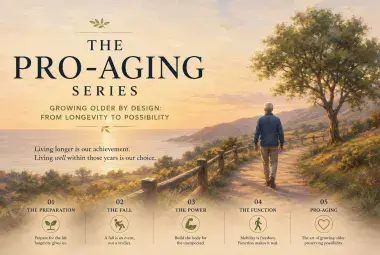
The future is not anti-aging. It is pro-aging with intention and design.
Aging populations represent a reservoir of experience, capability, and adaptive intelligence. When systems fail to integrate this resource, societies incur avoidable economic and social costs. When they succeed, they unlock resilience, innovation, and sustained growth.
The central insight of the silver blueprint is clear: aging is not a burden to be managed, but a framework through which better systems can be built. Designing with age in mind does not only support older populations as it creates environments that are more inclusive, efficient, and sustainable for all.
“Aging is not a burden to be managed, but a resource to be activated. The true wealth of societies lies not only in their youth, but in the wisdom of those who came before”.- Dr. Lendez
Image

Suggested Citation
Lendez, M. (2026). The silver blueprint: Redesigning systems with the strength of age. Part of the Silver Challenges and Opportunities Series. Developed within the Ikigai-Bayanihan Purpose-Driven Retirement Framework.
About the Author
Written by Dr. Mariza Lendez, the developer of the Ikigai-Bayanihan Purpose-Driven Retirement Framework, a model that redefines aging through purpose, dignity, and community-centered living.
Silver Migration Series
👉 Part 1: The Silver Migration Series – An Opening Manifesto
👉 Part 2: Global Retirement Checklist
👉 Part 3: Silver at a Cost: Aging in the Land of Independence
👉 Part 4: ASIAN Rising: Retirement Haven or Policy Mirage?
👉 Part 5: The Countries Left Behind: Who Is Failing to Protect Their Aging Citizens?
👉 Part 6: The Silver Blueprint: Redesigning Systems with the Strength of Age
References
European Commission. (2020). The silver economy report.
World Health Organization. (2022). Global age-friendly cities framework.
Massachusetts Institute of Technology. (2023). AgeTech innovation report.
Organisation for Economic Co-operation and Development. (2022). Aging and employment policies.