A Filipino Framework for Purpose-Driven Aging Takes the International Stage
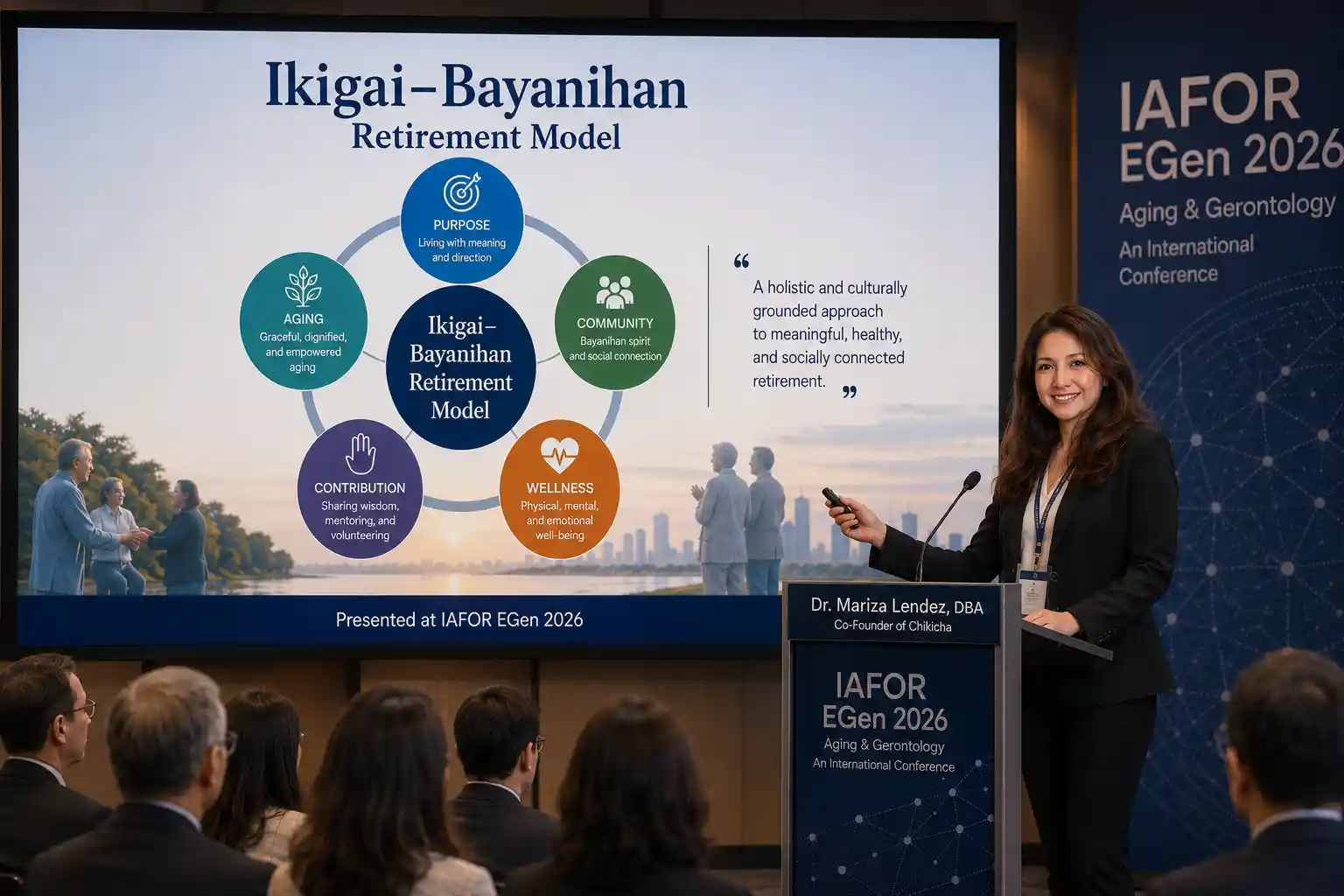
Chikicha is proud to announce that co-founder Dr. Mariza Lendez will present her original research, the Ikigai-Bayanihan Retirement Model, at the European Conference on Aging & Gerontology (EGen 2026), organized by the International Academic Forum (IAFOR).
The presentation, titled "Ikigai-Bayanihan Retirement Model", will be delivered on July 13, 2026, as part of the conference's international research program. The session will be livestreamed online, allowing participants from around the world to engage with emerging ideas on aging, retirement, and community well-being.
The official conference presentation listing can be viewed on the IAFOR conference website:
https://egen.iafor.org/presentation/submission107279/
Rethinking Retirement in an Aging World
Across the globe, populations are aging at unprecedented rates. Governments, researchers, and communities are grappling with a fundamental question:
How can people live meaningful, fulfilling lives after retirement?
Traditional retirement models have largely focused on financial preparedness, pensions, and healthcare services. While these elements remain important, growing research suggests that psychological well-being, social participation, and a sense of purpose are equally critical to healthy aging. Studies have found that social support, participation, and meaning in life contribute significantly to life satisfaction among older adults.
The Ikigai-Bayanihan Retirement Model seeks to address this challenge by integrating two powerful cultural concepts into a practical framework for later life.
The Integration of Ikigai and Bayanihan
The model combines:
Ikigai
Originating from Japan, Ikigai is often described as a person's reason for being or sense of purpose. It has become an influential concept in discussions of healthy aging, longevity, well-being, and meaningful living. Recent international discussions on aging continue to highlight the role of purpose and community engagement in supporting older adults.
Bayanihan
Bayanihan is a deeply rooted Filipino value centered on mutual assistance, community cooperation, and collective responsibility. It reflects the belief that individuals thrive when supported by a caring community.
While Ikigai provides personal meaning, the research behind the Ikigai-Bayanihan framework suggests that sustaining purpose in later life requires social structures that encourage participation, contribution, and belonging.
Together, these concepts form the foundation of a retirement model that views aging not as withdrawal from society but as continued engagement with it.
Research Highlights
Using a convergent mixed-methods Design Science Research approach, the study integrated quantitative survey data and qualitative focus group discussions to develop and refine the framework.
The findings revealed several key insights:
- Purpose-aligned roles emerged as the strongest predictor of life satisfaction and psychological well-being.
- Cooperative economic participation strengthened dignity, engagement, and self-worth.
- Preventive healthcare supported continued independence and contribution.
- Social participation reinforced positive outcomes by strengthening community connections.
- Collective support systems helped sustain purpose over time.
The research further suggests that retirement should not be understood merely as an economic transition but as a social and psychological transformation involving identity, meaning, and contribution. This perspective aligns with emerging research on retirement readiness, purpose, and productive aging.
From Dependency to Contribution
The Ikigai-Bayanihan Retirement Model challenges the traditional narrative that aging inevitably leads to dependency.
Instead, it proposes a framework in which older adults continue to:
- Share knowledge and life experience.
- Participate in community development.
- Engage in meaningful work or volunteer roles.
- Support younger generations through mentorship.
- Maintain social, intellectual, and emotional well-being.
- Contribute to cooperative and community-based initiatives.
In this model, retirement becomes a new stage of contribution rather than a period of disengagement.
Why This Research Matters
As societies confront increasing longevity and changing family structures, there is growing recognition that healthy aging involves more than healthcare and financial security alone.
Researchers, policymakers, and practitioners worldwide are exploring new approaches that emphasize purpose, belonging, participation, and community-based support systems. Recent international studies have similarly highlighted the importance of community-led approaches that empower older adults to remain active contributors within society.
The Ikigai-Bayanihan Retirement Model contributes to this growing conversation by offering a culturally grounded framework that combines Japanese insights on purpose with Filipino traditions of collective support.
Readers may view the official conference presentation details and abstract through the IAFOR conference website.
https://egen.iafor.org/presentation/submission107279/
About the Presenter
Dr. Mariza Lendez is co-founder of Chikicha.com, an independent researcher, writer, and advocate for purpose-driven aging and community-centered retirement innovation.
She is the creator of the Ikigai-Bayanihan Retirement Model, a framework that reimagines aging as a stage of dignity, contribution, purpose, and shared prosperity.
Her work focuses on helping redefine retirement as an active, purpose-filled phase of life, where both individual meaning and collective well-being are strengthened through community-based systems.
You can learn more about her professional background and work here:
- Dr. Mariza Lendez Profile: https://www.chikicha.com/mariza-lendez
- LinkedIn: https://ph.linkedin.com/in/mariza-lendez-25546637
Looking Ahead
The presentation of the Ikigai-Bayanihan Retirement Model at IAFOR EGen 2026 represents an important milestone in the continuing exploration of how societies can support meaningful aging in the twenty-first century.
As populations live longer than ever before, the future of retirement may depend not only on financial readiness but also on the ability to cultivate purpose, connection, and community throughout later life.
Chikicha Longevity will continue to share updates, insights, and future developments related to the Ikigai-Bayanihan framework as the research evolves and reaches new audiences around the world.