"Adding more years to life can be a mixed blessing if it is not accompanied by adding more life to years."
—Dr. Tedros Adhanom Ghebreyesus
Director-General, World Health Organization (WHO, 2020)
Introduction
Humanity has never been better at extending life. Advances in public health, medicine, sanitation, nutrition, and disease prevention have transformed ageing from a privilege enjoyed by relatively few into a shared global experience. Today, nearly every country is witnessing unprecedented growth in its older adult population, making population ageing one of the defining demographic transformations of the twenty-first century (World Health Organization [WHO], 2020; United Nations, 2023).
Longer life expectancy reflects decades of scientific progress and improved living conditions. Yet while living longer is one of humanity's finest achievements, it brings a challenge that cannot be answered by medicine alone.
For the past century, we viewed healthy ageing primarily through a biomedical lens. Measuring success by reducing disease, delaying disability, and extending lifespan. These goals remain essential. However, as increasing numbers of people survive into older age, longevity alone is not enough. Living longer does not automatically mean living well, staying socially connected, or continuing to experience a life that feels worthwhile.
From Functional Ability to Living a Life That Matters
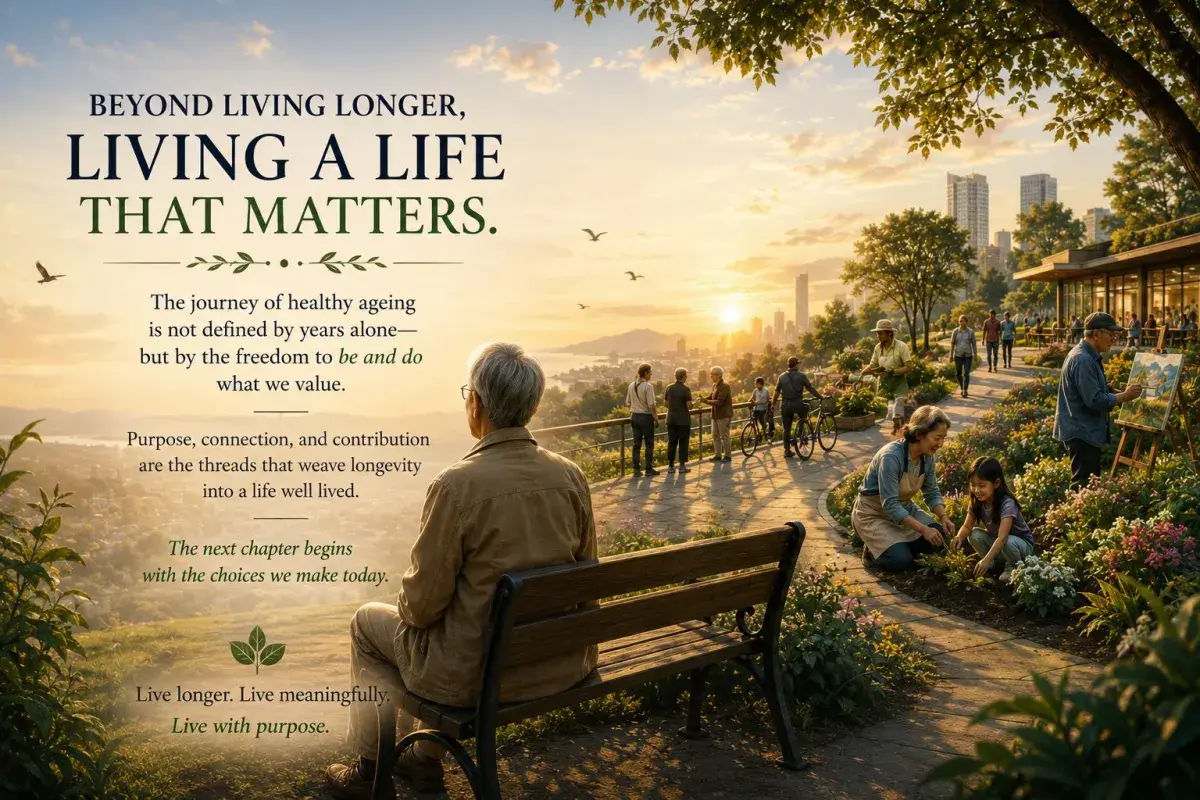
Recognizing this shift, the World Health Organization reframed the conversation through the UN Decade of Healthy Ageing (2021–2030). Rather than defining healthy ageing simply as freedom from disease, the WHO describes it as "the process of developing and maintaining the functional ability that enables well-being in older age" (WHO, 2020). Functional ability reflects the interaction between an individual's intrinsic capacity and the environments in which they live. More importantly, healthy ageing is ultimately about enabling older people to "be and do what they value" (WHO, 2024).
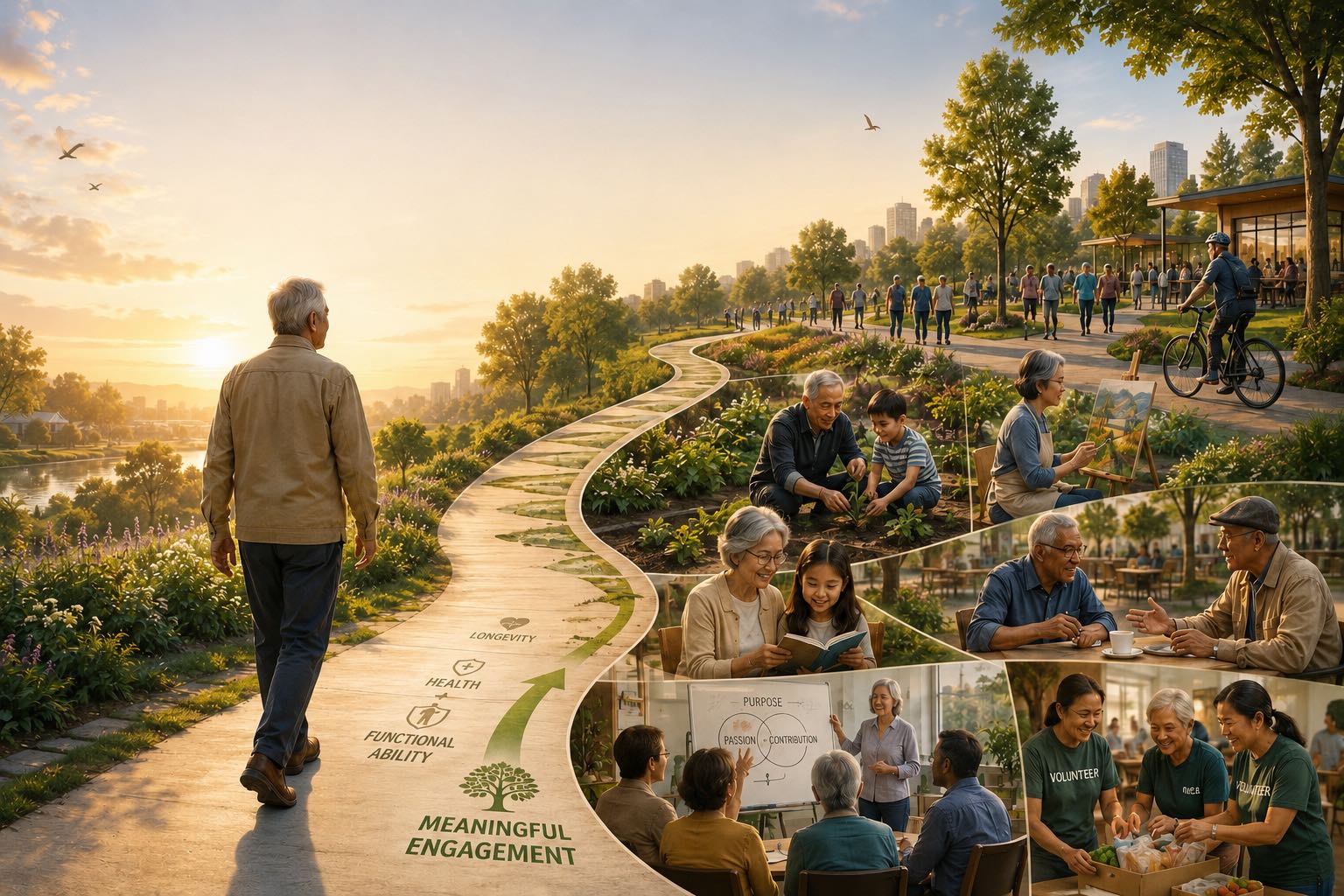
This definition represents an important conceptual shift. Instead of asking only how long people live, the conversation now asks how they are able to continue participating in activities, relationships, and social roles that give their lives meaning. Healthy ageing is therefore understood not only as a medical outcome, but also as the capacity to remain engaged with life in ways that individuals themselves value.
For the purposes of this series, meaningful engagement refers to the continued participation of older adults in activities, relationships, and social roles that they personally value and that contribute to their sense of meaning, identity, and overall well-being. This working definition is informed by the WHO's emphasis on functional ability and participation while drawing upon the growing body of research examining purpose and meaning in later life. Once healthy ageing is viewed through this broader lens, an important scientific question naturally emerges:
What enables older adults to remain meaningfully engaged throughout later life?
Although the WHO does not explicitly identify purpose in life as the answer, an expanding body of research suggests that purpose represents an important psychological dimension of meaningful engagement. Over the past two decades, researchers from psychology, gerontology, epidemiology, and public health have progressively investigated how purpose relates to measurable outcomes such as longevity, cognitive health, and quality of life. Together, these studies reveal an important evolution in ageing research from asking - if purpose matters to exploring how it contributes to healthy ageing and, increasingly, how meaningful engagement may be sustained throughout later life.
Image
From Living Longer to Living Meaningfully: What Does the Evidence Tell Us?
Once the World Health Organization reframed healthy ageing as enabling older adults to "be and do what they value," an important scientific conversation began to emerge. If remaining engaged in valued activities and roles is central to healthy ageing, what factors enable individuals to maintain that engagement as they grow older?
Researchers increasingly turned their attention to one psychological construct that appeared consistently across diverse studies: purpose in life. Rather than approaching purpose as a philosophical ideal, they examined it as a measurable characteristic that could be evaluated alongside health outcomes.
One of the most influential contributions came from Alimujiang et al. (2019), who analyzed data from nearly 7,000 participants in the U.S. Health and Retirement Study. The study addressed a straightforward question:
Is life purpose associated with mortality among older adults after accounting for demographic, behavioral, psychological, and medical factors?
The findings indicated that it was. After adjusting for age, socioeconomic characteristics, health behaviors, depression, anxiety, chronic disease, and other established predictors of health, individuals reporting a stronger sense of purpose in life had a lower risk of all-cause mortality during the follow-up period (Alimujiang et al., 2019). The authors appropriately described this relationship as an association, not evidence of causation. Even so, the consistency of the findings after extensive statistical adjustment suggested that purpose deserved greater attention within healthy ageing research.
The study also marked an important shift in scientific thinking. Questions traditionally examined within medicine, such as why some individuals remain healthier or live longer than others were increasingly being explored alongside psychological and social dimensions of life. Purpose, once regarded primarily as a philosophical concept, had become a legitimate subject of population health research. The conversation naturally evolved. Once researchers demonstrated an association between purpose and longevity, another question emerged:
Is purpose also associated with healthy cognitive ageing?
This question was explored by Sutin, Stephan, and Terracciano (2021), who examined the relationship between psychological well-being and the risk of developing dementia. Instead of focusing exclusively on depression or psychological distress, they investigated whether positive dimensions of psychological functioning including purpose in life were associated with cognitive outcomes in later adulthood.
Their findings extended the emerging evidence. Individuals reporting higher levels of purpose in life had a lower risk of incident dementia over time after accounting for multiple demographic and health-related characteristics (Sutin et al., 2021). As in the earlier mortality study, the authors reported an association rather than a causal relationship. And their findings strengthened the growing evidence that purpose is consistently associated with important dimensions of healthy ageing.
Viewed together, these studies reveal an evolution in scientific inquiry. The first question examined the relationship between purpose and longevity, and the second examined the relationship between purpose and cognitive health.
Although they investigated different outcomes using different designs, both studies converged on a consistent observation: a sense of purpose is closely linked to healthier aging. Consequently, the study of healthy aging is shifting from a purely medical focus to a multidisciplinary conversation that integrates psychology, public health, and gerontology.
This shift aligns with the World Health Organization’s (2024) definition of healthy aging: enabling older adults to "be and do what they value." While current research successfully demonstrates why purpose and meaningful engagement matter for longevity and cognitive health, it leaves a fundamental question insufficiently explored:
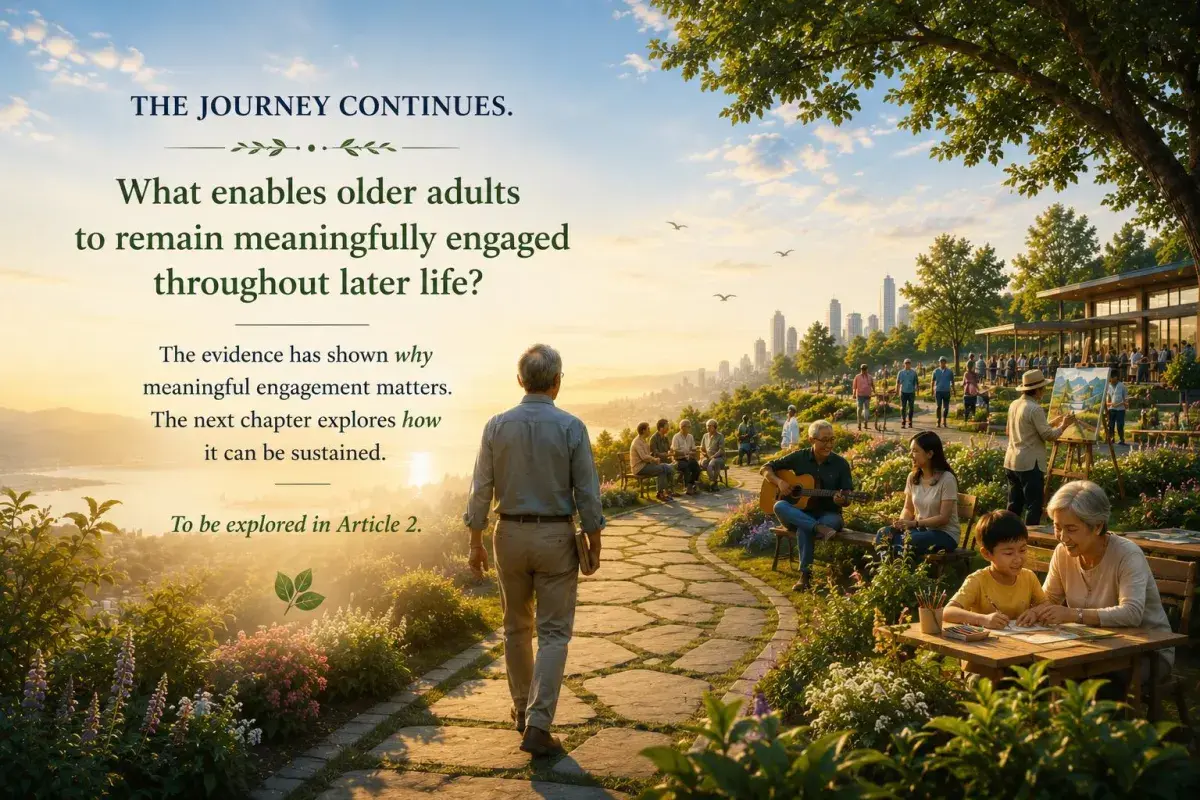
What enables older adults to maintain this meaningful engagement across the transitions of retirement and later life?
Moving forward, scientific inquiry must shift from merely documenting the benefits of purpose to understanding the practical mechanisms that sustain it. The science of healthy aging has fundamentally shifted; from adding years to life - to ensuring those years are worth living.
Now that we know meaningful engagement is essential to aging well, the next step is practical. In our next article, we will explore the specific factors that support or disrupt this sense of purpose as people transition through retirement and later life.
👉️ click here to read article 2 https://www.chikicha.com/missing-question-healthy-ageing-why-meaningful-engagement-cannot-be-explained-single-factor
Image
Suggested Citation
Lendez, M. L. (2026). Beyond Living Longer: Part 1- The Scientific Journey Toward Meaningful Engagement in Healthy Ageing. Chikicha Longevity.
About the Author
Dr. Mariza Lendez is a researcher, social entrepreneur, and creator of the Ikigai-Bayanihan (Purpose + Collective Ethos) Retirement Model, an innovative framework that integrates purpose, community engagement, and sustainability to support meaningful aging and later-life well-being.
References
Alimujiang, A., Wiensch, A., Boss, J., Fleischer, N. L., Mondul, A. M., McLean, K., Mukherjee, B., Pearce, C. L., & Lee, S. J. (2019). Association between life purpose and mortality among US adults older than 50 years. JAMA Network Open, 2(5), e194270. https://doi.org/10.1001/jamanetworkopen.2019.4270
Sutin, A. R., Stephan, Y., & Terracciano, A. (2021). Psychological well-being and risk of dementia. Journal of Alzheimer's Disease, 83(1), 249–257. https://doi.org/10.3233/JAD-210364
United Nations, Department of Economic and Social Affairs, Population Division. (2023). World social report 2023: Leaving no one behind in an ageing world. United Nations. https://desa.un.org/world-social-report-2023
World Health Organization. (2020). Decade of Healthy Ageing: Baseline report. World Health Organization. https://www.who.int/publications/i/item/9789240017900
World Health Organization. (2024). Healthy ageing. https://www.who.int/news-room/questions-and-answers/item/healthy-ageing-and-functional-ability