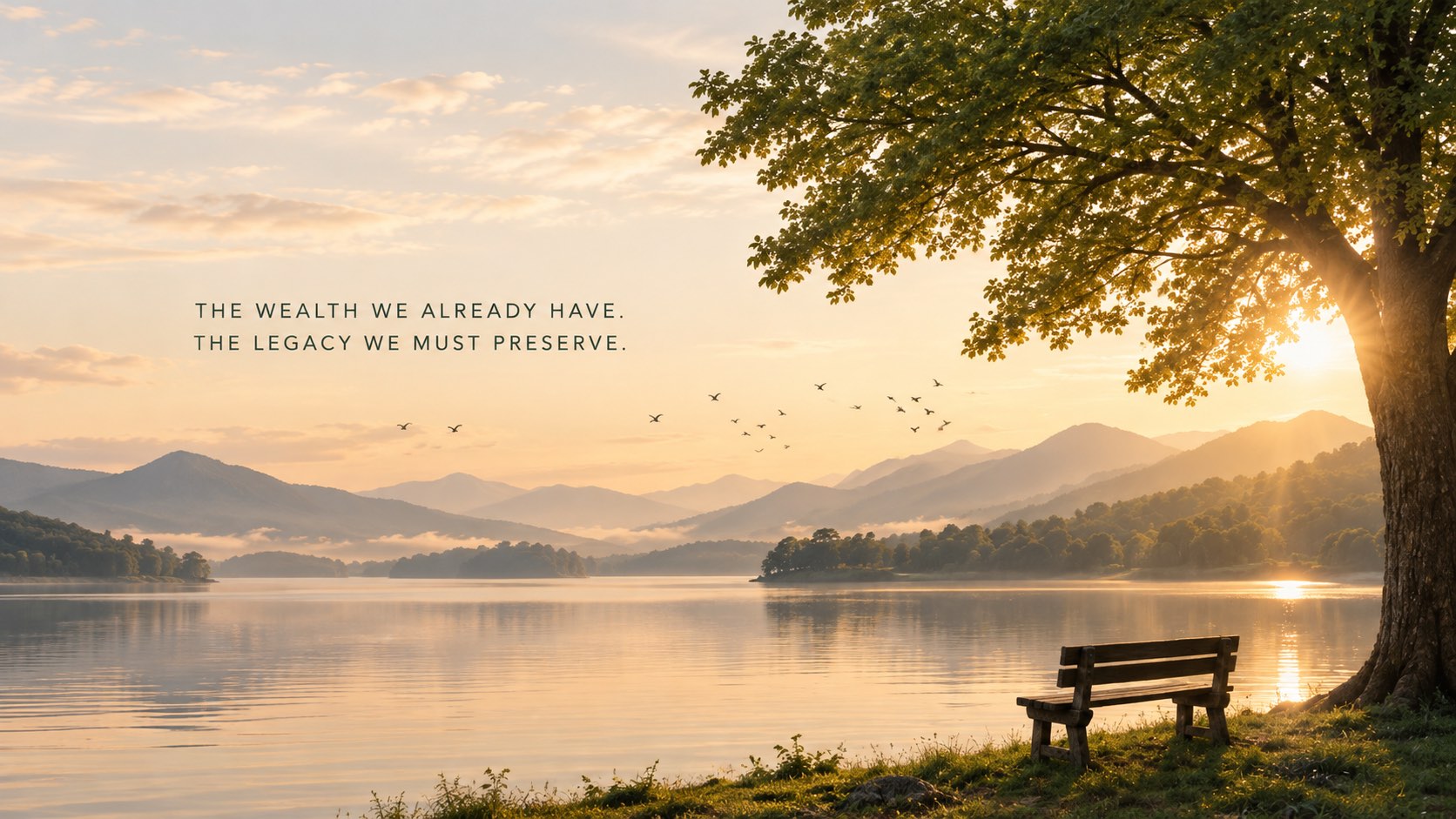
The Wealth That Was Never Missing
In Part 1 of this series, we proposed a simple yet often overlooked idea: wisdom may be one of the most valuable forms of societal capital that modern societies have never systematically measured. Drawing upon scholarship on tacit knowledge, wisdom, healthy ageing, and intergenerational learning, we argued that ageing populations possess forms of accumulated value that extend beyond traditional measures of productivity.
While economies routinely measure financial capital, human capital, and technological capital, comparatively little attention has been devoted to understanding wisdom as a societal asset. Yet wisdom, shaped by experience, reflection, judgment, resilience, and lived understanding may represent one of humanity's most enduring forms of wealth.
Part 2 extended this discussion by exploring the possibility of a growing wisdom crisis. If wisdom is indeed a form of capital, then its loss carries consequences. Research on retirement, social isolation, intergenerational disconnect, and changing social structures suggests that societies may be weakening many of the pathways through which wisdom has traditionally been transmitted. As populations age and social systems evolve, the challenge may not be the absence of wisdom, but the increasing difficulty of preserving, sharing, and mobilizing it across generations.
The question therefore emerged: “if wisdom is accumulated across a lifetime but rarely preserved beyond it, are we witnessing the gradual depletion of one of civilization's most valuable and least understood forms of capital?”
The answer may be simpler and more hopeful than we imagine as wisdom is not disappearing, much of it is already here, but the challenge is that we have not learned how to see it.
Reservoirs of Wisdom
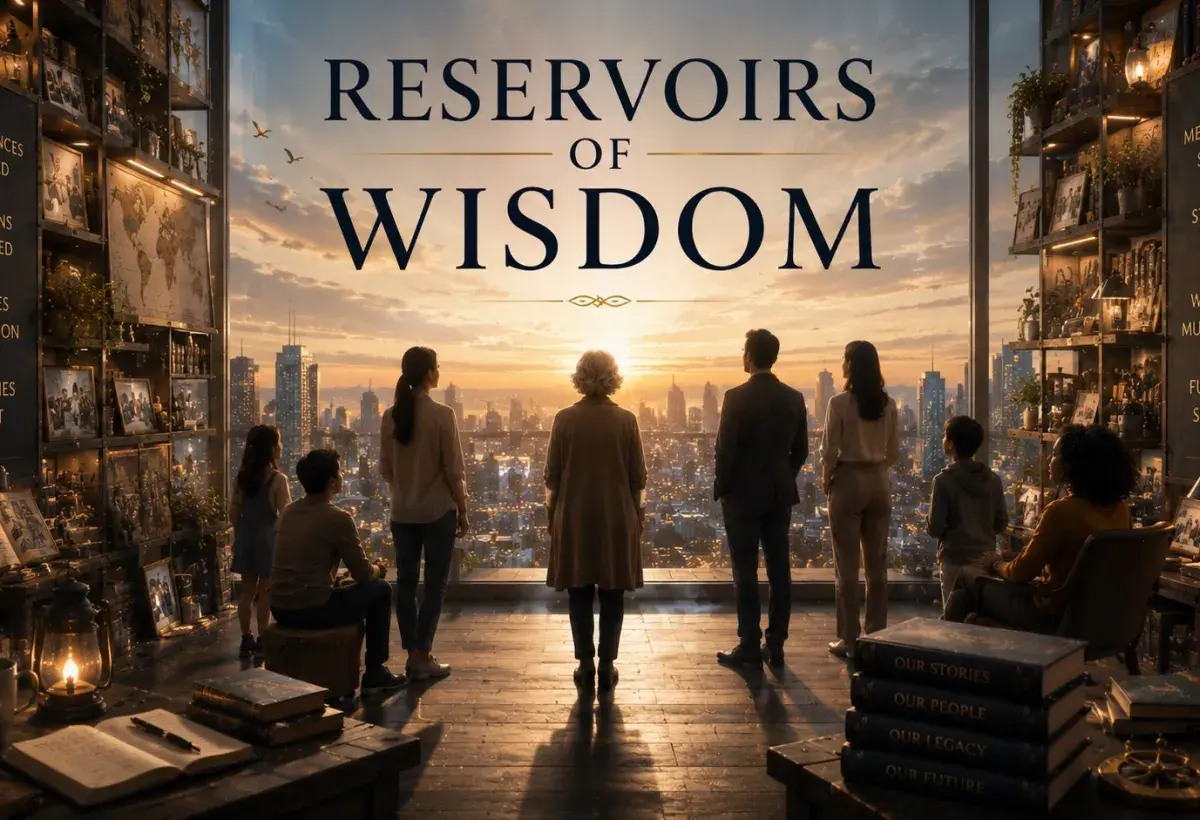
A reservoir is valuable not because it is constantly being emptied, but because of what it contains. It stores resources accumulated over time, preserving them until they are needed. The same may be true of ageing populations. Across families, communities, organizations, and nations exist millions of older adults who collectively hold decades of accumulated knowledge, experience, judgment, mentorship, resilience, cultural memory, and lived understanding.
The Wisdom Economy proposes that these individuals should not be viewed solely through the lenses of retirement, dependency, healthcare needs, or declining physical capacity. Rather, they may be understood as reservoirs of wisdom - repositories of societal capital accumulated through decades of learning, working, caregiving, leading, adapting, failing, recovering, and persevering.
Unlike financial assets, wisdom cannot be manufactured quickly. Unlike technology, it cannot simply be downloaded. Unlike information, it cannot be instantly generated. Wisdom is accumulated slowly across a lifetime. Every challenge overcome, every mistake corrected, every relationship nurtured, every responsibility carried, and every hardship endured contributes to its formation.
The reservoirs are already here. The defining challenge of ageing societies is whether they can recognize older adults not as symbols of dependency, but as reservoirs of wisdom whose contributions increasingly reside in mentorship, judgment, resilience, cultural memory, and lived experience.
Image
Beyond Productivity: Rethinking Contribution
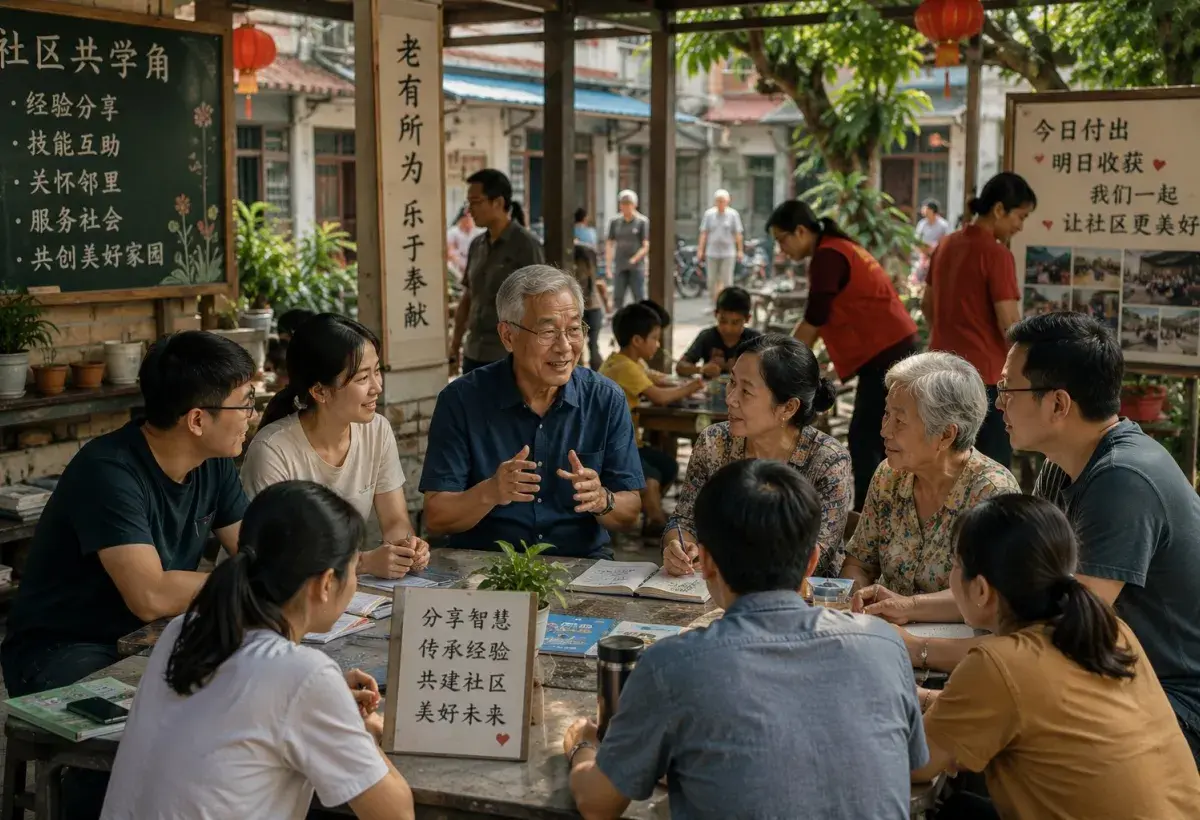
Modern societies often evaluate individuals according to their capacity for economic production. As people age and leave the workforce, public discourse frequently shifts toward pensions, healthcare expenditures, dependency ratios, and long-term care needs. These concerns are important, but they do not tell the whole story as there is no evidence suggesting that individuals suddenly lose all capacity to contribute the moment they retire. What often changes is not the existence of contribution, but its form.
-
A retired teacher may continue mentoring young people.
-
A former executive may advise entrepreneurs.
-
A grandparent may preserve family history and cultural traditions.
-
A community elder may guide younger generations through conflict, uncertainty, and change.
Physical capacity may decline over time. Yet judgment, perspective, emotional intelligence, contextual understanding, and mentorship capacity often remain valuable long after formal employment ends. The challenge for ageing societies is therefore not simply extending productive years, but recognizing the many forms of contribution that continue beyond conventional definitions of work.
A Living Illustration of a Wisdom Reservoir
The concept of a wisdom reservoir may appear abstract until viewed through the life of an older adult who remains deeply connected to family and community.
Consider the case of an 89-year-old Filipino woman living independently within her community. She prepares her own meals, manages many of her daily routines, participates in social activities, and maintains strong relationships with neighbors and family members. Community members greet her throughout the day. They know her by name. They acknowledge her presence, listen to her stories, and accept her advice. They occasionally receive her scolding when she believes they are making poor decisions.
From a conventional demographic perspective, she belongs to an ageing population. Yet such classifications reveal little about her actual societal value.
Over nearly nine decades, she has accumulated experience that no institution could easily replicate. She carries family history, cultural memory, practical knowledge, lessons learned through hardship, and insights shaped by nearly a century of social change. Her influence is not exercised through formal authority but through relationships, trust, credibility, and presence. Younger people still listen. Neighbors still seek her out. Family members still learn from her.
She may no longer lift the physical burdens she once carried, yet she continues to carry something far heavier: Nearly ninety years of lived experience.
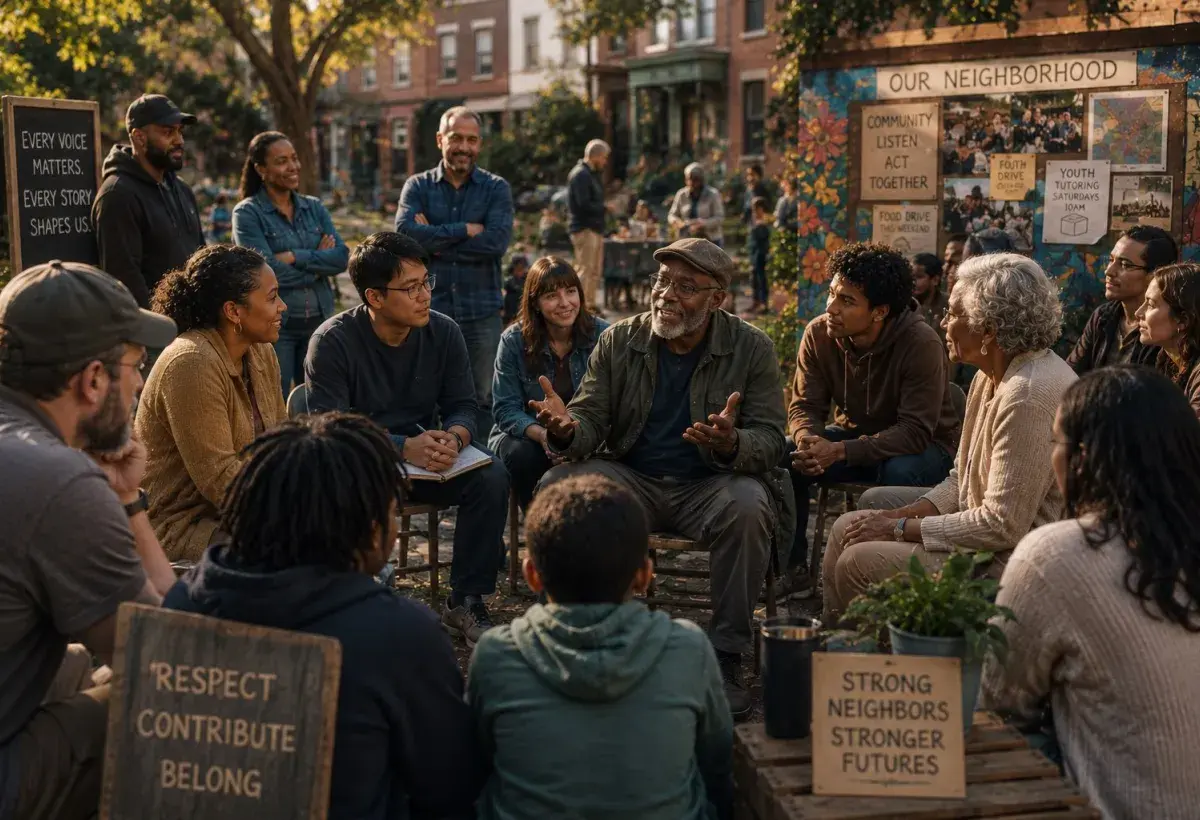
Her story is not unique. It is repeated in communities throughout the world, and it reminds us that some of society's greatest assets are not hidden in institutions, corporations, or databases. They sit quietly on porches, beneath trees, in community centers, family gatherings, places of worship, and neighborhood streets waiting to be recognized.
Image
The Reservoirs We Already Built
For generations, societies have invested enormous resources into helping people live longer. Advances in medicine, public health, education, nutrition, and social development have extended human life expectancy to levels unimaginable to previous generations. These achievements should be celebrated.
Yet longer lives have produced something that many societies have not yet fully recognized. They have created the largest reservoirs of accumulated human wisdom in history.
Within these reservoirs reside teachers, caregivers, craftsmen, leaders, parents, entrepreneurs, workers, volunteers, and community builders whose collective experiences represent a vast but largely untapped societal asset. The challenge before ageing societies is therefore not simply how to support older adults, but how to recognize, preserve, connect, and mobilize the wisdom they already possess.
A Future Worth Building
The future of ageing need not be defined by dependency, decline, or burden. It can be defined by contribution, connection, continuity, and purpose. Policymakers can create environments that encourage participation and intergenerational engagement. Scholars can continue exploring wisdom as a form of societal capital. Communities can build stronger bridges between generations. Families can recognize the value that exists within their own homes.
The Wisdom Economy begins with a simple realization: the wealth we seek is already among us.
The ageing populations of the twenty-first century may represent the largest reservoirs of accumulated human wisdom humanity has ever known. Within them reside lessons learned through adversity, judgment refined through experience, resilience forged through challenge, and perspectives earned across entire lifetimes.
The defining opportunity of our time is not merely extending human longevity. It is transforming longevity into legacy by ensuring that the wisdom accumulated across longer lives continues to enrich the generations that follow.
For if wisdom is one of civilization's greatest forms of wealth, then the future will depend not only on what we create, but also on what we choose to preserve.
Read 👉️ Part 1: The Greatest Wealth We Never Measured https://www.chikicha.com/wisdom-economy-part-1-greatest-wealth-we-never-measured
Read 👉️ Part 2: The Coming Wisdom Crisis https://www.chikicha.com/wisdom-economy-part-2-coming-wisdom-crisis
Image
Suggested Citation
Lendez, M. (2026). The Wisdom Economy – Part 3: Reservoirs of Wisdom. Chikicha. (the author is the developer of Ikigai-Bayanihan Framework).
About the Author: Dr. Mariza Lendez is a researcher, social entrepreneur, and creator of the Ikigai-Bayanihan (Purpose + Collective Ethos) Retirement Model, an innovative framework that integrates purpose, community engagement, and sustainability to support meaningful aging and later-life well-being.