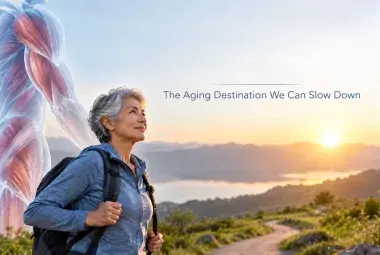
The World's New Demographic Reality
Modern societies have become remarkably effective at measuring what they value. Governments track economic growth, labor productivity, educational attainment, healthcare expenditure, dependency ratios, and workforce participation to assess national progress. Yet as populations age and longevity increases, a fundamental question remains largely unexplored:
What forms of value accumulate as people grow older?
According to the United Nations Department of Economic and Social Affairs (2024), the number of people aged 65 years and older is projected to more than double globally by 2050, while the World Health Organization (2024) reports that by 2030 one in six people worldwide will be aged 60 years or older. These demographic shifts have prompted growing concern regarding healthcare systems, pension sustainability, labor shortages, and long-term care needs.
Such concerns are both legitimate and necessary. However, much of the contemporary discourse surrounding population ageing continues to focus on the costs associated with longevity rather than the assets that may also accumulate across the life course. As societies gain unprecedented years of human experience, a largely overlooked question emerges: beyond longer lives, what forms of knowledge, wisdom, judgment, mentorship, and societal value are growing alongside longevity?
Beyond Human Capital
For decades, economists have relied on the concept of human capital to explain how education, training, health, and workforce skills contribute to economic productivity and national development. According to the World Bank (2024), human capital consists of the knowledge, skills, and health that people accumulate throughout their lives and that enable them to realize their potential as productive members of society.
The OECD (2025) similarly emphasizes lifelong learning, workforce adaptability, and skills development as essential responses to demographic and technological transformation. Likewise, the World Economic Forum (2025) identifies human capabilities, adaptability, and continuous learning as critical assets within rapidly evolving labor markets.
These frameworks have significantly advanced our understanding of economic value. However, they largely focus on qualities that can be measured and quantified: educational attainment, workforce participation, technical skills, productivity, and employment outcomes.
But what about judgment?
What about perspective?
What about emotional maturity, ethical reasoning, resilience, mentorship, and the ability to navigate uncertainty?
These capacities often emerge through decades of lived experience and may represent forms of value that extend beyond conventional economic definitions of productivity.
Wisdom: An Underexplored Form of Capital
The scientific study of wisdom has expanded considerably over the past several decades. Among the most influential scholars in this field, Baltes and Staudinger (2000) described wisdom as an expert system concerning the fundamental pragmatics of life, emphasizing judgment, contextual understanding, and the ability to navigate complex human situations.
Similarly, Ardelt (2003) argued that wisdom integrates cognitive, reflective, and compassionate dimensions that contribute to effective decision-making and human flourishing. Rather than being acquired solely through formal education, wisdom develops through reflection on lived experiences, challenges, relationships, successes, and failures.
Developmental psychologist Erik Erikson (1982) further proposed that later stages of life are often characterized by generativity - the desire to guide, mentor, support, and contribute to future generations. This perspective suggests that ageing is not merely a period of decline but may also represent a period of accumulated perspective, meaning, and societal contribution.
Contemporary healthy ageing frameworks increasingly reinforce these observations. The World Health Organization's Decade of Healthy Ageing (2021–2030) recognizes participation, purpose, contribution, and meaningful engagement as important dimensions of wellbeing in later life (WHO, 2024). Collectively, these perspectives challenge prevailing assumptions that value is primarily associated with economic productivity. Instead, they suggest that some forms of human value may increase rather than diminish with age.
Image
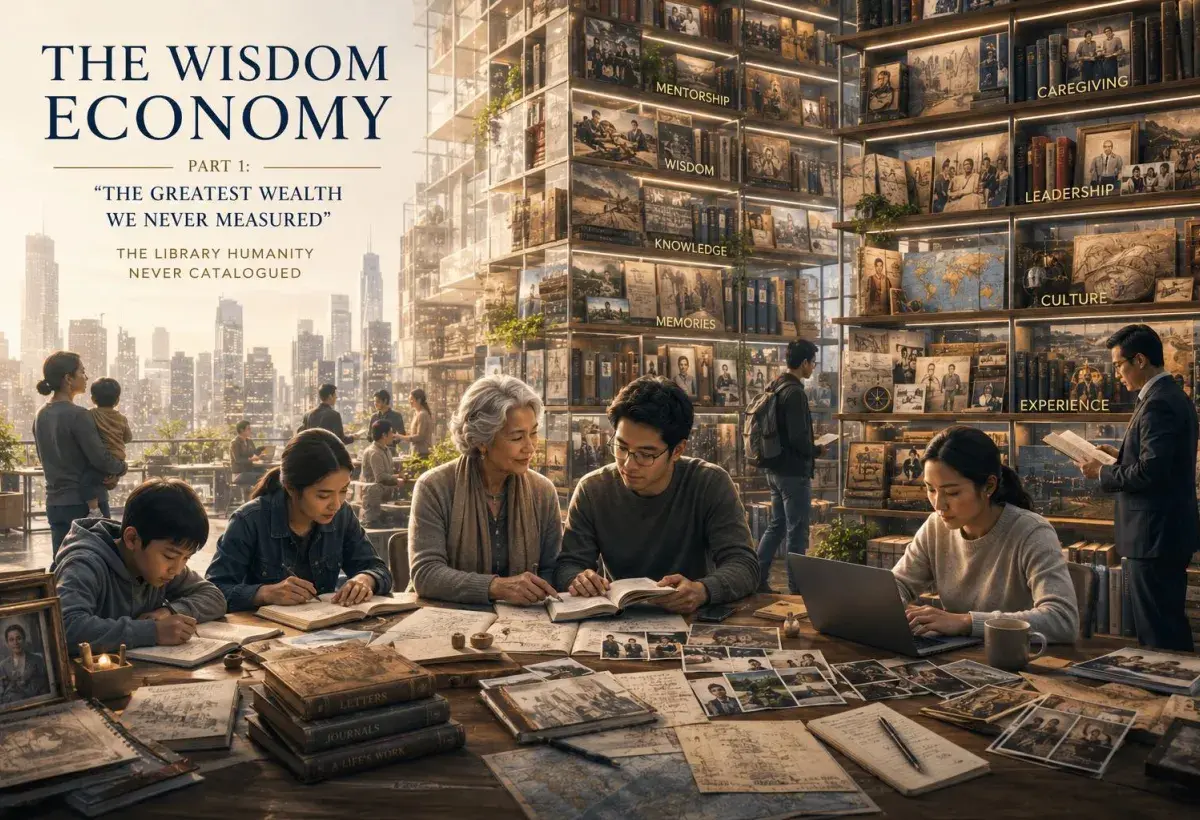
Tacit Knowledge: The Invisible Asset
The philosopher Michael Polanyi (1966) famously observed that “we know more than we can tell.” This insight became the foundation of tacit knowledge theory, which distinguishes between knowledge that can be formally documented and knowledge that exists through experience, intuition, judgment, and practice.
Building upon this foundation, Nonaka and Takeuchi (1995) demonstrated that tacit knowledge plays a critical role in organizational learning and innovation because many of the most valuable forms of expertise are embedded within lived experience rather than written instructions.
-
A nurse may recognize subtle signs of patient distress before clinical indicators appear.
-
A teacher may instinctively understand how to engage a struggling student.
-
A caregiver may possess practical insights developed through years of supporting family members.
-
A community leader may sense emerging tensions before conflict becomes visible.
These forms of knowledge are rarely captured in economic statistics, yet they are essential to the functioning of families, communities, institutions, and societies.
Recent studies on intergenerational knowledge transfer continue to demonstrate that older individuals often possess valuable experiential knowledge, institutional memory, and mentorship capacity that benefit younger generations and organizations (Fasbender & Gerpott, 2021; Pfrombeck et al., 2023). Yet many contemporary institutions remain poorly equipped to systematically preserve or transfer these assets.
Are We Facing a Wisdom Crisis?
As populations age globally, governments increasingly discuss labor shortages, pension sustainability, healthcare expenditure, and long-term care needs. However, comparatively less attention has been devoted to understanding what societies may lose when accumulated wisdom, tacit knowledge, mentorship capacity, and lived experience disappear without meaningful transfer.
Policy discussions frequently focus on workforce replacement. Far less attention is given to the loss of institutional memory, practical judgment, intergenerational learning, community leadership, and experiential knowledge accumulated across decades. This raises an important question.
“While societies are preparing for labor shortages, are they also preparing for wisdom shortages?”
Image
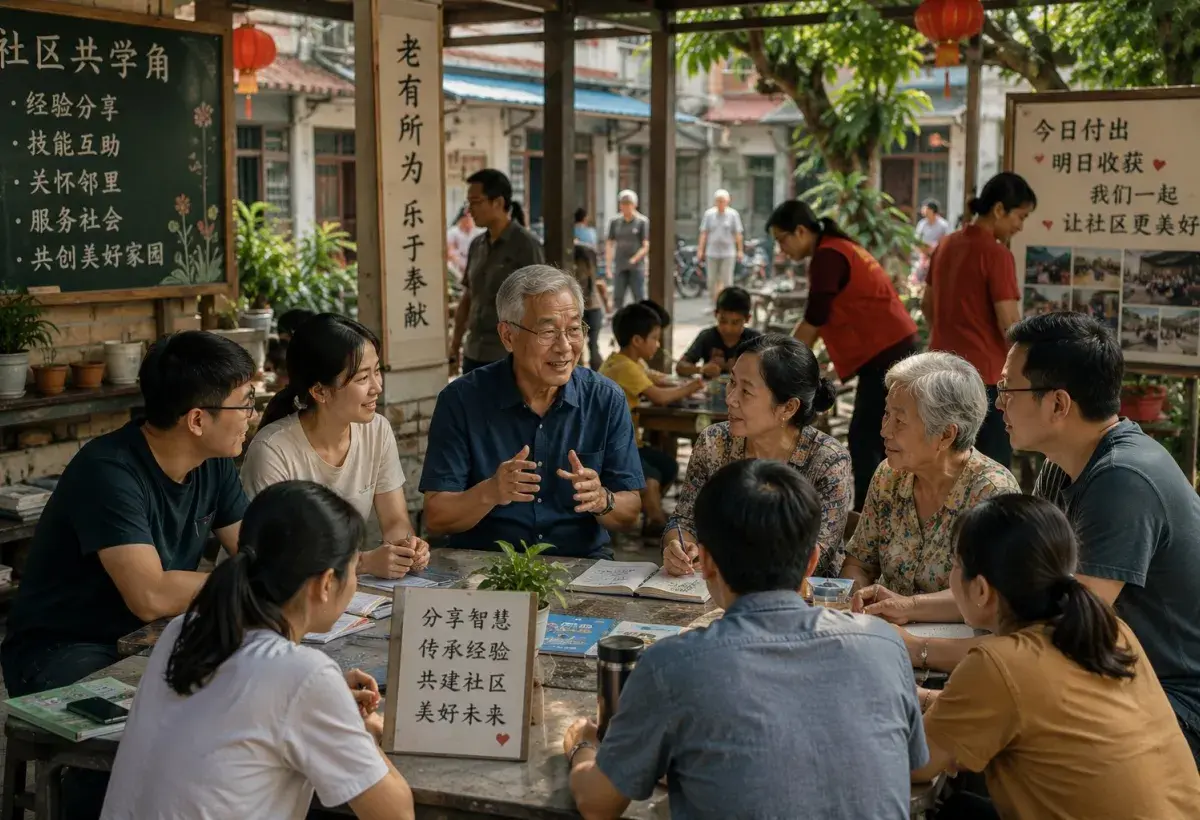
Introducing the Wisdom Economy
Contemporary ageing frameworks have significantly advanced understanding of longevity, healthy ageing, workforce participation, and economic sustainability. However, comparatively less attention has been devoted to understanding ageing populations as repositories of accumulated wisdom, tacit knowledge, mentorship capacity, generativity, and intergenerational assets that contribute to societal resilience, continuity, and adaptive capacity.
Existing frameworks examine these concepts largely in isolation. Limited integrative scholarship has explored how wisdom, tacit knowledge, mentorship, generativity, and accumulated life experience may collectively function as societal assets within rapidly ageing populations. Building upon existing scholarship on wisdom, tacit knowledge, healthy ageing, human capital, and intergenerational learning, this article proposes the Wisdom Economy Framework.
The Wisdom Economy refers to the societal value generated through the accumulation, preservation, transfer, and application of wisdom, tacit knowledge, mentorship, experience, and intergenerational learning. Its foundations include:
- Knowledge Capital: What people know.
- Wisdom Capital: How people apply what they know.
- Mentorship Capital: How experience is transferred.
- Intergenerational Capital: How values and resilience move across generations.
- Community Capital: How trust and social cohesion are sustained.
- Purpose Capital: How older adults continue contributing meaningfully to society.
Rather than viewing ageing populations primarily through the lens of dependency, the Wisdom Economy invites societies to recognize older adults as contributors to forms of value that have long existed but have rarely been measured.
A Question for the Future
For centuries, societies have built schools to preserve knowledge, banks to preserve wealth, libraries to preserve information, and museums to preserve history.
Yet as populations age globally, remarkably little attention has been devoted to preserving wisdom itself. The challenge of population ageing is not solely how societies support older adults, but whether societies can recognize, preserve, and mobilize the accumulated wisdom, tacit knowledge, mentorship capacity, generativity, and intergenerational assets embedded within increasingly long-lived populations.
In an era defined by demographic transformation, technological disruption, and social complexity, these often-overlooked resources may prove as important to societal resilience and continuity as the economic and healthcare systems that currently dominate ageing discourse.
If the twenty-first century is becoming increasingly complex, technologically disruptive, and socially fragmented, can humanity afford to lose the accumulated wisdom of the largest and longest-living generation in history?
Read 👉️ The Wisdom Economy - Part 2: The Coming Wisdom Crisis https://www.chikicha.com/wisdom-economy-part-2-coming-wisdom-crisis
Read 👉️ The Wisdom Economy – Part 3: Reservoirs of Wisdom https://www.chikicha.com/wisdom-economy-part-3-reservoirs-wisdom
Image
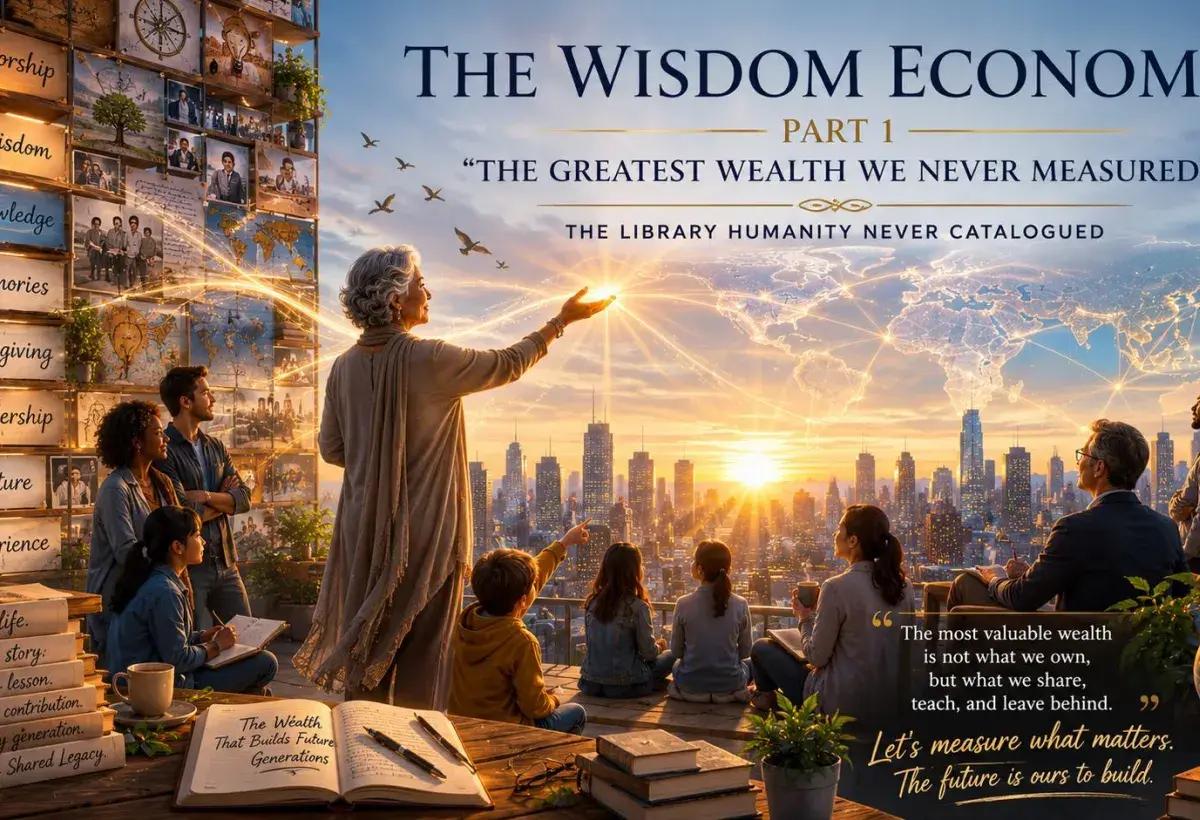
Suggested Citation
Lendez, M. (2026). The Wisdom Economy-Part 1: The Greatest Wealth We Never Measured. Chikicha. (Dr. Lendez is the developer of Ikigai-Bayanihan Framework).
About the Author
Dr. Mariza Lendez is a researcher, social entrepreneur, and creator of the Ikigai-Bayanihan (Purpose + Collective Ethos) Retirement Model, an innovative framework that integrates purpose, community engagement, and sustainability to support meaningful aging and later-life well-being.
Explore the Ikigai-Bayanihan Retirement Model presented by Chikicha Co-founder:
https://www.chikicha.com/chikicha-co-founder-present-ikigai-bayanihan-retirement-model-iafor-egen-2026
References
*Demographic Ageing and Healthy Ageing
United Nations World Population Prospects 2024
United Nations Department of Economic and Social Affairs. (2024). World population prospects 2024: Summary of results. United Nations. Retrieved from https://population.un.org/wpp/
World Health Organization. (2024). Ageing and health. World Health Organization. Retrieved from https://www.who.int/news-room/fact-sheets/detail/ageing-and-health?
WHO Decade of Healthy Ageing 2021–2030
World Health Organization. (2024). UN Decade of Healthy Ageing (2021–2030). World Health Organization. Retrieved from https://www.who.int/initiatives/decade-of-healthy-ageing?
*Human Capital and Workforce Transformation
World Bank. (2024). Human capital project. World Bank Group. Retrieved from https://www.worldbank.org/en/publication/human-capital
Organisation for Economic Co-operation and Development. (2025). OECD skills outlook. OECD Publishing. Retrieved from https://www.oecd.org/en/publications/serials/oecd-skills-outlook_d4187381.html?
Organisation for Economic Co-operation and Development. (2025). OECD skills outlook 2025: Building the skills of the 21st century for all. OECD Publishing. https://www.oecd.org/en/publications/oecd-skills-outlook-2025_26163cd3-en.html
World Economic Forum Future of Jobs Report 2025
World Economic Forum. (2025). The future of jobs report 2025. World Economic Forum.
*Wisdom Theory (Foundational)
Baltes, P. B., & Staudinger, U. M. (2000). Wisdom: A metaheuristic (pragmatic) to orchestrate mind and virtue toward excellence. American Psychologist, 55(1), 122–136. https://doi.org/10.1037/0003-066X.55.1.122
Ardelt, M. (2003). Empirical assessment of a three-dimensional wisdom scale. Research on Aging, 25(3), 275–324. https://doi.org/10.1177/0164027503025003004
Erikson, E. H. (1982). The life cycle completed. W. W. Norton & Company.
T*acit Knowledge and Knowledge Transfer
Polanyi, M. (1966). The tacit dimension. University of Chicago Press.
Nonaka, I., & Takeuchi, H. (1995). The knowledge-creating company: How Japanese companies create the dynamics of innovation. Oxford University Press.
*Contemporary Validation of Knowledge Transfer
Fasbender, U., & Gerpott, F. H. (2021). To share or not to share: A social-cognitive internalization model to explain how age discrimination impairs older employees’ knowledge sharing with younger colleagues. European Journal of Work and Organizational Psychology, 30(1), 125–142. https://doi.org/10.1080/1359432X.2020.1839421
Pfrombeck, J., Fasbender, U., Deller, J., & Kauffeld, S. (2023). Intergenerational learning in organizations: A systematic review and future research agenda. Journal of Knowledge Management, 27(5), 1321–1345.