Introduction
As we navigate life's continuously evolving stages, the eager independence of childhood gives way to the weight of adult responsibilities, ultimately shaping how we embrace the inevitable changes of our later years.
Some changes are anticipated, such as retirement after decades of work. Others through unexpected illness, the loss of a loved one, changing family roles, or gradual changes in physical capacity. Regardless of how they occur, these experiences reshape the way people participate in everyday life and relate to the world around them.
Yet these transitions do not affect everyone in the same way.
Some older adults discover new opportunities to learn, mentor, volunteer, create, travel, or deepen their involvement in family and community. Others gradually withdraw from activities they once valued, even when their physical health remains relatively stable. These contrasting experiences suggest that ageing itself does not determine whether a person remains actively engaged with life.
The more important question is what happens after the transition. Retirement may bring freedom from professional responsibilities, but it may also bring the loss of familiar routines, daily social interaction, and long-established identities. Similarly, changes in health, family structure, or financial circumstances may create new limitations while also opening unexpected opportunities for growth and contribution.
The transition itself is not the outcome. Rather, it marks the beginning of a new chapter in which individuals adapt, redefine their roles, and discover new ways of remaining connected to what they value. This naturally leads to an important question:
What enables older adults to remain meaningfully engaged throughout later life?
Although the question appears straightforward, the scientific literature suggests that the answer is anything but simple.
Looking Beyond a Single Explanation
Over the past two decades, healthy ageing research has undergone an important conceptual shift. The focus has gradually expanded beyond preventing disease and extending life expectancy toward understanding how older adults continue living lives they value. This evolution is reflected in the World Health Organization's definition of healthy ageing as the process of developing and maintaining the functional ability that enables well-being in older age, emphasizing the interaction between individuals and the environments in which they live (World Health Organization [WHO], 2020, 2024).
This broader perspective has encouraged researchers from multiple disciplines to examine different aspects of later life. Medicine has advanced our understanding of longevity, chronic disease, and functional health. Psychology has explored purpose, resilience, adaptation, and psychological well-being. Sociology has examined relationships, social roles, and community participation. Gerontology has integrated biological, psychological, and social perspectives on ageing, while economics and public policy have investigated the influence of financial security, age-friendly environments, and social protection on well-being (WHO, 2020, 2024; Organisation for Economic Co-operation and Development [OECD], 2024).
Each discipline has contributed important insights, yet each examines only part of a much larger picture.
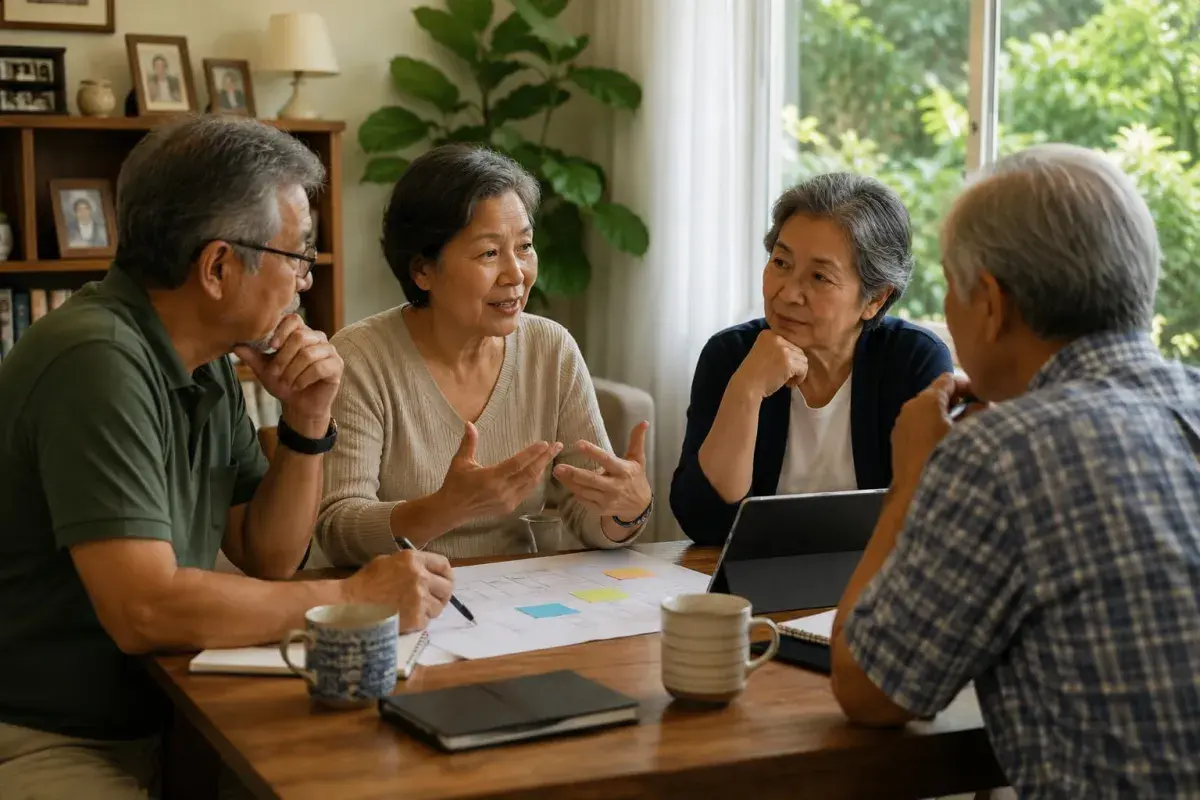
Viewed together, these diverse bodies of evidence point toward a common realization: meaningful engagement in later life cannot be adequately explained through a single disciplinary perspective or a single determinant. Instead, it appears to emerge through the interaction of multiple personal, social, environmental, and structural influences (WHO, 2020, 2024; OECD, 2024).
Why One Factor Is Never Enough
The complexity of later life becomes evident when individual experiences are compared.
Good physical health undoubtedly expands opportunities for participation, yet it does not automatically lead to meaningful engagement. An older adult may remain physically active while experiencing a profound loss of identity following retirement. Conversely, another individual living with chronic illness may continue to lead a deeply meaningful life through mentoring, volunteering, caregiving, creative pursuits, or community leadership. The difference lies not only in health status but also in the opportunities available to remain connected with valued activities and social roles (WHO, 2020).
The same pattern can be observed across other domains.
Financial security increases access to resources and opportunities, yet it cannot by itself create a sense of purpose or belonging. Strong family relationships provide emotional support, but they may not replace the identity once derived from work, community leadership, or lifelong interests. Likewise, purpose contributes to psychological well-being, yet purpose itself is shaped by health, relationships, opportunities for contribution, and supportive environments rather than existing independently of them (Alimujiang et al., 2019; Sutin et al., 2021; Boreham et al., 2026).
Each influence contributes something important, but none explains the whole story. Rather than identifying one defining predictor of successful ageing, contemporary research increasingly suggests that meaningful engagement develops through the interaction of multiple influences operating throughout the life course (WHO, 2020, 2024; OECD, 2024).
Image
An Emerging Scientific Perspective
This evolving understanding is reflected across several disciplines.
Public health increasingly recognizes that healthy ageing depends not only on intrinsic capacity but also on physical, social, and policy environments that enable people to continue participating in activities they value (WHO, 2020, 2024). Psychology demonstrates that purpose, resilience, and psychological resources are associated with important outcomes, including well-being, cognitive health, and longevity (Alimujiang et al., 2019; Sutin et al., 2021). More recently, Boreham and colleagues (2026) concluded that purpose is neither fixed nor uniformly experienced across adulthood but changes in response to life circumstances, social roles, health, and opportunities for continued engagement.
Gerontology and sociology add another important perspective by emphasizing that later life is shaped through transition. Retirement, widowhood, caregiving, relocation, declining health, and changing family responsibilities alter daily routines, social relationships, and opportunities for participation. These events are not inherently positive or negative. Their influence depends largely on how individuals adapt and on the resources available to support that adaptation.
Although these disciplines differ in their theoretical perspectives and methods, they converge on an important observation. Healthy ageing is best understood as a dynamic process in which biological, psychological, social, environmental, and economic influences continually interact throughout later life (WHO, 2020; OECD, 2024).
The Missing Question
Scientific progress often reveals new questions.
The literature now provides substantial evidence supporting the importance of functional ability, purpose, social participation, supportive environments, financial security, and psychological well-being. Each has been examined extensively within its own field of inquiry. Collectively, however, they raise a more fundamental question that has received comparatively less attention.
How do these different influences work together to enable older adults to remain meaningfully engaged throughout later life?
This is the missing question. It does not challenge existing research. Instead, it builds upon it. As knowledge accumulates across disciplines, the next step is understanding how these influences complement one another to sustain meaningful engagement across the diverse transitions of later life.
Concluding Reflection
Healthy ageing is no longer understood simply as living longer or preventing disease. Increasingly, it is understood as creating the conditions that enable people to continue participating in activities, relationships, and social roles they value throughout later life (WHO, 2020, 2024).
The evidence reviewed in this article suggests that no single discipline, and no single factor can fully explain how meaningful engagement is sustained. Instead, meaningful engagement appears to emerge through the interaction of multiple dimensions that collectively shape the experience of ageing.
Recognizing this complexity marks an important shift in the scientific conversation that researchers are increasingly challenged to understand how multiple dimensions work together to support continued engagement across later life.
The next article in this series, Understanding the Dimensions of Meaningful Engagement, explores these recurring dimensions as they emerge across gerontology, psychology, sociology, public health, economics, and ageing research. By examining each dimension individually, we begin building a more comprehensive understanding of the factors that collectively support meaningful engagement throughout later life.
👉️ click here to read article 3 https://www.chikicha.com/understanding-dimensions-meaningful-engagement
Image
Suggested Citation:
Lendez, M. L. (2026). The Missing Question in Healthy Ageing: Why Meaningful Engagement Cannot Be Explained by a Single Factor. Chikicha Longevity. (the author is the developer of the Ikigai-Bayanihan Framework).
About the Author
Dr. Mariza Lendez is a researcher, social entrepreneur, and creator of the Ikigai-Bayanihan (Purpose + Collective Ethos) Retirement Model, an innovative framework that integrates purpose, community engagement, and sustainability to support meaningful aging and later-life well-being
References
Alimujiang, A., Wiensch, A., Boss, J., Fleischer, N. L., Mondul, A. M., McLean, K., Mukherjee, B., & Pearce, C. L. (2019). Association between life purpose and mortality among US adults older than 50 years. JAMA Network Open, 2(5), e194270. https://doi.org/10.1001/jamanetworkopen.2019.4270
Organisation for Economic Co-operation and Development. (2024). The economic benefits of promoting healthy ageing and community care. OECD Publishing. https://doi.org/10.1787/0f7bc62b-en
Sutin, A. R., Luchetti, M., & Terracciano, A. (2021). Sense of purpose in life and healthier cognitive aging. Trends in Cognitive Sciences, 25(11), 917–919. https://doi.org/10.1016/j.tics.2021.08.009
World Health Organization. (2015). World report on ageing and health. World Health Organization. https://apps.who.int/iris/handle/10665/186463
World Health Organization. (2020). Decade of Healthy Ageing: Baseline report. World Health Organization. https://www.who.int/publications/i/item/9789240017900
World Health Organization. (2020). Healthy ageing and functional ability. https://www.who.int/news-room/questions-and-answers/item/healthy-ageing-and-functional-ability
World Health Organization. (2021). UN Decade of Healthy Ageing (2021–2030). https://www.who.int/initiatives/decade-of-healthy-ageing