A Moment That Can Change What Comes After
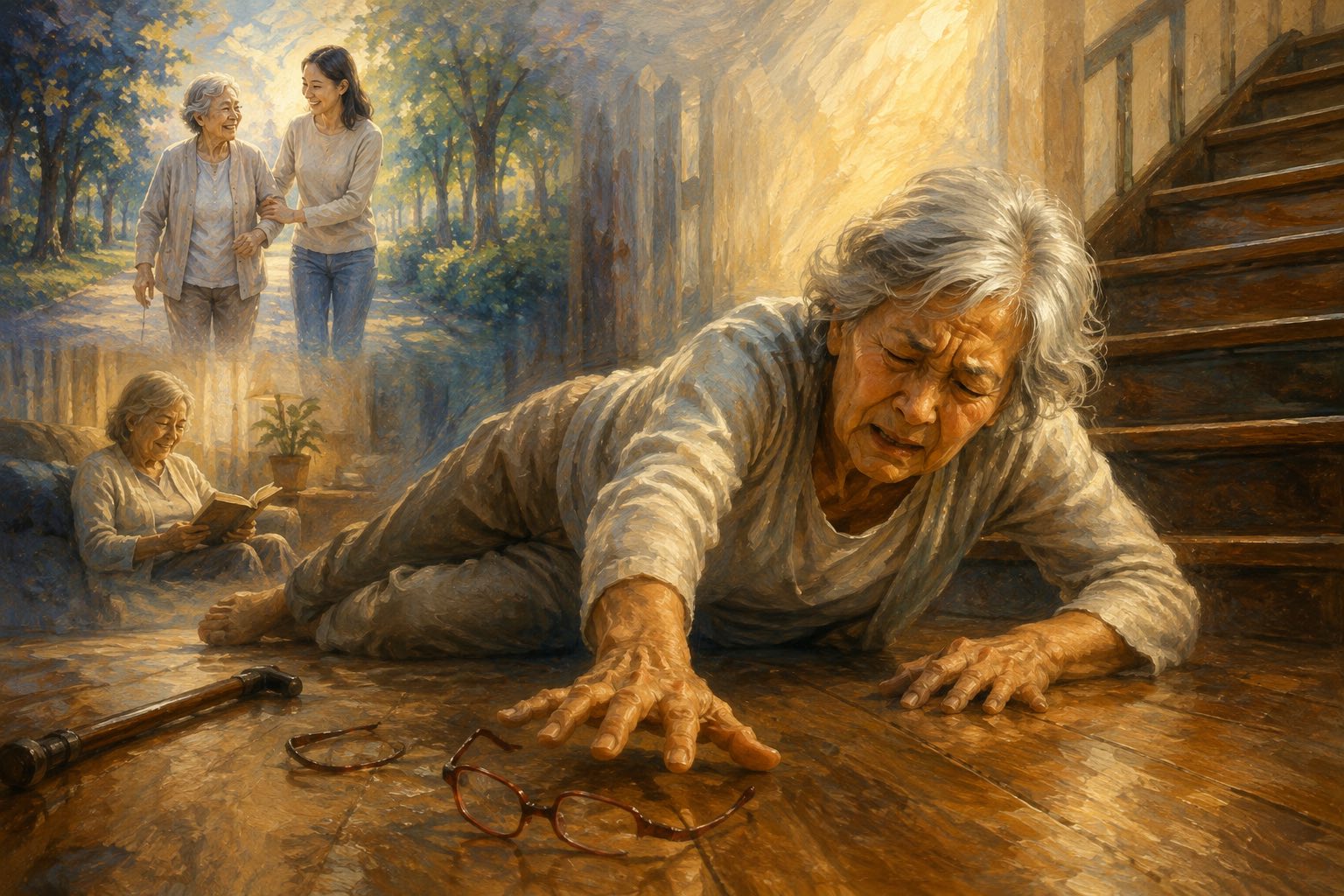
A fall can happen during an ordinary movement: walking across a room, turning, standing from a chair, stepping over an obstacle, or moving across an unfamiliar surface. The event itself may take only a moment. What follows can be considerably longer.
The World Health Organization (WHO) defines a fall as an event in which a person comes to rest inadvertently on the ground, floor, or another lower level (World Health Organization [WHO], 2021a). Most falls are non-fatal, but some result in injuries requiring medical attention, hospitalization, rehabilitation, or longer-term support. This is why a fall deserves to be taken seriously in later life.
The concern is not that ageing makes falling inevitable. It does not. The concern is that the consequences of a fall can become more serious as physical vulnerability increases with age. And the scale of the problem makes that vulnerability difficult to dismiss.
The Numbers Tell a Larger Story
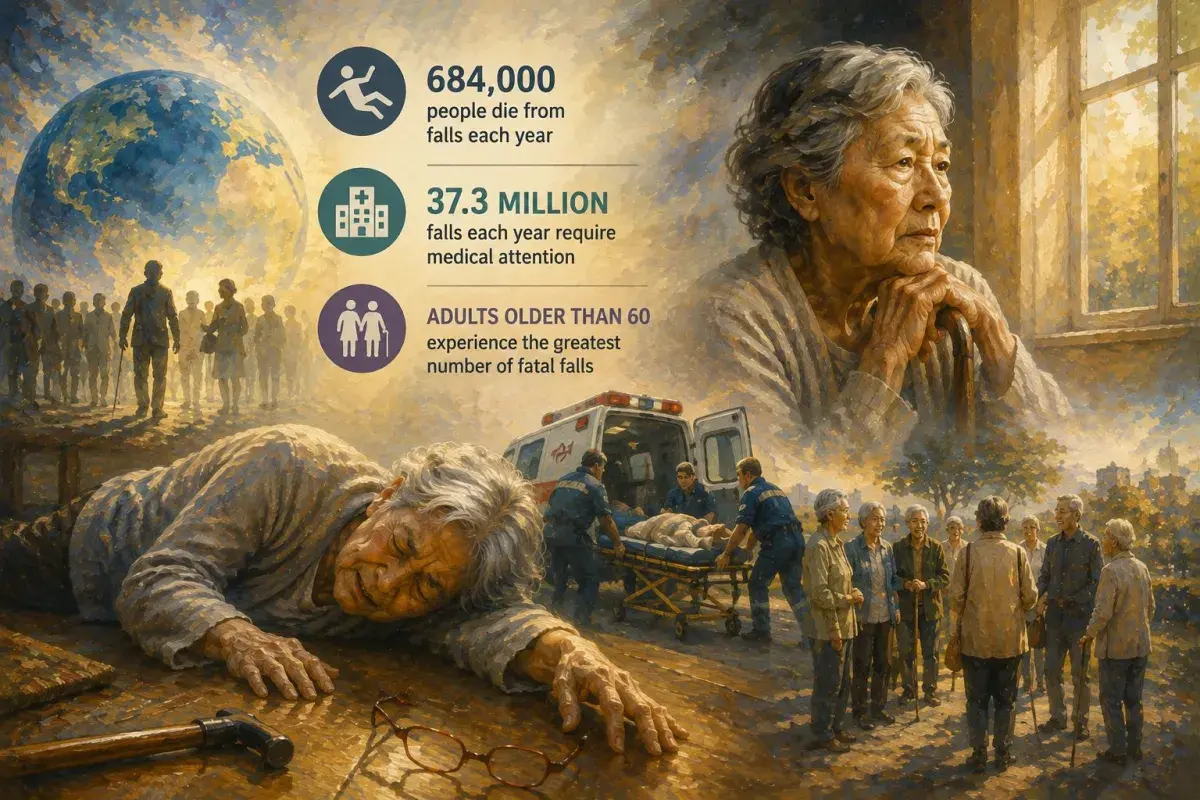
Globally, WHO reported that approximately 684,000 people die from falls each year, making falls the second leading cause of unintentional injury deaths worldwide. The organization also reported that approximately 37.3 million falls each year are severe enough to require medical attention and that adults older than 60 experience the greatest number of fatal falls (WHO, 2021a).
The burden is particularly significant in low- and middle-income countries. WHO reported that more than 80% of fall-related fatalities occur in low- and middle-income countries, with the Western Pacific and South-East Asia together accounting for approximately 60% of these deaths (WHO, 2021a). WHO's Step Safely technical package further estimated that 172 million people experience disabilities arising from falls each year (WHO, 2021b).
The publication also identified falls as a growing global public-health problem and outlined evidence-based strategies for prevention across the life course.
The European evidence provides another perspective. A 2025 systematic review and meta-analysis examined 38 studies involving 71,245 community-dwelling adults aged 65 years and older across Europe. Rommers et al. (2025) estimated that approximately 30% of older adults were fallers. Their meta-regression found no significant change in faller prevalence over the years examined, despite the extensive evidence accumulated on fall prevention.
The United States presents a similarly persistent burden. The Centers for Disease Control and Prevention (CDC) currently reports that more than 14 million, or one in four, adults aged 65 and older report falling each year. The CDC also reports that the age-adjusted fall death rate among older adults increased by 21%, from 64.7 per 100,000 in 2018 to 78.4 per 100,000 in 2024 (Centers for Disease Control and Prevention [CDC], 2026).
Earlier CDC surveillance reported 38,742 deaths from unintentional falls among U.S. adults aged 65 and older in 2021 (CDC, 2023). The financial burden is substantial. Haddad et al. (2024) estimated that US$80.0 billion in healthcare expenditure in 2020 was attributable to non-fatal falls among older adults in the United States. The estimate included healthcare expenditures associated with falls and was substantially higher than previous estimates.
The numbers become particularly relevant when viewed from the Philippines.
A nationally representative study published by Mgabhi et al. (2024), using baseline data from the 2018 Longitudinal Study of Ageing and Health in the Philippines (LSAHP), included 4,606 Filipino adults aged 60 and older. The study found that 17.7% had experienced a fall during the 12 months preceding the interview. Among Filipino participants, functional impairments, pain and poor grip strength were among the factors significantly associated with falls.
The Philippine burden also has an economic dimension. Cortez et al. (2021) estimated an annual economic burden of approximately ₱1.094 billion for acute fragility hip fractures in the Philippines. This figure represents the economic burden of acute fragility hip fractures, not the total economic cost of all falls in the country.
Collectively, these findings establish something important: a fall is not a minor ageing statistic. It is a significant health, functional and economic concern across populations and health systems.
Image
Why Do People Fall?
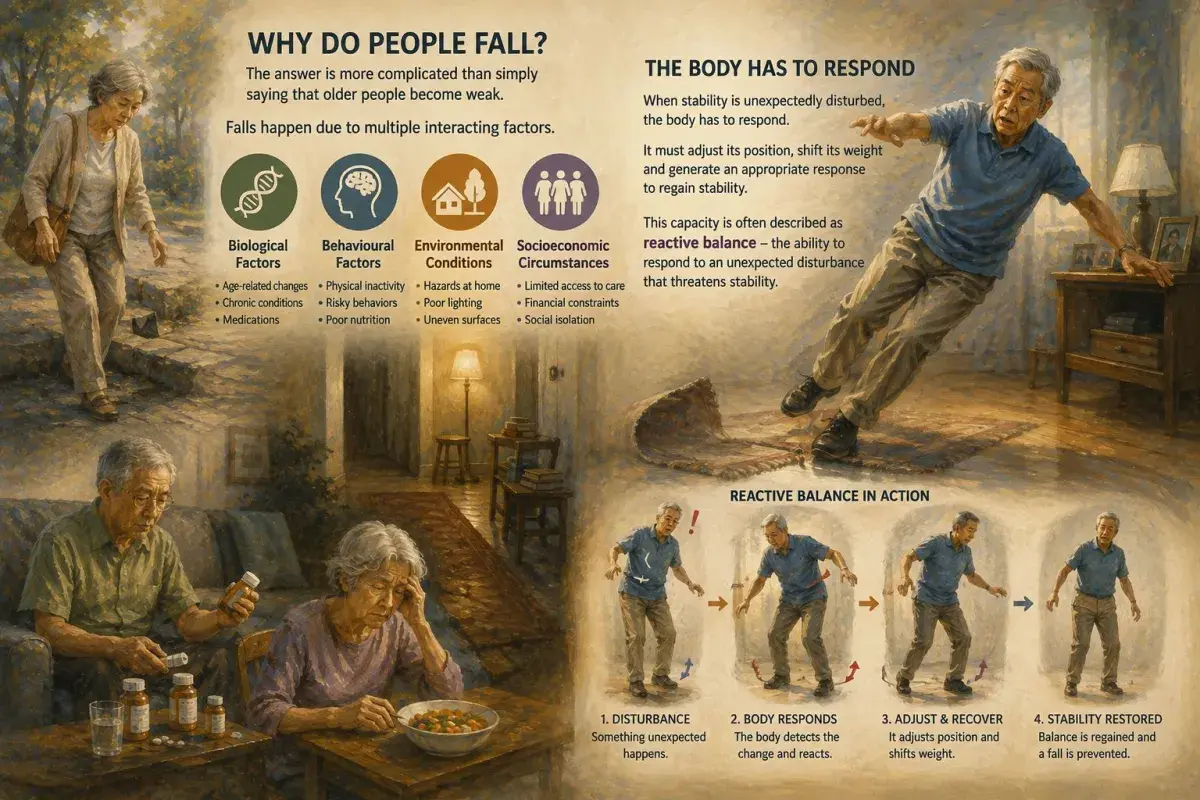
The answer is more complicated than simply saying that older people become weak.
WHO describes falls as the result of multiple interacting factors. These include biological factors, behavioural factors, environmental conditions and socioeconomic circumstances. Among older adults, physical inactivity, loss of balance, impaired mobility and vision, underlying medical conditions, medication effects and unsafe environments can contribute to fall risk (WHO, 2021a).
Physical capacity is therefore part of the picture, but it is not the entire picture. The Philippine study by Mgabhi et al. (2024) illustrates this complexity. Its analysis considered sociodemographic, biophysical and psychological factors, including functional impairments, pain, vision, chronic conditions, grip strength, walking speed, postural control and depressive symptoms. Among Filipino older adults, several factors were significantly associated with falls, including functional impairments, pain and poor grip strength.
A fall, therefore, is not necessarily explained by one isolated weakness. It can emerge when several vulnerabilities meet an unexpected physical challenge.
A surface that presents little difficulty to one person may present a serious challenge to another. A sudden change in direction may be easily corrected by one person but may exceed another person's ability to recover balance. A minor obstruction may be inconsequential when strength, balance and mobility are adequate, yet become consequential when those capacities have declined.
The fall is the visible event, but the vulnerability beneath it may be much less visible.
The Body Has to Respond
When stability is unexpectedly disturbed, the body has to respond. It must adjust its position, shift its weight and generate an appropriate response to regain stability. This capacity is often described as reactive balance - the ability to respond to an unexpected disturbance that threatens stability.
Kim et al. (2022) examined this capacity in a systematic review and network meta-analysis of 39 randomized controlled trials involving 1,388 older adults. Their analysis found that task-specific reactive-balance training produced the strongest improvements in reactive balance, while power training also demonstrated important effects. This finding adds an important dimension to fall prevention.
Preventing a fall is not only about removing hazards from the environment. It also concerns the body's capacity to respond when movement does not go exactly as expected. WHO's Step Safely framework identifies strength and balance training for older people among effective fall-prevention measures, while its falls guidance also includes gait, balance and functional training, home assessment and modification, medication review and multifactorial interventions among approaches for older adults (WHO, 2021a, 2021b).
The evidence does not suggest that exercise makes a person immune to falling, but it establishes something more useful: Physical capacity is one component of preparedness.
Why Age Changes the Consequences
The significance of a fall is not only in how it happens. It is also in what the body is able to do before, during and after the event.
Ageing can involve changes in muscle capacity, physical performance and skeletal health. As discussed in Article 1, muscle size, strength and physical performance represent related but distinct dimensions of physical capacity. Bone vulnerability can also change with age. These factors matter because a fall places physical demands on the body at precisely the moment when the body must respond.
A person needs sufficient capacity to recover balance. If recovery is unsuccessful, the body then has to withstand the impact. If skeletal fragility is present, an impact that might otherwise result in a minor injury may have more serious consequences. This does not mean that ageing automatically leads to fractures, it only means that the consequences of a fall occur within the context of an individual's existing physical capacity and vulnerability.
That is why preparation cannot begin after the fall.
Image
When a Fall Becomes More Than a Fall
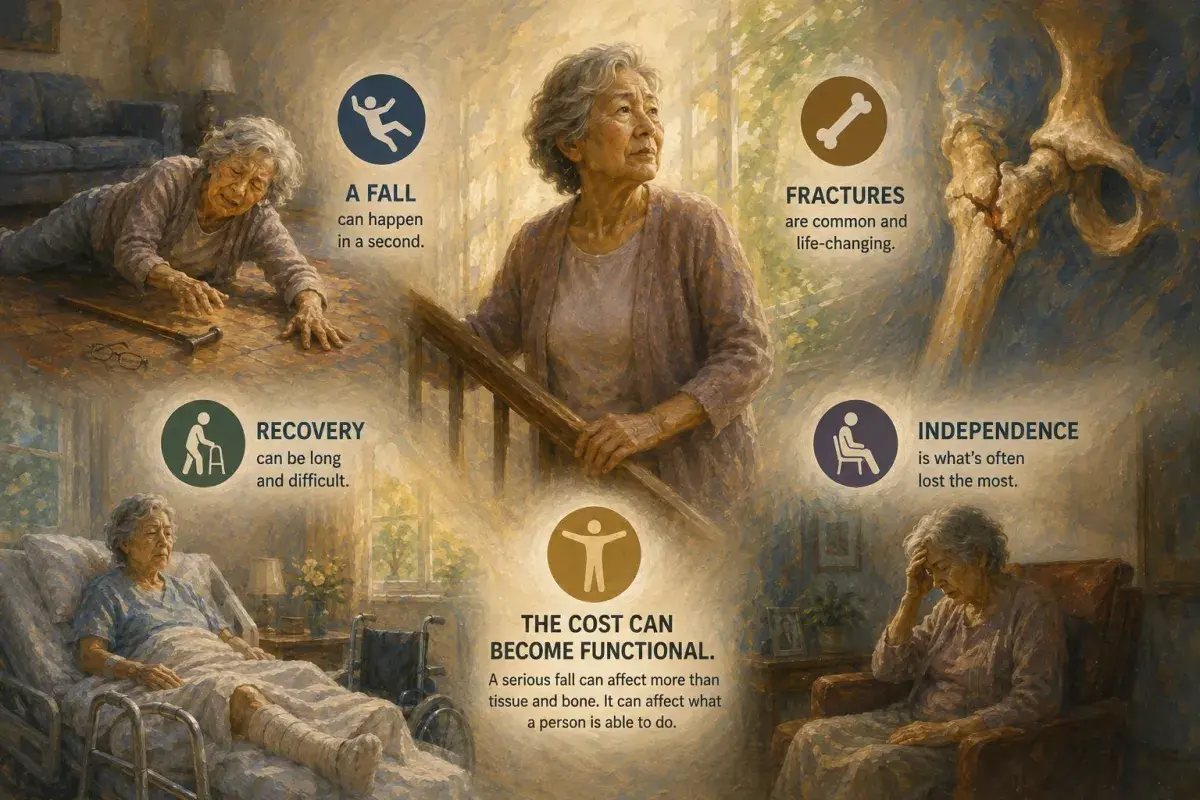
The relationship between falls and fractures becomes particularly important when skeletal fragility is present. WHO reported that 178 million new fractures occurred globally in 2019, and that fractures accounted for 25.8 million years lived with disability that year. The organization also reported that fractures were more common among older people and that most fractures in older people were associated with bone fragility and could result from forces equivalent to a fall from standing height or less (WHO, 2024).
WHO identifies older age as a non-modifiable risk factor for fragility fractures and identifies falls and physical inactivity among modifiable risk factors (WHO, 2024). A fall does not automatically produce a fracture. But when skeletal fragility is present, the physical consequences of a relatively low-energy event can be substantially different.
The most common sites of fragility fractures include the spine, hip, distal forearm and proximal humerus, with hip and vertebral fractures among the most serious (WHO, 2024). When a fall results in a serious fracture, particularly a hip fracture, the event moves beyond the moment of impact. Treatment may involve hospitalization, surgery and rehabilitation, while recovery may require substantial support.
The Philippine evidence illustrates the economic dimension of one such injury. Cortez et al. (2021) calculated an annual economic burden of ₱1,094,048,363 for acute fragility hip fractures in the Philippines. The study also found that treatment costs were lower among patients hospitalized earlier than among those whose hospitalization was delayed.
The number is important, but the meaning behind the number is even more important, because the cost of a fall is not measured only by the hospital bill.
The Cost Can Become Functional
A serious fall can affect more than tissue and bone. It can affect what a person is able to do. That distinction takes us back to the concept of functional ability introduced in Article 1. When injury affects mobility, ordinary activities may become more difficult. WHO notes that people who fall and experience disability, particularly older people, may face increased risk of longer-term care and institutionalization (WHO, 2021a).
The CDC similarly identifies falls as a leading cause of fatal and nonfatal injuries among older adults and emphasizes screening and intervention to address fall risk, including factors such as poor strength and balance (CDC, 2026).
This is why the consequences of a fall must be considered beyond the immediate injury. A fall that disrupts mobility can make ordinary daily activities more difficult, and when daily function is affected, a person’s ability to move through the world, participate in everyday life, and maintain independence may also be compromised.
These outcomes are not inevitable for every person who falls, but the potential for a fall to disrupt functional ability makes prevention and preparation too important to leave until after the event has occurred.
When the Fall Leaves Fear Behind
There is another consequence that cannot be seen on an X-ray: fear of falling.
Xiong et al. (2024) conducted a systematic review and meta-analysis involving 153 studies, 200,033 participants and 38 countries. Their random-effects analysis estimated the global prevalence of fear of falling among older adults at 49.6%, although the individual study estimates varied substantially.
The review also found significant associations between fear of falling and demographic characteristics, physical function, chronic diseases and mental-health factors. The prevalence was higher in the pooled estimates for developing countries and for Asian populations, although substantial heterogeneity existed across studies and measurement approaches (Xiong et al., 2024).
This matters because the experience of a fall can extend beyond physical injury. The psychological dimension has become an important area of fall-prevention research. Rather than treating fear of falling as an incidental reaction, researchers have examined interventions intended to address it alongside physical and functional risk.
The fall, therefore, can have consequences that are physical, functional and psychological. And that is precisely why preparation should not be taken lightly.
Prevention Is Not a Single Intervention
If falls have multiple contributing factors, prevention cannot reasonably depend on one solution.
WHO's approach includes education, training, safer environments, research and effective policies. For older adults, WHO identifies gait, balance and functional training, home assessment and modification, medication-related interventions and multifactorial risk assessment among prevention strategies (WHO, 2021a).
The Step Safely technical package similarly identifies strength and balance training among effective interventions for older people (WHO, 2021b). The CDC's STEADI approach follows a screen, assess and intervene model for identifying and addressing fall risk. Current CDC guidance highlights potentially modifiable factors including medication use, strength and balance (CDC, 2026).
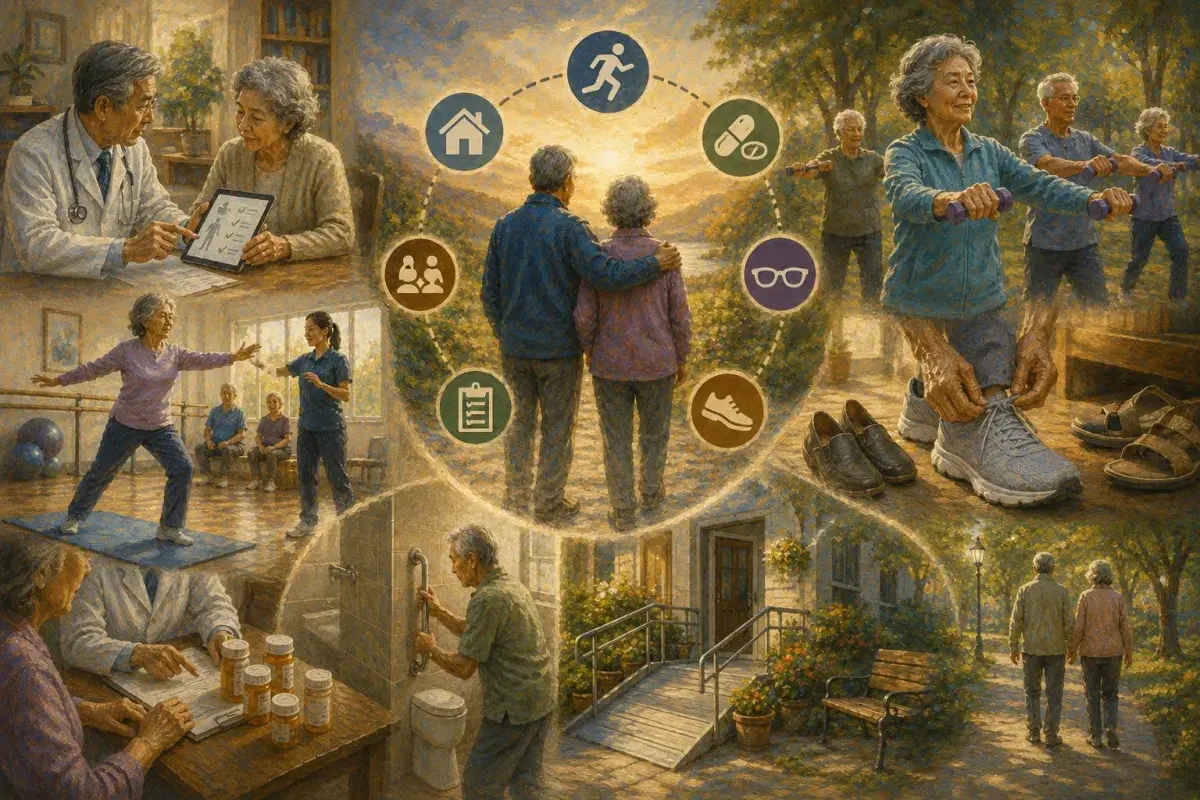
This approach matters because fall prevention is not simply a matter of telling an older person to “be careful.” It requires identifying what may be increasing an individual's risk and addressing the factors that can be changed. That may involve physical training, medication review, vision assessment, attention to footwear and the environment, and other individualized interventions.
Preparation is therefore not one exercise, but process of understanding risk and maintaining capacity.
Image
Why Preparation Cannot Begin at the Moment of Vulnerability
There is a practical problem with waiting, because physical capacity is not something that can be built instantly when it is suddenly needed. Balance cannot be developed during the second in which a person loses it. Strength cannot be summoned from a body that has not been using it. And a physical response cannot be rehearsed for the first time at the moment it is required.
This does not mean that people should live in fear of falling, but quite the opposite. The evidence supports a more constructive response: understand the risks, maintain physical capacity, address modifiable factors and make the environment safer.
WHO's prevention framework supports interventions across the life course and emphasizes the importance of evidence-based strategies to reduce the harm caused by falls (WHO, 2021b). The objective is not to promise that an older adult will never fall, but to avoid treating vulnerability as something that deserves attention only after an adverse event has already occurred.
Preparing Before the Body Is Tested
What This Means for the Years Ahead
A fall is not a verdict on ageing. It is an event that can reveal how physical capacity, bone health, environment and preparation interact when the body is suddenly challenged. The evidence shows that falls are common, that their consequences can extend well beyond the initial injury, and that their burden reaches across health systems, economies and the everyday lives of older adults (WHO, 2021a; CDC, 2026).
Taking falls seriously, therefore, is not about fearing what ageing may bring; it is about understanding what the ageing body may be asked to withstand.
The appropriate response is preparedness. Preparation does not mean expecting the worst or attempting to eliminate every vulnerability. It means recognizing that movement will sometimes be unpredictable, that the body will encounter unexpected demands, and that some of the physical capacities needed to meet those demands can be developed and maintained before they are tested.
The goal is not to live afraid of falling. It is to live prepared for the possibility strong enough to respond, mobile enough to continue, and informed enough to prepare before vulnerability becomes a crisis. And this leads to the next question in the series:
If mobility is a form of freedom, and the body must be prepared to respond when movement does not go according to plan, what physical capacities should we deliberately build and continue building as we grow older?
Article 3 — THE POWER Strength Is Not Enough: Building the Body for the Unexpected
Image
Suggested Citation
Lendez, M.L. (2026). THE FALL: A Fall Takes a Second But Its Consequences Can Last a Lifetime. Chikicha Longevity. (the author is the developer of the Ikigai-Bayanihan Framework for Purposeful Aging).
Abou the Author
Dr. Mariza Lendez is a researcher, social entrepreneur, and creator of the Ikigai-Bayanihan (Purpose + Collective Ethos) Retirement Model, an innovative framework that integrates purpose, community engagement, and sustainability to support meaningful aging and later-life well-being.
References
Centers for Disease Control and Prevention. (2023). Nonfatal and fatal falls among adults aged ≥65 years—United States, 2020–2021. Morbidity and Mortality Weekly Report, 72(35), 938–943. https://doi.org/10.15585/mmwr.mm7235a1
Centers for Disease Control and Prevention. (2026, February 26). Older adult falls data. https://www.cdc.gov/falls/data-research/index.html?
Cortez, K. A., Lai, J. G. L., & Tabu, I. A. (2021). Economic burden and the effects of early versus delayed hospitalization on the treatment cost of patients with acute fragility hip fractures under the UPM-PGH Orthogeriatric Multidisciplinary Fracture Management Model and Fracture Liaison Service. Osteoporosis and Sarcopenia, 7(2), 63–68. https://doi.org/10.1016/j.afos.2021.05.004
Haddad, Y. K., Miller, G. F., Kakara, R., Florence, C., Bergen, G., Burns, E. R., & Atherly, A. (2024). Healthcare spending for non-fatal falls among older adults, USA. Injury Prevention, 30(4), 272–276. https://doi.org/10.1136/ip-2023-045023
Kim, Y., Vakula, M. N., Bolton, D. A. E., Dakin, C. J., Thompson, B. J., Slocum, T. A., Teramoto, M., & Bressel, E. (2022). Which exercise interventions can most effectively improve reactive balance in older adults? A systematic review and network meta-analysis. Frontiers in Aging Neuroscience, 13, 764826. https://doi.org/10.3389/fnagi.2021.764826
Mgabhi, P. S., Chen, T.-Y., Cruz, G., Vu, N. C., & Saito, Y. (2024). Falls among community-dwelling older adults in the Philippines and Viet Nam: Results from nationally representative samples. Injury, 55(3), 111336. https://doi.org/10.1016/j.injury.2024.111336
Rommers, E., De Pauw, R., Petrovic, M., & Cambier, D. (2025). Epidemiology of falls in community-dwelling older adults in Europe: A systematic review and meta-analysis. Age and Ageing, 54(6), afaf157. https://doi.org/10.1093/ageing/afaf157
World Health Organization. (2021a). Falls. https://www.who.int/news-room/fact-sheets/detail/falls?
World Health Organization. (2021b). Step safely: Strategies for preventing and managing falls across the life-course. https://www.who.int/publications/i/item/978924002191-4?
World Health Organization. (2024, September 25). Fragility fractures. https://www.who.int/news-room/fact-sheets/detail/fragility-fractures?
Xiong, W., Wang, D., Ren, W., Liu, X., Wen, R., & Luo, Y. (2024). The global prevalence of and risk factors for fear of falling among older adults: A systematic review and meta-analysis. BMC Geriatrics, 24, 321. https://doi.org/10.1186/s12877-024-04882-w