Aging Women as a Structural Risk, Not a Social Footnote
Across the world, women are aging into retirement with fewer financial resources, weaker pension protection, and higher exposure to health and care risks than men. This is not accidental, nor is it primarily the result of individual choices. It is the predictable outcome of economic systems that have relied heavily on women’s unpaid caregiving while failing to account for it in pension design, labor policy, and social protection frameworks.
As populations age and fertility rates decline, this imbalance is no longer a private concern or a gender issue alone. It represents a systemic vulnerability one that affects fiscal sustainability, public health capacity, labor markets, and social cohesion. In this sense, the economic insecurity of aging women has become a national and human security issue.
The Unaccounted Economy Beneath Growth
Conventional measures of economic growth capture what is traded in markets, but they systematically exclude the foundational layer that allows those markets to function: unpaid care work. Across societies, women perform the majority of caregiving for children, older adults, and individuals with illness or disability. This labor sustains households, enables paid employment, and substitutes for services that would otherwise require significant public or private expenditure.
The scale of this contribution is substantial. The International Labour Organization estimates that unpaid care work represents economic value comparable to that of major global industries, yet it remains absent from national accounts and largely invisible in fiscal and labor policy. As a result, a central driver of productivity and social stability operates outside formal economic recognition.
This unpaid labor performs several critical economic functions. It allows continuous labor force participation by absorbing care responsibilities that would otherwise limit paid work, particularly for male partners. It supports the development of human capital, as maternal health, education, and caregiving are consistently linked to long-term educational, health, and income outcomes. It also generates significant cost savings for healthcare and social welfare systems by providing informal long-term care for older adults and people with disabilities services that, if formally delivered, would carry high fiscal costs.
Image
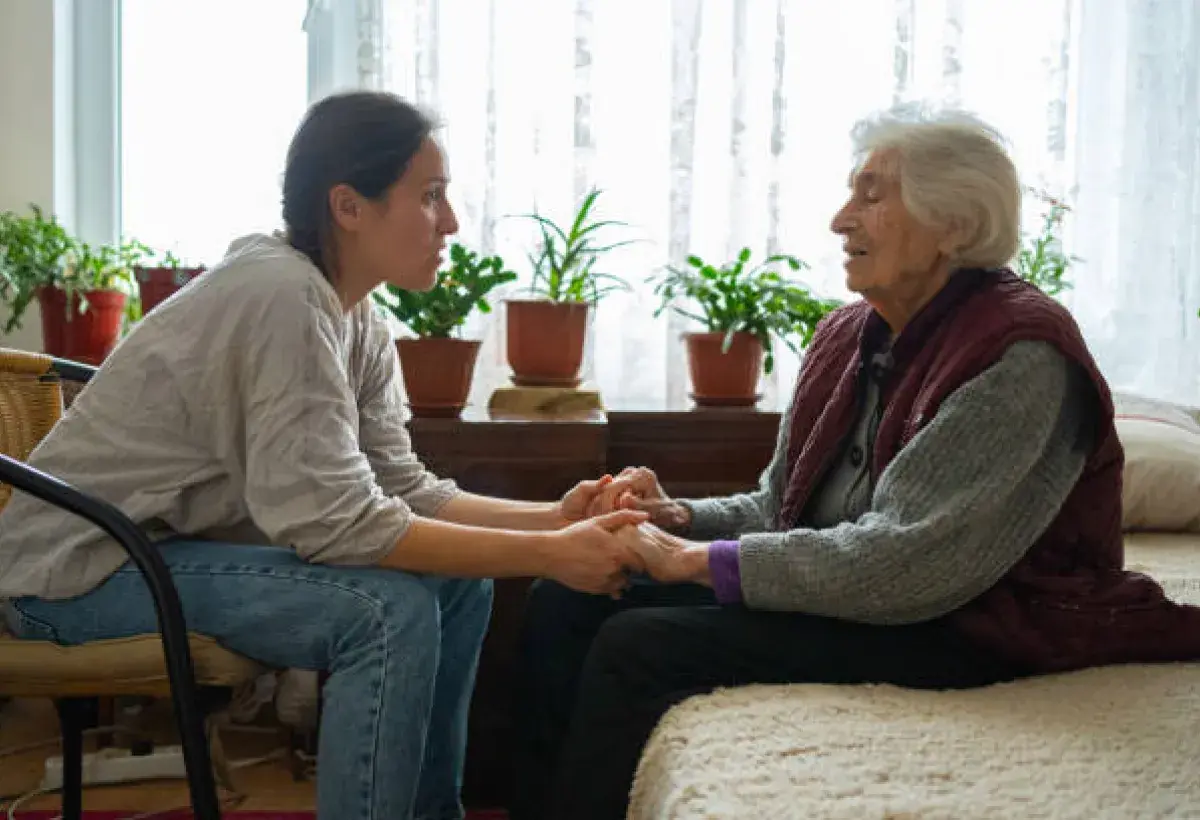
Despite these contributions, unpaid care work is treated as economically neutral: it creates value without generating formal rights, protections, or future security for those who provide it. The result is a structural disconnect between what sustains economic growth and what economic systems are designed to reward.
The Structural Consequences in Old Age
The long-term effects of this exclusion surface most clearly at retirement. Women experience significantly lower pension income, driven by interrupted employment histories, part-time work linked to caregiving, and persistent gender pay gaps. OECD data consistently show pension outcomes for women lagging behind men by substantial margins across developed economies.
At the same time, women live longer and are more likely to spend later years managing chronic health conditions. Health systems, however, are often designed around acute care rather than long-term, gender-responsive aging support. Mental health risks including isolation and untreated depression are exacerbated by limited income and reduced access to community-based services.
A further gap emerges in long-term care. Public systems remain underdeveloped or underfunded, frequently assuming that family members most often women will provide care. Yet for aging women who spent their lives as caregivers, this assumption collapses. The system relies on a labor force that eventually becomes its most exposed population, without a clear institutional response.
From Social Issue to Security Risk
The convergence of low pension security, higher health needs, and inadequate care infrastructure creates risks that extend beyond individual hardship. Large populations of economically insecure older women place sustained pressure on public health systems, housing markets, and local economies. They also weaken the social contract by demonstrating that long-term contribution does not guarantee protection.
From a policy perspective, this is not sustainable. Societies that fail to secure aging women undermine trust in institutions, discourage family formation, and exacerbate intergenerational inequality. In this context, unpaid care work and its consequences intersect directly with national resilience and demographic stability.
Image

Aligning Policy with Reality: Care, Menopause, and the Midlife Squeeze
Correcting the imbalance created by decades of unpaid caregiving does not require new economic theories or radical frameworks. The tools already exist. What is missing is the willingness to apply them to the lived realities of women’s lives particularly during midlife and menopause, when the costs of policy neglect become most visible.
Midlife is not a neutral transition. For many women, menopause coincides with peak caregiving demands, declining health resilience, and heightened economic vulnerability. It is often the period when women are simultaneously caring for children, aging parents, and sometimes grandchildren while managing menopause-related health challenges such as fatigue, sleep disruption, cognitive strain, musculoskeletal pain, cardiovascular risk shifts, and mental health stressors. Yet this convergence of biological change and social responsibility remains largely invisible in labor, pension, and health policy.
This is where alignment must begin. One essential intervention is the integration of unpaid care work into national accounting systems through satellite accounts. By formally measuring care labor, governments can link economic value to policy planning making visible not only the contribution of caregivers, but also the timing of that contribution, which often peaks during women’s menopausal years. Without this visibility, midlife caregiving remains statistically invisible and politically deprioritized.
Pension credits for caregiving years are equally critical. Many women reduce work hours or exit the labor force entirely during midlife to manage caregiving alongside menopause-related health changes. Without pension credits, this period becomes a permanent financial penalty turning a temporary caregiving responsibility into lifelong income loss. Crediting these years recognizes that caregiving is not an employment gap, but a form of work that sustains the economy and the social system.
Investment in public care infrastructure is another structural necessity. When long-term care remains a private fallback, midlife women absorb the burden often at the expense of their own health, earning capacity, and retirement security. Publicly funded, accessible care services reduce the physical and psychological strain on women navigating menopause while caregiving, and prevent cascading health costs later in life.
Finally, gender-responsive aging and health strategies must explicitly include menopause as a core public health issue, not a niche concern. Prevention-focused healthcare addressing cardiovascular risk, bone health, mental well-being, and functional capacity during midlife reduces long-term system costs and supports women’s autonomy as they age. Policies that ignore menopause inevitably shift costs downstream into disability, chronic illness, and higher public expenditure.
Overall, these measures align directly with global commitments on gender equality, decent work, healthy aging, and sustainable development. They are supported by evidence, endorsed in principle by international institutions, and already piloted in various forms across countries.
What remains absent is not data, nor policy tools but implementation at scale, and a recognition that menopause and midlife caregiving are not private issues. They are structural pressure points where economic policy, health systems, and demographic sustainability intersect. Ignoring this reality does not save costs. It simply defers them into old-age poverty, preventable illness, and systemic strain that societies can no longer afford.The Policy Test of This Century
The treatment of aging women will be one of the defining policy tests of the coming decades. Societies can continue to benefit from unpaid care while deferring its costs or they can formally recognize it, insure it, and integrate it into the economic system it sustains. This is not a matter of sentiment or moral appeal. It is a question of economic realism and institutional responsibility. Systems that extract value without providing security accumulate liabilities, whether acknowledged or not. The unpaid debt already exists. The remaining question is whether policymakers will continue to ignore it or finally account for it.
Image
Suggested Citation
Lendez, M. (2026). The Unpaid Debt: Why Our Aging Women Are a National Security Issue. Developer of Ikigai-Bayanihan purpose-driven retirement framework.
About the Author
Dr. Mariza Lendez, DBA, is the developer of the Ikigai–Bayanihan Purpose-Driven Retirement Framework, a community-centered model that redefines aging through purpose, social connection, and sustainable living. Her work focuses on empowering individuals to age with dignity, meaning, and continued contribution to society
References
1. United Nations, Department of Economic and Social Affairs, Population Division. World Population Prospects(latest edition)
2. International Labour Organization. Care at Work and at Home / Care Economy briefs
3. OECD. Pensions at a Glance (latest edition)
4. World Health Organization. Decade of Healthy Ageing and World Mental Health Report
Image

Some images used in this article were sourced from Pixabay and Freepik, platforms that provide royalty-free visual content for editorial use. We gratefully acknowledge the photographers and designers who make these resources available.