"The ultimate measure of healthy ageing is not simply how long we live, but whether we continue to find reasons to wake each morning with purpose, connection, and the opportunity to contribute."
Introduction
In the previous article, we explored an important shift in the science of ageing. For decades, research concentrated on extending life expectancy and reducing the burden of disease. While these advances transformed public health, they also revealed a more profound question. If people are living longer than ever before, what enables those additional years to remain meaningful?
Longevity alone does not capture the full picture of a thriving later life. An individual may enjoy excellent physical health yet experience loneliness, a loss of purpose, or social isolation. Conversely, another person living with chronic illness may continue to lead a deeply satisfying life through meaningful relationships, purposeful activities, and active participation in the community. Increasingly, researchers recognize that the quality of later life depends not only on the presence or absence of disease but on the ability to continue living in ways that people themselves value.
This understanding reflects one of the most significant shifts in contemporary gerontology. Healthy ageing has moved beyond a destination measured solely by biological indicators. Instead, it is recognized as a dynamic process in which physical health, psychological well-being, social participation, autonomy, economic security, and supportive environments interact throughout later life to prevent isolation. Although different disciplines describe these elements using different terminology, they consistently converge around a common idea: meaningful engagement.
Yet meaningful engagement remains one of the least clearly defined concepts in ageing research. It appears in discussions of successful ageing, active ageing, productive ageing, positive ageing, healthy ageing, and age-friendly communities. In some contexts, it refers to employment or volunteering. In other contexts, it describes social relationships, lifelong learning, creativity, caregiving, spirituality, or civic participation. Spanning multiple disciplines, the concept resists capture by any single, all-encompassing definition.
Instead of proposing another definition, this article takes a different approach. It asks a more fundamental question:
What dimensions consistently emerge across the scientific literature as essential for meaningful engagement in later life?
To answer this question, we synthesize evidence from three complementary sources. First, we revisit the foundational theories that have shaped modern understanding of ageing and well-being. Second, we examine contemporary systematic reviews and recent empirical evidence to determine how these theories have evolved. Finally, we consider how leading international organizations including the World Health Organization (WHO), the Organisation for Economic Co-operation and Development (OECD), the United Nations Department of Economic and Social Affairs (UN DESA), and the U.S. National Institute on Aging (NIA), translate these scientific findings into global policy and practice.
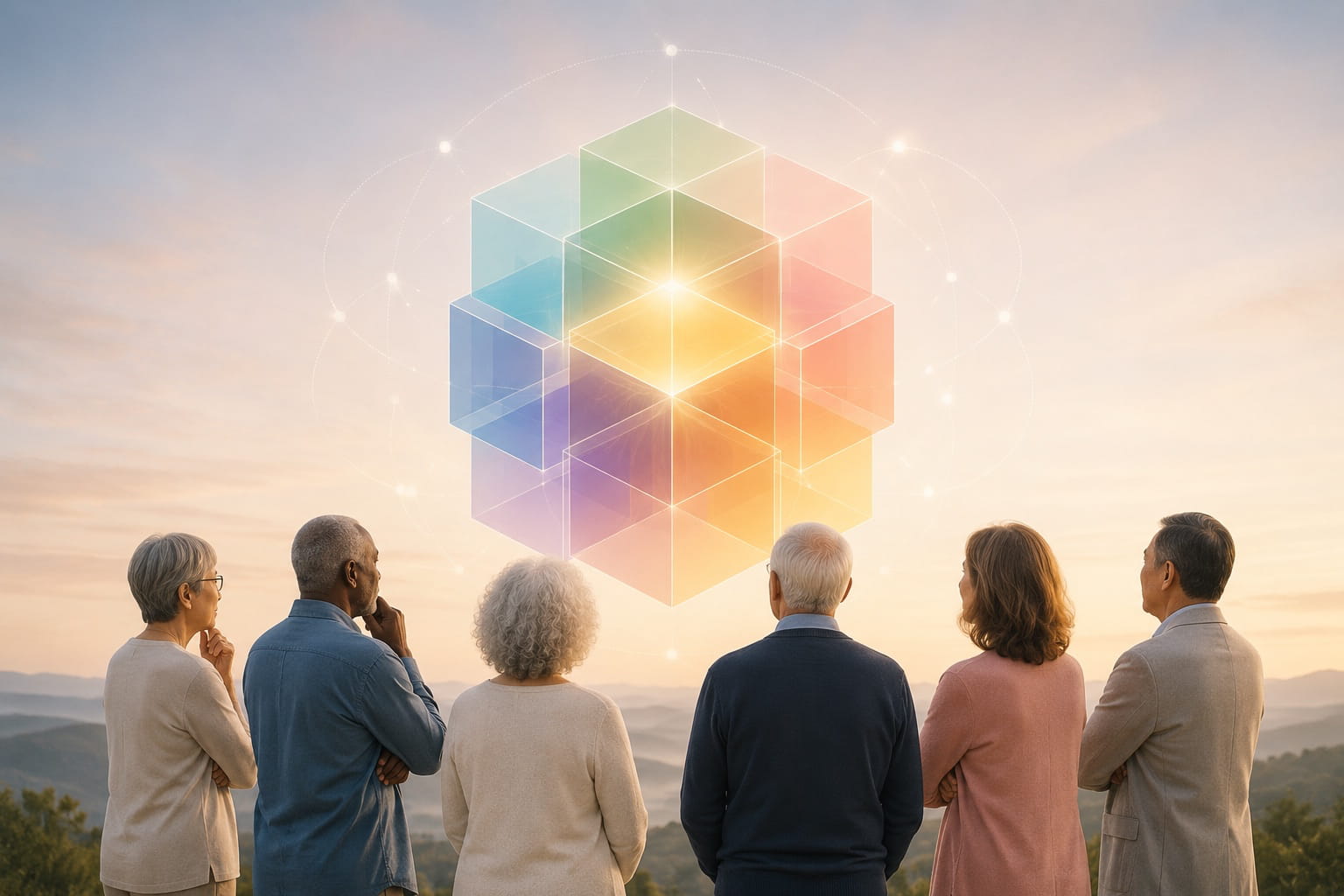
Altogether, these three levels of evidence reveal a remarkable consistency. While terminology differs across disciplines and institutions, the underlying dimensions remain strikingly similar. Meaningful engagement is not defined by a single activity or achievement as it emerges from the interaction of several interconnected dimensions that enable older adults to continue growing, contributing, maintaining relationships, making meaningful choices, and living with dignity.
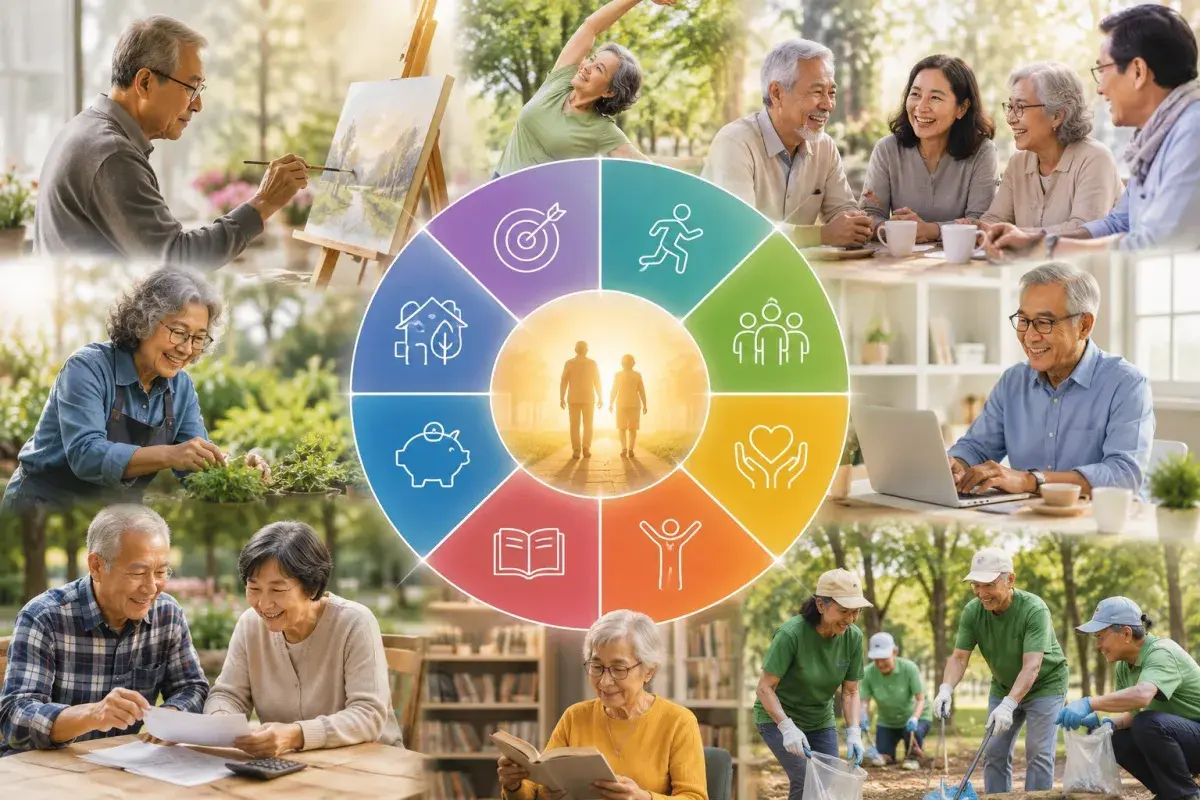
These dimensions are deeply interconnected. Instead, they reinforce one another throughout the ageing process. Purpose is strengthened through contribution. Autonomy supports continued participation. Social relationships promote psychological well-being. Economic security expands opportunities for engagement, while supportive environments make participation possible despite changes in physical capacity. Together, these dimensions create the conditions under which longer lives become richer lives.
The sections that follow examine each of these dimensions individually before bringing them together into a comprehensive understanding of meaningful engagement. Instead of treating them as separate components, the discussion highlights how they collectively shape the experience of ageing with purpose, resilience, and dignity.
Image
Why Do the Dimensions Matter?
One of the most consistent findings across contemporary ageing research is that no single factor adequately explains why some older adults continue to thrive while others struggle, even when they share similar health conditions or socioeconomic circumstances. Researchers have increasingly moved away from searching for one defining characteristic of successful or healthy ageing. Instead, they describe ageing as a multidimensional process in which biological, psychological, social, economic, and environmental factors continuously interact over time.
This shift represents more than a change in terminology. It reflects a growing recognition that later life cannot be understood through isolated indicators. Measuring blood pressure, counting chronic diseases, or estimating life expectancy provides valuable information about health, but these measures reveal little about whether an individual continues to experience purpose, belonging, autonomy, or opportunities to contribute. Likewise, focusing exclusively on psychological well-being without considering financial security, physical functioning, or supportive environments offers only a partial understanding of the ageing experience.
The multidimensional perspective also helps explain why older adults age differently. Two individuals of the same chronological age may have remarkably different experiences because the dimensions that support meaningful engagement are not equally available to everyone. Differences in education, income, family relationships, community resources, health systems, and social opportunities shape how individuals navigate later life. Ageing, therefore, is not merely a biological process; it is deeply influenced by the environments in which people live and the opportunities they have to remain engaged.
This understanding is reflected across multiple disciplines. Psychological theories emphasize purpose, autonomy, and personal growth. Gerontological models highlight adaptation and continued participation. Public health frameworks focus on functional ability and supportive environments. Economic research draws attention to financial resilience and quality of life, while international policy increasingly emphasizes inclusion, dignity, and the rights of older persons. Although these perspectives originate from different fields, they consistently converge around the same conclusion: meaningful engagement emerges from the interaction of multiple dimensions rather than from any single characteristic.
Recognizing these dimensions provides more than an academic framework. It offers practical guidance for individuals, families, communities, and policymakers seeking to support healthy ageing. Instead of asking how to prolong life alone, the more meaningful question becomes how to create conditions that enable older adults to continue living lives they value.
The following sections explore the principal dimensions that repeatedly appear across the scientific literature and international policy. Together, they provide a comprehensive picture of the foundations upon which meaningful engagement in later life is built.
As this review has shown, meaningful engagement is neither an abstract ideal nor a single measurable outcome. Across decades of psychological theory, gerontological research, public health frameworks, and international policy, a remarkable pattern emerges: older adults thrive not because of one defining characteristic, but through the interaction of multiple dimensions that collectively support purpose, well-being, participation, and dignity. Although different disciplines use different language, they consistently point toward the same conclusion: that healthy ageing is best understood as a dynamic and multidimensional process rather than a fixed state of health.
Recognizing this convergence represents an important step forward, but it also raises a more fundamental question. If meaningful engagement is indeed shaped by multiple interconnected dimensions, “what are these dimensions, why do they repeatedly emerge across the scientific literature, and how does each contribute to enabling older adults to continue living lives they value?” Answering this question requires moving beyond broad concepts to examine the evidence behind each dimension individually. It is this scientific journey that begins in the next article, where we explore the core dimensions of meaningful engagement and the growing body of evidence that supports their role in healthy ageing.
👉️ click here to read article 4 https://www.chikicha.com/eight-dimensions-meaningful-engagement-evidence-based-framework-purposeful-ageing
Image

Suggested Citation
Lendez, M. L. (2026). Understanding the Dimensions of Meaningful Engagement. Chikicha Longevity. (she is the developer of the Ikigai-Bayanihan framework fpr Pursposeful Ageging).
About the Author
Dr. Mariza Lendez is a researcher, social entrepreneur, and creator of the Ikigai-Bayanihan (Purpose + Collective Ethos) Retirement Model, an innovative framework that integrates purpose, community engagement, and sustainability to support meaningful aging and later-life well-being.
References
Baltes, P. B., & Baltes, M. M. (1990). Psychological perspectives on successful aging: The model of selective optimization with compensation. In P. B. Baltes & M. M. Baltes (Eds.), Successful aging: Perspectives from the behavioral sciences (pp. 1–34). Cambridge University Press.
Menassa, M., Stronks, K., Khatmi, F., Roa Díaz, Z. M., Espinola, O. P., Gamba, M., Itodo, O. A., Buttia, C., Wehrli, F., Minder, B., Velarde, M. R., & Franco, O. H. (2023). Concepts and definitions of healthy ageing: A systematic review and synthesis of theoretical models. eClinicalMedicine, 56, Article 101821. https://doi.org/10.1016/j.eclinm.2022.101821
Official Publisher:
https://www.sciencedirect.com/science/article/pii/S2589537022005508
Monteiro, J. M., Gonçalves, R., Bastos, A., & Barbosa, M. R. (2025). Social engagement and wellbeing in late life: A systematic review. Ageing & Society, 45(7), 1327–1354. https://doi.org/10.1017/S0144686X24000011
Official Publisher:
https://www.cambridge.org/core/journals/ageing-and-society/article/social-engagement-and-wellbeing-in-late-life-a-systematic-review/B2316932EC196AC8BA8CEFA83DD71175
Organisation for Economic Co-operation and Development. (2024). How's life? 2024: Well-being and resilience in times of crisis. OECD Publishing. https://doi.org/10.1787/90ba854a-en
Official OECD:
https://www.oecd.org/en/publications/how-s-life-2024_90ba854a-en.html
Owen, R., Berry, K., & Brown, L. J. E. (2022). Enhancing older adults' well-being and quality of life through purposeful activity: A systematic review of intervention studies. The Gerontologist, 62(6), e317–e335. https://doi.org/10.1093/geront/gnab017
Official Publisher:
https://academic.oup.com/gerontologist/article/62/6/e317/6131479
Rowe, J. W., & Kahn, R. L. (1997). Successful aging. The Gerontologist, 37(4), 433–440. https://doi.org/10.1093/geront/37.4.433
Ryff, C. D. (1989). Happiness is everything, or is it? Explorations on the meaning of psychological well-being. Journal of Personality and Social Psychology, 57(6), 1069–1081. https://doi.org/10.1037/0022-3514.57.6.1069
Ryff, C. D. (2024). The privilege of well-being in an increasingly unequal society. Current Directions in Psychological Science, 33(5), 300–307. https://doi.org/10.1177/09637214241266818
Official Publisher:
https://journals.sagepub.com/doi/full/10.1177/09637214241266818
Ryan, R. M., & Deci, E. L. (2000). Self-determination theory and the facilitation of intrinsic motivation, social development, and well-being. American Psychologist, 55(1), 68–78. https://doi.org/10.1037/0003-066X.55.1.68
World Health Organization. (2015). World report on ageing and health.https://www.who.int/publications/i/item/9789241565042
World Health Organization. (2020). Decade of Healthy Ageing: Baseline report.https://www.who.int/initiatives/decade-of-healthy-ageing