Mobility is freedom
The first three articles have taken us through a progression that began with a demographic reality: we are living longer. We then examined how a single fall can challenge the physical capacity on which everyday life depends, and explored what the evidence tells us about strength, power and the physical capacities that support movement. But the evidence now brings us to a more human question: what are those additional years, and all the capacity we work to preserve - ultimately for?
They are for living. They are for moving through the world, making choices, maintaining relationships, pursuing interests, contributing to others and participating in the activities that give our lives meaning. The activity will differ from one person to another. One person may want to travel, another may want to continue working, cultivate a garden, care for grandchildren, volunteer, dance, learn something new, meet friends, or simply move through an ordinary day without having every activity determined by physical limitation. The common thread is not the activity itself but the freedom to participate.
The First Step Is Acceptance
There is a difficult truth at the heart of growing older, and it is one we can resist even when we understand it intellectually: the body is ageing.
We know our chronological age. We see it on a birthday, a medical record or an official document. Yet our internal sense of ourselves does not necessarily move at the same pace. Research on subjective age - the age people feel themselves to be, shows a substantial difference between “chronological age and felt age”. In a meta-analysis of 294 studies, Barrett and Gumber (2021) found that adults aged 60 and older reported feeling substantially younger than their chronological age, with the average difference ranging from approximately 11 to 21 years.
This finding gives scientific language to an experience that is deeply human: the person we continue to experience ourselves as can feel considerably younger than the body we now inhabit (Barrett & Gumber, 2021). Our memories remain vivid, so our interests and ambitions. The desire to travel, create, work, contribute, love and experience life does not disappear simply because the calendar advances.
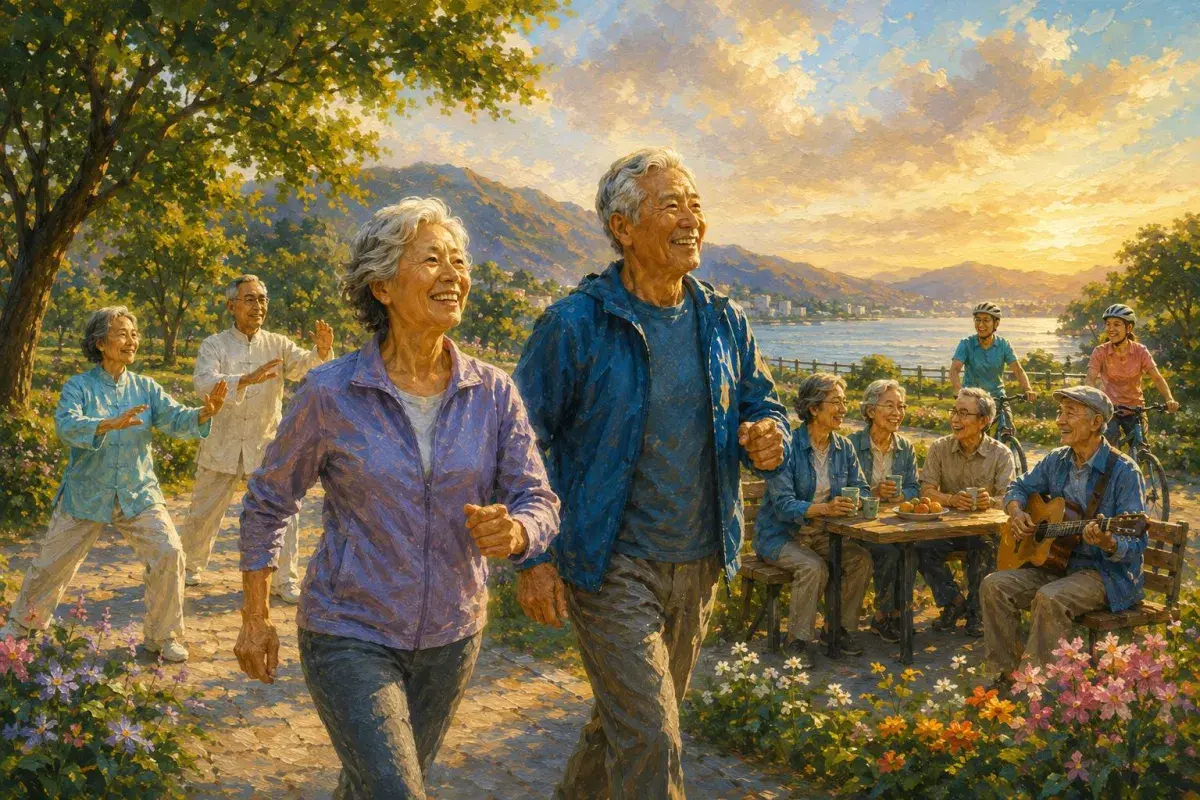
But the body continues its biological journey. Strength changes, recovery changes, balance may also change with mobility. Activities that once required little thought may require greater preparation, adaptation or support. Our inner sense of self may carry the vitality of earlier decades while our physical capacity reflects the years that have passed. This is where acceptance becomes important.
The answer is not to reject the younger self we still carry within us, nor is it to pretend that the body has remained unchanged. The answer is to bring the two into conversation. Recognizing that the body is ageing is not an admission of defeat. It is information that gives us something powerful which is - the opportunity to prepare.
Image
From Acceptance to Preparation
The first three articles have already shown why preparation matters. Longevity gives us more years. Falls can unexpectedly challenge physical function. Strength and power are not identical, and physical capacity has several dimensions that can be supported through appropriate activity and training.
The logical response is therefore not to wait until capacity is lost before paying attention to it. It is to begin with the capacity we have now to preserve what can be preserved, protect what needs protection, train what can be strengthened, and adapt when circumstances require it.
This is not a promise that every limitation can be prevented or reversed. Ageing remains a biological process, and individual trajectories differ. It is a commitment to respond to that process deliberately rather than allowing surprise, denial or neglect to determine the outcome.
That is where Pro-Aging becomes more than a phrase. It becomes an orientation toward the ageing body: one that recognizes change without surrendering to it and accepts limitation without allowing limitation to define the whole of later life.
From Capacity to Function
This brings us to the broader concept of healthy ageing. The World Health Organization defines healthy ageing as the process of developing and maintaining functional ability that enables well-being in older age. It explains that functional ability emerges from the interaction between a person's intrinsic capacity and the environment in which that person lives. The environment includes physical surroundings, relationships, attitudes, policies, health systems and social services that can support or constrain what a person is able to do (World Health Organization [WHO], 2021).
That definition changes the question. It moves us beyond How young does this body look? and beyond How many diseases does this person have? toward a more consequential question: What is this person able to be and do?
This matters because ageing does not occur in isolation. A person may retain the physical capacity to walk, but an unsafe street or inaccessible building may restrict where that person can go. A person may retain decision-making capacity, yet social attitudes may diminish the opportunity to exercise those decisions. Another person may require assistance with one activity while remaining fully capable of directing many other aspects of life.
Functional ability is therefore not synonymous with doing everything alone. It is about having the capacity and opportunity to be and do what gives life value, within the realities of one's circumstances (WHO, 2021).
Respecting the Ageing Body
This is where the idea of Pro-Aging becomes more meaningful. The ageing body changes over time: strength and balance may decline, recovery may take longer, and movements that once felt effortless may require greater effort or adaptation. Illness, injury or disability can introduce limitations that training alone cannot eliminate.
Pro-Aging does not deny these realities; it recognizes them clearly and responds by preserving what can be preserved, strengthening what can be strengthened, and adapting to what cannot be changed. It also means protecting against avoidable risks, responding to changing circumstances, and using appropriate support when support becomes necessary. This is stewardship.
The objective is not to prove that an ageing body can remain exactly as it was decades earlier. It is to help the body function as well as circumstances allow, while enabling the person to retain meaningful opportunities to participate in life. That is a more realistic and humane understanding of independence.
Image
Independence Is Not All-or-Nothing
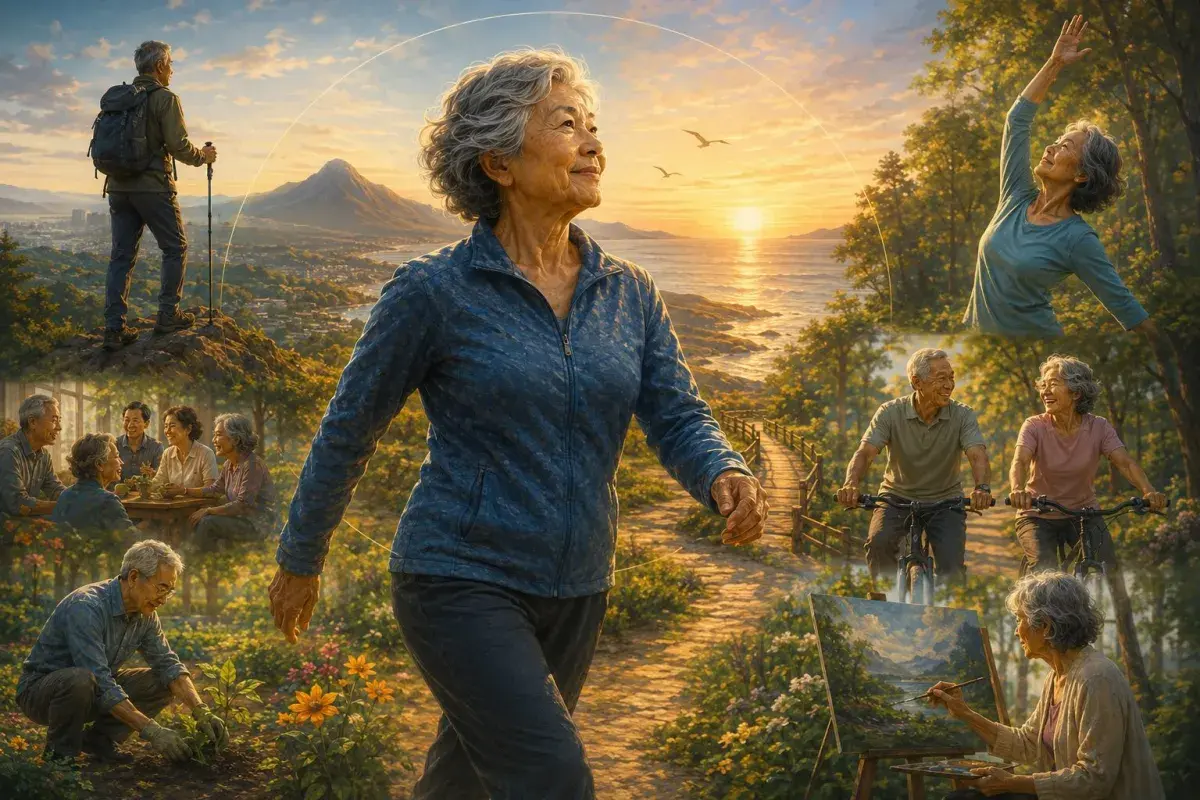
Independence is often imagined as the ability to do everything without assistance. Human life has never really worked that way. People depend on one another throughout the lifespan. We use tools, seek professional advice, accept transportation, ask for help with difficult tasks and adapt our surroundings when circumstances change.
Receiving assistance with one activity does not erase a person's autonomy. A person can use a mobility aid and still decide where to go. A person can need help carrying something and still choose how to spend the day. A person can require assistance with personal care and still maintain relationships, make decisions, contribute to others and pursue meaningful interests.
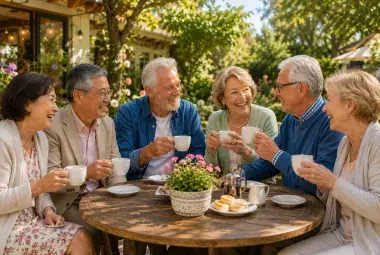
Dependence in one area does not mean helplessness in every area. Healthy ageing, therefore, should not be reduced to a test of whether a person can do everything without assistance. A more meaningful question is whether the person retains the capacity, opportunity and support to participate in the aspects of life that matter to them. That understanding is consistent with WHO's framework, which places functional ability at the intersection of the individual and the environment (WHO, 2021).
Mobility Is Freedom
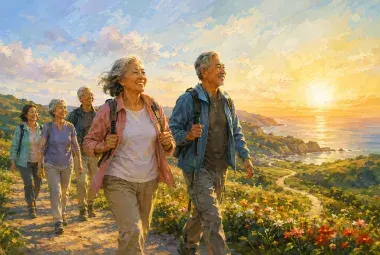
Mobility matters because movement gives us access to life. It allows us to leave the house, visit a friend, go to work, shop for ourselves, travel, attend community activities, care for others, pursue interests and decide where we want to be. When mobility becomes restricted, the loss is not necessarily limited to movement; the range of possibilities can become smaller.
A trip may be postponed or an invitation declined. A familiar activity may disappear from the routine, or a place once easily reached may become inaccessible. The physical limitation may be the immediate problem, but its deeper consequence can be a reduction in participation and choice.
This is why the physical capacity discussed in Article 3 matters. We were never building strength and power merely to produce impressive numbers on a test as we were building capacity for life. Physical capacity creates the possibility of movement. Movement creates access. Access creates opportunities for participation. And participation is where physical function acquires its human meaning.
The Pro-Aging Choice
This is where the evidence from the first four articles comes together. Longevity gives us more years; preparation helps us meet the uncertainties those years may bring; physical capacity gives us greater opportunity to move through them; and functional ability shapes what we are able to be and do within the environments in which we live (WHO, 2021).
Pro-Aging does not promise an ageing body without limitations. It asks us to approach that body with knowledge instead of denial, preparation over fear, preservation over neglect, and adaptation over resignation. It allows appearance to remain a personal choice without making appearance the measure of successful ageing, and it recognizes physical limitations without allowing them to define the whole person. Accepting support when it is needed does not diminish dignity, autonomy or purpose; it can be part of preserving them.
A body deserves care not simply because it is visible, but because it is the body through which life is lived. That is the deeper meaning of functional ability. It is not merely the ability to move from one place to another, but the capacity and opportunity to continue participating in relationships, activities and experiences that give life meaning.
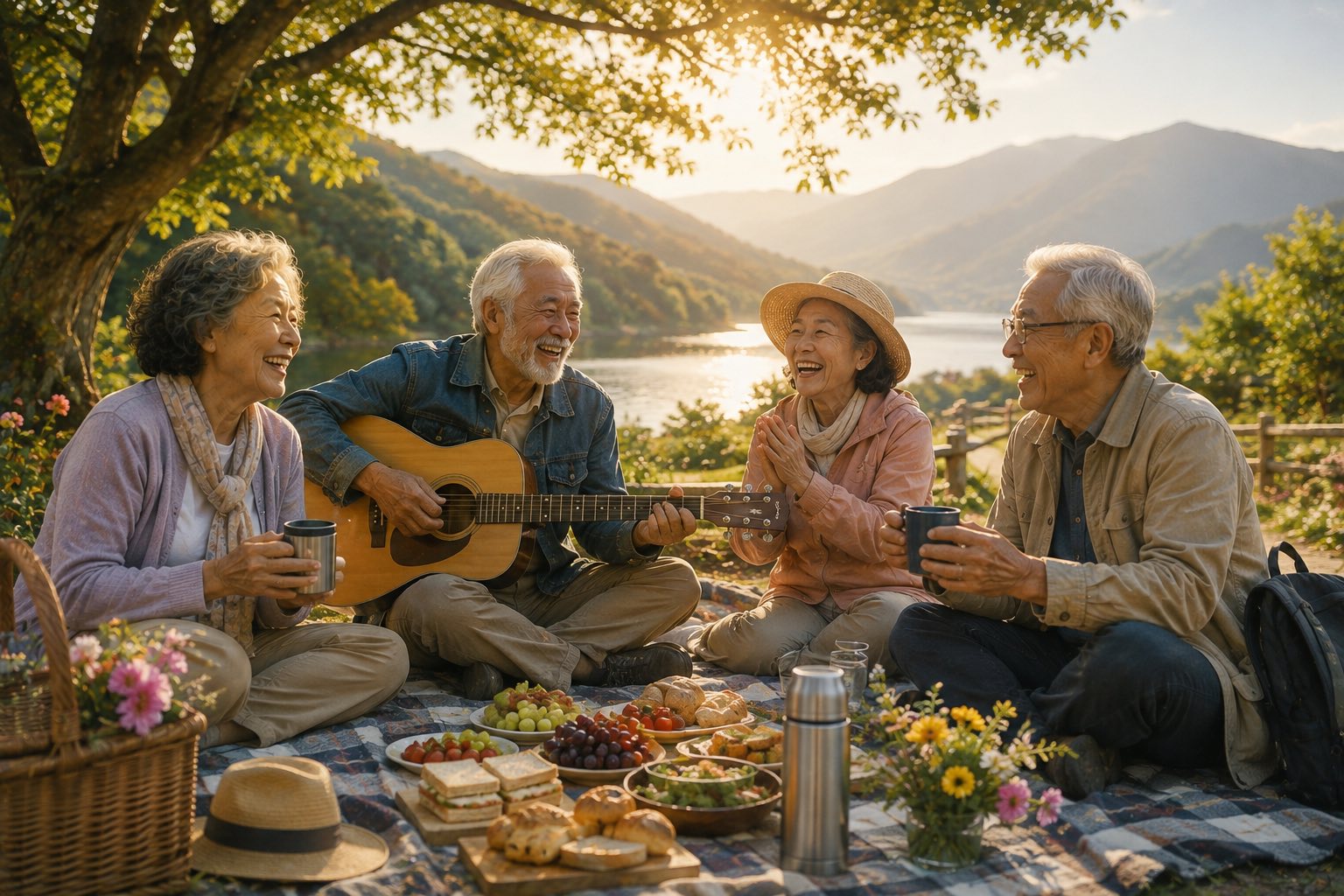
The purpose of preserving physical capacity, therefore, is not to preserve youth. It is to preserve possibility. And this brings the series to its central question: If ageing is not something we need to defeat, but a stage of life we can understand, prepare for, respect and actively inhabit, what does it mean to embrace ageing well?
That question takes us to Article 5 — PRO-AGING: The Art of Growing Older: Preserving Possibility in the Longevity Era.
Image
Suggested Citation
Lendez, M.L. (2026). THE FUNCTION - Mobility Is Freedom: What Does It Mean to Remain Capable? Chikicha Longevity. (the author is the developer of the Ikigai-Bayanihan Framework for Purposeful aging).
About the Author
Dr. Mariza Lendez is a researcher, social entrepreneur, and creator of the Ikigai-Bayanihan (Purpose + Collective Ethos) Retirement Model, an innovative framework that integrates purpose, community engagement, and sustainability to support meaningful aging and later-life well-being
References
Barrett, A. E., & Gumber, C. (2021). Feeling old, body and soul: The effect of aging attitudes on subjective age. The Gerontologist, 61(5), 685–696. https://doi.org/10.1093/geront/gnaa169
PubMed — Barrett & Gumber (2021)
World Health Organization. (2021). Decade of healthy ageing: Baseline report. World Health Organization. https://www.who.int/publications/i/item/9789240017900?