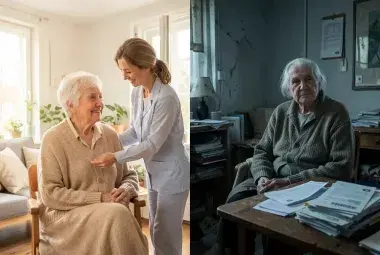
When Distance Replaces Presence in a Rapidly Aging Society
Part of the SILVER CHALLENGES AND OPPORTUNITIES Series
The Promise of Care and the Reality of Distance
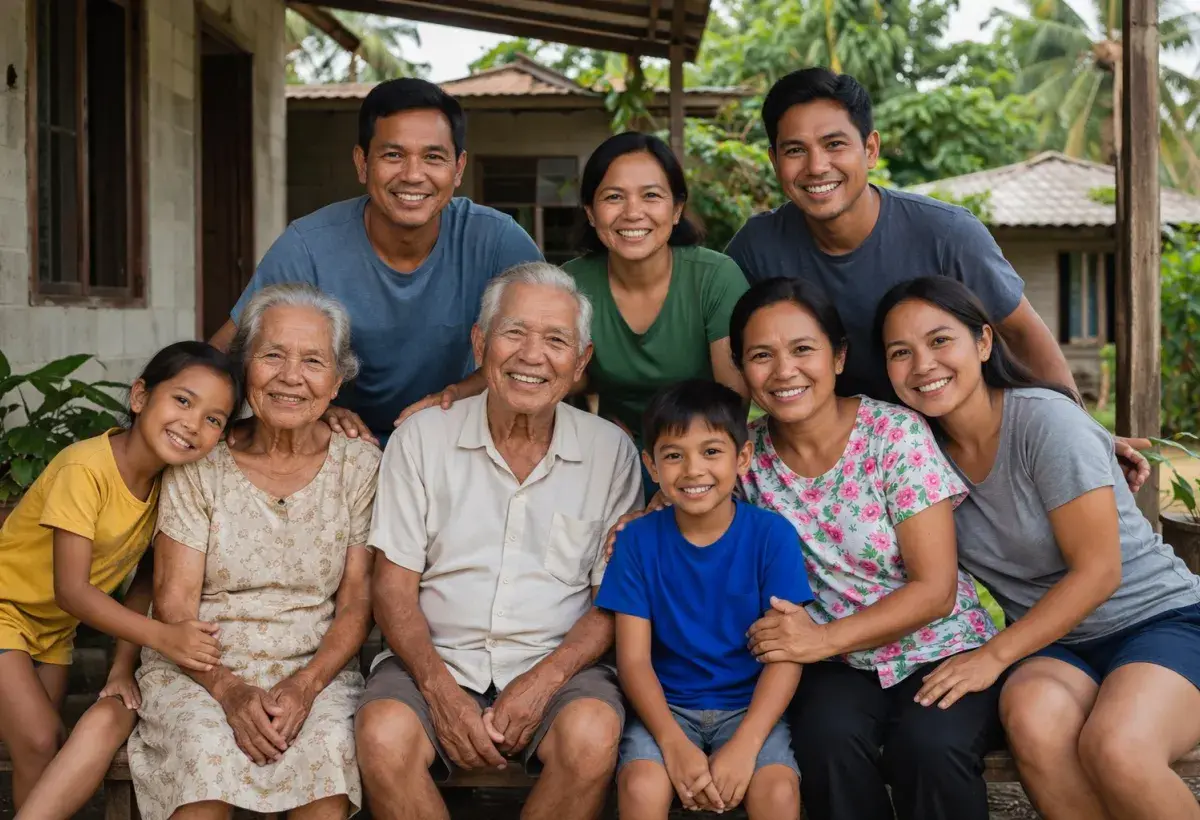
Filipino culture has long been anchored in a deeply held expectation: children will care for their aging parents. This principle, embedded in social norms and reinforced through generations, reflects values of utang na loob, responsibility, and familial continuity.
However, structural changes in the Philippine economy and labor force have begun to reshape this expectation. Large-scale labor migration, particularly through overseas employment has redefined how care is delivered. Increasingly, care is provided not through presence, but through financial remittances.
According to the Bangko Sentral ng Pilipinas, overseas Filipino workers (OFWs) contribute billions of dollars annually to the domestic economy. While these remittances sustain households financially, they also reveal a growing paradox: economic support has expanded, but physical caregiving has diminished.
The Emerging Care Gap
The Philippines is entering a demographic transition in which the number of older adults is steadily increasing. This shift is occurring faster than the development of formal long-term care systems.
Data from the Philippine Statistics Authority indicate a rising proportion of senior citizens, with projections pointing toward a significantly aging population within the next decade. At the same time, institutional elder care infrastructure remains limited.
The Department of Health has acknowledged gaps in geriatric services, including shortages in specialized healthcare professionals and limited access to age-appropriate facilities.
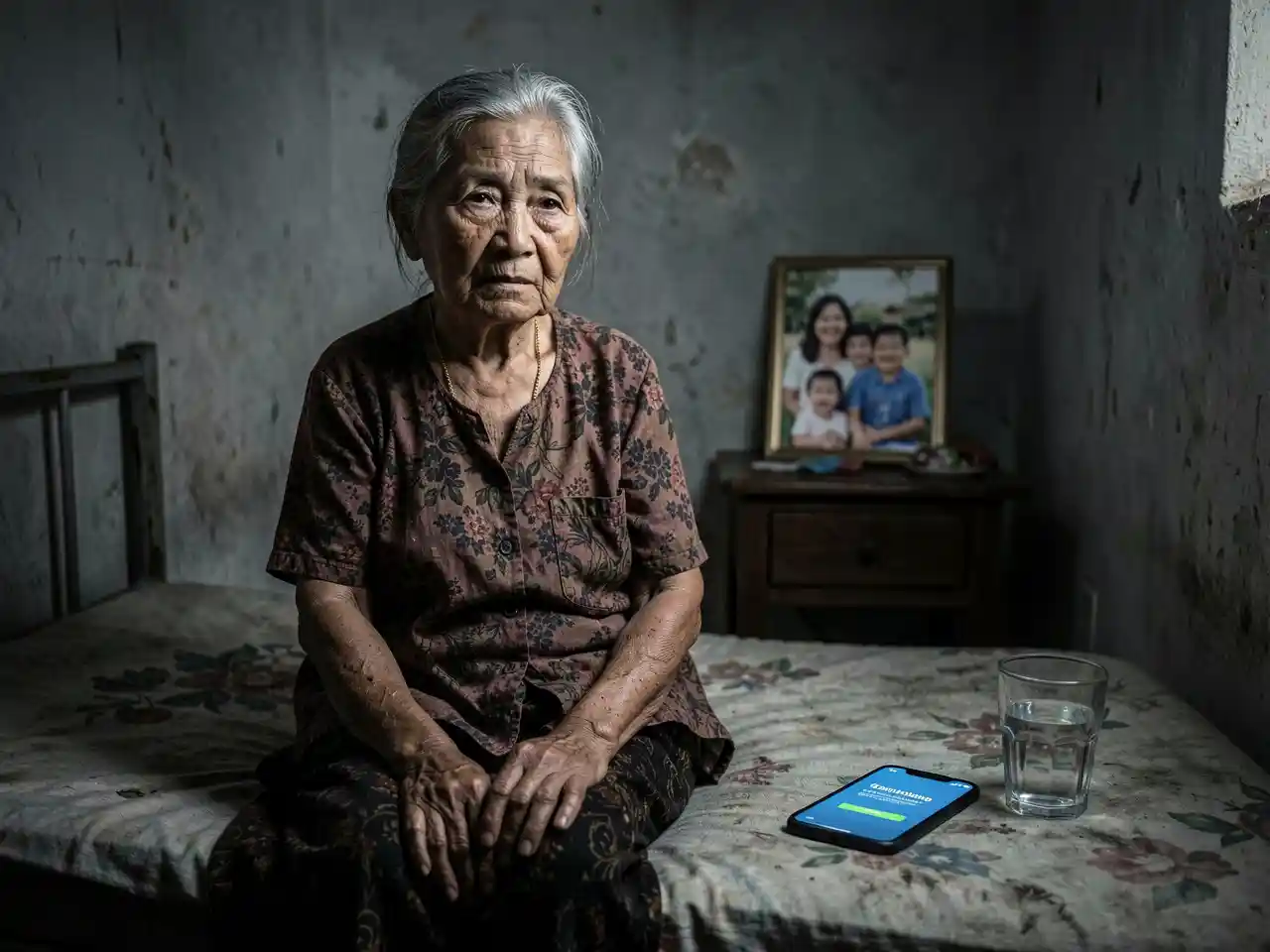
This creates a widening “care gap” a disconnect between the growing needs of the elderly and the systems available to support them.
Image

The Limits of Remittance-Based Care
Remittances have become a primary mechanism through which Filipino families fulfill caregiving responsibilities across distance. While financially essential, this model carries inherent limitations that cannot be addressed through economic support alone.
Care is not purely transactional. It extends beyond the provision of resources and requires consistent physical monitoring, emotional presence, timely intervention, and sustained relational continuity. These elements are difficult to replicate when caregiving is mediated by distance and delegated to others without structured oversight.
Research from the World Health Organization (2023) underscores the consequences of this gap, highlighting that social isolation among older adults is associated with increased risks of depression, cognitive decline, and declining overall well-being. In this context, financial provision, while necessary, becomes insufficient as a standalone form of care.
The limitation of remittance-based caregiving is therefore not a failure of intention, but a constraint of structure. Without systems that bridge distance with accountability and human connection, the quality of care remains uneven and, in many cases, inadequate.In the absence of consistent in-person support, older adults may experience a form of “invisible neglect” not intentional, but systemic, arising from distance, fragmented oversight, and limited regulation of care providers.
Workforce Strain and Systemic Pressure
The caregiving ecosystem in the Philippines is also affected by workforce dynamics. Many trained healthcare workers and caregivers seek employment abroad, attracted by higher wages and better working conditions.
This outward migration contributes to a domestic shortage of skilled caregivers, placing additional pressure on public hospitals, informal care networks, and unregulated or underregulated private facilities
The World Bank (2023) highlighted how labor migration can create internal service gaps in sectors such as healthcare, particularly in developing economies. As a result, the Philippines faces a dual challenge: exporting care labor while experiencing a shortage of care capacity at home.Structural and Policy Constraints
Unlike countries with established long-term care systems, the Philippines relies heavily on family-based care. Formal mechanisms such as regulated nursing homes, community-based elder care programs, and long-term care insurance remain underdeveloped.
Globally, countries with aging populations have responded by:
- investing in community-based care systems
- regulating long-term care facilities
- integrating healthcare and social services
The Philippines is at an earlier stage of this transition. Without proactive policy development, the burden will continue to fall disproportionately on families—many of whom are already stretched across geographic and economic boundaries.
Image

Toward a More Sustainable Model of Care
Addressing the growing caregiver gap requires a fundamental shift from informal, assumption-based care toward systems that are structured, transparent, and accountable. While Filipino families remain at the core of caregiving, the increasing complexity of aging demands support mechanisms that extend beyond the household.
One critical area is transparency in elder care services. Families must have access to reliable and verifiable information about care facilities, including their licensing status, staffing conditions, and quality of service. Without this visibility, decisions are often made based on trust rather than evidence, increasing the risk of inadequate care.
Equally important is the development and retention of a skilled caregiving workforce. Strengthening local training programs and improving working conditions can help address the outflow of care professionals, ensuring that competence and compassion remain available within the country.
At the community level, caregiving can be reinforced through localized support systems. Barangay-based initiatives and neighborhood networks have the potential to provide supplementary care, monitoring, and social connection particularly for elders who may not have immediate family present.
These efforts must be supported by integrated policy frameworks that align healthcare, social welfare, and labor systems. Aging is not a single-sector issue; it intersects with public health, economic policy, and social protection. Without coordination across these domains, interventions remain fragmented and insufficient.
Importantly, these structural developments are not intended to replace family care, but to reinforce it. A sustainable model recognizes that while families provide the foundation of care, systems must exist to ensure that such care remains both compassionate and competent in the face of changing realities.
Reframing Responsibility in a Changing Society
The evolving reality of Filipino families does not signal a loss of values, but rather a transformation of context. Distance, economic necessity, and demographic change have reshaped how care is expressed, shifting it from physical presence to financial provision, and from daily interaction to periodic connection.
Within this transition, the central question is no longer whether families care for their elders, but whether the systems surrounding them are capable of supporting that care in meaningful and sustainable ways. The traditional expectation that families will absorb the full responsibility of aging is increasingly misaligned with modern realities.
A sustainable approach to elder care must therefore move beyond symbolic expressions of responsibility. Love, while enduring, cannot be reduced to remittances alone. Caregiving, though rooted in sacrifice, cannot depend entirely on individual endurance without risking burnout and neglect. Aging, as a societal phenomenon, cannot be managed informally in the absence of structure, policy, and institutional support.
Ensuring dignity in later life requires a broader framework, one that recognizes caregiving not solely as a private obligation, but as a shared societal responsibility supported by systems, safeguards, and collective accountability.
Image
Suggested Citation
Lendez, M. (2026). The caregiver exodus: Reframing elder care in the Philippines. Part of the Silver Challenges and Opportunities Series. Developed within the Ikigai-Bayanihan Purpose-Driven Retirement Framework.
About the Author
Written by Dr. Mariza Lendez, the developer of the Ikigai-Bayanihan Purpose-Driven Retirement Framework, a model that redefines aging through purpose, dignity, and community-centered living.
References
Bangko Sentral ng Pilipinas. (2024). Overseas Filipino remittances report.
Department of Health. (2023). Health system capacity and geriatric care in the Philippines.
Philippine Statistics Authority. (2023). Demographic statistics on aging population.
World Bank. (2023). Migration and its impact on domestic labor markets.
World Health Organization. (2023). Social isolation and health outcomes among older adults.