⚠️ A Note Before We Begin
This article is for public education, not medical advice, diagnosis, or treatment. We do not sell, endorse, or recommend any product, procedure, or remedy. We simply examine what credible scientific research, peer-reviewed literature, dermatological organizations, and health authorities have reported and distinguish established evidence from emerging findings, uncertainty, and opinion.
“Natural” does not automatically mean safe or effective. When skin changes are persistent, severe, painful, or concerning, professional dermatological assessment is appropriate.
We do not tell the evidence what to say. We listen to what the evidence says.
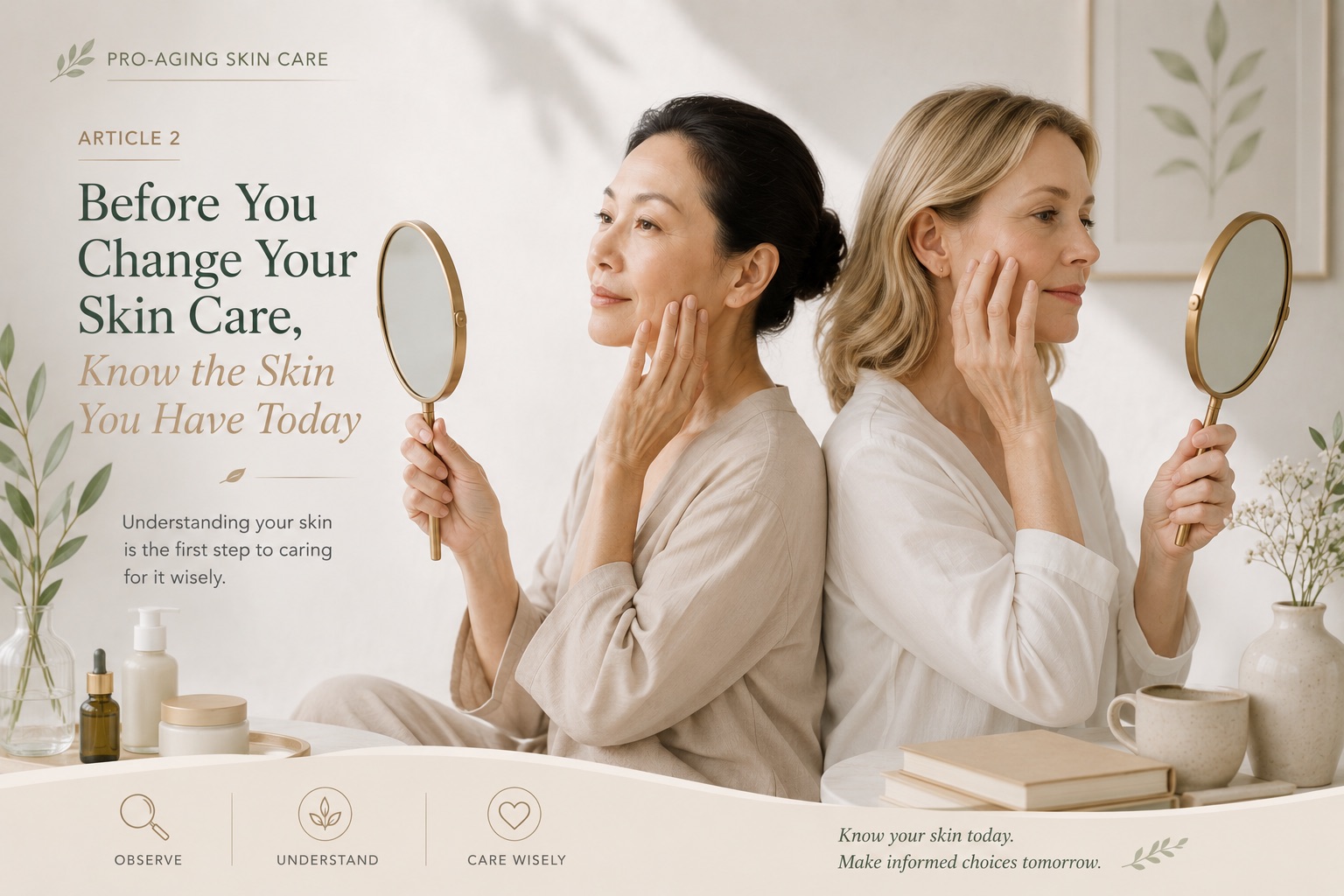
Before You Change Your Skin Care, Know the Skin You Have Today
In the first article, we looked at what changes as skin ages: its structure, barrier function, ability to retain water and response to environmental and biological influences. But knowing what commonly happens to aging skin does not tell us exactly what is happening to one person's skin today. Research on older adults has found that the factors associated with skin-barrier dysfunction are not simple or uniform, and a 2024 systematic review concluded that the available evidence was heterogeneous enough that personalized assessment remained important (Konya et al., 2024).
This is where Pro-Aging skin care takes its next step. Before changing products, adding ingredients or trying a new remedy, we first need to observe the skin itself. The purpose is not to diagnose the skin in front of the mirror, but to understand what it may be telling us.
Look before you label
Skin can communicate through changes in texture, moisture, comfort and sensitivity. It may feel tight after washing, become rough or flaky, itch more often, sting when a product is applied, or develop cracks when dryness becomes severe. The American Academy of Dermatology identifies dehydration, flaking, rough texture, cracking, itching, pain, stinging, burning and peeling among the signs that can accompany excessively dry skin (American Academy of Dermatology [AAD], n.d.-a).
These observations are useful, but they do not tell us their cause. The same visible or sensory change can arise from different circumstances, which is why dermatologists ask about how long the problem has existed, what makes it worse and what treatments have already been tried when evaluating excessive dryness (AAD, n.d.-b).
The mirror can tell us what we see but it cannot always tell us why it is happening.
Dryness is not a diagnosis
Dryness is one of the most common concerns in aging skin, but it is not a complete explanation of every uncomfortable or visibly changed skin condition. A 2024 review of mature skin reported that the exact cause of xerosis was not entirely understood and was likely influenced by several genetic and environmental mechanisms; the authors also described age-associated reductions in stratum-corneum lipids related to reduced epidermal lipid synthesis (Gold et al., 2024).
A large systematic review and meta-analysis reinforced how common the problem is: across 28 studies involving 48,054 older adults, the pooled prevalence of xerosis cutis was approximately 53%, although prevalence varied considerably between settings (Yao et al., 2023). The researchers concluded that older adults were at high risk of xerosis and that early, targeted skin care deserved greater attention, while the variation among studies also reminds us that xerosis cannot be reduced to one universal experience.
Image

So when someone says, “My skin is dry,” that simple observation is worth taking seriously as the beginning of an inquiry into what the skin may be experiencing and what it may need. One of the first places to look is at how the skin responds to something we do every day: cleansing.
What does your skin feel like after cleansing?
One useful place to begin observing the skin is immediately after cleansing. Does it feel comfortable, tight, rough, itchy or irritated, and does that sensation disappear quickly or remain for some time? These observations do not diagnose a barrier disorder, but they can help reveal how the current routine is being tolerated.
The AAD has identified harsh cleaning products, deodorant soaps and long, hot showers as factors that can strip skin oils and worsen dryness. Its current dermatologist guidance recommends shorter bathing with warm rather than hot water and gentle cleansing for people experiencing dry skin (AAD, n.d.-c, n.d.-d).
The useful question, therefore, is not simply “Did I clean my skin?” but also “How did my skin respond to what I just did?”
What happens after you moisturize?
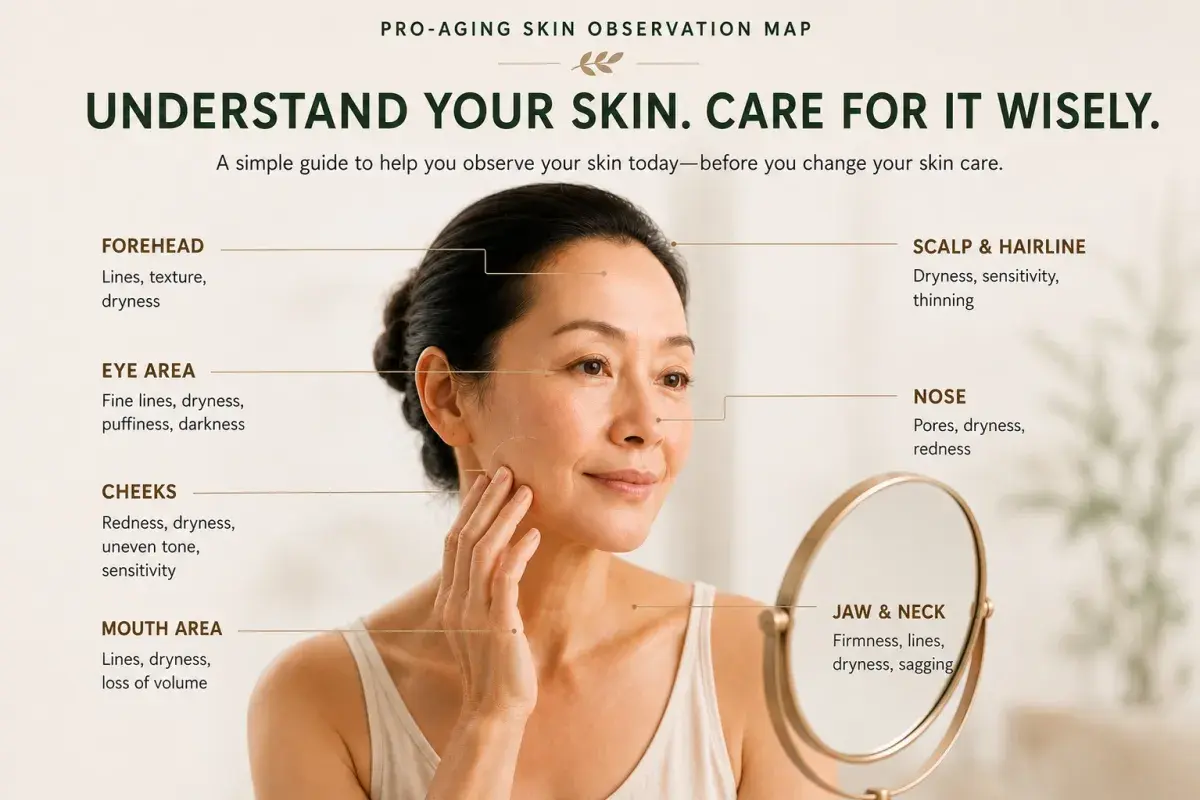
The response after moisturizing can provide another piece of information. Does the skin feel more comfortable, remain rough, become irritated, or return to a dry and tight feeling soon afterward? These observations can establish awareness, and they can help a person recognize patterns that may be useful when discussing their skin with a professional.
Dermatological guidance emphasizes that moisturizer selection should be individualized rather than treated as a one-size-fits-all decision. The AAD explains that the choice of formulation should take account of skin type and the severity of dryness, while the 2024 international dermatology panel similarly emphasized the specific needs of mature skin when considering cleansers and moisturizers (AAD, n.d.-e; Fluhr et al., 2024).
The point is not to teach the reader which moisturizer to purchase. It is to teach the reader that the skin's response is information.
The skin has a history
What we see today is not necessarily the result of what happened today. Skin has experienced years of sunlight, climate, bathing practices, occupational exposures, products, medications, hormonal changes and other environmental influences.
The 2024 international panel of eight dermatologists from Europe, North America, South America, Australia, Africa and Asia concluded that mature xerosis involved genetic and environmental factors affecting stratum-corneum hydration and skin-barrier function. Their geographic diversity is particularly relevant to our series because the authors included dermatologists working in China, Kenya, Australia, Brazil, Denmark, Germany, the Netherlands and the United States (Fluhr et al., 2024).
This gives us an important principle: Today's skin is partly the record of yesterday's exposures.
Image
Age is a clue, not the whole answer
Chronological age tells us that biological aging has occurred, but it does not tell us the precise condition of an individual's skin. The systematic review by Konya et al. (2024) examined 4,833 records and included 20 studies on risk factors for skin-barrier dysfunction in older adults; because of high risk of bias and inconsistent findings, the authors concluded that only chronic kidney disease and dry skin could be considered supported risk factors in their review.
That finding is instructive beyond the specific risk factors examined in the review. It reminds us to be cautious about turning biologically plausible explanations into established facts, particularly when the evidence is heterogeneous or limited. A change in aging skin may have several possible influences, and what is observed in a population or identified in research does not necessarily explain what is happening in one individual.
Evidence about aging skin gives us knowledge about patterns and possibilities, however, it does not give us certainty about every individual skin.
Chronological age provides essential context because skin changes over time, yet age alone cannot explain why an individual's skin becomes dry, sensitive, rough, or irritated. Knowing your age should mark the beginning of an inquiry; while it offers a baseline, understanding your unique skin requires personal observation, lifestyle history, and, when appropriate, professional dermatological assessment.
When the skin tells you something needs attention
There are situations in which observation should lead beyond ordinary self-care. Persistent or worsening dryness, significant itching, painful skin, cracking, bleeding, burning, stinging, rash or signs of infection should not simply be dismissed as inevitable consequences of getting older.
The AAD explains that excessive dryness can create breaks in the outer layer of the skin and increase the risk of complications, and it recommends dermatological evaluation when dryness persists or when ordinary care does not resolve the problem (AAD, n.d.-b, n.d.-d). This is an important part of knowing the skin: knowing when the mirror is no longer enough.
A dermatologist sees more than the mirror
A mirror can reveal that something has changed, but a clinical assessment can investigate why. According to the AAD, dermatologists consider the duration of dryness, possible triggers, relevant personal or family history and previous treatments when developing a treatment plan, because excessively dry skin can arise from underlying skin conditions, medications or other causes (AAD, n.d.-b).
This is why Pro-Aging education should never be positioned against dermatological care. The goal is not to replace professional assessment, but to help people recognize when it is appropriate and arrive better informed about what they have observed.
The problem with chasing every new sign
Aging skin can create a cycle of reaction. A new wrinkle appears, a dark spot becomes noticeable, the skin feels drier, or a familiar product stops feeling comfortable, and the immediate response can be to add something else. But more intervention does not automatically mean better care. The AAD advises introducing anti-aging products carefully, focusing on one concern at a time, and notes that using several products within a short period can irritate the skin (AAD, n.d.-f).
That gives us another Pro-Aging principle:
A changing face or skin does not automatically require a changing shopping cart.
Image
The Pro-Aging Skin Observation Map
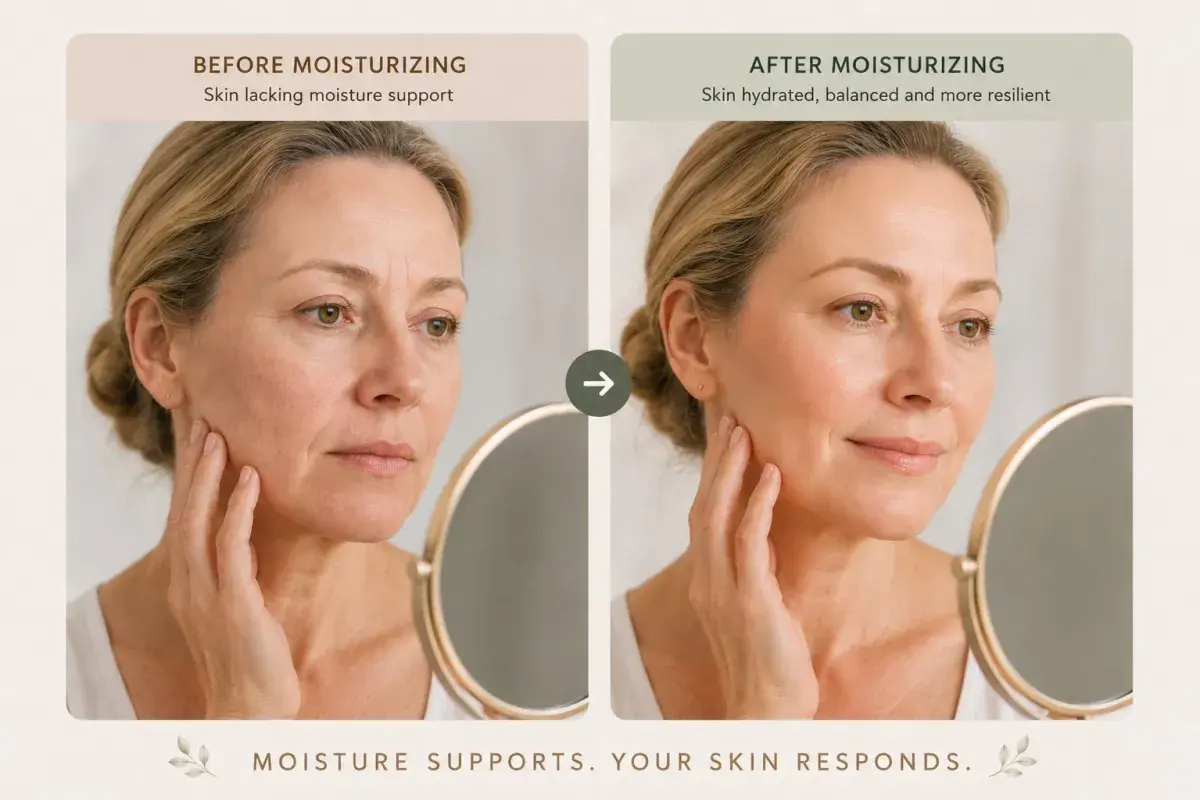
We can therefore approach the skin through a simple observational framework not as a diagnostic test, but as a way of paying closer attention.
| What you notice | What it tells you |
| Tightness | Your skin is experiencing a change in comfort that deserves attention. |
| Roughness | There may be increased surface dryness or another process affecting texture. |
| Flaking or peeling | Moisture/barrier disruption may be involved, but other causes are possible. |
| Itching | It commonly accompanies dry skin but can have other causes. |
| Stinging or burning | The skin may be reacting to something; persistent symptoms warrant attention. |
| Cracking or bleeding | Dryness may be severe enough to compromise the outer barrier. |
| Redness or rash | This should not automatically be attributed to ordinary aging. |
| Reaction after cleansing | The current cleansing practice may be affecting comfort or dryness. |
| Response after moisturizing | Provides information about comfort and how the skin responds to current care. |
| Seasonal changes | Suggest that environmental conditions may be influencing symptoms. |
| Persistent or worsening symptoms | A reason to consider professional assessment. |
Note: The important limitation must remain visible: this is an observation framework, not a diagnostic tool. The AAD's clinical approach illustrates why diagnosis requires history and, when appropriate, professional examination rather than relying solely on visible symptoms (AAD, n.d.-b).
The first change may not be a product
Once we begin observing the skin, another question naturally follows: what is the skin being exposed to every day? Dryness can be influenced by environmental conditions, cleansing practices, medications and disease, and the AAD specifically identifies cold, dry environments, hot water and harsh cleansing among contributors to dry skin (AAD, n.d.-c).
This changes the way we think about skin care. Instead of immediately asking what new ingredient should be added, we can first ask whether something in the existing environment or routine is contributing to the problem. That question leads directly to the next part of our investigation.
Know before you care
By this point, aging skin looks less like a cosmetic problem and more like a biological system that deserves observation. The evidence shows that xerosis is common among older adults, that its causes are multifactorial, that barrier dysfunction can have several contributors, and that individual assessment remains important (Gold et al., 2024; Konya et al., 2024; Yao et al., 2023).
We therefore do not approach Pro-Aging Skin Care by asking what everyone over a certain age should use. Instead, we begin by examining what the skin is experiencing, what factors might be influencing it, what remedies have already been tried, and whether the observed changes fall within the realm of ordinary self-care or warrant a professional evaluation.
Age gives us a number, but the skin gives us information. Before deciding what belongs on aging skin, we first need to learn how to read it.
Next: Article 3 — Your Skin Has a History (Understanding the Life It Has Lived and Learning to Care for It Now)
Image
Suggested Citation
Lendez, M. L. (2026). PRO-AGING SKIN CARE: The KNOWING. Chikicha.com (the author is the developer of the Ikigai-Bayanihan framework for Purposeful Aging).
About the Author
Dr. Mariza Lendez is a researcher, social entrepreneur, and creator of the Ikigai-Bayanihan (Purpose + Collective Ethos) Retirement Model, an innovative framework that integrates purpose, community engagement, and sustainability to support meaningful aging and later-life well-being.
References
American Academy of Dermatology. (n.d.-a). Dry skin: Signs and symptoms. https://www.aad.org/public/diseases/a-z/dry-skin-symptoms
American Academy of Dermatology. (n.d.-b). Dry skin: Diagnosis and treatment. https://www.aad.org/public/diseases/a-z/dry-skin-treatment
American Academy of Dermatology. (n.d.-c). Dry skin: Who gets and causes. https://www.aad.org/public/diseases/a-z/dry-skin-causes
American Academy of Dermatology. (n.d.-d). Dermatologists' top tips for relieving dry skin. https://www.aad.org/public/everyday-care/skin-care-basics/dry/dermatologists-tips-relieve-dry-skin
American Academy of Dermatology. (n.d.-e). How to pick the right moisturizer for your skin. https://www.aad.org/public/everyday-care/skin-care-basics/care/skin-care-in-your-60s-and-70s
American Academy of Dermatology. (n.d.-f). How to select anti-aging skin care products. https://www.aad.org/public/everyday-care/skin-care-secrets/anti-aging/selecting-anti-aging-products
Fluhr, J. W., Alexis, A. F., Andriessen, A., Ferero Barrios, O. L., Bjerring, P., Foley, P., Gold, M. H., Kaderbhai, H., & Zhang, C. (2024). A global perspective on the treatment and maintenance of mature skin using gentle cleansers and moisturizers. International Journal of Dermatology, 63(12), 1676–1684. https://doi.org/10.1111/ijd.17375. PubMed record
Gold, M., Andriessen, A., Burgess, C., Callender, V., Goldberg, D., Hougeir, F., Kircik, L., & Schlesinger, T. (2024). Promoting a healthy skin barrier using skin care in people with mature skin xerosis. Journal of Drugs in Dermatology, 23(1), 1253–1259. https://www.jddonline.com/articles/promoting-a-healthy-skin-barrier-using-skin-care-in-people-with-mature-skin-xerosis-S1545961624P1253X/
Konya, Y., et al. (2024). Risk factors of skin barrier dysfunction in older adults: A systematic review. Japan Journal of Nursing Science. https://doi.org/10.1111/jjns.12609. PubMed record
Yao, D., Gong, X., Ma, Y., Gong, T., & Wang, G. (2023). The prevalence and interventions of xerosis cutis among older adults: A systematic review and meta-analysis. Geriatric Nursing, 54, 219–228. https://www.sciencedirect.com/science/article/abs/pii/S0197457223002422