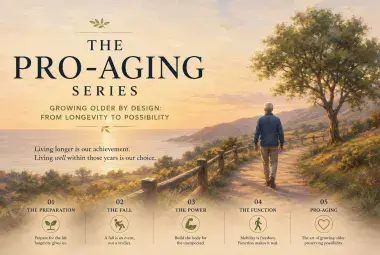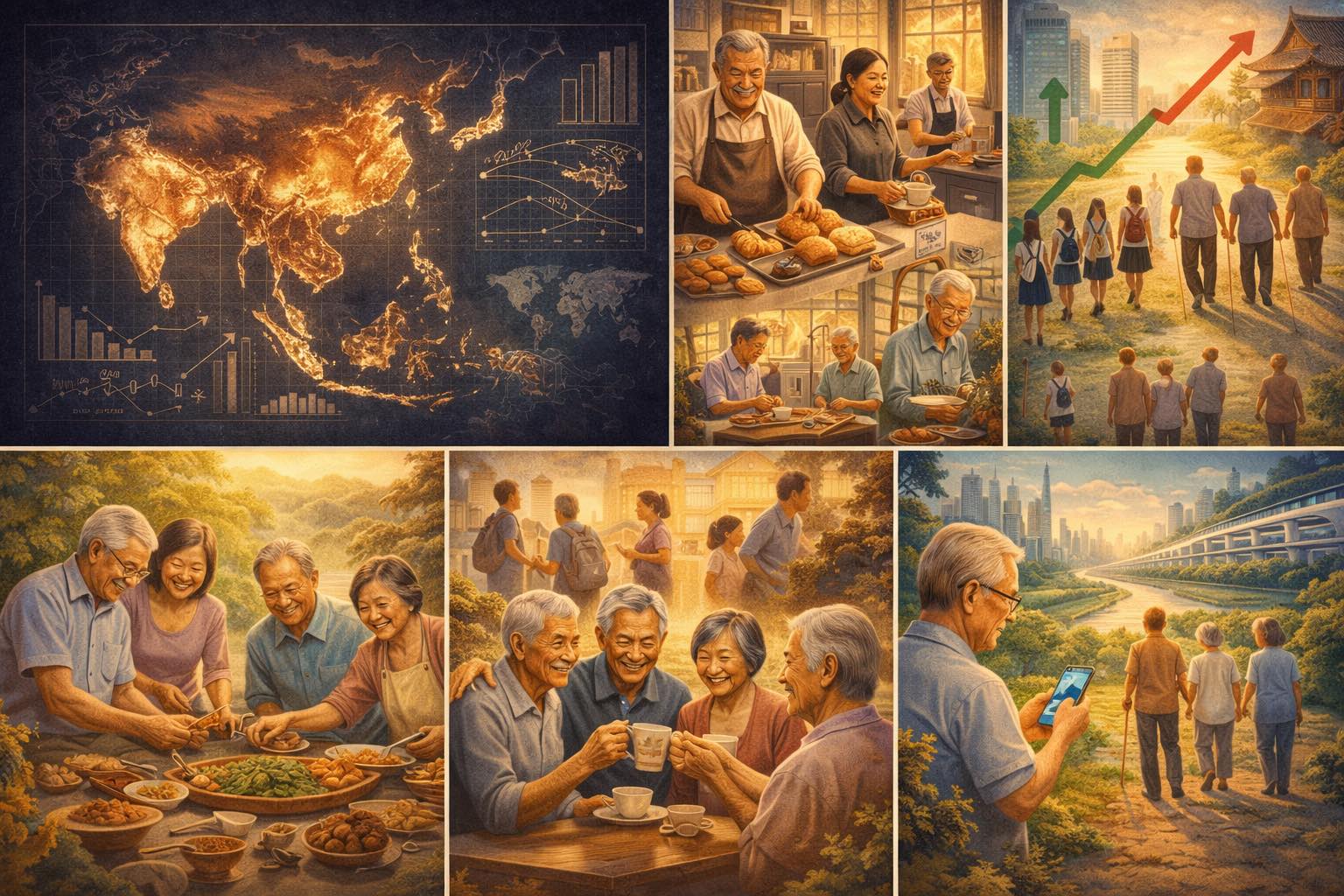
Why the World’s Longest Lives Are Becoming Everyone’s Concern
Across the world, people are living longer than at any point in human history. This is not a crisis in itself - it is a profound achievement. Advances in medicine, public health, education, and living standards have extended life expectancy across continents. Yet what distinguishes the present moment is not longevity alone, but its speed, scale, and concentration.
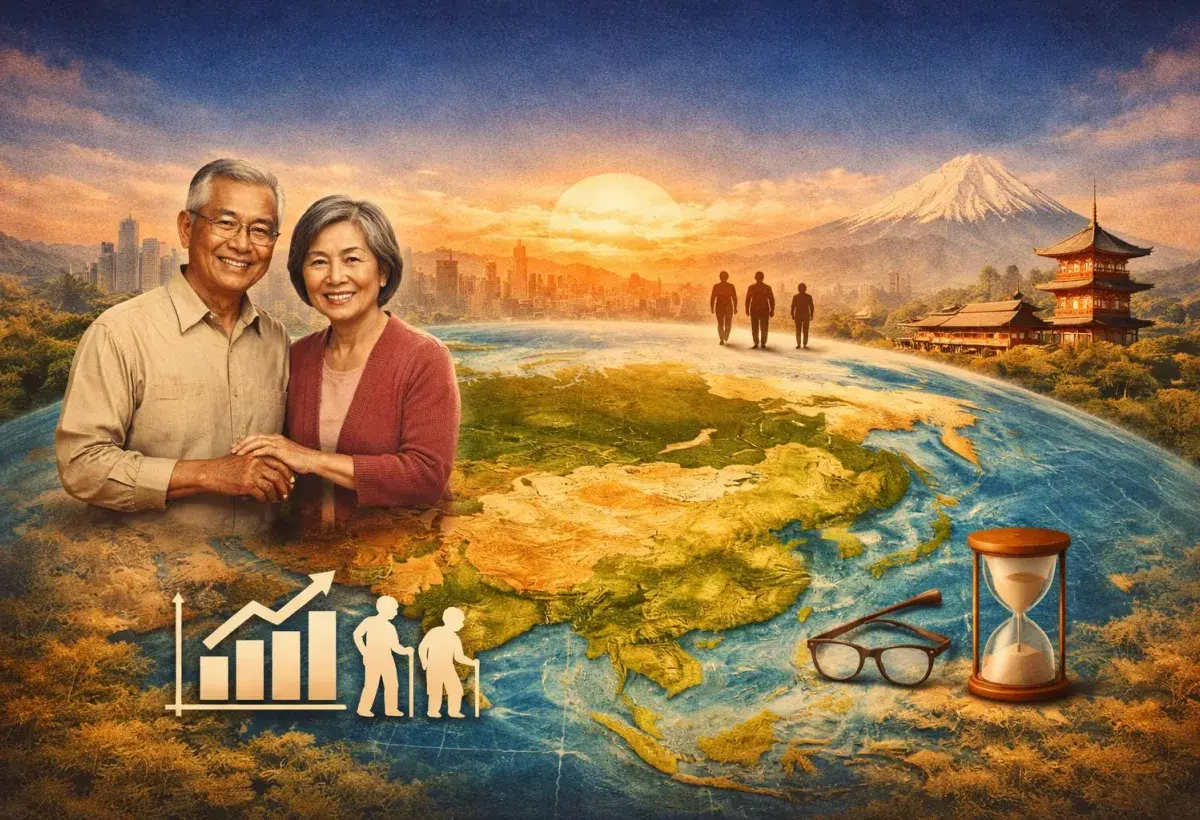
Asia now stands at the center of this transformation. According to projections from the United Nations Department of Economic and Social Affairs, the region will account for the largest share of the global population aged 65 and over by mid-century.
At the same time, the United Nations Population Fund emphasizes that ageing in Asia is occurring more rapidly than in any other region, compressing demographic transitions that took a century elsewhere into just a few decades (UN DESA, 2022; UNFPA Asia-Pacific, 2025).
This convergence scale and speed, places Asia at the forefront of a shift that will ultimately affect every society.
Why This Series Matters
The purpose of this three-part series is not to present ageing as a problem to be solved, nor as a narrative of decline. It is to provide a clear, evidence-based understanding of what ageing now represents, and why it has become a shared global concern.
Insights throughout this series are grounded in the work of leading international institutions, including the World Health Organization, the United Nations Population Fund, and the Organisation for Economic Co-operation and Development. These organizations, despite their different mandates, converge on a central point:
Ageing is no longer a marginal issue. It is a structural condition shaping the future of societies.
This matters because the implications extend far beyond demographics. Ageing influences how economies function, how healthcare systems are organized, how communities are designed, and how individuals experience the later stages of life.
A Guided Path Through the Series
This series unfolds in three connected movements, each building on the previous one.
Part 1: Why Ageing Has Become Everyone’s Business
This opening article situates ageing within its global and regional context. It explains why Asia is ageing faster than any other region, and how this shift is reshaping economies, health systems, and social structures. It establishes ageing not as a distant policy concern, but as a present and defining reality.
Part 2: What “Active Ageing” Really Means for Everyday Life
The second article moves from systems to lived experience. It examines how global experts understand ageing, not as decline, but as a phase shaped by health, participation, work, and security. It reframes ageing in human terms, emphasizing functional ability, dignity, and choice.
Part 3: Designing a Society That Ages Well
The final article expands the discussion outward. It explores how societies must respond, through health system reform, inclusive labour markets, social protection, and age-friendly environments. It asks what it truly means to design systems that support longer lives with dignity.
What Connects All Three
At its core, this series advances a simple but consequential idea that ageing is not a single event. It is a long phase of life shaped by both individual experience and societal design.
The World Health Organization describes this through the concept of functional ability, the capacity to live in accordance with one’s values across time (WHO, 2020). The United Nations Population Fund highlights how this capacity is unevenly distributed, shaped by gender, income, and social conditions (UNFPA Asia-Pacific, 2025). Meanwhile, the Organisation for Economic Co-operation and Development underscores the economic and societal implications of inclusion or exclusion in later life (OECD, 2025).
These perspectives reveal a shared reality:
How we age is not determined by time alone it is shaped by the choices we make and the systems we build.
An Invitation to the Reader
This series does not ask readers to adopt a particular view of ageing. Nor does it prescribe how one should prepare for later life. Instead, it offers a framework for understanding. For some, this may bring clarity to questions already forming, for others, it may introduce a perspective not previously considered. And for policymakers and scholars, it may provide a structured lens through which to interpret emerging demographic realities.
But for all readers, it invites a simple reflection: If longer lives are becoming the norm, then the question is no longer whether ageing will matter - but how we choose to respond to it.
Where to Begin
If you are starting this series, begin with Part 1, where the foundations are laid.
From there, the discussion moves naturally into lived experience in Part 2, and finally into societal design in Part 3.
Each article stands on its own. Together, they form a coherent exploration of one of the most important shifts of our time.
Image
About the Author
Written by Dr. Mariza Lendez, the developer of the Ikigai-Bayanihan Purpose-Driven Retirement Framework, a model that redefines aging through purpose, dignity, and community-centered living.
Asia Is Aging First Series: Why the World’s Longest Lives Are Becoming Everyone’s Concern