A Reason to Live, A Community to Live With
Purpose begins within the individual, but purposeful living can become larger and more sustainable when it is embedded within community.
The Seed Was Planted Before He Knew What It Was
In 2000, Chen Si was crossing the Nanjing Yangtze River Bridge when he encountered a young woman in obvious distress. A later Chinese retrospective reported that she had been deceived into a pyramid-selling scheme and had lost 5,000 yuan; Chen helped bring her away from the bridge, arranged assistance, and sent her home. Chen later described the experience as the “moment he understood that a life could be pulled back from the edge”. Because accounts published at different times vary in some details of this first encounter, the most defensible conclusion is that the experience itself - and the realization that intervention could make a difference became deeply significant to him (Sina News, 2017).
Then life continued. Chen returned to his ordinary responsibilities, working and helping run his small business while raising his family, and the experience did not immediately become a formal mission. Three years later, however, another event brought the memory back with unexpected force. While watching television in September 2003, Chen saw news of a person who had jumped from the same bridge, and the images of the death connected with what he had witnessed in 2000. A contemporary Chinese retrospective reported that this experience prompted him to conclude that he could do something more meaningful to prevent such deaths (Sina News, 2017).
The timing mattered. The report came around the first World Suicide Prevention Day, and other media reports of people dying from the bridge had already disturbed Chen deeply. He began to see the problem differently: if people in crisis could sometimes be reached before the final moment, then maybe another outcome was possible. On September 19, 2003, he returned to the bridge deliberately, carrying a hand-made sign offering free consultation and beginning the regular weekend patrol that would eventually define much of his life (China News Service, 2003; Guangming Daily, 2004).
That was the moment when an experience became a purpose.
When the Heart Recognizes Its Reason for Being
Purpose is not always discovered through a carefully constructed life plan. Sometimes it begins with an experience that stays with us long enough to reveal what matters. In Japanese research, ikigai has been examined as a sense of “life worth living,” and studies have associated the presence of ikigai with important health and mortality outcomes, although such findings should not be interpreted as proof that ikigai itself guarantees longevity (Sone et al., 2008; Tsuzishita et al., 2021).
This is why I use “reason for being” when discussing ikigai in the context of purposeful aging, but it does not mean that every person must discover a single grand mission, nor does it mean that one's purpose must become a profession. Rather, it points toward the source of meaning that gives a person a reason to continue engaging with life, relationships, responsibilities, and contribution.
Sometimes we know what that reason is early in life. Sometimes it emerges through work, family, creativity, faith, learning, service, or relationships, while at other times it becomes visible only after an experience changes the way we see ourselves and the world around us. Chen's story suggests another possibility: purpose can first appear as a memory that refuses to become irrelevant.
The 2000 rescue showed Chen that intervention was possible; the television report in 2003 reminded him that people were still reaching that same point of despair; and his return to the bridge transformed memory into action. He did not begin with a theory of purpose.
He discovered purpose by recognizing that something mattered enough for him to act.
When Passion Became Mission
Chen, an ordinary shopkeeper, his regular day on the bridge was with a hand-made sign and little institutional support. CCTV's contemporary report described how he spent his weekends traveling to the bridge, searching for people whose behavior suggested that they might be contemplating suicide and approaching them to talk. His first day of regular patrol resulted in the rescue of a man who had been deceived financially and was preparing to jump (CCTV, 2003).
Within twenty days, China News Service reported that Chen had helped 11 people. Early reports also documented the practical difficulties he encountered: the bridge was crowded, people in distress were difficult to identify, traffic made movement difficult, and Chen had to learn through experience how to recognize signs of hesitation and despair (China News Service, 2003).
This is where passion became mission. His concern was no longer simply an emotional reaction to suffering; it became a repeated commitment to do something about it. He developed observational skills, communication strategies, psychological knowledge, and relationships with others who could assist him.
Within the Ikigai-Bayanihan Model for Purposeful Aging, I understand this progression through four dimensions - passion, mission, vocation, and profession. These four dimensions are not being presented as the original Japanese definition of ikigai; rather, they are part of my model's interpretation of how an individual's reason for being can become an enduring form of contribution.
Chen's experience illustrates the movement from what matters to me, to what I am willing to do, to what I repeatedly contribute, and eventually to what requires structure and support.
Purpose therefore becomes more than enthusiasm. Passion becomes socially meaningful when it is translated into contribution.
The Seed Began to Grow
Chen continued returning to the bridge on weekends and holidays. A 2004 report described him traveling approximately 50 minutes by bus each way and remaining on the bridge for most of the day, while keeping records in what became his Bridge Diary. He was no longer simply responding to emergencies; he was developing a sustained practice of observing, approaching, listening, persuading, and following up with people in crisis (Sina News, 2004).
The work also began to attract other people. One of the individuals Chen helped became his first volunteer, and subsequent reports documented additional volunteers joining the effort. This was significant because Chen's original act of individual compassion was beginning to create relationships and collective participation around the same social need (Sina News, 2004; China News Service, 2003).
Over time, the scale became extraordinary. In a 2021 China News Service interview, Chen reported that from 2003 through April 30, 2021, he had successfully helped 413 people who were attempting suicide, while later international reporting placed the figure at 469 by 2024. The later figure should be understood as a reported count rather than an independently audited population statistic, but the long documentary trail confirms that his intervention continued for more than two decades (China News Service, 2021; South China Morning Post, 2024).
The number tells us about scale, but it also raises a more important question: How long can one person carry a purpose that keeps becoming larger?
When Purpose Becomes Heavier
Purpose can give direction to life, but it does not make a person limitless. Chen still had to earn a living, support his family, travel to the bridge, communicate with people in crisis, provide transportation and food, and respond to people who needed assistance after being rescued. As the work expanded, the difference between having a purpose and having the capacity to sustain that purpose became increasingly visible.
By 2006, Chen's small business was facing disruption, and he eventually began working for a logistics company while continuing his rescue activities during weekends and holidays. A later Chinese report described him working during the week and returning to the bridge during his free time, demonstrating that his purpose existed alongside ordinary economic responsibilities rather than replacing them (The Paper, 2019).
The financial burden also became significant. A 2013 China News Service report described the costs associated with renting accommodation, providing food, arranging medical assistance, and helping rescued people return home. It reported that in 2007, when Chen was struggling to continue, a stranger from Shantou began providing him with 5,000 yuan per month, allowing the work to continue (China News Service, 2013).
This is an important part of the story because it prevents us from turning purpose into a romantic demand for self-sacrifice. A meaningful purpose still needs resources, relationships, and systems. When the contribution becomes larger than the individual's capacity, something else must happen.
The community must begin to carry part of the weight.
Image
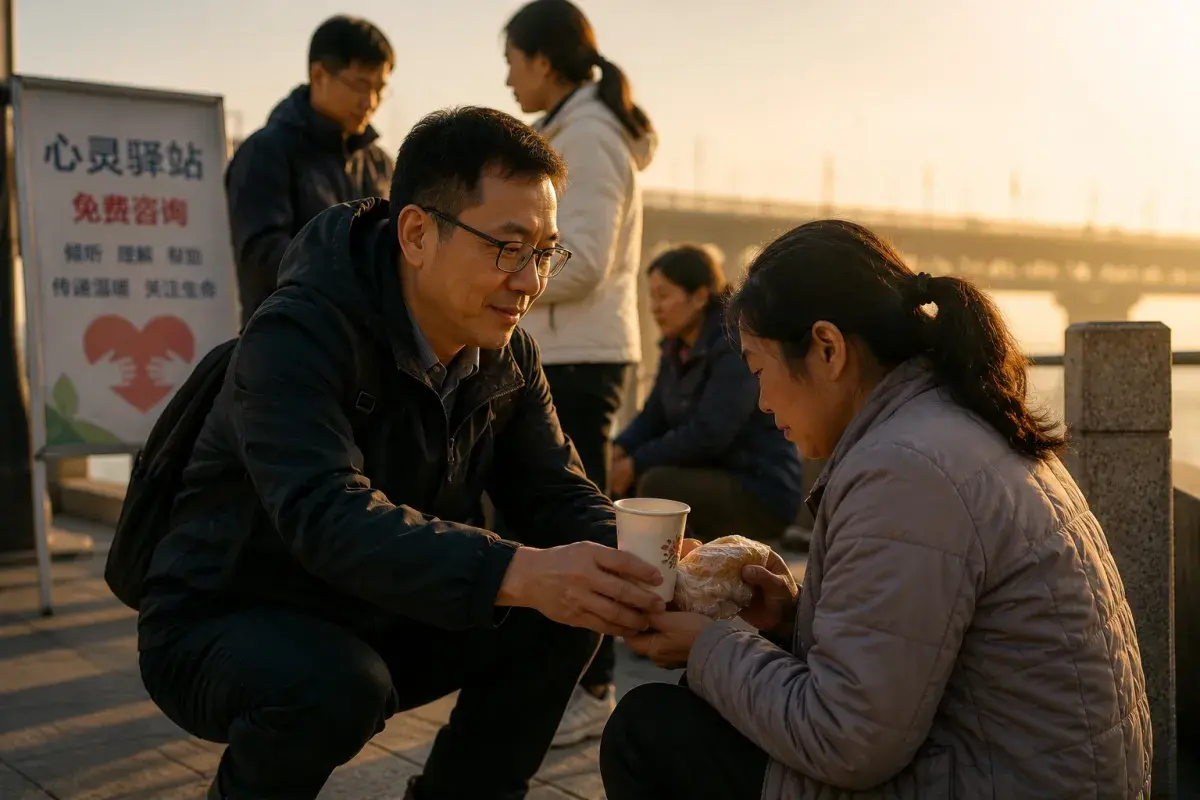
From Rescue to Recovery: The Heart Station
Chen eventually recognized that pulling someone away from the bridge did not necessarily resolve the circumstances that had brought that person there. A person could be physically safe and still be facing debt, family violence, relationship breakdown, unemployment, loneliness, or emotional distress. The question therefore shifted from “How do I stop this person from jumping?” to “What happens after I bring this person back?”
In late 2006, Chen rented a house and established what he called the Heart Station (心灵驿站), a temporary place where people he had rescued could stay while receiving food, conversation, psychological support, and assistance in returning home. In a 2021 China News Service interview, Chen reported that he had personally spent approximately 300,000 yuan on establishing and supporting the Heart Station and related assistance over the years (China News Service, 2021).
Contemporary reporting showed that the Heart Station soon involved people beyond Chen himself. By early 2007, it had accommodated several rescued individuals, and 12 psychology students from Nanjing University were volunteering to provide one-to-one psychological support. Chen himself acknowledged that the station effectively meant that responsibilities that might ordinarily have been handled by institutions were being carried personally by him (China News Service, 2007).
The meaning of his work therefore changed again.
Rescue became relationship.
Relationship became recovery.
Recovery required community.
The seed was beginning to grow beyond the person who had planted it.
When Bayanihan Lifted Some of the Weight
This is where Chen Si's story becomes particularly meaningful through the lens of the Ikigai-Bayanihan Model for Purposeful Aging.
Bayanihan is a Filipino concept associated with cooperative undertaking, solidarity, mutual assistance, and helping one another within the community. Del Castillo and Perdido (2023) describe bayanihan as “being in communion with your neighbors, working together and helping one another,” while noting its evolution from a traditional communal practice into contemporary forms of assistance to vulnerable people and communities.
The essential idea is not simply that one person helps another. It is that people become part of one another's capacity to cope, recover, and continue. Resources can include money, but they can also include time, knowledge, labor, relationships, skills, transportation, emotional support, and organizational capacity.
Chen's story reflects this transition without requiring us to claim that he consciously practiced bayanihan. His purpose began individually, but other people gradually became part of the work: volunteers joined him, psychology students provided specialized assistance, strangers helped during difficult rescues, and financial supporters eventually helped sustain the costs. The individual's purpose became increasingly embedded in a network of collective contribution (China News Service, 2003, 2013, 2021). This is the point at which Ikigai meets Bayanihan.
Ikigai teaches us why to live meaningfully. Bayanihan shows us how to live meaningfully together.
One Person Can Plant the Seed
A person can begin something meaningful without knowing how large it will become. Chen planted the seed in 2000 when he stopped to help one person, although he did not yet understand what that experience would mean for his life. In 2003, the seed was activated again when a television report connected another person's death with his earlier experience, and he decided to return to the bridge.
The seed then grew through repetition. One intervention became eleven, then hundreds; one volunteer became a network; one rented room became the Heart Station; and one man's personal resources were eventually supplemented by the resources of people who recognized the value of the work. The contribution therefore became larger than its originator.
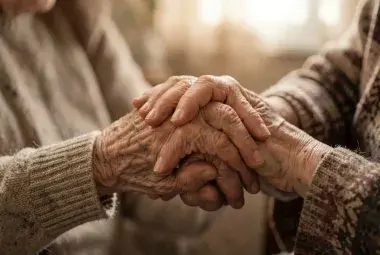
This is where reciprocity becomes central. The person who gives today may need to receive tomorrow; the caregiver may eventually need care; the person with physical strength may later need assistance; and the person who once carried others may eventually need others to carry part of the load.
Receiving does not erase the dignity of having given. Nor should giving create an expectation that a person must remain strong forever.
A community that truly practices reciprocity does not simply harvest the contributions of its members. It also helps sustain the people who make those contributions possible.
Image
From Independence to Interdependence
This principle has important implications for longevity. International ageing policy has increasingly emphasized that older people should not be viewed solely as recipients of care but as people who retain rights, capacities, aspirations, and opportunities to participate in society.
The Madrid International Plan of Action on Ageing (MIPAA) established three major priorities: older persons and development, advancing health and well-being into old age, and ensuring enabling and supportive environments (United Nations, 2002). The Plan also emphasized that older persons should be able to age with security and dignity and continue participating in society as citizens with full rights.
The MIPAA+20 review reinforced the continuing need to build societies for all ages and to translate international commitments into national and local action. It also recognized that progress in ageing policy depends on stronger implementation and cooperation across sectors rather than on policy statements alone (United Nations, 2023).
The United Nations Decade of Healthy Ageing 2021-2030 takes this environmental and community dimension further. The World Health Organization defines healthy ageing as “the process of developing and maintaining the functional ability that enables well-being in older age,” with functional ability encompassing the ability to meet basic needs, learn and make decisions, remain mobile, build and maintain relationships, and contribute to society (World Health Organization [WHO], 2020, 2021).
This definition is important because functional ability does not exist inside the body alone. WHO explains that it emerges from the interaction between a person's intrinsic capacity and the environment, including the home, community, relationships, services, systems, policies, and broader social conditions in which a person lives (WHO, 2020).
The implication is clear: healthy longevity is partly a community achievement. A person may experience changes in physical or cognitive capacity while retaining the ability to build relationships, make decisions, contribute knowledge, mentor others, create, care, or participate in communal life. Environments that support these possibilities can help preserve functional ability and well-being even as capacities change.
Living With Dignity Within the Community
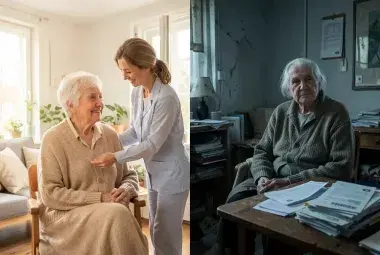
This is the point at which the Ikigai-Bayanihan Model for Purposeful Aging moves beyond the idea of purpose as an individual psychological state. Ikigai addresses the question of why life remains worth living; Bayanihan addresses how meaningful life can be sustained with and among others. Their intersection is what I call Purposeful Communal Living.
The model does not define dignity as permanent independence. Instead, it recognizes that dignity can coexist with changing levels of capacity, including the need to receive assistance. A person can remain valuable even when they can no longer do everything they once did, just as a person can remain connected to community purpose even when their contribution takes a different form.
This is consistent with the international vision of ageing with dignity, participation, and supportive environments. MIPAA calls for societies in which older persons can continue to participate and develop, while the UN Decade of Healthy Ageing emphasizes environments that enable people to be and do what they have reason to value (United Nations, 2002; WHO, 2020).
Therefore, the right question for purposeful aging is:
How can we keep older adults purposeful, connected, contributive, and dignified within a community that is willing to support them when their capacity changes?
That is a different philosophy of longevity.
Where the Seed Is Today
The story that began with Chen Si stopping to help one person eventually became a life organized around meaningful contribution, and the contribution itself gradually attracted people, resources, expertise, and systems. The seed was never the 469th rescue. The seed was the first moment when one human being recognized that another person's life mattered enough to stop and help.
The later growth came through repetition and community. Chen's purpose became a practice; the practice became a social contribution; the contribution required relationships; the relationships required resources; and the resources eventually came not only from Chen but also from people who recognized that his work mattered.
This is the journey I see in the Ikigai-Bayanihan Model for Purposeful Aging:
Reason for Being → Meaningful Contribution → Communal Connection → Reciprocity → Living With Dignity Within the Community
The model does not ask every person to discover a heroic mission. Purpose can be simple such as teaching, mentoring, raising a family, caring for others, creating, farming, volunteering, preserving knowledge, building a business, strengthening a neighborhood, or simply becoming someone others can rely upon. What matters is that the person recognizes something worth contributing and has a community in which that contribution can remain meaningful. In this sense, longevity is not simply about adding years to life.
It is about creating the conditions in which additional years can continue to contain purpose, relationship, contribution, belonging, and dignity.
The Garden Is Bigger Than the Gardener
Chen Si did not begin as the “Angel of Nanjing.” He began as an ordinary man who stopped when someone needed help. Years later, a television report awakened the memory of that first intervention, and he returned to the bridge with a clearer sense that his time, strength, and abilities could be used in service of others (Sina News, 2017).
What followed was not a straight line from purpose to heroism. It was a process of learning, sacrifice, limitation, adaptation, and eventually community participation. His story shows that purpose can start with one person, but sustaining purpose is often a collective task.
One person can plant the seed. A community can water it. Someone else may protect it when the storm comes, while another helps gather its harvest. And there may come a season when the person who first planted the seed can no longer carry the watering can - and must allow someone else to tend what they once began.
That is reciprocity.
It reminds us that purpose is not a solitary possession. We may begin by giving, contributing, guiding, or caring for others, but longevity eventually teaches us that there are seasons when we must also receive. The ability to accept care without losing dignity is as important as the ability to give it, this is what longevity ultimately asks of us:
not simply to live longer, but to remain connected to something worth living for; to contribute what we can while we can; to receive when our capacities change; and to belong to a community strong enough to carry one another through the changing seasons of life.
Ikigai teaches us why we live meaningfully, Bayanihan shows us how we live meaningfully together.
And when purpose meets contribution, when contribution is sustained by community, and when giving and receiving become reciprocal, longevity becomes more than the extension of year, as it becomes purposeful communal living.
It becomes a way of living with dignity within the community.
One person may plant the seed. The community helps it take root, survive the storms, and bear fruit. And when the seasons change, the hands may change, but the purpose does not have to disappear.
This is where Ikigai-Bayanihan finds its meaning: not in living for oneself alone, but in creating a life where purpose can be given, received, shared, and carried forward.
One person plants the seed.
A community helps it grow.
And together, we make longevity a life worth living.
Image
References
China Central Television. (2003, December 9). 《新闻会客厅》:大桥日记——劝慰轻生者 [News Interview: Bridge Diary—Counseling people contemplating suicide]. CCTV News. CCTV News interview/report
China News Service. (2003, November 11). 20天救回11条人命 长江大桥上的“生命”守望者 [11 lives saved in 20 days: The “life guardian” on the Yangtze River Bridge]. China News Service. China News Service report
China News Service. (2007, January 21). 2000生命殒没江中 南京长江大桥成“自杀胜地”? [Nearly 2,000 lives lost in the river: Has Nanjing Yangtze River Bridge become a “suicide spot”?]. China News Service. China News Service report
China News Service. (2013, August 23). 男子在长江大桥10年救助轻生者 背后有陌生人资助 [Man helps people contemplating suicide on the Yangtze River Bridge for 10 years, supported by a stranger]. China News Service. China News Service report
China News Service. (2021, December 24). 南京长江大桥劝生志愿者陈思:救助过413位自杀者 愿更多人珍爱生命 [Nanjing Yangtze River Bridge volunteer Chen Si: I have helped 413 people contemplating suicide and hope more people cherish life]. China News Service. China News Service interview
del Castillo, F. A., & Perdido, M. S. (2023). “Bayanihan”: Protecting communities from the cost-of-living crises. Journal of Public Health, 45(2), e360–e361. https://doi.org/10.1093/pubmed/fdac134
Guangming Daily. (2004, March 14). 长江大桥上的“生命守卫者” [The “guardian of life” on the Yangtze River Bridge]. Guangming Online. Guangming Daily report
Lendez, M. L. (2026). Ikigai–Bayanihan Model for Purposeful Aging [Unpublished research framework]. Philippine Women’s University.
Sina News. (2004, April 2). 在大桥上守望生命(特别报道) [Watching over life on the bridge: Special report]. Sina News. Sina News report
Sina News. (2017, October 3). 坚守者|南京长江大桥志愿者14年救334人:尽力做盏油灯 [The steadfast one | Nanjing Yangtze River Bridge volunteer helps 334 people over 14 years: Trying his best to be a lamp]. Sina News. Sina News retrospective
Sone, T., Nakaya, N., Ohmori, K., Shimazu, T., Higashiguchi, M., Kakizaki, M., Kikuchi, N., Kuriyama, S., & Tsuji, I. (2008). Sense of life worth living (ikigai) and mortality in Japan: Ohsaki Study. Psychosomatic Medicine, 70(6), 709–715. https://doi.org/10.1097/PSY.0b013e31817e7e64
South China Morning Post. (2024, July 31). China “angel” stops 469 suicidal people jumping off bridge over 21 years. South China Morning Post report
The Paper. (2019). 南京长江大桥上的自杀终结者 [The man who works to end suicides on the Nanjing Yangtze River Bridge]. The Paper. The Paper profile
Tsuzishita, Y., & Wakui, S. (2021). The effect of high and low life purpose on ikigai (a meaning for life) among community-dwelling older people: A cross-sectional study. Geriatrics, 6(3), Article 73. https://doi.org/10.3390/geriatrics6030073
United Nations. (1991). United Nations principles for older persons. United Nations Department of Economic and Social Affairs.
United Nations. (2002). Madrid International Plan of Action on Ageing. United Nations. Madrid International Plan of Action on Ageing
United Nations. (2023). MIPAA+20: Looking back, moving forward. United Nations.
World Health Organization. (2020, October 26). Healthy ageing and functional ability. WHO — Healthy ageing and functional ability
World Health Organization. (2020). Decade of healthy ageing: Baseline report. World Health Organization. WHO — Decade of Healthy Ageing Baseline Report