The Art of Growing Older- Possibility in the Longevity Era
The first four articles have taken us through a progression that begins with one of the most significant developments in human history:
People are living longer- The Preparation article established why longer lives require deliberate preparation; The Fall examined how physical vulnerability can interrupt that longevity; The Power examined the physical capacities that allow the body to generate, control and sustain movement; and The Function brought those capacities back to their purpose, mobility, participation and freedom of choice. Together, they lead to a question about "how we should approach the reality of growing older?"
Longevity gives us more years, but those years are lived through an ageing body. That body changes over time: its capacities may shift, some limitations may emerge, and its needs evolve with those changes. Recognizing this reality is the starting point for understanding how to live well within a longer life. Another important question to consider asking is "how deliberately we will respond to those changes, what we will preserve, strengthen, protect and learn to adapt?"
The First Requirement Is Acceptance
Acceptance is an agreement to regard every limitation as inevitable. It is the recognition of a fundamental biological reality that the body ages. The mind, however, may continue to carry the ambitions, memories, curiosity and sense of identity formed across decades, creating a natural tension between how we experience ourselves and what the changing body can physically do.
That body at 60, is not expected to recover quickly, generate force, tolerate physical demands or move in exactly the same way it did at 30; some capacities can be maintained or strengthened, some can be managed, and others will inevitably change. The intelligent response is not to demand that the body remain what it once was, but to understand what it has become and respond accordingly.
Acceptance therefore becomes the starting point for informed action. Once we acknowledge the body as it is, we can make better decisions about what to preserve, what to protect, what to train and what to adapt. Acceptance does not ask us to give up on the body; it gives us an honest basis from which to care for it.
Acceptance Creates the Basis of Stewardship
Once the body is seen clearly, stewardship becomes possible. Stewardship means paying attention to what the body needs instead of demanding that it continue performing according to the standards of an earlier decade. It means preserving what can be preserved, training what can be strengthened, protecting what needs protection, monitoring meaningful changes and adapting when the circumstances of the body or its environment change.
This creates a different relationship with ageing. The question has change, from “How do I stop my body from growing old?” to “How do I care for the body I have today so it can continue to support the life I want to live?”
That question changes how we approach the ageing body. We can train the aging body without making appearance the measure of health, seek medical care without treating ageing itself as a problem, and adapt when necessary - without seeing support as failure. Stewardship begins when we stop fighting the fact that the body is ageing and start taking responsibility for caring for it.
Image

So, What Is Anti-Aging and Pro-Aging?
The scholarly discussion shows that neither term should be treated as a simple opposite of the other. Binstock (2004) described anti-aging as a contested field in which scientific efforts to modify fundamental ageing processes existed alongside commercial claims that gerontologists questioned, while Hayflick (2004) emphasized the distinction between influencing age-associated diseases and demonstrating that the human ageing process itself could be slowed, stopped or reversed. On the Pro-Aging side, Wilkowska et al. (2021) connected a pro-aging attitude with bringing positive functioning and preserved resources into view rather than beginning with disability and deficits, while Kaleli and Tufan (2026) used Pro-Aging in a preventive-health model designed to support health-related intentions and behaviours among older adults.
These studies do not provide one universal definition of Pro-Aging, and they do not need to. They establish a useful distinction: Anti-aging can refer to efforts to modify biological ageing, while Pro-Aging has also been used in relation to positive functioning, preserved resources and preventive health. For this series, that distinction provides the basis for moving away from the question of how ageing might be defeated and toward the more immediate question of how we can live intelligently within an ageing body.
Why Aging Can Be a Gift
Calling ageing a gift requires intellectual honesty as ageing can bring loss. It can bring illness, physical limitation, changes in independence, bereavement and circumstances that cannot be solved simply through determination or positive thinking. To describe ageing as a gift without acknowledging these realities would turn the idea into sentiment rather than substance.
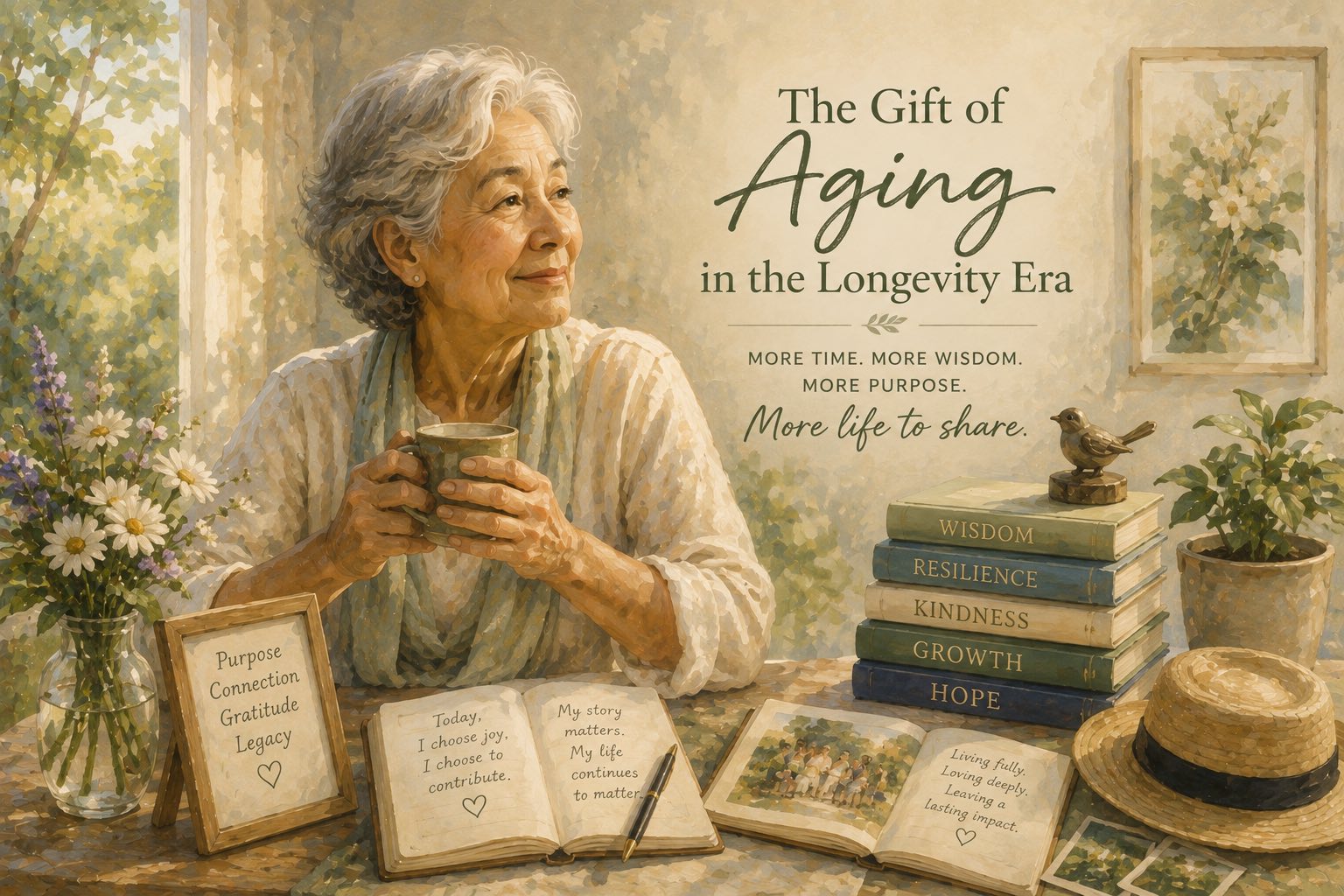
The gift is we have more life in which those difficulties, possibilities and experiences can unfold. Longevity gives people additional years in which to learn, contribute, create, nurture relationships, pursue interests, revise priorities and discover possibilities that were not available earlier in life. More years do not automatically produce a meaningful life, but they create more time in which meaning can continue to be made.
This direction is consistent with the WHO concept of healthy ageing, which places functional ability at the center of well-being in older age. The value of longevity, therefore, is not simply the number of birthdays accumulated, but what remains possible within those years.
The Gift Is Not Youth. It Is Possibility.
This changes the question we ask of the ageing body. If the goal is to remain young, every change in the body can begin to look like a loss: slower recovery becomes something to fight, reduced strength something to hide, and changes in mobility something to resist. The body is then judged against a younger version of itself, even though that version belongs to another stage of life.
A different question opens a more useful way forward: “What is still possible with the body I have now? What can it maintain, what can it strengthen, and what can it adapt to? What support might extend its capacity, and what activities continue to bring meaning and participation?”
These questions help redirect our focus from what the body once was to what it can still make possible. This is where the earlier articles come together. Strength matters because it allows us to act. Power matters because some movements require force to be produced quickly. Mobility matters because movement gives us access to the world around us. Function matters because physical capacity becomes meaningful when it allows us to participate in life.
The muscle was never the destination; rather, physical capacity has always been about the life it allows us to continue living.
Pro-Aging Is About Possibility
This is why Pro-Aging should not be confused with simply being positive about getting older. It requires us to acknowledge what is changing while continuing to identify what can be supported. It means preparing before limitations become crises, preserving capacity rather than neglecting it, and adapting when circumstances change.
A person may no longer run at the same pace and still walk every morning. A person may no longer climb stairs effortlessly and still remain active through appropriate adaptation. A person may need assistance with one task and remain fully capable of making decisions about many others.
Ageing does not erase capability in one moment. It changes the conditions under which capability is expressed. That is why Pro-Aging is not about maintaining an illusion of youth. It is about understanding the changing body well enough to preserve the greatest meaningful scope for movement, participation and choice.
Image

Our Understanding of Pro-Aging
For this series, Pro-Aging is our evidence-informed understanding of how to approach the reality of growing older.
It begins with accepting that the body changes and that limitations may emerge, while recognizing that aspects of health, physical capacity, function, participation and well-being can be supported through preparation, preservation, appropriate training, preventive care and adaptation. It does not promise freedom from decline, nor does it suggest that every limitation can be overcome.
Rather, Pro-Aging asks us to work with the ageing body we have, and not against the younger body we remember.
This understanding is aligned with the broader direction of healthy ageing. WHO places functional ability at the center of healthy ageing, while the UN Decade of Healthy Ageing emphasizes changing how societies think, feel and act toward age and ageing, fostering the abilities of older people, providing person-centred care and ensuring access to long-term care when needed.
The UN's Madrid International Plan of Action on Ageing similarly emphasizes health and well-being, participation, development, dignity and enabling environments. Our use of Pro-Aging does not replace Healthy Ageing; it gives a practical expression to its larger direction: understand ageing, respect the person, support capacity and preserve the possibility of living a life of value.
The Ageing We Choose to Embrace
The ageing body can be understood much like a vehicle that has carried its owner faithfully for many years.
We would not expect an older vehicle to perform at exactly the same speed as a new high-performance car, but neither would we regard it as useless simply because its performance has changed. A responsible owner maintains it, monitors its condition, repairs what requires attention, adapts its use and respects the limits within which it can continue to function safely and reliably.
The human body deserves the same thoughtful stewardship as it has carried us through our lives.
It has taken us to work, raised children, cared for parents, endured demanding days, celebrated milestones and survived difficult ones. Through this body we have pursued ambitions, formed relationships, experienced loss and joy, and accumulated the experiences that become part of who we are.
The body may no longer operate at the speed it possessed at 30, but that does not make it obsolete. It only means its maintenance now requires greater understanding.
Respecting the Body Means Paying Attention
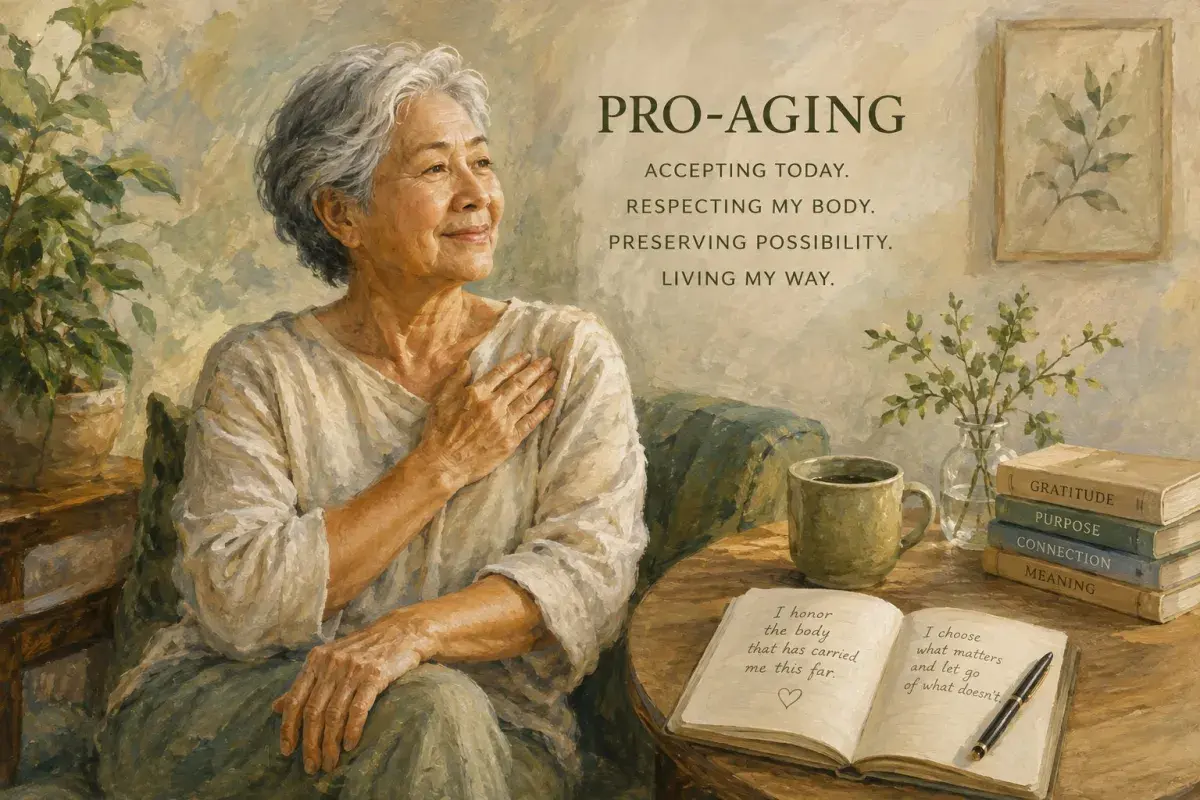
Pro-Aging does not ask an older person to force an ageing body back into the expectations of youth. It asks the person to know the body they have now.
That means paying attention to the food we choose, the movement we maintain, the way we recover, the health changes we monitor, the activities we undertake and the circumstances in which professional assessment is appropriate. It means preserving physical capacity where possible, adapting activities when necessary and using appropriate support when the body can no longer perform a task in exactly the same way.
This is not a rejection of limitation, it is an intelligent response to limitation, becasue the objective is not to make an ageing body pretend that it is young. It is to help that body remain as capable as possible for the life its owner still wants to live.
Image

The Body Has Served Us Well
There is another dimension to this discussion that cannot be captured by a clinical measurement.
The body has a history, it has been present through every stage of our lives. It carried us when we were children, adapted as we matured, endured the physical demands of adulthood and supported the responsibilities we assumed along the way. It has helped us care for people we love, pursue ambitions, earn a living, recover from hardship and experience the ordinary pleasures that make a life recognizable as our own.
By later life, therefore, the ageing body is not simply a biological object undergoing change but the physical record of a life already lived. Respecting it does not require making it appear as though time has not passed. It requires understanding its present condition and giving it the care required for the years ahead.
Giving Back the Kindness
For much of adult life, the body serves our plans. We ask it to work, travel, care for others, meet deadlines, carry responsibilities, recover from exhaustion and keep going when something still needs to be done. We often notice what the body can do without giving much thought to what it costs the body to keep doing it.
As we get older, our relationship with our body naturally changes. The body that spent decades working hard to support our ambitions and responsibilities begins to require more deliberate attention - not because it is failing us, but simply because the dynamic has shifted. What once happened almost automatically may now require nourishment, movement, rest, monitoring, training and, when necessary, adaptation or support.
Giving something back does not mean trying to restore the body to what it was. It means caring for the body according to what it needs now: preserving what can be preserved, strengthening what can still be strengthened, protecting it from avoidable harm and adapting when its capacities change. Accepting assistance when it is needed is not a failure of independence; it can be part of caring responsibly for the body that has carried us this far.
The body has spent a lifetime carrying us through life. Pro-Aging is learning to carry that body with the same care.
The Longevity Era Requires a Different Relationship With Ageing
The longevity era has changed the question. Living longer means that more people will experience extended periods in which the body, identity, relationships, responsibilities and aspirations may change. That longer horizon makes preparation more important, not less, and it makes our relationship with ageing more consequential.
If ageing is treated only as something to resist, later life can become a measurement of what has been lost. If it is treated only as decline, the person can become defined by limitation. But when ageing is understood as a changing stage of life that deserves preparation, stewardship and adaptation, attention can return to what remains possible.
This is consistent with the broader international direction of healthy ageing, which emphasizes not only individual capacity but also the environments, services and social conditions that allow older people to continue participating with dignity.
Pro-Aging Is Not About Becoming Younger
Caring for the ageing body does not require restoring it to an earlier version of itself. A 70-year-old body does not have to perform exactly like a 30-year-old body to have value. An adapted activity does not become meaningless because it is different from the activity performed decades earlier. A slower pace does not eliminate participation. A walking aid does not erase autonomy.
The new measurement is if the person can continue to live with the greatest meaningful degree of capability, participation and choice available within their circumstances. That is a more realistic understanding of ageing, and also a more respectful one.
Image
The Ageing We Choose to Embrace
Pro-Aging does not promise an ageing body without limitations. It asks us to approach that body with knowledge instead of denial, preparation over fear, preservation over neglect, and adaptation over resignation.
Some capacities can be strengthened. Some can be preserved. Some can be supported by the environment. Some will inevitably change. None of these realities, however, needs to determine the entire boundary of a person's life. The more important question is:
How much possibility can we preserve within the reality of growing older?
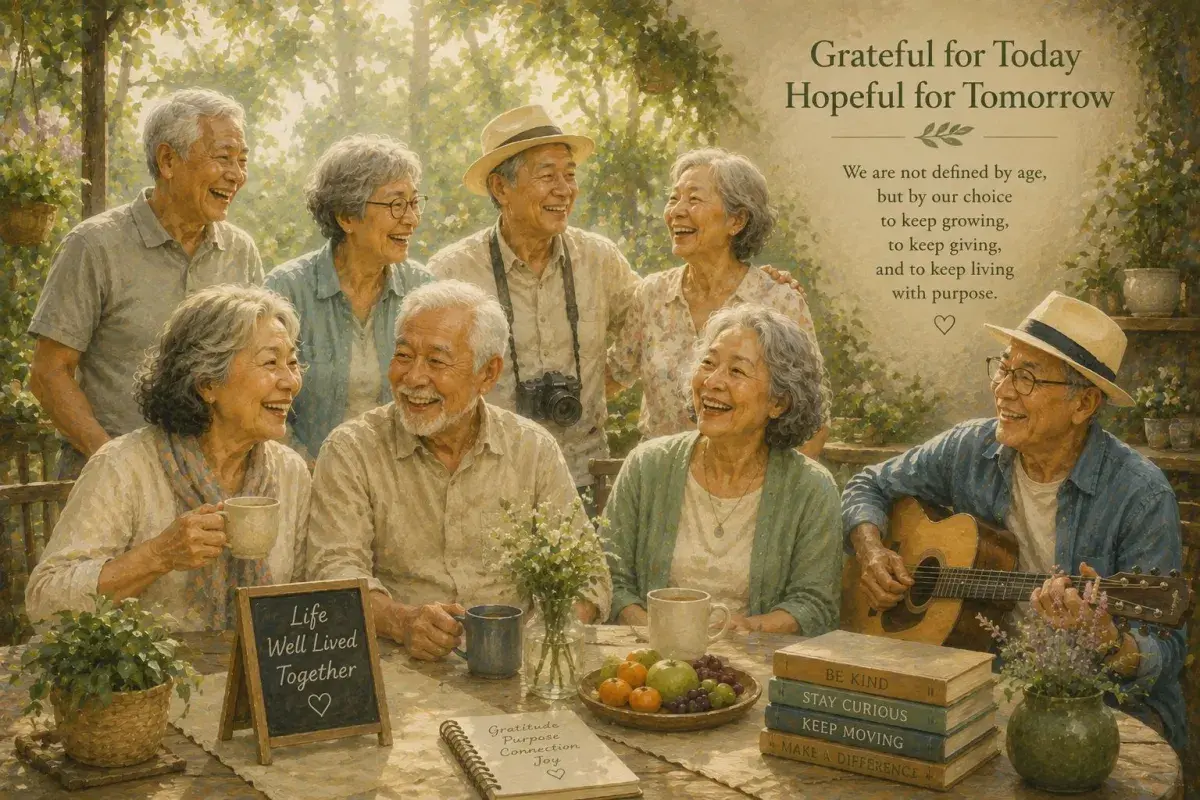
That possibility may be physical, intellectual, relational, creative or purposeful. Sometimes it may be as ordinary, and as valuable as deciding where to go, whom to see, what to do and how to spend another day.
Aging Well Is Not Aging Without Limits
This is one of the most important distinctions of the series as aging well does not mean that nothing changes. It simply means that change does not automatically determine the boundaries of a person's life.
The ageing body may require more attention. The environment may require modification. Activities may require adaptation. Support may become necessary. Priorities may change. But within those realities, there remains room for decision, participation, relationship, contribution and meaning.
WHO's concept of functional ability captures this broader understanding: healthy ageing concerns the capabilities that allow people to be and do what they have reason to value, within the interaction of their capacities and their environments.
That brings the five-article journey together:
-
Preparation protects possibility.
-
The Fall reveals why that possibility needs protection.
-
Power supports possibility.
-
Function expresses possibility.
-
And Pro-Aging asks us to respect and steward that possibility as the body grows older.
Image
The Gift of Growing Older
The greatest mistake in the conversation about ageing is to assume that the opposite of youth is decline, it is not, because the opposite of youth is simply another stage of life. It comes with different capacities, responsibilities, vulnerabilities and possibilities. Some doors close. Others open. Some ambitions change. Others become more meaningful. Some forms of movement become harder. Other forms of participation become more intentional.
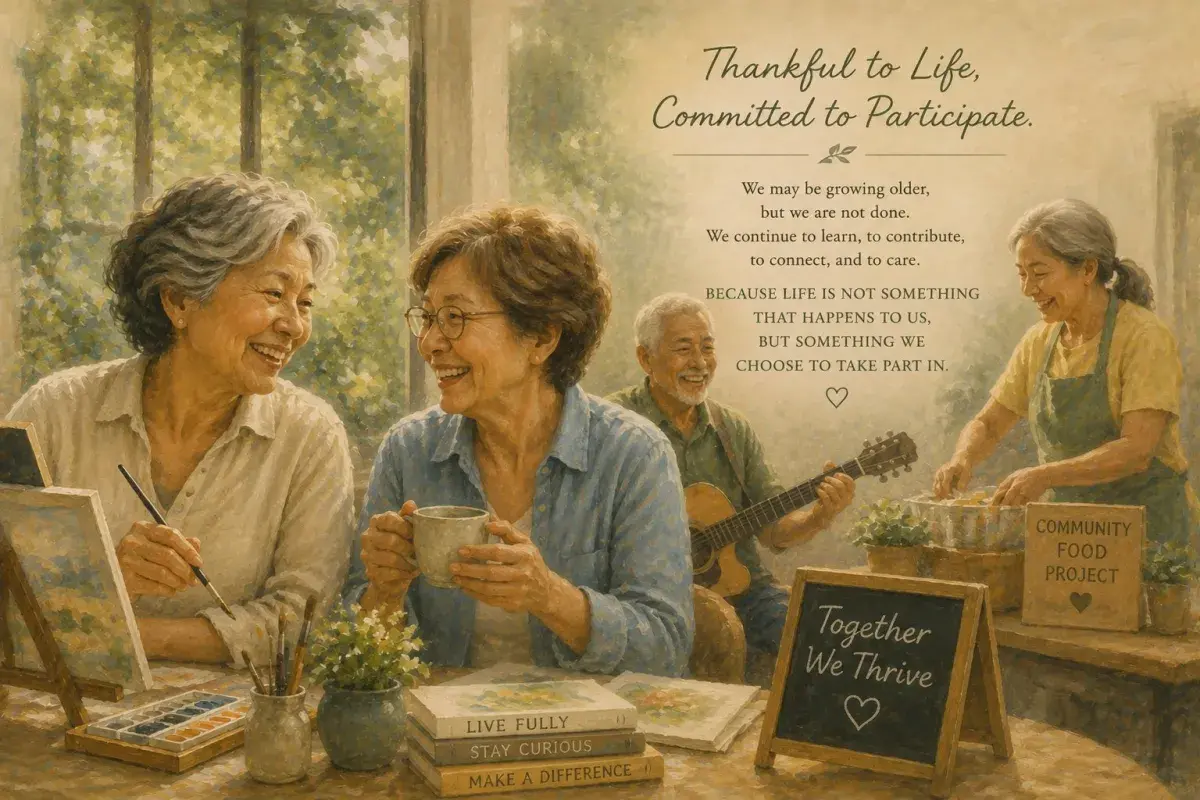
The task is not to deny the difference but to live intelligently within it, and longevity gives us the opportunity to do that for longer. And that is why ageing is truly a gift, as we are given more years in which to continue becoming, contributing, connecting, choosing and living.
This Is Pro-Aging
For this series, Pro-Aging is not a promise to defeat time. It is not a demand to remain young, nor an argument against medicine, science or interventions that seek to improve health. And it is not surrender to whatever limitations ageing may bring.
“Pro-Aging is the informed decision to respect the ageing body as it is, care for it according to what it needs, preserve what can be preserved, strengthen what can be strengthened, adapt to what changes, and continue making meaningful choices within the years that longevity has given us.”
The body does not need to return to 30 to deserve our care. It does not need to move at the speed of a new machine to remain valuable, and it does not need to be flawless to continue supporting a meaningful life.
It has already carried us a very long way.
The most appropriate response to that service is not to demand that it become young again, but to learn how to give back the kindness. And that may be the most intelligent way to grow older, not fighting the years, not surrendering to them, but caring for the body that has carried us through them, and preserving, for as long as possible, the freedom to choose what comes next.
Image
Suggested Citation
Lendez, M.L. (2026). PRO-AGING: The Art of Growing Older- Preserving Possibility in the Longevity Era. Chikicha Longevity. (the author is the developer of the Ikigai-Bayanihan Framework for Purposeful Aging).
About the Author
Dr. Mariza Lendez is a researcher, social entrepreneur, and creator of the Ikigai-Bayanihan (Purpose + Collective Ethos) Retirement Model, an innovative framework that integrates purpose, community engagement, and sustainability to support meaningful aging and later-life well-being.
References
Binstock, R. H. (2004). Anti-aging medicine: The history: Anti-aging medicine and research: A realm of conflict and profound societal implications. The Journals of Gerontology: Series A, 59(6), B523–B533. https://doi.org/10.1093/gerona/59.6.B523
Hayflick, L. (2004). Aging: The reality: “Anti-aging” is an oxymoron. The Journals of Gerontology: Series A, 59(6), B573–B578. https://doi.org/10.1093/gerona/59.6.B573
Kaleli, I., & Tufan, İ. (2026). Preventive health model for older adults: A conceptual map. Journal of Applied Gerontology. Advance online publication. https://doi.org/10.1177/07334648261460103
Wilkowska, W., Offermann-van Heek, J., Laurentius, T., Bollheimer, L. C., & Ziefle, M. (2021). Insights into the older adults' world: Concepts of aging, care, and using assistive technology in late adulthood. Frontiers in Public Health, 9, 653931. https://doi.org/10.3389/fpubh.2021.653931
World Health Organization. (2021). Decade of healthy ageing: Baseline report. World Health Organization. https://www.who.int/publications/i/item/9789240017900?
United Nations. (2002). Madrid International Plan of Action on Ageing. United Nations. https://social.desa.un.org/issues/ageing/madrid-plan-of-action-and-its-implementation-main/madrid-plan-of-action-and-its?
The gift, therefore, is not simply more time. It is more possibility within time.