
Warning Signs: 10 Subtle Cancer Symptoms You Shouldn’t Ignore
The Beginnings of Disease
Cancer rarely announces itself in dramatic ways. In many cases, it begins with small, almost forgettable changes subtle shifts in energy, appetite, or bodily function that are easy to attribute to stress, aging, or routine illness. This is precisely why early detection is often delayed: the signals are present, but they do not demand immediate attention.
Major institutions such as the American Cancer Society, National Health Service, and Mayo Clinic have consistently emphasized that early-stage cancer often manifests through patterns rather than isolated symptoms. Understanding these patterns and not reacting to a single occurrence is what allows early intervention without unnecessary fear.
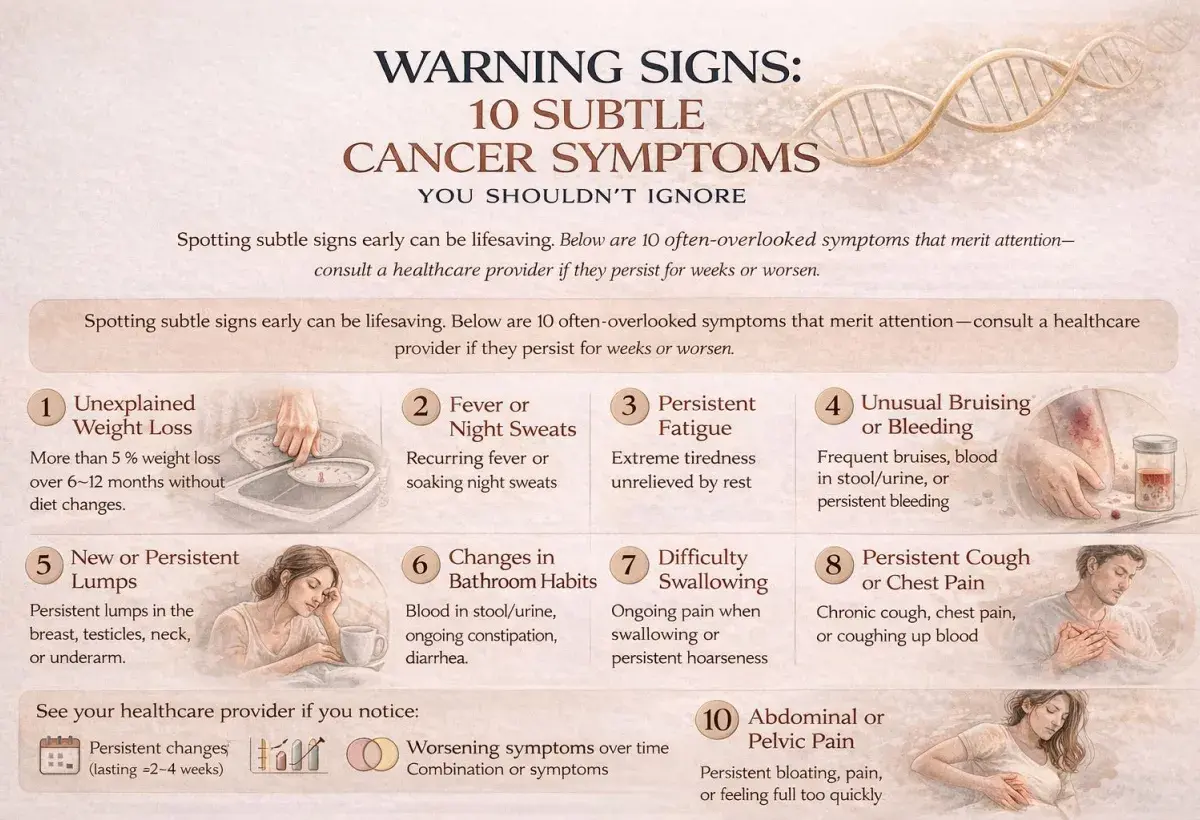
1. Unexplained Weight Loss
Unintentional weight loss is one of the most clinically significant early warning signs because it reflects a shift in how the body regulates energy. When no changes in diet or activity explain the loss, it may indicate that metabolic processes are being altered at a systemic level. Cancer cells can consume energy aggressively, disrupt normal metabolism, or suppress appetite through inflammatory signaling.
What makes this symptom particularly important is not the speed of loss, but its persistence and lack of explanation. A gradual but continuous decline in weight over several months often goes unnoticed until it becomes significant. Cancers of the pancreas, stomach, lung, and esophagus have been associated with this pattern, but the key clinical signal is not location - it is unintended change over time.
2. Persistent Fatigue
Fatigue associated with serious illness is fundamentally different from everyday tiredness. It is not resolved by sleep, and it often deepens rather than improves with rest. Individuals frequently describe it as a persistent heaviness or lack of energy that affects even simple daily tasks.
From a biological perspective, this type of fatigue may be driven by systemic inflammation, immune activation, or changes in blood composition such as anemia. It is commonly observed in blood-related cancers like leukemia and lymphoma, but also in solid tumors such as breast and colon cancer. The defining feature is not just tiredness, but fatigue that alters normal functioning and does not follow expected recovery patterns.
3. Fever or Night Sweats
Fever is often interpreted as a sign of infection, but when it occurs repeatedly without a clear source, it may reflect deeper immune system activity. Cancer-related fevers tend to be low-grade, intermittent, and persistent, making them easy to overlook or misattribute.
Night sweats add another layer of concern, particularly when they are severe enough to soak clothing or bedding. These episodes are commonly associated with blood cancers such as lymphoma and leukemia, where immune dysregulation plays a central role. The clinical significance lies not in a single episode, but in recurring patterns that do not align with typical infections.
4. Unusual Bruising or Bleeding
The body has tightly regulated mechanisms for clotting and blood vessel repair. When bruising or bleeding begins to occur more easily, more frequently, or without clear cause, it may signal disruption within these systems. This is particularly relevant in conditions affecting the blood or bone marrow.
Signs such as frequent unexplained bruises, prolonged bleeding from minor cuts, or the presence of blood in stool, urine, or sputum should not be dismissed as incidental. Blood-related cancers like leukemia can impair clotting function, while colorectal or bladder cancers may cause internal bleeding. The key concern is not isolated events, but a change in how the body responds to injury or bleeding over time.
Image

5. New or Persistent Lumps and Swellings
The discovery of a lump often triggers immediate concern, yet not all lumps are malignant. Many are benign, related to cysts, inflammation, or non-cancerous growths. What distinguishes a potentially serious lump is not its presence, but its behavior.
Lumps that persist, grow, feel hard or irregular, or do not resolve over time warrant closer evaluation. Common areas include the breast, neck (lymph nodes), testicles, and underarm. From a clinical perspective, the focus is on progression and persistence, rather than immediate alarm.
6. Changes in Bathroom Habits
Bodily routines, particularly those related to digestion and urination, tend to follow consistent patterns. When these patterns change and remain altered, it may indicate underlying disruption in gastrointestinal or urinary systems.
Persistent constipation, diarrhea, blood in stool or urine, or changes in frequency and urgency may signal colorectal, bladder, or prostate conditions. These symptoms are often overlooked because they can be attributed to diet, hydration, or temporary illness. However, the defining clinical signal is change that persists beyond normal variation.
7. Difficulty Swallowing or Persistent Hoarseness
Occasional throat irritation or voice changes are common, especially during infections. However, when swallowing becomes consistently uncomfortable or hoarseness persists beyond two to three weeks, it suggests structural or functional changes that require evaluation.
These symptoms may be associated with conditions affecting the throat, esophagus, or thyroid. The concern is not discomfort alone, but ongoing difficulty that interferes with normal communication or eating. Persistence is again the critical indicator.
8. Persistent Cough or Chest Pain
Coughing is a natural protective reflex, often linked to infections or environmental irritants. However, a cough that lingers beyond several weeks, worsens over time, or produces blood should not be dismissed particularly in individuals with risk factors such as smoking or prolonged exposure to pollutants.
Chest pain that accompanies coughing or breathing may reflect irritation or deeper respiratory involvement. Lung cancer is one possible cause, but the broader clinical principle applies: a persistent respiratory symptom that does not follow a typical recovery pattern deserves attention.
Image

9. Skin Changes or Non-Healing Sores
The skin is one of the most visible indicators of internal and external health changes. Alterations in moles, pigmentation, or the appearance of sores that do not heal may signal abnormal cellular activity.
Characteristics such as irregular borders, uneven color, or growth over time are particularly important in identifying melanoma and other skin cancers. Similarly, sores that persist without healing may reflect impaired tissue repair. The key clinical focus is change in appearance combined with lack of resolution.
10. Persistent Abdominal or Pelvic Discomfort
Discomfort in the abdominal or pelvic region is often attributed to digestion, menstrual cycles, or temporary conditions. However, when this discomfort becomes persistent, vague, and difficult to localize, it may indicate deeper issues.
Ovarian, gastrointestinal, and other internal cancers can present with subtle pressure, bloating, or ongoing discomfort rather than sharp pain. These symptoms are frequently dismissed because they are nonspecific. The critical signal is ongoing discomfort that does not resolve and gradually becomes part of daily experience.
What Matters Most: Patterns, Not Panic
A single symptom rarely defines a serious condition. What matters clinically is the pattern whether symptoms persist, worsen, or occur together. For example, fatigue combined with unexplained weight loss carries greater significance than either symptom alone.
Medical guidance consistently emphasizes observation over reaction. Awareness should not lead to fear, but to informed attention. The goal is not to diagnose, but to recognize when the body is signaling a need for evaluation.
When to Seek Medical Advice
Consultation becomes appropriate when a symptom persists beyond a few weeks, interferes with daily life, or feels distinctly different from your usual state of health. Early evaluation is not an admission of illness it is a form of proactive care.
Health systems consistently show that earlier detection improves outcomes across many conditions. The decision to seek advice should therefore be guided by change, persistence, and personal awareness, rather than fear.
Final Perspective
The purpose of understanding these warning signs is not to create anxiety, but to develop clarity. The body often communicates gradually, not urgently. Recognizing these signals requires attentiveness rather than alarm.
Early detection is rarely about dramatic symptoms. More often, it depends on noticing what has quietly changed and choosing not to ignore it.
Image
About the Author
The author is a registered nurse with both clinical and personal experience in caregiving. Guided by the belief that prevention is always better than cure, she advocates for early awareness, intentional living, and informed decision-making to reduce long-term burdens, whether in health or in life. She is also a strong believer in a natural remedy–first approach, valuing the body’s innate ability to heal when supported by proper nutrition, lifestyle, and holistic care.
Medical Disclaimer
The author is a registered nurse but not a medical doctor. This content is for informational purposes only and does not replace professional medical advice. Please consult a licensed physician for any health concerns.
References
- American Cancer Society. Signs and Symptoms of Cancer
- Mayo Clinic. Cancer: Symptoms and Causes
- NHS (UK). Signs and Symptoms of Cancer
- MD Anderson Cancer Center. Cancer Symptoms You Shouldn’t Ignore
- Johns Hopkins Medicine. Early Cancer Warning Signs
- UCSF Health. Cancer Symptoms Overview
- Cancer Research UK. Cancer Symptoms and Early Detection