
Chikicha Health Series "Before You Google Your Symptoms": Part 1 - Before You Google Your Symptoms, Read This First | Part 2 - What To Do When Something Feels Wrong | Part 3 - How to Choose the Right Doctor | Part 4 - When Is It Serious? | Part 5 - The Most Common Health Mistakes People Make Today
Framework Introduction
This article continues the Chikicha Health Series: Before You Google Your Symptoms, a framework designed to guide individuals toward structured and responsible health decisions.
Part 1 established a critical starting point: the need to pause before reacting. It highlighted how modern behavior often shifts immediately from discomfort to external searching, creating a gap between information and accurate interpretation. The key insight was clear - health decisions should not begin with assumptions, but with structured awareness.
Building from that foundation, this article addresses the next question: “Once awareness is established, how should one act correctly and responsibly?”
The Problem of Unstructured Response
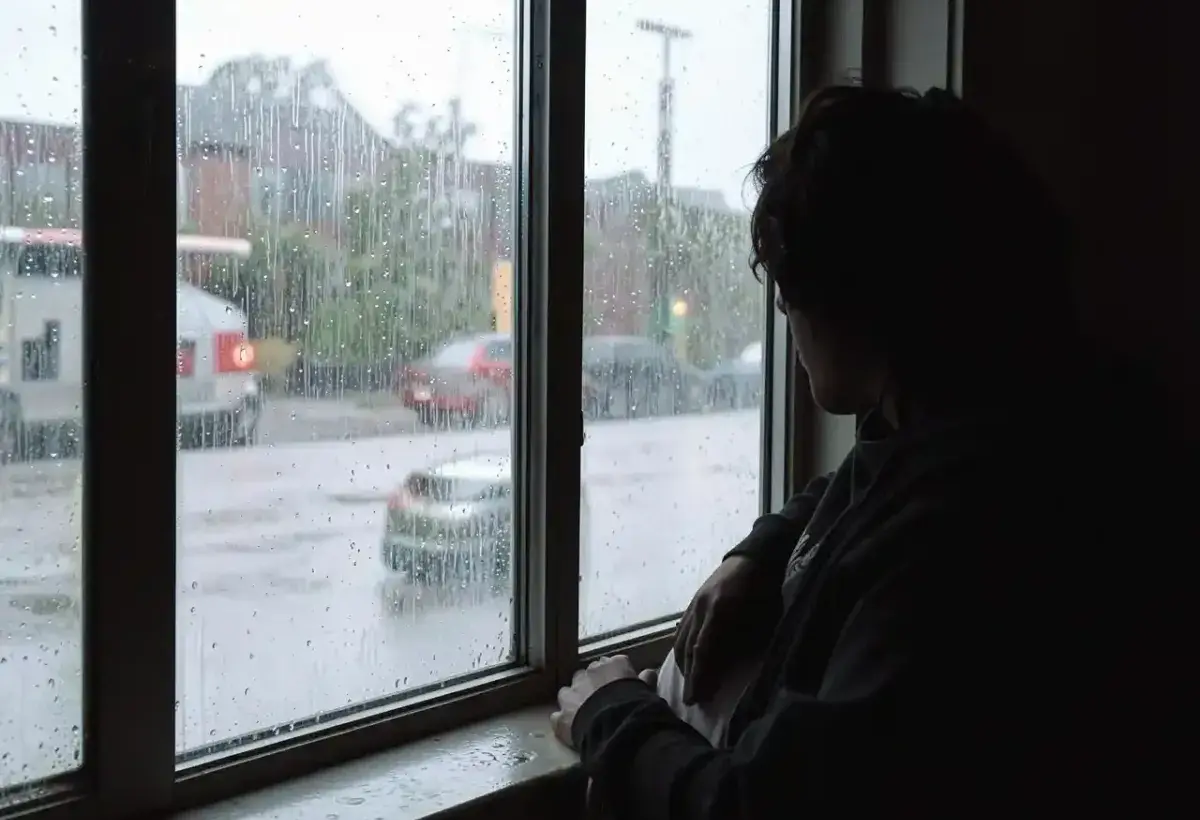
When something feels wrong, most individuals are not lacking concern. They are lacking structure. Responses tend to fall into two patterns - waiting without directio, or acting without clarity.
This movement between inaction and reaction creates uncertainty, not necessarily because the condition is complex, but because the response is unorganized.
In many cases, individuals rely on instinct, fragmented advice, or partial understanding. The same symptom may be handled differently at different times, leading to inconsistency in decision-making. In an environment where information is immediately available, the assumption is that access leads to understanding. In practice, access without structure often leads to confusion.
Where the Real Risk Lies
The risk is not simply in acting or waiting but in acting without sequence. Healthcare professionals do not rely on isolated symptoms or quick interpretation. They follow structured processes: clinical history, observation, testing, and analysis, built on years of training and governed by standards of accountability.
This distinction is critical as health is not just information. It is interpretation informed by experience, context, and responsibility. Attempts to replicate this process through fragmented information whether from digital sources or informal advice… can lead to misaligned decisions.
Recent public health discussions, including those from the World Health Organization, emphasize that decision-making in health is increasingly challenged not by lack of information, but by difficulty in navigating and applying it appropriately within an “infodemic” environment.
The issue, therefore, is not knowledge but structure in applying knowledge.
Image

The Aging Dimension: Decision Sensitivity Increases Over Time
As individuals age, health decisions require greater precision. This is not simply due to aging itself, but to increasing complexity:
- multiple coexisting conditions
- overlapping symptoms
- varying responses to interventions
The National Institute on Aging highlights that older adults are more likely to experience multimorbidity, where conditions interact and influence one another. This makes isolated interpretation more difficult and increases the importance of well-sequenced responses.
At the same time, global access to information continues to expand, as reported by the International Telecommunication Union. This creates a modern condition where individuals are exposed to more health information than ever before, without a corresponding increase in interpretive capacity.
For aging individuals, families, and care institutions, this is not a minor concern. It is a decision-quality issue with real consequences.
The Chikicha Method (Applied Structure)
To address this, the Chikicha Method provides a clear sequence:
Observe → Record → Support → Consult (ORSC)
This framework is not designed to replace professional care. It is designed to prepare individuals to engage with it properly.
1. Observe: Establish Clarity Without Interpretation
Not every discomfort is urgent, but no signal should be ignored without attention. Observation begins with a disciplined effort to establish clarity without immediately interpreting what is felt. Not every discomfort signals urgency, yet no signal from the body should be dismissed without attention.
The task at this stage is to identify the experience as it is “what is actually being felt', while carefully separating sensation from assumption. This distinction is essential. By resisting the impulse to label or conclude too early, observation restores accuracy at the starting point, allowing the situation to be understood before any form of action is considered.
2. Record: Transform Experience Into Usable Information
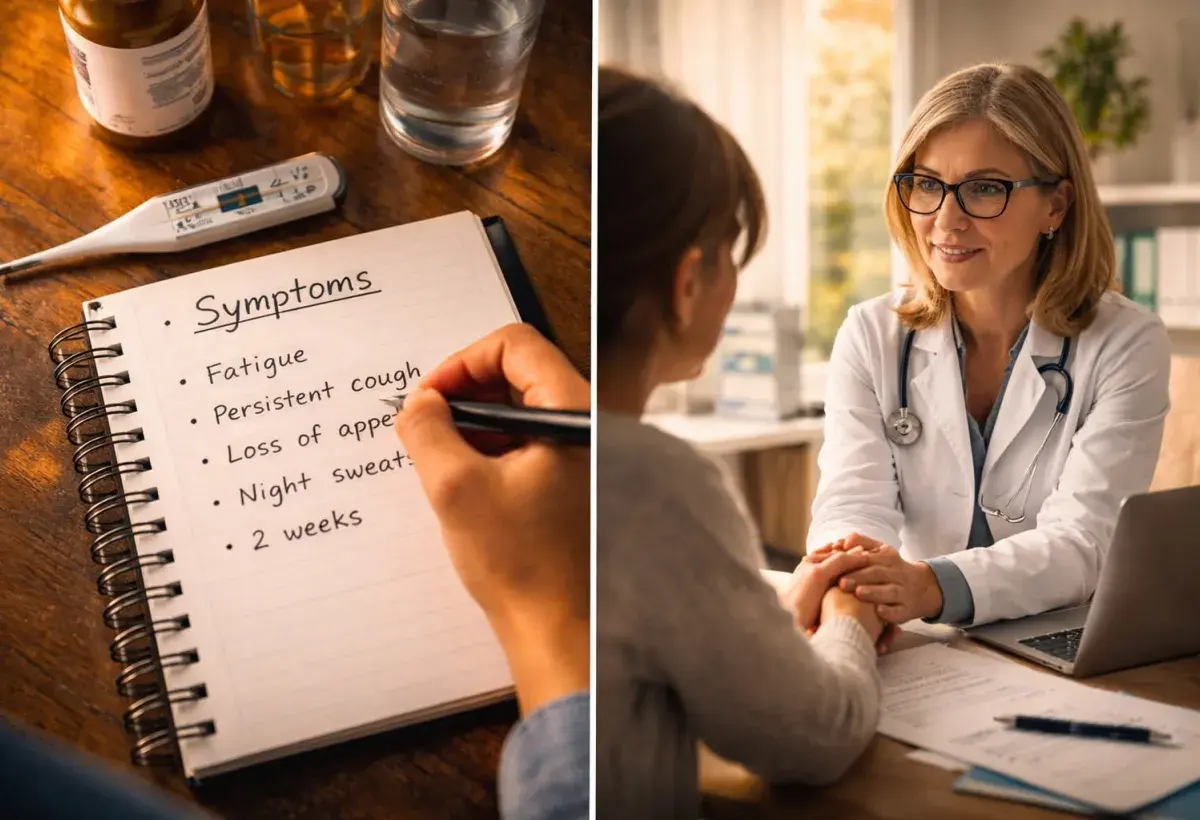
What is vague becomes useful when it is documented becasue recording transforms experience into usable information. What initially feels vague or uncertain becomes clearer when it is documented with intention. By putting observations into writing, patterns begin to emerge and details that might otherwise be overlooked are preserved.
This process creates continuity, allowing changes to be tracked over time. It brings clarity by organizing scattered impressions into a coherent picture, and it improves the reliability of information, particularly when that information is later shared with a healthcare professional.
And what may seem minor to an individual may be critical to a healthcare professional. A structured record reduces guesswork and supports more accurate evaluation.
Use this simple guide to organize your observations before consulting a professional. Bring this record when consulting a healthcare professional for a more accurate assessment.
Chikicha Personal Health Tracker
| Category |
Details |
| Date symptom started | |
| Description of symptom | |
| Duration (days) | |
| Intensity (1–10) | |
| Frequency (constant/intermittent) | |
| Sleep quality | |
| Appetite changes | |
| Mood/emotional state | |
| Weight changes | |
| Bowel/digestion changes | |
| Food intake (last 3 days) | |
| Stress level | |
| Actions taken (rest, diet, etc.) | |
| Changes observed |
3. Support: Stabilize Before Interpreting
Before conclusions are formed, the body should be supported through fundamental measures which is not a a treatment but stabilizationand preparation Eat clean, natural food, vegetables, fruits, whole nourishment. Try to reduce processed intake, even temporarily. Hydrate properly and allow the body to rest, then observe again. Sometimes the body responds quickly and sometimes it does not, but either way, you gain something important: A clearer understanding of your condition.
4. Consult: Transition to Professional Evaluation
Consultation is not a last resort but a critical step in responsible action. Professional evaluation becomes necessary if the condition persists beyond a few days, worsens over time, affects your daily function, or presents unusual or concerning symptoms, then it is time to consult a healthcare professional.
Seek the right specialist based on your concern, and when you do, come prepared. Not with assumptions but with observation and records, this is a responsible action, and this allows for better assessment, better decisions, and better outcomes. Arriving with observation and records improves:
- assessment quality
- diagnostic accuracy
- decision outcomes
This is not passive reliance. It is informed engagement.
Image
A Necessary Mindset Shift
A fundamental shift is required:
Your role is not to diagnose.
Your role is to observe, prepare, and act responsibly.
In modern environments, individuals are conditioned to seek immediate answers. The moment discomfort arises, the mind begins to compare, interpret, and conclude. A possibility is formed with a belief: “I think I know what this is.”
Recognition is often mistaken for understanding, yet the two are fundamentally different. The body does not function as a simple or linear system; it does not reveal complete information at once, nor does it respond predictably to assumption. What is immediately perceived is only a fragment, not the full picture.
For this reason, true understanding cannot be rushed. It develops through patience, through a structured process, and through a clear recognition of one’s limits in interpreting what is being experienced. Without these, what appears to be confidence may simply rest on incomplete understanding. And when confidence is not grounded in proper comprehension, it does not empower… it introduces risk.
Conclusion: The Discipline of Acting Correctly
Peace of mind does not come from guessing but from knowing that you are responding correctly. Health is not an area for experimentation. It requires structure, discipline, and respect for the body and for the expertise required to understand it.
The most effective response is not complexity. It is returning to the fundamentals:
Observe clearly
Record accurately
Support appropriately
Consult responsibly
This is not merely a method but a valuable standard of behavior. As this structure becomes established, a more refined challenge emerges:
If action must be structured, how do we determine which advice to trust - especially when it comes from people around us?
This becomes the focus of the next discussion.
Image
About the Author:
Written by Dr. Mariza Lendez, the developer of the Ikigai-Bayanihan Purpose-Driven Retirement Framework, a model that redefines aging through purpose, dignity, and community-centered living.
Suggested Citation: Lendez, M. (2026). Chikicha Health Series: What To Do When Something Feels Wrong (Part 2). Developer of the Ikigai-Bayanihan Purpose-Driven Retirement Framework and the Chikicha Decision Framework.
Chikicha Health Series "Before You Google Your Symptoms"
👉 Part 1 - Before You Google Your Symptoms, Read This First
👉 Part 2 - What To Do When Something Feels Wrong
👉 Part 3 - How to Choose the Right Doctor
👉 Part 4 - When Is It Serious?
👉 Part 5 - The Most Common Health Mistakes People Make Today
Disclaimer
The author is not a medical practitioner, and this article does not provide medical advice, diagnosis, or treatment. Its purpose is to offer guidance on how individuals may thoughtfully process and respond to their health concerns through observation, preparation, and responsible decision-making. Any symptoms or conditions should always be evaluated by a qualified healthcare professional.
This article is inspired by a personal experience involving a colleague who chose to rely on self-diagnosis, after which contact was lost. It is shared not as a clinical account, but as a reflection on the importance of seeking proper medical care and respecting the expertise of trained professionals.
References
White, R. W., & Horvitz, E. (2009). Cyberchondria: Studies of the escalation of medical concerns in web search.
Starcevic, V., & Berle, D. (2020). Cyberchondria: Toward a better understanding of excessive health-related internet use. Current Psychiatry Reports.
World Health Organization. (2020). Managing the COVID-19 infodemic: Promoting healthy behaviours and mitigating the harm from misinformation and disinformation.
World Health Organization. (2016). Multimorbidity: Technical series on safer primary care.
International Telecommunication Union. (2023). Facts and figures.