


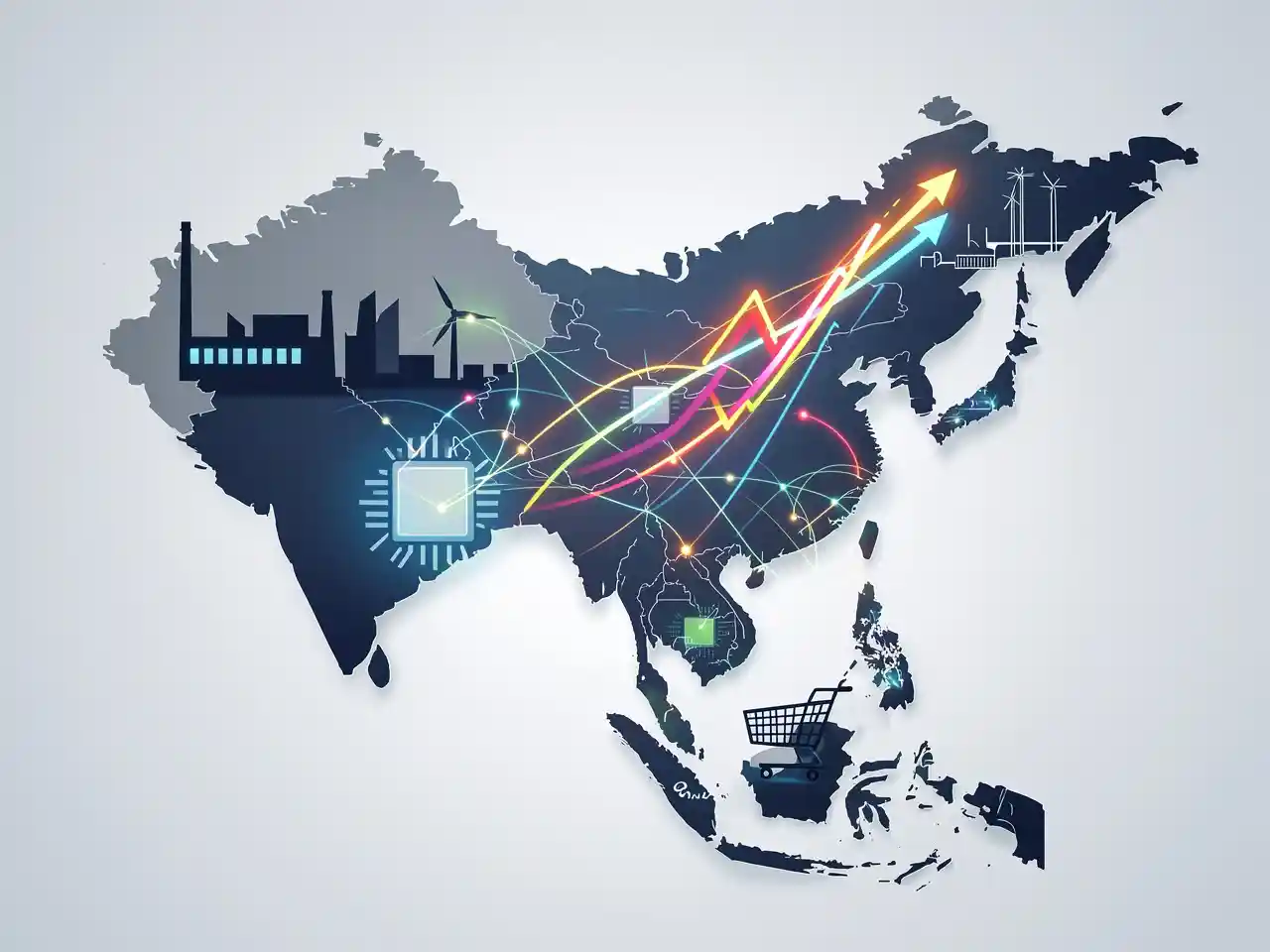
Asia: From Factory to Global Economic Powerhouse
Asia is no longer merely the world’s factory. It is rapidly ascending as the primary engine of global economic growth. According to the International Monetary Fund, by 2027 the region will contribute more than fifty percent of global GDP expansion. This growth is fueled by massive consumer markets, technological innovation, industrial diversification, and financial dynamism. The continent’s rise is neither uniform nor predictable. It is a mosaic of established leaders, rising giants, and unexpected high-growth economies that collectively define the future of global commerce.
The Established Powerhouses
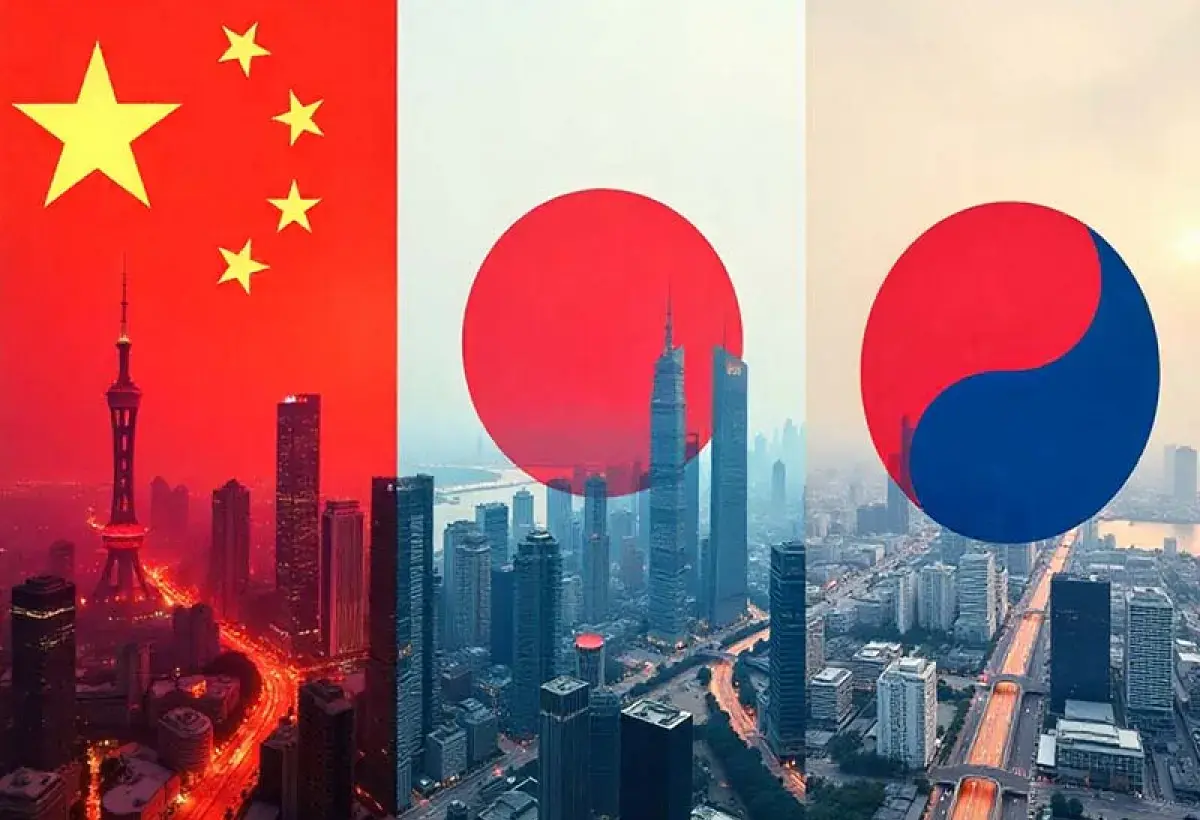
Asia’s economic dominance is anchored by a triad of established powerhouses: China, Japan, and South Korea. Each plays a unique but complementary role in sustaining regional growth and global influence.
China, as the largest economy in Asia with a GDP exceeding eighteen trillion dollars, remains the bedrock of global supply chains. Its industrial and technological prowess spans manufacturing, AI, electric vehicles, and green energy. China is increasingly shifting from export-led growth to domestic consumption and innovation-driven strategies, solidifying its role as a global leader.
Japan continues to be a bastion of innovation and stability. With a GDP of four point two trillion dollars, it leads in robotics, semiconductors, and precision manufacturing. While its aging population presents demographic challenges, Japan remains a major investor in Southeast Asia and a stabilizing force in global markets.
South Korea is a technological and cultural powerhouse, dominating semiconductor production and global pop culture. Giants such as Samsung and Hyundai exemplify its industrial strength, while the global popularity of K-pop demonstrates its soft power. South Korea is also advancing in AI, biotechnology, and renewable energy, ensuring its enduring relevance.
Together, these three nations provide Asia with a foundation of scale, innovation, and dynamic export capability, forming a resilient and multifaceted backbone of the regional economy.
Image
The Rising Tigers
Beyond the established giants, a new generation of high-growth economies is emerging. Known as the Rising Tigers, these nations are growing at rates above five percent annually, poised to become the next pillars of Asia’s global influence.
India leads this cohort as the world’s fastest-growing major economy. Its growth is fueled by a youthful population, a thriving technology sector, and domestic consumption. Companies like Tata, Infosys, Flipkart, and Paytm exemplify its innovation ecosystem. By 2030, India is projected to surpass Japan and Germany in economic size, asserting its position as a global powerhouse.
Indonesia is awakening as Southeast Asia’s sleeping giant. With a GDP of one point four trillion dollars, it leverages rich natural resources and an expanding digital economy. Indonesia is a critical supplier of nickel for EV batteries, and its tech ecosystem, led by firms like Gojek and Tokopedia, is rapidly maturing. The nation is strategically climbing the manufacturing value chain, capturing more complex production opportunities.
Vietnam is establishing itself as the new global manufacturing hub. It attracts record foreign direct investment from global tech leaders including Apple, Samsung, and Intel. Vietnam’s robust annual GDP growth of six to seven percent positions it as the "China plus one" alternative for global companies seeking diversified supply chains.
Together, India, Indonesia, and Vietnam exemplify Asia’s dynamic future, leveraging demographic strength, industrial expansion, and technological adoption to secure their roles as the next economic leaders.
Image
The Dark Horses: Emerging High-Growth Economies
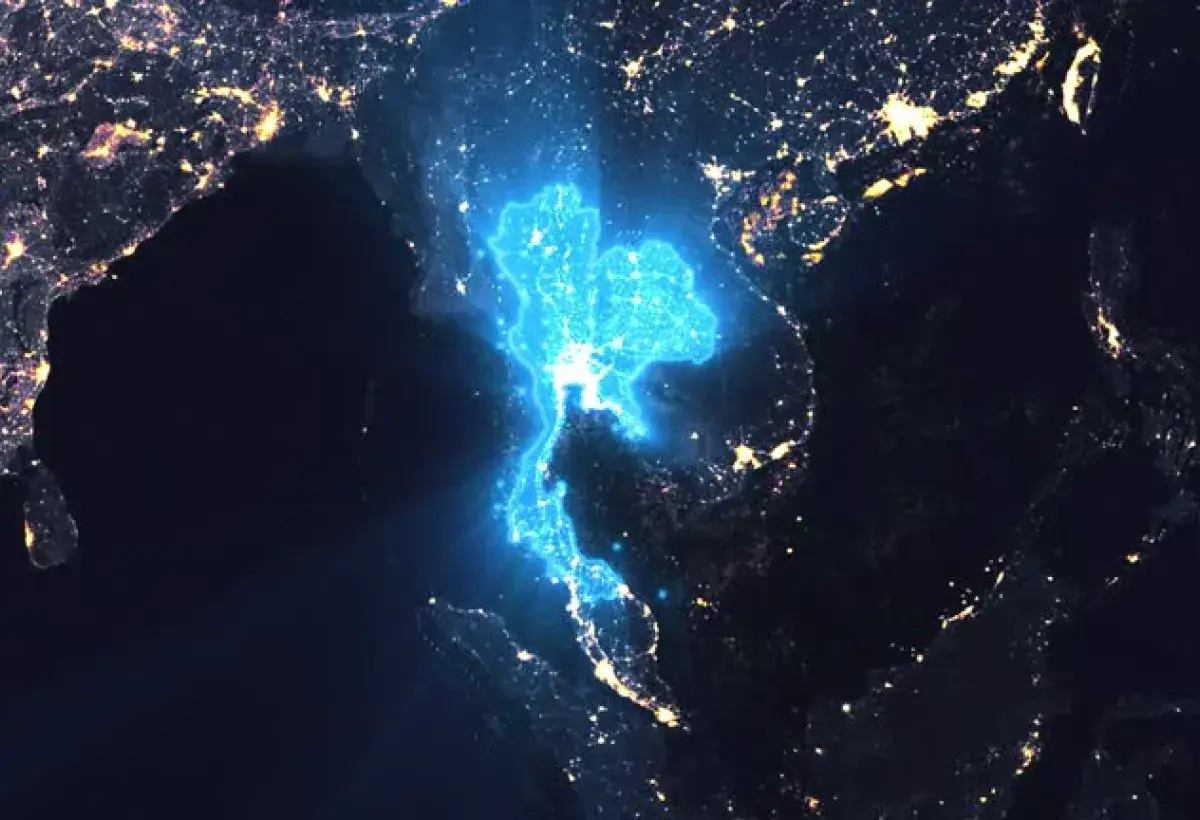
Some nations are rising unexpectedly, demonstrating transformative potential. These Dark Horses are reshaping regional economic possibilities.
The Philippines is the global leader in business process outsourcing, generating thirty-five billion dollars annually. Its digital economy, including fintech and cryptocurrency adoption, is expanding rapidly. Infrastructure development under the "Build Better More" program supports sustainable economic growth.
Bangladesh is transitioning from a garment-based economy to a tech-driven future. While continuing to export garments valued at forty-five billion dollars annually, it is embracing IT and software outsourcing and expanding digital financial inclusion. GDP growth consistently exceeds six percent, positioning Bangladesh as a model of industrial and digital transition.
Cambodia is emerging as ASEAN’s newest manufacturing hub. Moving beyond textiles, it is integrating auto parts and electronics assembly. Strong foreign investment, particularly from China, is accelerating industrialization and connectivity. GDP growth of six point five percent underscores its rising economic significance.
Together, the Philippines, Bangladesh, and Cambodia demonstrate that economic success is not only a function of size but also strategy, adaptability, and innovation.
Image

Integration, Innovation, and Challenges
Asia’s economic ascent is unified by three critical trends: the digital economy, supply chain rebalancing, and green energy transitions. E-commerce and fintech innovations are reshaping markets while financial connectivity across borders strengthens regional integration. Supply chains are diversifying away from over-reliance on China, with India, Vietnam, and Thailand becoming critical nodes. Renewable energy, particularly solar, wind, and EV-related metals, is emerging as a strategic driver of growth.
Yet, the path forward faces challenges. Geopolitical tensions, aging populations, and widening income inequality threaten to disrupt growth trajectories. Japan, South Korea, and increasingly China must manage demographic contraction, while inclusive policies are required to ensure benefits of growth are shared equitably.
Asia is no longer merely a region of manufacturing and production. Its economic landscape is a vibrant ecosystem of scale, innovation, youthful dynamism, and emerging ingenuity. From the established giants to the rising tigers and unexpected dark horses, Asia is redefining global economic power.
Understanding the trajectories of these economies is essential for business, policy, and international relations. The continent is simultaneously a driver of growth, a hub of innovation, and a testing ground for addressing the challenges of the twenty-first century. Asia’s rise is global in impact, shaping the future of trade, finance, technology, and society itself.
Image

Author's Note
This article, “Asia's Economic Ascent: The Powerhouses, Tigers, and Dark Horses Shaping the Future," is an original work based on verified data, peer-reviewed literature, and insights from national and global agencies and with the help of AI for deep research.
Disclaimer
This article is for informational purposes only. It does not promote or sell investments. Insights are based on independent research and verified sources including the IMF, World Bank, ASEAN reports, and the Bangko Sentral ng Pilipinas.
References
-
International Monetary Fund. 2024. World Economic Outlook 2024.
-
World Bank. 2024. East Asia & Pacific Economic Update 2024.
-
Asian Development Bank. 2023. ASEAN Economic Integration Report.
-
Bangko Sentral ng Pilipinas. 2024. Fintech and Digital Banking Data.