


Series 3 of 5: “The Eternal Quest for Happiness & Its Beautiful Lies”
When Stillness Becomes a Cage
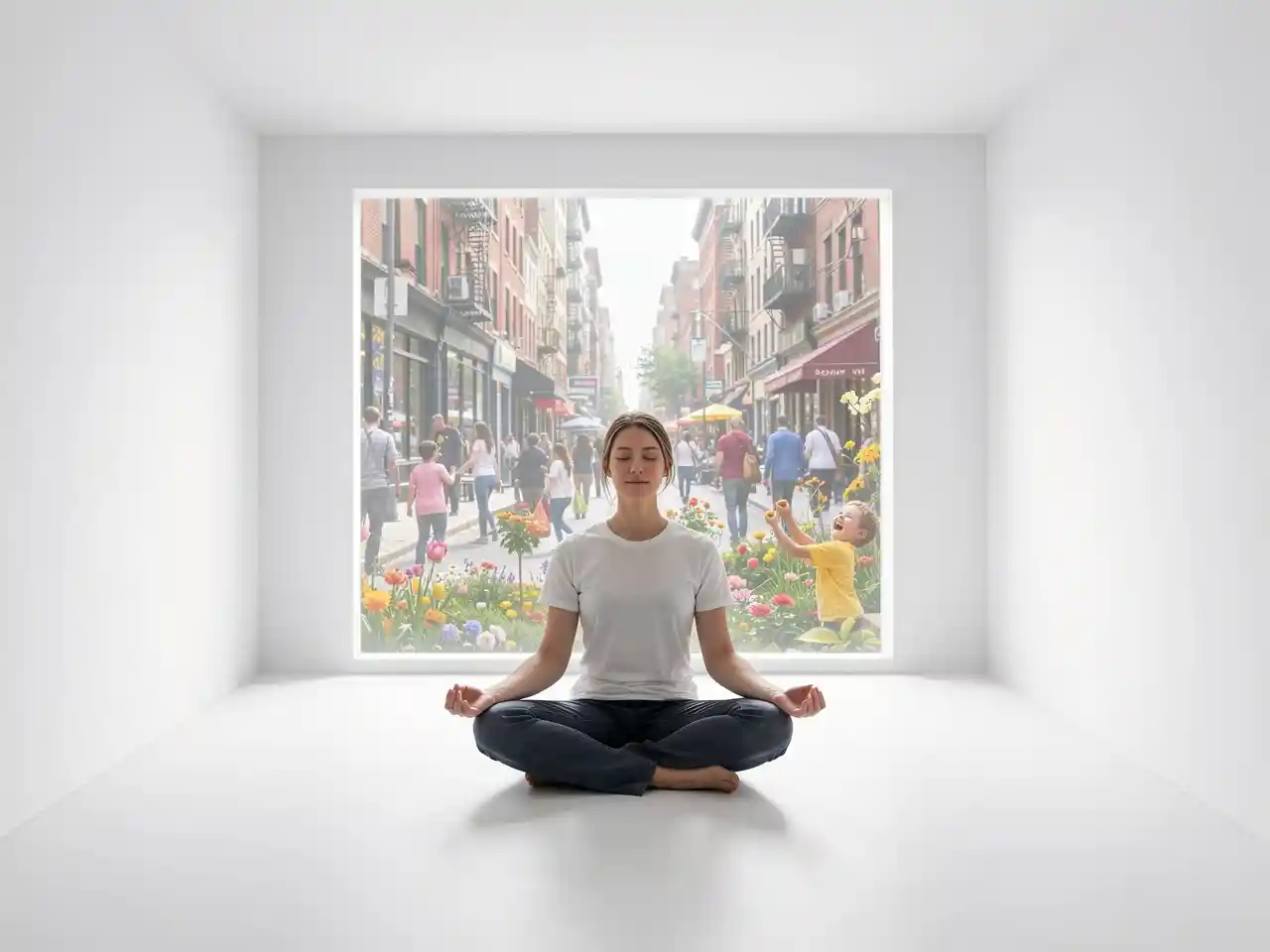
You have done a thousand hours of meditation. You can observe your thoughts like a detached monk. You can watch fear, joy, anger, and longing pass through your awareness without clinging or resisting. Yet, even after all this, you may still feel like a ghost in your own life. The problem is not that mindfulness has failed you. The problem is that the version you were sold might be incomplete. Somewhere along the way, stillness stopped being a bridge back into life and became a substitute for it.
In a world obsessed with inner peace, few dare to ask: What if peace without purpose is simply another form of exile?
The Mindfulness Industrial Complex
Mindfulness has become one of the most profitable forms of spirituality in modern culture. It is marketed as a universal cure for stress, burnout, and anxiety. There are apps, online courses, retreats, and influencer coaches promising instant serenity. The slogans are everywhere: Five minutes a day to a calmer you. Unlock your true self. Find lasting happiness.
But behind the soothing voices and tranquil background music lies a hard truth: stillness, when stripped of depth, can turn into avoidance.
A 2024 study in the Journal of Consciousness Studies revealed that 41% of long-term meditators experienced heightened dissociation, describing a loss of connection with their emotions, bodies, or daily lives. What begins as “observing without attachment” can evolve into emotional detachment so severe that nothing feels meaningful. The very skill designed to bring us closer to reality can, without integration, turn us into spectators of our own existence.
This is not accidental. The commercialization of mindfulness often teaches people to treat presence as a product. It becomes a consumable promise rather than a practice of integration. You are told to “sit with discomfort,” but rarely asked to take action about the circumstances creating it. Presence becomes a placebo, not a pathway.
Image

The Presence Trap
Neuroscience supports what many practitioners have quietly discovered. fMRI scans show that advanced meditators can suppress emotional processing in ways that mimic emotional numbing. While this skill can help in moments of crisis, it can also dull the natural motivational energy that drives us to connect, create, and care.
Worse still, a subtle sense of spiritual superiority can form. Detachment becomes armor. In interviews with former monks, some admitted that their practice of “non-attachment” was, in truth, a fear of intimacy and failure. “I told myself I had transcended worldly desires,” one said, “but really, I was just afraid to feel alive.”
This is the Presence Trap: mistaking inner calm for a complete life. Sitting in awareness is not the same as living with awareness. Observing your breath is not the same as breathing with intention. Detachment is not belonging.
Antidote: Embodied Purpose
The answer is not to abandon mindfulness but to reimagine it. Awareness should be the foundation upon which life is built, not the sanctuary where we hide from it.
Consider the story of a former tech executive who spent years attending silent retreats. He meditated twelve hours a day and reached states of deep stillness. Yet one afternoon, he confessed, “I am peaceful, but my life is empty.” He left the retreat circuit, volunteered at a local shelter, and later founded a nonprofit that builds transitional housing across five cities. His reflection was simple: “You cannot meditate your way out of a life you dislike.”
Purpose does not have to be grand. It might mean nurturing someone, building something, protecting what matters, or learning something new. Meaning arises not from detachment but from deliberate connection. Awareness becomes powerful only when it is embodied in action.
A Closing Challenge
Try this simple experiment. For one week, replace half of your meditation time with activities that align with what you value most. Volunteer, create art, mend something broken, or spend uninterrupted time with someone you love. Then observe how your inner world changes.
Clarity is not the absence of thought. It is the alignment of thought, emotion, and purpose. Mindfulness is the soil. Purpose is the seed. Without planting, all you have is an empty garden.
You do not have to choose between peace and participation. The quiet mind you have cultivated is not a retirement home for your spirit; it is a launchpad. But launching requires courage. It means feeling again—allowing yourself to be moved by joy, pain, and beauty.
Purpose lives in the act of engagement. The next time you sit in silence, ask yourself: What am I preparing for? And when the answer comes, even if it frightens you, rise and live it. The goal was never to merely observe the world breathe. The goal was always to join it.
Image

Author’s Note
This article is an original work published under Clarity Edited, written by the Clarity Edited Team at chikicha.com with the support of AI-assisted research and editing tools. This piece combines human reflection and insight. While AI helped refine clarity and coherence, the message, tone, and ideas remain fully human-directed.