



The digital economy is no longer just a backdrop for business; it is the primary driver of growth, innovation, and global connectivity. Portals and platforms now serve as the central gateways through which consumers, enterprises, and developers interact. Understanding how these digital gateways operate, scale, and monetize is essential for businesses that want to thrive in an increasingly competitive and technologically driven environment.
This report provides an in-depth, data-driven examination of the dominant portals and platforms across the globe, revealing how their business models, technological evolution, and regional strategies position them for long-term success. The insights presented here are actionable for IT teams, business process outsourcing providers, and investors aiming to make informed decisions in the evolving digital landscape.
The global portal and platform market is projected to reach $7.8 trillion by 2027, according to Statista 2023. This growth is fueled by rapid adoption of digital services, integration of artificial intelligence, and innovative platform business models.
Key areas analyzed in this report include:
-
Business Models: How platforms generate revenue through advertising, transactions, and hybrid software-as-a-service models.
-
Regional Leaders: How Asia’s super apps compare with Western SaaS giants, highlighting global market dynamics.
-
Emerging Threats and Opportunities: How artificial intelligence, blockchain, and regulatory shifts are reshaping competition and market strategies.
By examining these factors, businesses and investors can position themselves to take advantage of the opportunities created by the global digital platform ecosystem.
Business Model Breakdown
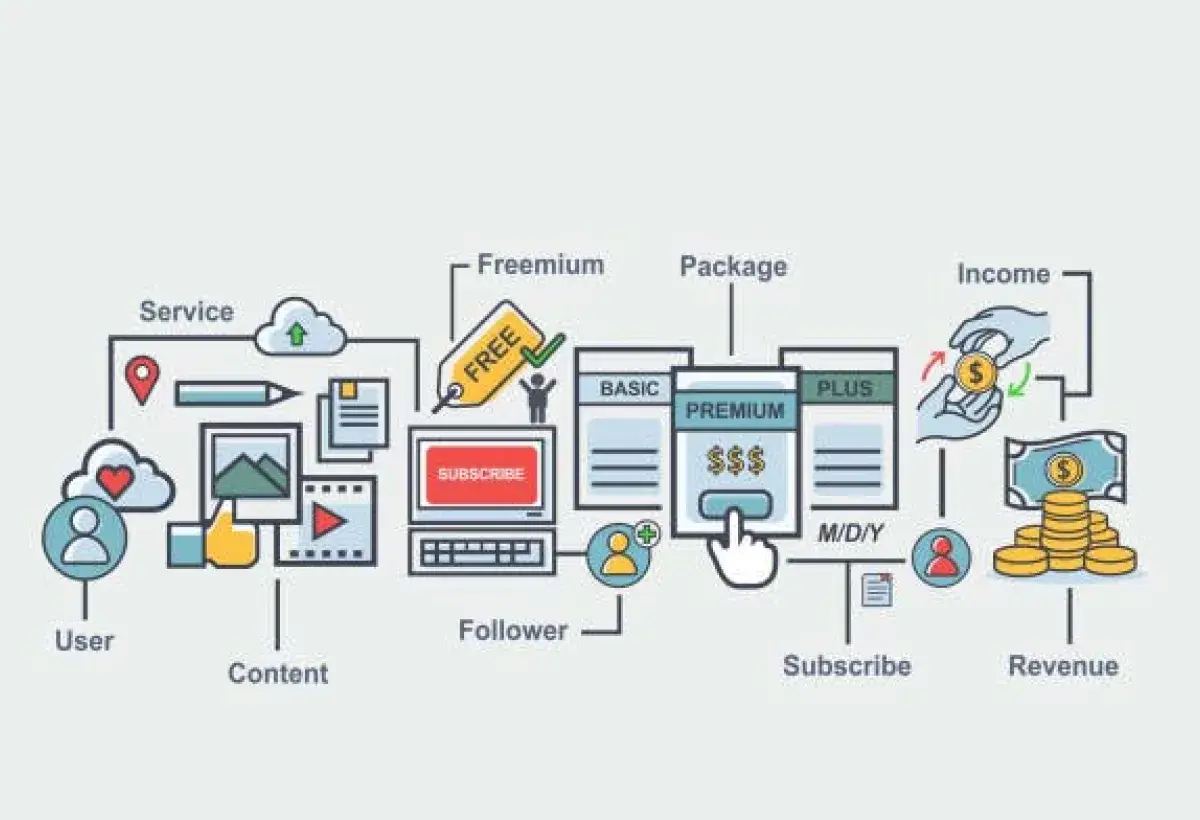
Digital platforms generally rely on three primary business models: advertising-driven, transaction-based, and hybrid SaaS. Each model reflects a distinct approach to revenue generation, user engagement, and scalability.
Advertising-Driven Models
Advertising remains one of the most powerful revenue engines for global platforms. Google, for example, generates 81 percent of Alphabet’s total revenue through its advertising networks, according to the Alphabet FY2023 report. With global digital ad spend projected to reach $4.8 trillion by 2026, platforms that can leverage user data for targeted advertising are positioned for extraordinary growth.
The strength of advertising-driven models lies in their ability to scale without significantly increasing marginal costs. Platforms can monetize attention and engagement at unprecedented levels, creating a self-reinforcing ecosystem where user activity directly translates into revenue. Beyond Google, social media networks, video streaming portals, and search engines continue to refine algorithms to maximize both engagement and monetization.
Transaction-Based Models
Transaction-based platforms generate revenue primarily through facilitating sales or services, often by charging fees or commissions. Amazon’s third-party marketplace, for instance, maintains an average take rate of 19.5 percent, according to Marketplace Pulse 2024. This model has expanded beyond retail, influencing sectors like food delivery, travel booking, and freelance marketplaces.
Business process outsourcing (BPO) plays a critical role in supporting transaction-based platforms. According to Gartner, 63 percent of customer service operations now handle platform disputes, ensuring efficiency while allowing platforms to scale globally without overwhelming in-house support teams. This operational backbone is vital for transaction-based platforms, which rely on consistent customer experience and trust to maintain high transaction volumes.
Hybrid SaaS Models
Hybrid SaaS platforms combine subscription revenue with transactional elements, often providing a recurring revenue stream alongside flexible service offerings. Adobe provides a prime example. By transitioning from traditional software licensing to Creative Cloud, Adobe now achieves 90 percent recurring revenue, ensuring financial stability while adapting to evolving customer needs.
Hybrid SaaS models allow platforms to maintain predictable cash flows while offering additional services that drive growth. This approach is particularly advantageous in industries where continuous innovation is necessary, such as productivity software, creative tools, and cloud-based solutions.
Image
Regional Power Players
Different regions have developed unique platform ecosystems, reflecting local market conditions, consumer behavior, and technological infrastructure.
| Region | Top Platform | Key Strength | Revenue Driver |
| North America | Meta | Social graph dominance | $134B ad revenue (2023) |
| Asia | Tencent (WeChat) | Super app penetration | $86B fintech GMW (Bernstein) |
| Europe | Spotify | Audio SaaS pivot | 236M subscribers (Q1 2024) |
In Asia, super apps like WeChat dominate by integrating social networking, e-commerce, payments, and lifestyle services into a single platform. Western SaaS giants, by contrast, specialize in productivity, creative, and entertainment tools.
Business process outsourcing continues to play a vital role in global platform operations. For example, Manila-based support teams now handle 40 percent of Spotify’s user queries, demonstrating how global operations are interwoven with digital service delivery. These regional differences illustrate that successful platforms adapt to local market needs while leveraging global technological advancements.
Technology Stack Evolution
Platforms must continuously evolve technologically to maintain competitiveness. Two areas are particularly transformative: artificial intelligence and blockchain.
Artificial Intelligence Integration
AI has become a critical driver of operational efficiency and customer experience. Alibaba, for instance, reduced customer service costs by 30 percent after integrating ChatGPT-based AI solutions, according to TechCrunch 2024. AI is now widely used for content moderation, personalized recommendations, automated support, and predictive analytics. McKinsey reports that 78 percent of platforms currently leverage AI in at least one core operational area.
AI not only improves operational efficiency but also enhances the user experience by providing faster, more personalized service. Platforms that fail to adopt AI risk losing competitive edge as customer expectations continue to rise.
Blockchain Experiments
Blockchain technology is being explored for credential verification, digital asset management, and secure transactions. LinkedIn issued 500,000 credential verification NFTs in 2023, enabling verified professional achievements on a tamper-proof blockchain. Such experiments highlight the potential for blockchain to enhance trust and transparency across digital ecosystems.
Blockchain can also support new monetization strategies, including tokenized rewards, secure digital identities, and decentralized marketplaces, creating opportunities for platforms to diversify revenue streams while improving user engagement.
Strategic Recommendations
-
For IT Teams: Focus on seamless API integrations with dominant platforms like Shopify, Salesforce, and other cloud solutions to ensure interoperability and scalability.
-
For BPO Providers: Invest in AI-augmented platform support through advanced certifications in tools such as Zendesk and Freshdesk, enabling teams to manage complex customer interactions efficiently.
-
For Investors: Seek out niche SaaS opportunities in emerging markets, particularly in Southeast Asia and Latin America, where digital adoption is accelerating rapidly.
Platforms are more than tools or services. They have become the infrastructure of modern economies. Businesses that understand platform mechanics, technological innovations, and regional strategies are best positioned to succeed in this dynamic landscape.
Image

Final Thought
"Platforms do not merely disrupt industries. They become the infrastructure of the global economy." Those who anticipate platform evolution, leverage emerging technologies, and integrate region-specific strategies will not only survive but thrive in the future digital ecosystem.
Citations and Sources
-
Market Size: Statista Digital Economy Compass, 2023
-
Advertising Trends: Insider Intelligence, "Global Ad Spend Forecast"
-
BPO Data: Everest Group, CX Outsourcing Analysis, 2024
-
AI Impact: MIT Sloan Management Review, March 2024
-
Other References: Alphabet FY2023 Report, Marketplace Pulse 2024, TechCrunch 2024, Bernstein 2023, McKinsey Platform Analysis 2024