


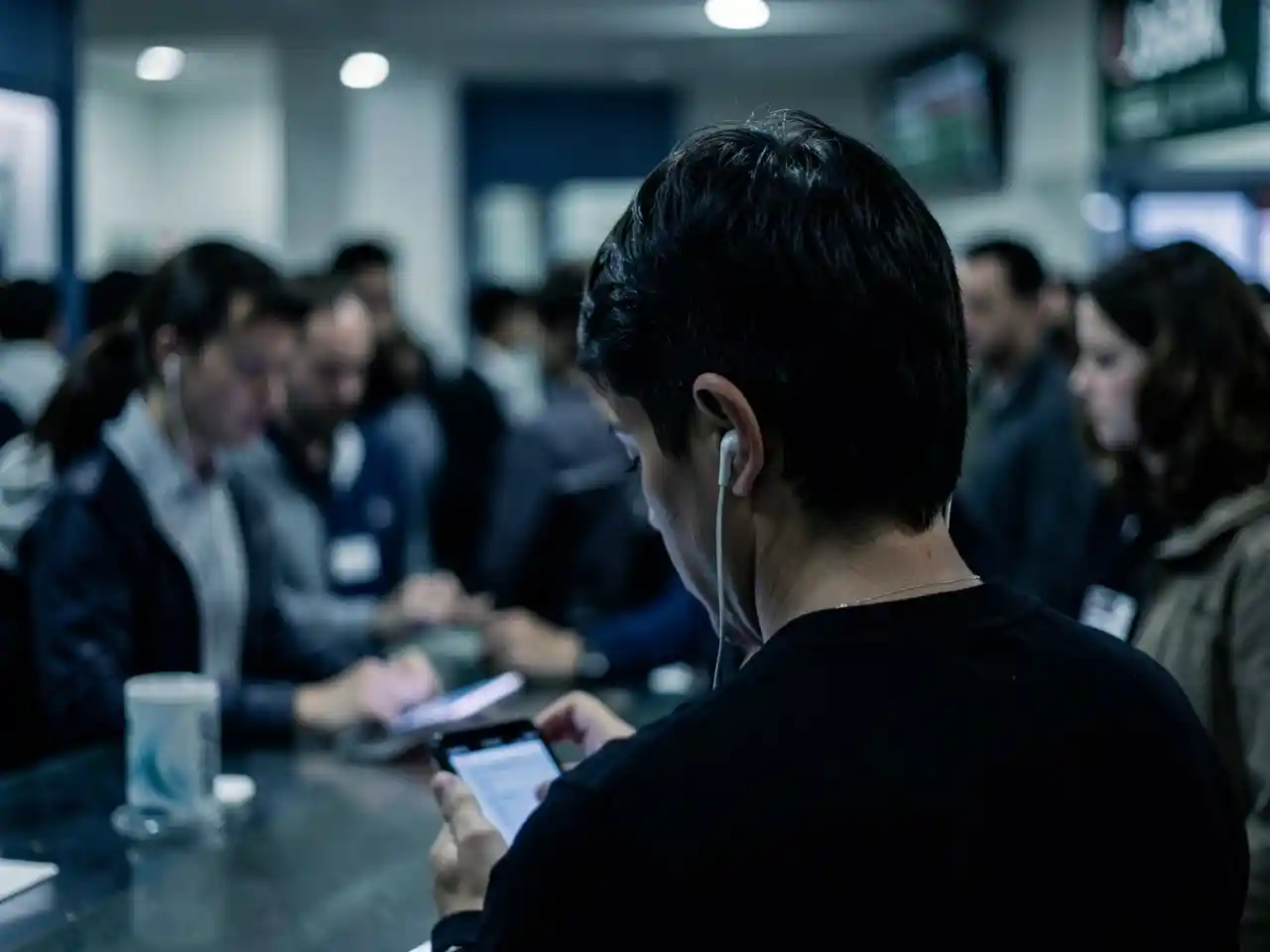
This is the first part of a five-part series titled Human Connection in Decline, a reflection on how technology is making real-life presence invisible. Are we losing our ability to connect face to face? What is truly at stake in the age of earbuds and digital priority?
There was a time not too long ago when a simple greeting meant something.
A smile at the entrance of the gym, a quick thank you, or a goodnight to the receptionist was more than just politeness. It was a small act of connection, a subtle but powerful way of saying, I see you. You matter.
But today, that smile is often met with silence. A nod, if you are lucky. Most of the time, it is ignored, not because people are rude, but because they are plugged in. Literally.
With earbuds in and eyes fixed on screens, many are no longer fully present. The voice in their ears, the podcast, the playlist, the remote call, has replaced the voice right in front of them.
This disconnect goes deeper than simple technology use. Studies have shown a steady decline in face-to-face communication, even among close friends and family members. A 2023 Pew Research study revealed that more than 60 percent of adults under 35 now prefer to message instead of talk, even when the person is right beside them. Add to that the growing workplace culture where remote clients or virtual meetings take priority over those physically present, and we begin to see a troubling shift. Proximity no longer equals priority.
The Moment That Says It All
Picture a small customer service counter. A man, after waiting in line for nearly half an hour, finally speaks up. “Miss, there are six of us here. We traveled. We waited. That caller is at home. What would you feel if you were in our shoes?”
It was not anger. It was a plea, a reminder that the person standing in front of you deserves the same respect as the one on the phone. That moment captured what so many quietly feel, being unseen in a world that constantly looks down.
Why Human Presence Still Matters
Humans are wired for connection. Neuroscience has proven that our brains contain mirror neurons that activate when we are in the presence of another person. These neurons help us empathize, build trust, and read subtle emotional cues. That is something a text message, an emoji, or even a video call can never fully replace.
Face-to-face interaction builds social understanding in ways no digital tool can. The tone of voice, the flicker of expression, the shared silence, all of it shapes the invisible language of empathy. When we lose that, we lose part of what makes us human.
In the past, people would walk miles just to meet someone, to hold a real conversation, to feel another person’s presence. We used to chase connection. Now, many avoid it. We have become connected through technology but increasingly disconnected from one another.
The Cost of Convenience
Convenience has come at a quiet price. We order food without speaking to anyone. We pay bills without seeing a face. We even build relationships that exist entirely in message threads. The more we depend on digital shortcuts, the more we forget the warmth of real human contact.
When every human interaction becomes optional, empathy fades. The habit of seeing others as whole, feeling beings begins to erode. Without realizing it, we start treating people as background noise until someone finally says, Can you see me?
Reclaiming Human Connection
This is not about nostalgia or etiquette. It is about preserving our humanity.
The next time someone greets you at the gym, look up. Smile. Say something. When you stand in line and the person behind the counter is there to help you, acknowledge them. Speak to them. Be present.
Because if we stop valuing the person standing in front of us, we risk losing the very essence of being human. The cure to invisibility is simple awareness, the willingness to see and be seen again.
Image