


What Current Evidence Shows About Women in Their 50s
Menopause has long been framed as a period of inevitable physical and cognitive decline. Fatigue, reduced concentration, mood disturbance, and visible aging are commonly portrayed as unavoidable consequences of midlife hormonal change. However, emerging clinical and population-level evidence presents a more complex picture one that challenges assumptions about reduced capability and diminished performance after menopause.
Recent research indicates that some postmenopausal women, particularly those in their 50s, demonstrate stable or improved physical function, cognitive performance, and quality-of-life measures when menopausal symptoms are effectively managed. This observation has prompted renewed attention to menopausal hormone therapy (MHT), also referred to as hormone replacement therapy (HRT), as one of several medically recognized interventions for symptom relief and physiological support during menopause.
“This article does not promote or recommend hormone therapy. It summarizes what current scientific literature and institutional guidance report regarding observed outcomes associated with menopausal hormone support.”
Menopause, Hormonal Decline, and Functional Change
Menopause marks a defined biological transition rather than a vague stage of aging. It is medically described as the permanent cessation of menstruation following the loss of ovarian follicular activity, leading to a sustained decline in estrogen and progesterone levels, as outlined by the World Health Organization. This hormonal shift is not confined to the reproductive system. Estrogen receptors are distributed throughout the body, including the brain, skin, cardiovascular system, skeletal muscle, and bone, which explains why menopause can affect multiple aspects of physical and cognitive function at once.
Clinical research consistently links this hormonal decline to a recognizable cluster of changes. Many women experience vasomotor symptoms such as hot flashes and night sweats, alongside disrupted sleep patterns. Changes in mood, memory, and concentration are also commonly reported, as are accelerated bone loss and visible alterations in skin structure and elasticity. These effects reflect estrogen’s broad role in maintaining tissue integrity, metabolic regulation, and neurological signaling.
At the same time, the scientific literature makes one point clear: menopause is not a uniform biological experience. The intensity, combination, and functional impact of symptoms vary widely from one woman to another. Some experience minimal disruption, while others face more pronounced challenges. This variability underscores why menopause cannot be reduced to a single narrative of decline, but is better understood as a complex, individualized physiological transition shaped by biology, health status, and timing.
Image

Hormone Therapy and Physical Energy: What Studies Report
At the cellular level, estrogen plays a role in mitochondrial function and energy metabolism. Peer-reviewed studies indicate that estrogen influences mitochondrial efficiency, oxidative stress regulation, and muscle energy utilization (Frontiers in Cell and Developmental Biology, 2022; PMC, 2025). Estrogen-related receptors have also been shown to regulate mitochondrial biogenesis and metabolic activity in skeletal muscle (Salk Institute, 2025).
Clinical observations documented in the literature note that some women receiving menopausal hormone therapy report reductions in fatigue and improvements in physical endurance. These outcomes are not universal and are influenced by timing of initiation, formulation, dosage, and individual health context, as emphasized by the North American Menopause Society (NAMS, 2022).
Importantly, the literature does not suggest that hormone therapy enhances performance beyond physiological norms; rather, it may help mitigate menopause-related declines in some women.
Cognitive Function and Brain Health: Evidence, Not Assumptions
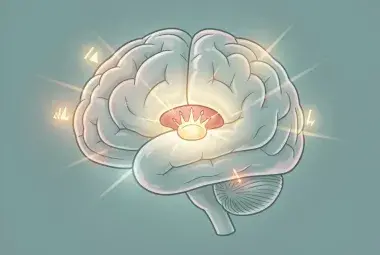
Cognitive complaints often described as “brain fog” are among the most commonly reported menopausal symptoms. Research indicates that estrogen modulates synaptic plasticity, cerebral blood flow, and neuroinflammatory pathways.
Systematic reviews and cohort studies report that timing matters. Hormone therapy initiated closer to the onset of menopause has been associated with neutral or favorable cognitive outcomes, whereas initiation later in life may carry increased neurological risk (Alzheimer’s Research & Therapy, 2023).
Data from the EPAD cohort showed that among women at genetic risk for Alzheimer’s disease (APOE4 carriers), those who used hormone therapy earlier demonstrated larger entorhinal cortex volumes and better performance on certain memory and spatial tasks compared with non-users. These findings are observational and do not establish causation, but they contribute to the evolving understanding of estrogen’s neurobiological role.
Major medical organizations caution that hormone therapy is not indicated for dementia prevention, and cognitive outcomes remain an area of active research (NAMS, 2022).
Image

Skin Integrity and Structural Aging
Estrogen is known to influence collagen synthesis, dermal thickness, hydration, and wound healing. Dermatologic studies consistently show that estrogen decline contributes to accelerated skin thinning and loss of elasticity during menopause.
Clinical research indicates that estrogen therapy can slow collagen loss and improve skin hydration in postmenopausal women (Frontiers in Cell and Developmental Biology, 2022). These effects are structural and physiological, not cosmetic interventions, and vary according to treatment type and duration.
Professional consensus does not classify hormone therapy as an aesthetic treatment; observed skin changes are considered secondary physiological effects of hormonal modulation.
Access, Cost, and Health System Context
In many countries, including the Philippines, menopausal hormone therapy is available in multiple formulations and price points. Public hospital menopause clinics and government facilities offer standardized regimens at relatively low cost compared with private-sector pricing.
Medical organizations emphasize that route of administration (oral vs transdermal) and formulation influence risk profiles, particularly regarding thromboembolic outcomes (American College of Obstetricians and Gynecologists). These considerations are part of clinical decision-making and not uniform across populations.
Separating Evidence from Assumption
When the research is read carefully, one message becomes clear: menopause does not follow a single script. The evidence does not support the idea that women inevitably decline once their reproductive years end. Instead, it shows wide variation. Some women experience significant disruption, while others maintain or regain function, depending on how their bodies respond to hormonal change.
What is consistent across studies is that menopause is not limited to one system. Hormonal shifts affect energy regulation, cognition, bone density, skin structure, cardiovascular function, and sleep. That complexity explains why menopause feels so different from one woman to the next and why simplified narratives rarely hold up under scientific scrutiny.
Within this context, hormone therapy stands out not as a miracle solution, but as one of the most extensively studied medical approaches for managing menopausal symptoms. Decades of research have mapped its potential benefits and risks, showing that outcomes are not fixed. They vary meaningfully based on when therapy is initiated, how it is formulated, how it is delivered, and the individual health profile of the woman using it.
At the same time, the evidence draws clear boundaries. It does not support the universal use of hormone therapy for all women. It does not frame hormones as anti-aging agents or performance enhancers. And it does not endorse non-medical or self-directed use. These distinctions matter, because they separate evidence-based medicine from exaggeration and misuse.
Image

For this reason, professional guidelines consistently return to the same principle: menopause-related care must be individualized. Major medical organizations, including the North American Menopause Society and the World Health Organization, emphasize informed evaluation that accounts for timing, health history, and personal context. The science does not point to one right answer only to the importance of decisions grounded in evidence rather than assumption.
Conclusion
The emerging narrative around midlife women is not one of decline, but of variability. Some women in their 50s demonstrate high levels of physical activity, cognitive engagement, and professional productivity not because menopause reverses aging, but because biological changes can be managed in ways that preserve function.
Hormone therapy remains one medically recognized option among several for addressing menopausal symptoms. Its role continues to be refined through ongoing research. Understanding menopause through evidence rather than assumption allows societies, health systems, and individuals to replace outdated narratives with data-driven clarity.
Note from the Author
I am not a medical doctor. I am a postmenopausal woman who has thoroughly researched Hormone Replacement Therapy to make an informed decision for my health in partnership with my physician. This article synthesizes information from leading health organizations and recent peer-reviewed studies. It is meant as a starting point for your research and a tool to facilitate productive conversations with your doctor.
This is not medical advice. Decisions regarding HRT are highly personal and must be made with a qualified healthcare professional based on your individual health profile.
❤️#HRTisLife #MenopauseGlowUp #AskForEstrogen❤️
Image

References
-
World Health Organization. Menopause.
-
North American Menopause Society. (2022). Hormone therapy position statement.
-
American College of Obstetricians and Gynecologists. Postmenopausal estrogen therapy.
-
Hormone replacement therapy is associated with improved cognition and larger brain volumes in at-risk APOE4 women. Alzheimer’s Research & Therapy, 2023.
-
Estrogen signaling as a bridge between the nucleus and mitochondria in cardiovascular diseases. Frontiers in Cell and Developmental Biology, 2022.
-
Estrogen-related receptors and metabolic regulation. Salk Institute, 2025.
-
Estrogen and mitochondrial function. PMC, 2025.
Cast Your Vote
Image