

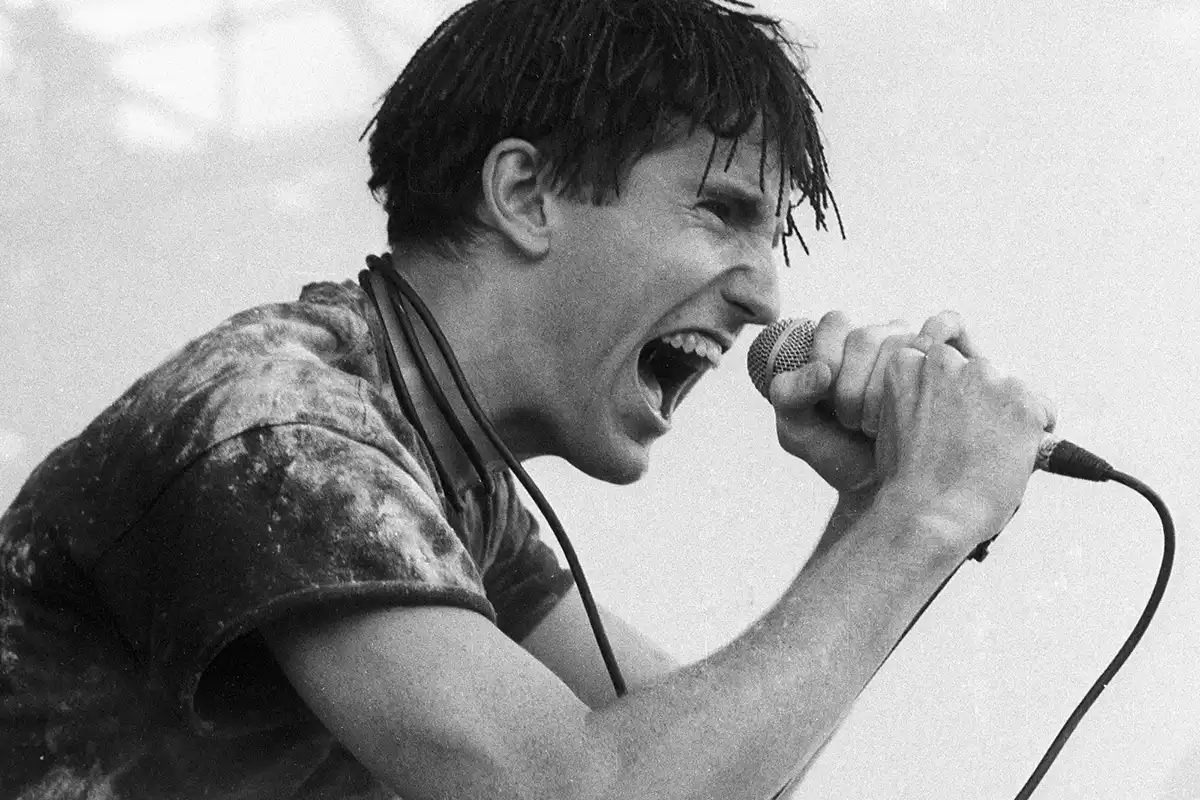
When Nine Inch Nails released Head Like A Hole in 1989, few could have predicted the cultural impact it would have on alternative and industrial music. Written by Trent Reznor and featured on the band’s debut album Pretty Hate Machine, the song became their breakout hit, introducing mainstream audiences to a raw, aggressive, and experimental sound that would come to define much of the 1990s alternative scene.
At its core, Head Like A Hole is a furious anthem about control, corruption, and resistance. The lyrics channel rage against authority and greed, with Reznor’s sharp vocals delivering lines that are both confrontational and cathartic. The repeated refrain—“bow down before the one you serve”—underscores themes of exploitation and rebellion, striking a chord with listeners disillusioned with social and political hierarchies. Its message was as direct as it was intense, resonating with a generation that craved music with an edge.
Musically, the track represents a perfect fusion of industrial rock and electronic experimentation. Pounding drum machines, distorted guitar riffs, layered synthesizers, and Reznor’s searing vocals combine to create a sound that is abrasive yet compelling. Unlike much of the underground industrial scene at the time, Head Like A Hole managed to be accessible enough for radio and MTV rotation while retaining its uncompromising intensity. This balance helped Nine Inch Nails reach audiences beyond the niche industrial community, laying the groundwork for the band’s mainstream breakthrough.
The music video, directed by Eric Zimmerman, reinforced the song’s rebellious energy. Featuring flashing strobe lights, live performance footage, and stark imagery, the video became a staple on MTV’s alternative programming. It visually captured the visceral intensity of the track, showcasing Nine Inch Nails as a band capable of commanding both underground credibility and mainstream attention. The video’s stark, almost confrontational style perfectly mirrored the song’s themes of defiance and rebellion.
Commercially, Head Like A Hole did not climb as high on the charts as some of Nine Inch Nails’ later hits, but its influence was immediate and enduring. The track became a defining moment of Pretty Hate Machine and a permanent fixture of the band’s live performances, often serving as a high-energy closer. Its anthemic chorus and raw power made it an instant fan favorite, and over time it grew into a symbol of the band’s uncompromising approach to music and artistry.
Over the decades, Head Like A Hole has been covered and reinterpreted by numerous artists, but Reznor’s original remains definitive. Its raw intensity captured a specific cultural moment while laying the foundation for Nine Inch Nails’ subsequent work, including seminal albums like The Downward Spiral and The Fragile. The track’s enduring influence can be heard in countless industrial and alternative acts that followed, testifying to its significance in shaping the genre.
Today, Head Like A Hole is recognized not only as a cornerstone of industrial rock but also as one of the most iconic alternative songs of the late 1980s. It showcased Trent Reznor’s talent for merging aggression with accessibility, proving that industrial music could be both uncompromising and widely appealing. For fans of alternative and industrial rock, the song remains a timeless anthem of resistance, a visceral expression of anger, and one of Nine Inch Nails’ most enduring tracks.
In the broader context of 1980s music, Head Like A Hole stands out as a pivotal moment when industrial sounds crossed into mainstream awareness. Its uncompromising energy, thought-provoking lyrics, and innovative production continue to inspire artists and fans alike, ensuring its place as a defining track of both Nine Inch Nails’ career and the industrial genre at large.