

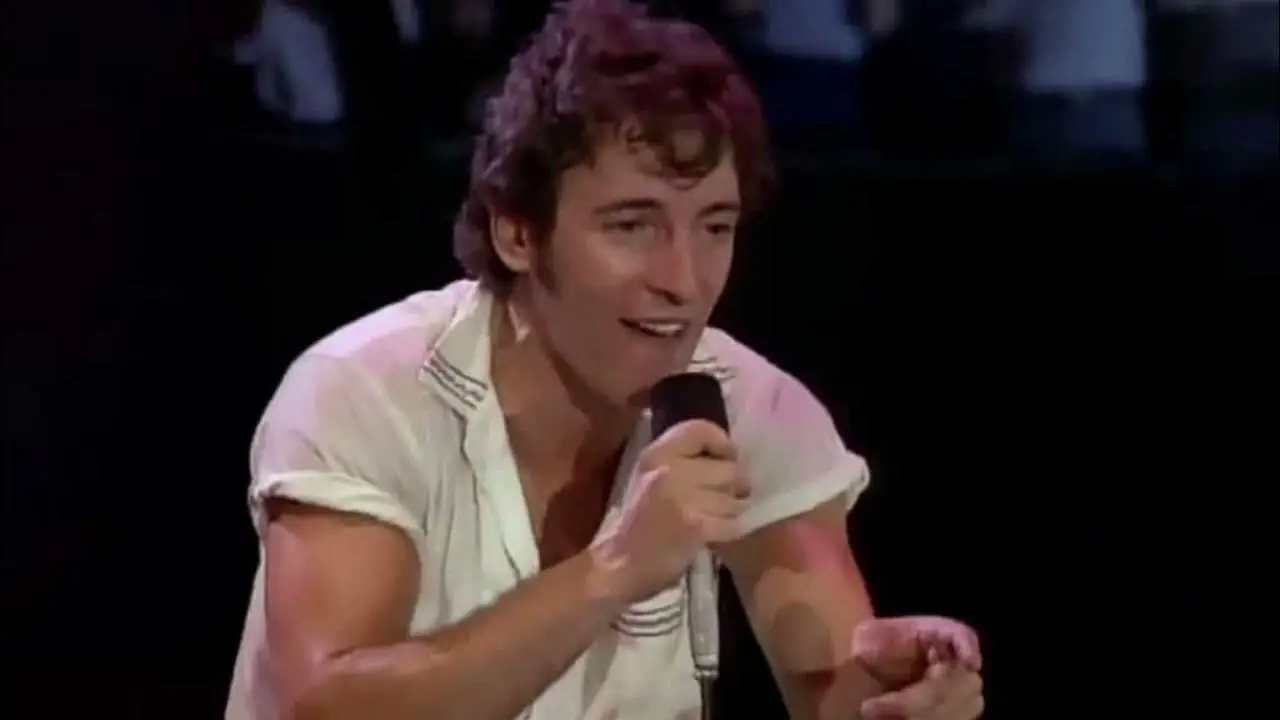
When Bruce Springsteen released “Dancing in the Dark” in 1984, few could have predicted that its music video would become one of the most recognizable visual moments of the decade. At a time when music videos were becoming increasingly theatrical and stylized, this one stood out for doing the opposite. It felt real, immediate, and grounded in the raw atmosphere of a live concert. Viewers did not see elaborate sets or costume changes. Instead, they saw Bruce Springsteen on stage, reacting to the crowd, moving awkwardly, and sharing a spontaneous moment that felt genuine in a medium often criticized for being overly manufactured.
The video arrived during a turning point in Springsteen’s career. Born in the U.S.A. had transformed him from a respected rock artist into a global superstar, and MTV was quickly becoming the dominant force in shaping popular music culture. While Springsteen had previously been hesitant about music videos, “Dancing in the Dark” proved that a simple visual approach could still carry massive cultural impact. The camera work emphasized human expression rather than spectacle, allowing audiences to feel connected to the performance even through a television screen.
One of the most talked about aspects of the video is the appearance of a young woman pulled from the audience to dance on stage. This moment felt playful and unscripted, reinforcing the illusion that anything could happen at a Springsteen concert. Over time, fans would learn that this scene was carefully planned, though performed in a way that preserved its authenticity. That blend of planning and spontaneity became a defining strength of the video.
Decades later, “Dancing in the Dark” continues to be referenced in discussions about iconic music videos, celebrity breakouts, and the evolution of MTV. Its influence reaches beyond nostalgia, offering a case study in how authenticity and emotional connection can outshine elaborate production.
1. Directed by Brian De Palma
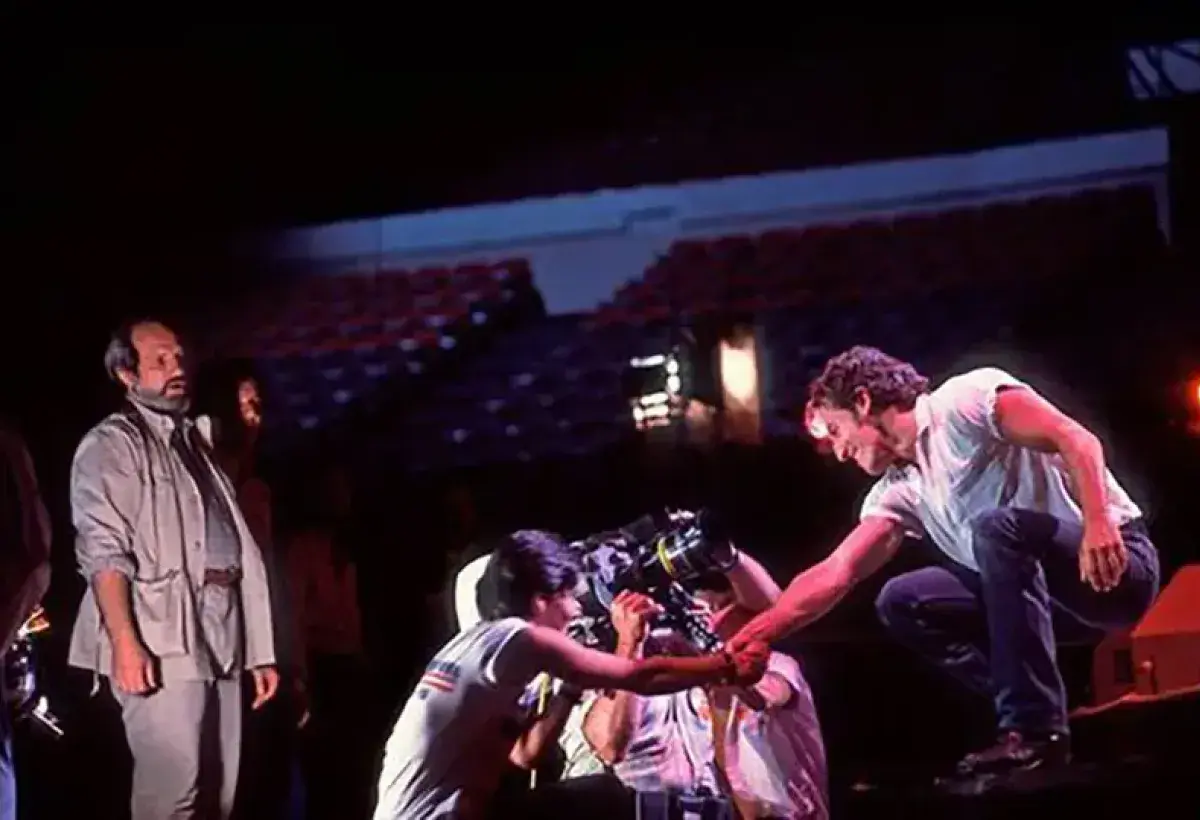
The decision to have Brian De Palma direct the “Dancing in the Dark” music video surprised many at the time. De Palma was already well known for his work in film, particularly intense and stylized movies such as Carrie, Scarface, and Blow Out. His reputation was built on suspense, dramatic tension, and visually striking storytelling, which made his involvement in a straightforward concert style music video seem unexpected. Yet this contrast is exactly what made the collaboration so effective.
De Palma approached the video with a cinematic eye while resisting the urge to overproduce it. Rather than turning the performance into a short film or heavily edited montage, he focused on capturing emotion through close ups, crowd reactions, and the rhythm of the live show. His camera lingered on Springsteen’s expressions, sweat, and body language, giving viewers a sense of intimacy that felt rare for stadium sized performances. This approach helped bridge the gap between cinema and music video without sacrificing authenticity.
Another important contribution from De Palma was his understanding of pacing. The video builds gradually, starting with Springsteen performing to the crowd before introducing the now famous dance moment. The timing feels natural, as if the camera is simply following the energy of the room rather than directing it. This subtle control is a hallmark of De Palma’s filmmaking style, even when applied to a much shorter format.
By bringing a respected film director into the project, the video gained credibility beyond the music industry. It showed that music videos could be taken seriously as a visual art form while still remaining accessible to mainstream audiences. De Palma’s involvement elevated the project without overshadowing the music, proving that strong direction does not always require dramatic flourishes.
Image
2. Shot in St. Paul, Minnesota
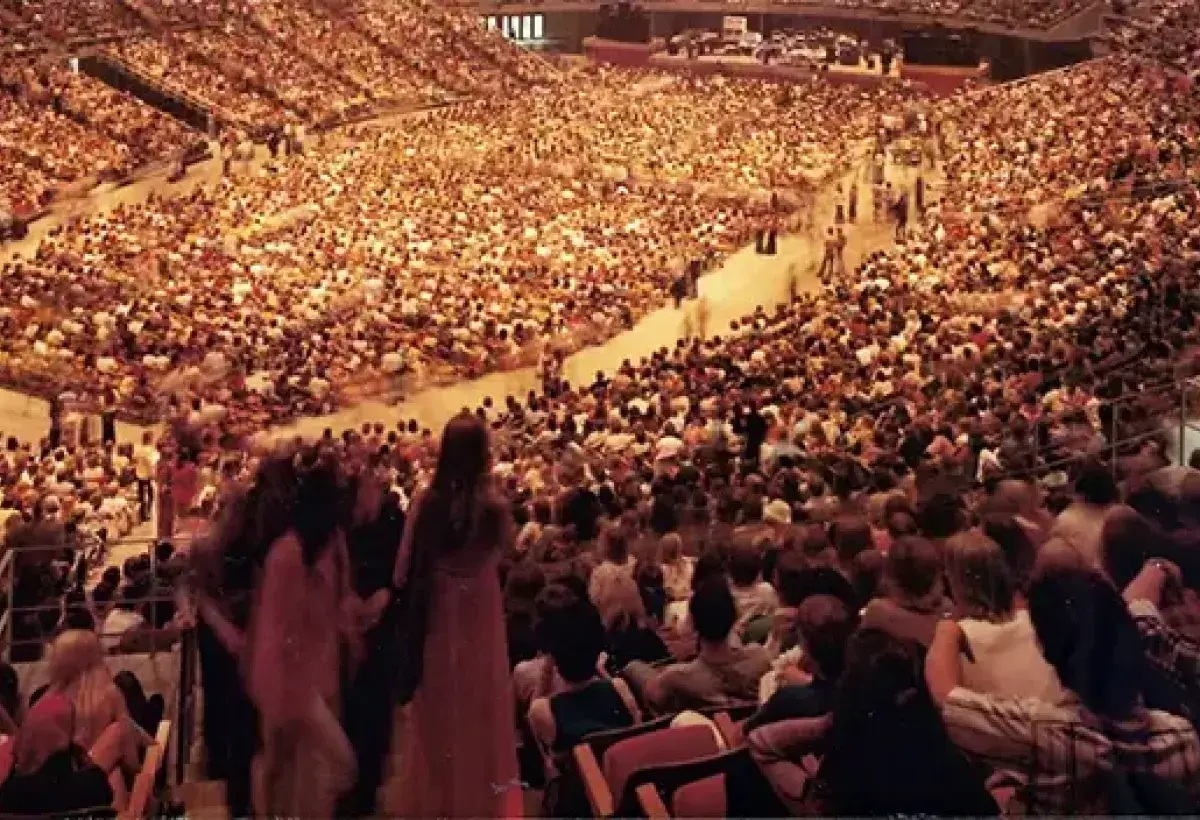
The “Dancing in the Dark” video was filmed during a live Bruce Springsteen and the E Street Band concert at the Saint Paul Civic Center in Minnesota. This choice was crucial to the video’s energy and authenticity. Instead of staging a fake crowd or recreating a concert environment, the production captured a real audience reacting in real time. The cheers, movement, and anticipation visible throughout the video are genuine, giving it a sense of immediacy that studio productions often lack.
Filming during a live show also introduced an element of risk. There was little room for mistakes, and the crew had to work around the natural flow of the concert. Lighting, camera angles, and timing had to align perfectly without disrupting the performance. This pressure added to the raw feel of the final result, as everything unfolded within the constraints of a single night and a single audience.
Saint Paul itself holds a special place in Springsteen’s touring history. The city was known for enthusiastic crowds, and that enthusiasm is clearly visible in the video. Fans are fully engaged, singing along and reacting to every movement on stage. This connection between performer and audience becomes a central theme of the video, reinforcing Springsteen’s reputation as a live performer who thrives on crowd interaction.
The choice of location also helped ground the video in a specific moment in time. Rather than feeling like a generic concert clip, it feels like a snapshot of one electric night. That specificity makes the video more memorable and personal, allowing viewers to feel as though they were present, even decades later.
Image
3. Courteney Cox’s Big Break
Before she became a household name through television and film, Courteney Cox was a young actress trying to establish herself in a competitive industry. Her appearance in the “Dancing in the Dark” video marked a turning point in her career. Though she had done some modeling and minor acting work, nothing had given her national exposure on this scale.
Cox was selected through auditions rather than randomly chosen from the crowd. The production needed someone who could move confidently on stage while still appearing like an ordinary fan. Cox fit this balance perfectly. When she steps onto the stage, her excitement feels genuine, and her nervous energy adds to the believability of the moment. Viewers saw her as a relatable figure rather than a polished performer, which helped the illusion succeed.
The impact of the video on her career was immediate. Casting directors and producers took notice, and Cox soon found herself receiving more auditions and opportunities. Over time, this exposure contributed to her landing major roles, including her iconic portrayal of Monica Geller on Friends. While the video was only a few minutes long, it introduced her face to millions of viewers worldwide.
Cox has often spoken about the experience with gratitude, acknowledging how unexpected the opportunity was. For many fans, the video remains a fascinating glimpse into the early moments of a future star. It serves as a reminder that iconic cultural moments often launch careers in ways that cannot be planned or predicted.
Image
4. Not a Random Fan
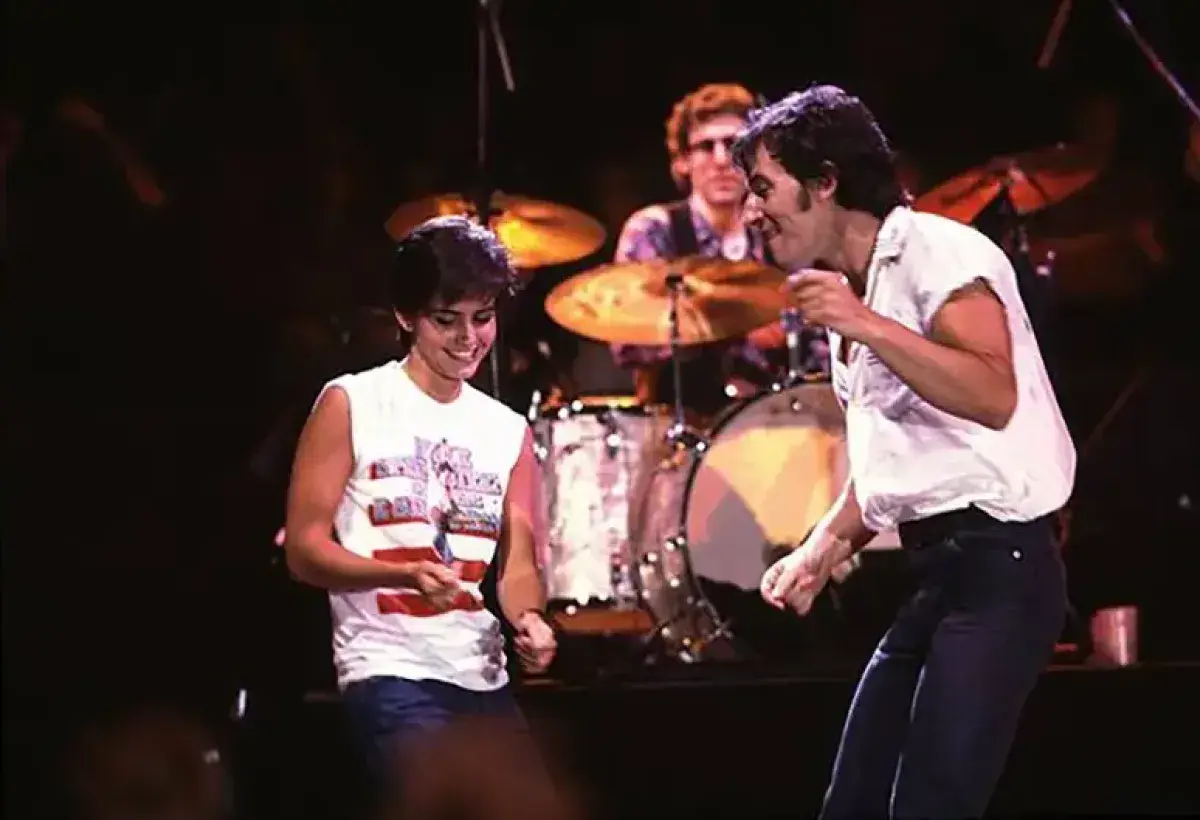
One of the most enduring myths surrounding the “Dancing in the Dark” video is the belief that Courteney Cox was a random fan pulled from the audience. This illusion was carefully crafted to enhance the spontaneity of the moment. In reality, Cox was hired and rehearsed for the role, though the interaction itself was kept loose to maintain authenticity.
The decision to present the moment as unscripted was a deliberate creative choice. Bruce Springsteen’s image was built around approachability and connection with everyday people. By appearing to invite a fan on stage, the video reinforced this persona and strengthened his bond with viewers. Even after the truth became widely known, the scene retained its charm because it still felt emotionally honest.
What made the moment work was the lack of rigid choreography. While Cox knew she would be called up, the dance itself was not tightly planned. This allowed genuine reactions, including visible nervousness and playful awkwardness. Springsteen’s own movements mirrored this energy, making the interaction feel mutual rather than staged.
This blend of planning and improvisation highlights a broader truth about entertainment. Many memorable moments are carefully set up but left open enough to feel real. The “Dancing in the Dark” video demonstrates how illusion, when handled thoughtfully, can enhance emotional impact without feeling deceptive.
Image
5. One Take Wonder
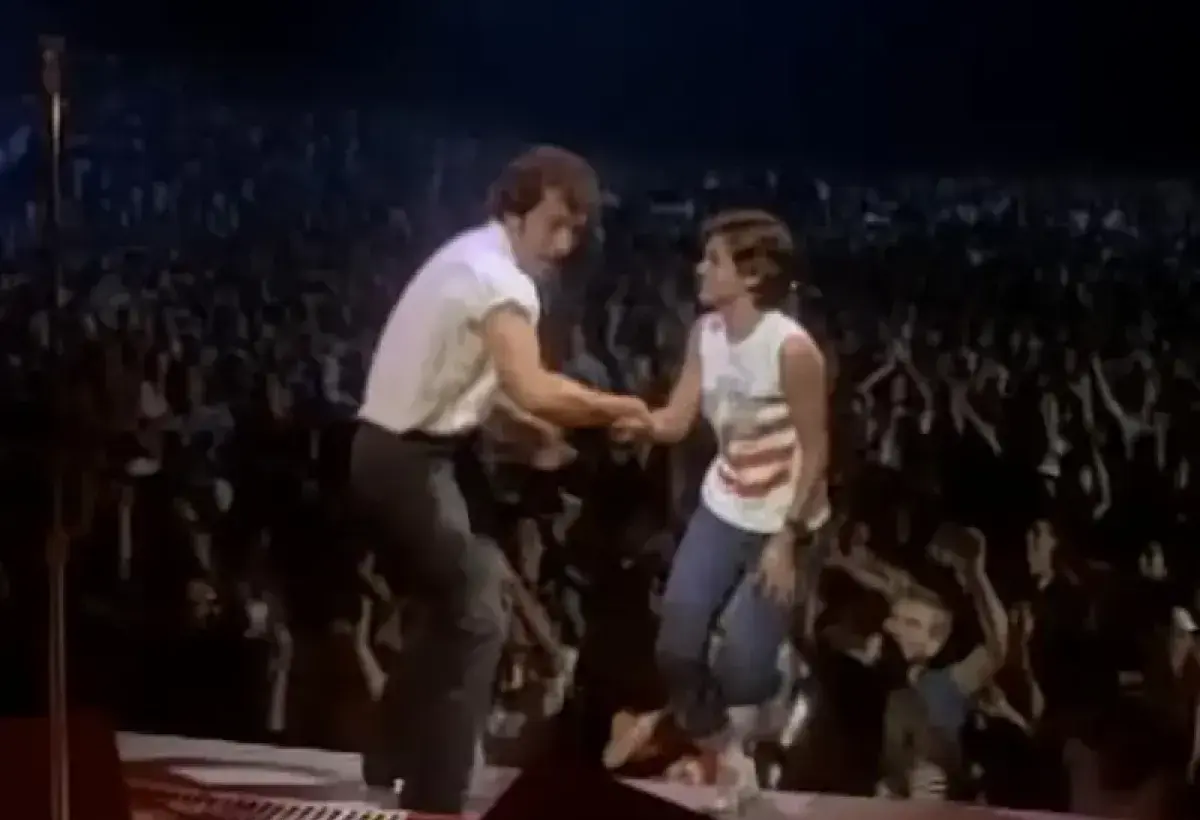
The famous dance sequence in the “Dancing in the Dark” video was captured in a single take. This decision was made to preserve the authenticity of the moment and avoid disrupting the energy of the live performance. In a concert setting, repeating such a moment would have felt artificial and potentially confusing for the audience.
Filming in one take required precise coordination between the camera crew, Springsteen, and Cox. Everyone needed to be in the right place at the right time, with no opportunity for correction. This pressure added to the tension and excitement of the scene, which ultimately translated into a more compelling visual experience.
The single take approach also aligned with the song’s themes. “Dancing in the Dark” reflects frustration, vulnerability, and the desire for connection. Capturing the dance without interruption allowed these emotions to flow naturally. Small imperfections, such as awkward movements or fleeting expressions, became strengths rather than flaws.
This method contrasts sharply with many music videos of the era, which relied on heavy editing and multiple takes. By embracing imperfection, the video stood out and resonated with viewers who were drawn to its honesty. The result is a moment that feels timeless precisely because it was not polished to perfection.
Image
6. Boosted MTV Popularity
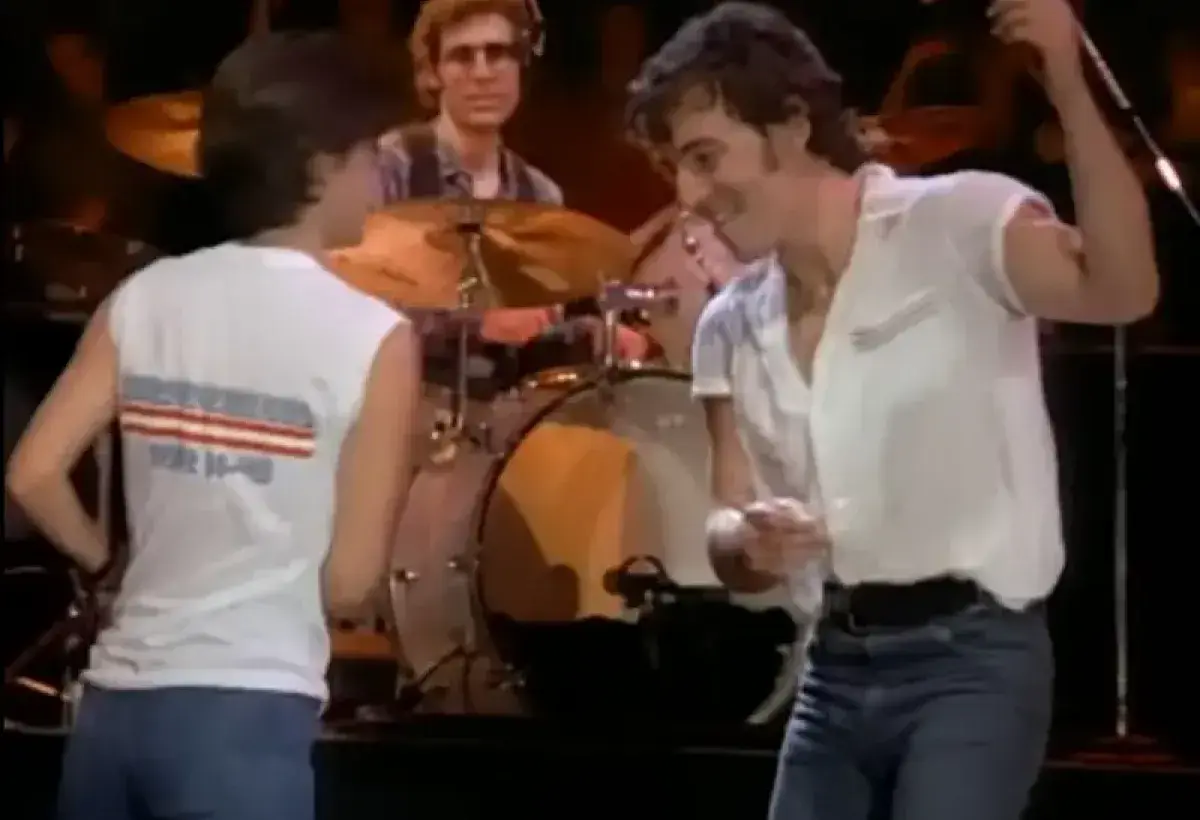
“Dancing in the Dark” played a significant role in expanding Bruce Springsteen’s presence on MTV. Prior to this release, Springsteen was known primarily for his live performances and storytelling through music rather than visual media. The success of the video helped bridge that gap and introduced him to a younger, television focused audience.
MTV thrived on memorable visuals, and this video delivered exactly that without sacrificing authenticity. The combination of a live concert setting and a relatable on stage interaction made it highly replayable. Viewers tuned in not only for the song but also for the moment everyone talked about, the dance with the audience member.
The video’s heavy rotation on MTV contributed directly to the song’s chart success. As more viewers discovered Springsteen through the channel, album sales increased and his cultural visibility grew. This exposure helped solidify Born in the U.S.A. as one of the defining albums of the decade.
Beyond commercial success, the video helped reshape perceptions of Springsteen. He was no longer seen solely as a rock artist for dedicated fans but as a mainstream figure capable of connecting across demographics. MTV provided the platform, and “Dancing in the Dark” provided the moment that made it work.
Image

7. Song Born from Label Pressure
“Dancing in the Dark” exists largely because of creative tension. As Born in the U.S.A. neared completion, Springsteen’s manager and record label expressed concern that the album lacked a clear hit single. This feedback frustrated Springsteen, who felt he had already delivered strong material. Nevertheless, he returned to writing with renewed urgency.
The song emerged quickly, fueled by that frustration. Its lyrics reflect feelings of restlessness and dissatisfaction, capturing the emotional state Springsteen was experiencing at the time. Rather than resisting the pressure, he channeled it into a track that spoke honestly about creative struggle and personal doubt.
Ironically, the song written under pressure became Springsteen’s highest charting single in the United States. Its success validated the label’s instincts while also proving Springsteen’s ability to transform constraint into inspiration. The contrast between the song’s upbeat sound and its introspective lyrics added to its appeal.
This backstory adds depth to the video as well. Knowing the circumstances behind the song’s creation makes its themes of tension and release more meaningful. The on stage dance becomes not just a fun moment but a symbolic release of creative frustration.
Image
8. Wardrobe Simplicity
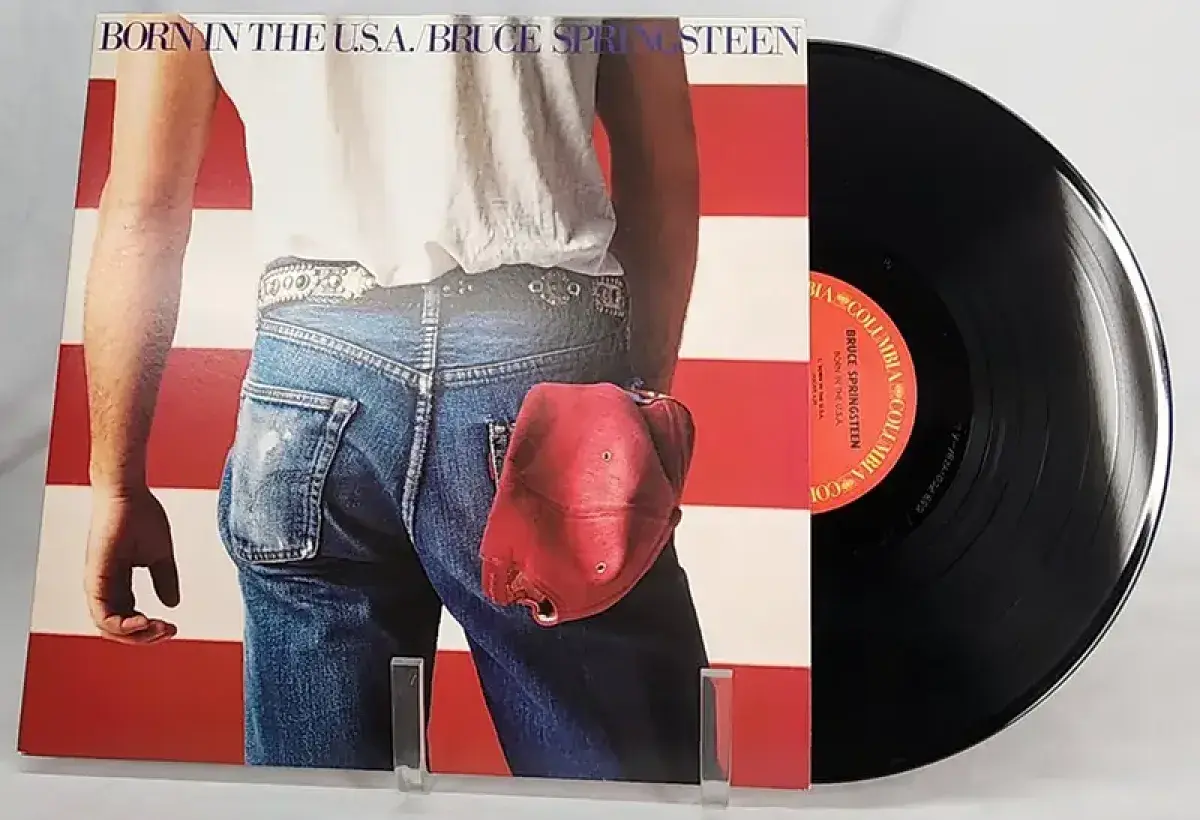
Bruce Springsteen’s wardrobe in the “Dancing in the Dark” video is strikingly simple. He wears jeans and a plain shirt, a deliberate choice that contrasted sharply with the flashy fashion trends dominating music videos at the time. This simplicity reinforced his image as an everyman rather than a manufactured pop star.
The decision was not accidental. Springsteen’s style had always been rooted in authenticity, and maintaining that image on MTV was important. By avoiding elaborate costumes, the focus remained on the performance and the connection with the audience rather than on visual spectacle.
This understated look also made the video feel timeless. While many videos from the era are instantly dated by their fashion, “Dancing in the Dark” feels less tied to a specific trend. The clothing serves the story rather than distracting from it.
Wardrobe choices often communicate values, and in this case, simplicity communicated sincerity. Springsteen appeared as himself, unfiltered and approachable, which resonated strongly with viewers and contributed to the video’s lasting appeal.
Image
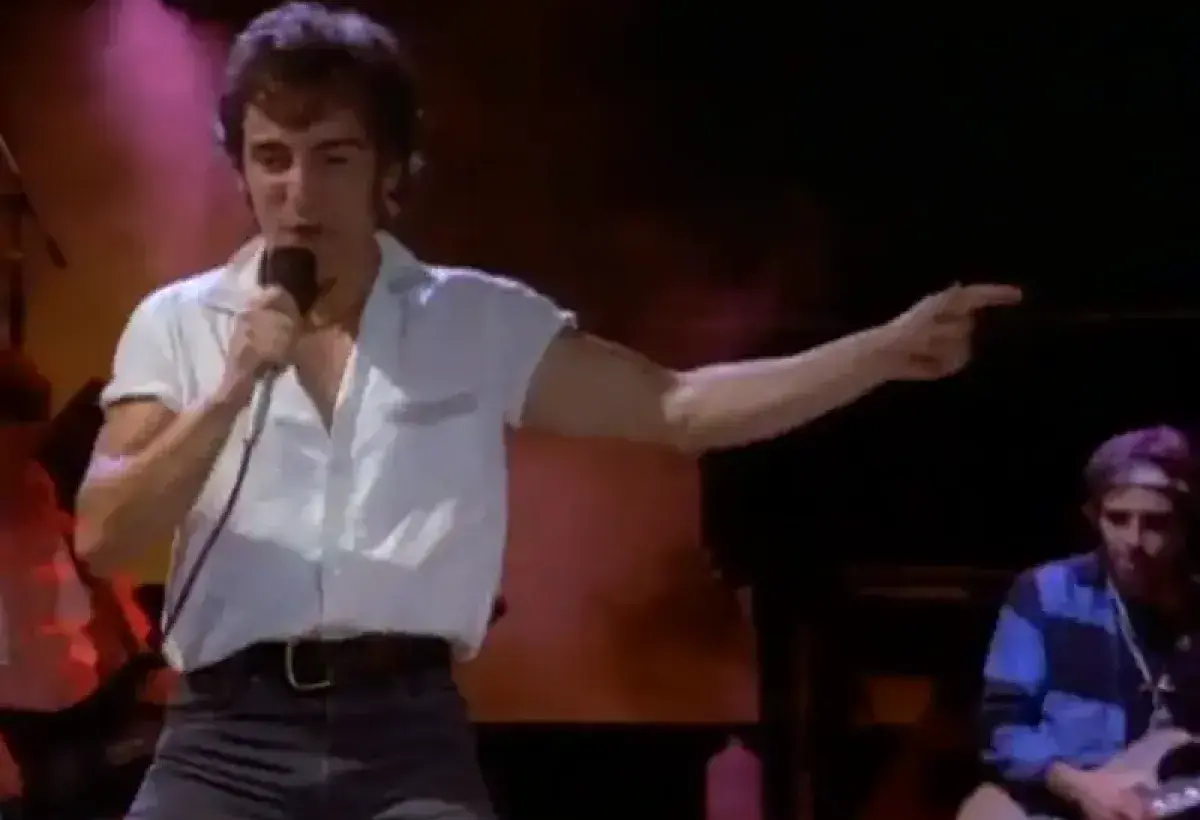
9. Unscripted Energy
One of the defining characteristics of the “Dancing in the Dark” video is its unscripted energy. While the setup was planned, Bruce Springsteen’s movements and reactions were not choreographed. His dancing is famously awkward, playful, and spontaneous, qualities that made the moment feel real.
This lack of choreography allowed Springsteen’s personality to shine through. Rather than trying to perform like a trained dancer, he embraced his natural movement. This honesty made him more relatable, especially to viewers who saw themselves in his self conscious yet enthusiastic dance.
The unscripted nature also influenced how audiences perceived the interaction with Cox. Their movements feel responsive rather than rehearsed, creating a sense of shared experience. The energy flows naturally between them, supported by the crowd’s reaction.
In an era when many music videos aimed for perfection, this embrace of imperfection stood out. It reminded viewers that genuine emotion often resonates more deeply than technical precision. The result is a moment that continues to feel alive decades later.
Image
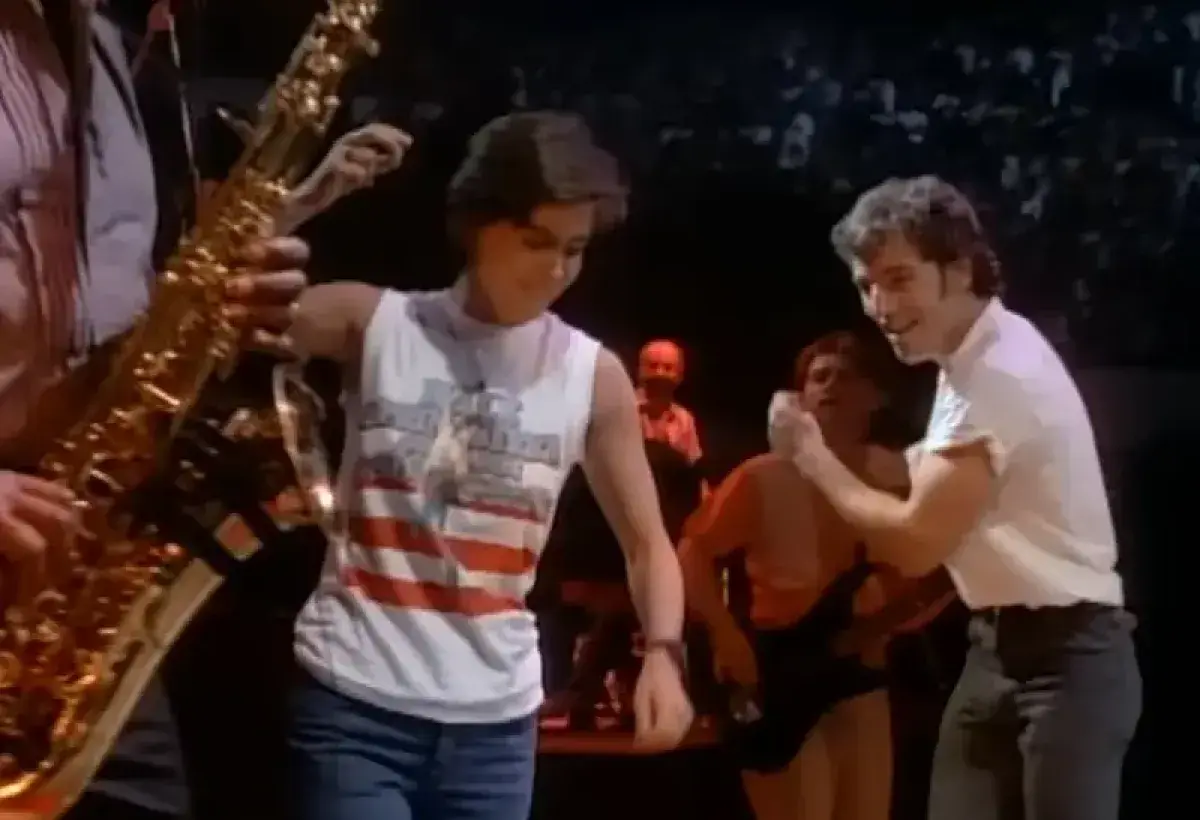
10. Grammy and VMA Favorite
“Dancing in the Dark” received widespread recognition from award organizations, further cementing its place in music history. The song earned Grammy Awards and multiple nominations, highlighting both its commercial success and artistic impact. These accolades reflected how deeply it resonated with audiences and critics alike.
The video also received significant attention at the MTV Video Music Awards. Its popularity demonstrated that a simple concept could compete with more elaborate productions. The recognition validated the creative choices behind the video and reinforced its influence on the medium.
Awards helped extend the song’s lifespan beyond its initial release. As it continued to receive airplay and recognition, new audiences discovered it, ensuring its relevance across generations. The combination of critical acclaim and popular appeal is a rare achievement.
Today, “Dancing in the Dark” is frequently cited in lists of iconic music videos. Its awards serve as formal acknowledgment of what fans already knew, that this was a defining moment in both Springsteen’s career and music video history.
Image

The enduring legacy of Bruce Springsteen’s “Dancing in the Dark” music video lies in its ability to feel both monumental and intimate at the same time. It captured a superstar at a pivotal moment in his career while maintaining a sense of humility and connection that resonated deeply with viewers. Rather than relying on spectacle, the video trusted the power of human interaction, emotion, and live performance.
Over the years, the video has become more than a promotional tool for a hit song. It stands as a cultural artifact that reflects the values of authenticity and spontaneity. The appearance of Courteney Cox, the decision to film during a real concert, and the choice to keep movements unscripted all contributed to a moment that feels genuine even after repeated viewings.
The video also helped redefine what a successful music video could be. It showed that simplicity, when guided by thoughtful direction and emotional honesty, could rival even the most elaborate productions. This lesson continues to influence artists and directors who seek to create meaningful visual experiences without losing their sense of self.
Decades later, “Dancing in the Dark” remains a reminder that some of the most powerful moments in pop culture come from embracing imperfection and vulnerability. It invites viewers to step into the moment, feel the music, and remember that sometimes all it takes is a little courage to get up and dance.