

The Philippine real estate market is experiencing a remarkable transformation, influenced heavily by the 2025 national elections, evolving economic policies, and changing market demand. Comparing the first half of 2024, marked by cautious investment, with the first half of 2025, characterized by a post-election boom, provides valuable insights into the country’s property landscape. This report explores vertical versus horizontal growth patterns, oversupply and shortage issues, and emerging opportunities across residential, commercial, and industrial sectors.
1. Market Sentiment: Pre-Election (H1 2024) vs. Post-Election (H1 2025)
H1 2024: Caution and Selective Investment
The first half of 2024 reflected the typical pre-election sentiment in the real estate market. Investors and homebuyers took a more cautious approach, waiting to see the election outcome before making significant commitments. Key trends included:
-
Office Market Recovery: Vacancy rates declined to 14.2 percent as BPO firms and flexible workspaces expanded.
-
Residential Slowdown: High-end condominium sales fell by 10 percent year-on-year due to election uncertainty.
-
Industrial Boom: Demand for warehouses surged by 25 percent year-on-year, particularly near ports and major highways, driven by e-commerce growth and logistics requirements.
H1 2025: Policy Clarity and Accelerated Growth
With the elections concluded and economic policies clarified, the first half of 2025 saw a notable acceleration across multiple sectors:
-
Office Demand Boost: Vacancy rates fell further to 12.5 percent as foreign companies expanded their Philippine operations, highlighting renewed confidence in the business environment.
-
Luxury Condo Rebound: Sales jumped 80 percent quarter-on-quarter as developers launched previously delayed projects, reflecting pent-up demand from buyers who had paused during the election period.
-
Affordable Housing Push: The Pambansang Pabahay program delivered 50,000 new units in H1 2025, reinforcing government commitment to addressing long-standing housing shortages.
Key Insight: While the elections temporarily slowed high-end residential sales, they ultimately catalyzed industrial growth and strengthened post-election office and luxury condominium markets.
Image
2. Vertical vs. Horizontal Growth: Regional Analysis
Metro Manila – Vertical Focus with Oversupply Considerations
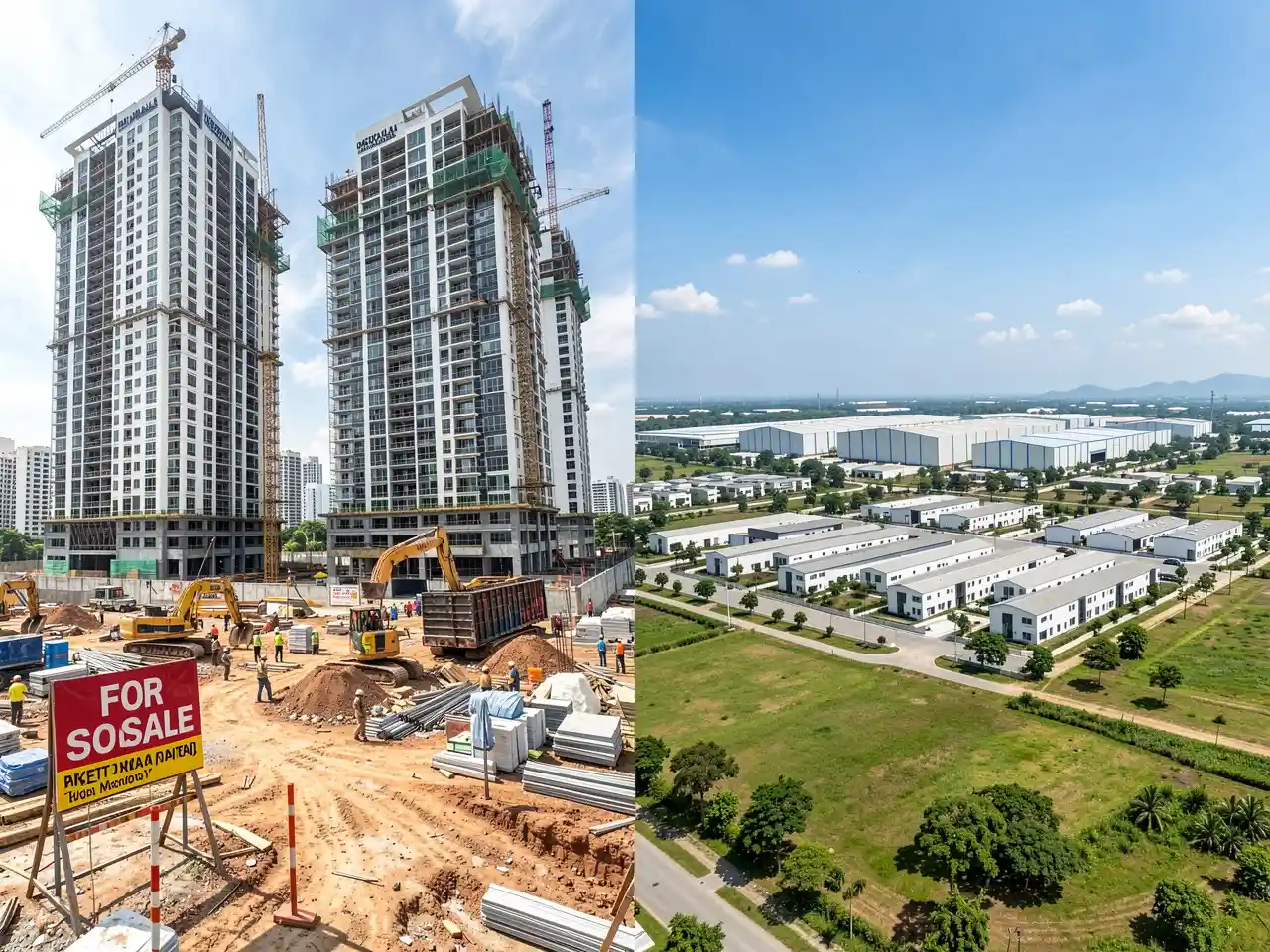
Metro Manila continues to favor vertical growth, primarily in condominium and office developments. Oversupply remains a consideration for investors and developers, despite strong demand in certain submarkets.
| Metric | H1 2024 | H1 2025 |
| Condo Supply | 48,000 unsold units | 42,000 (-12% YoY) |
| Office Vacancy | 14.2% | 12.5% |
| Major Projects | Arca South (Ayala) | New Manila Bay (SMC) |
Provincial Markets – Horizontal Expansion and Industrial Housing Boom
Provincial regions are showing remarkable growth, benefiting from lower land costs, infrastructure improvements, and more affordable housing options. Horizontal expansion in towns and emerging townships is outpacing Metro Manila in some cases.
| Region | H1 2024 Trend | H1 2025 Trend |
| Bulacan | Airport-driven land rush | Township launches +30% |
| Cavite | Industrial park expansion | Eco-townships spike |
| Cebu | IT park growth | Condo oversupply concerns |
Observation: The combination of infrastructure projects and affordability is making provincial cities an attractive alternative to Metro Manila, particularly for industrial and residential investments.
3. Oversupply vs. Shortage: Sector Dynamics
Oversupply Concerns
| Sector | H1 2024 | H1 2025 |
| Luxury Condos | 50,000+ unsold units | 42,000 (-16%) |
| POGO Offices | 18% vacancy | 15% (slight recovery) |
Persistent Shortages
| Sector | H1 2024 | H1 2025 |
| Affordable Housing | 6.5 million backlog | 6.7 million (gap widening) |
| Logistics Spaces | 30% rental growth | 35% (e-commerce demand) |
Insight: The most pressing opportunities lie in affordable housing and logistics infrastructure, sectors where demand continues to outpace supply despite the overall market recovery.
4. Major Developments Shaping 2025
Infrastructure Driving Growth
-
New Manila International Airport (Bulacan, projected completion 2027): Surrounding land values have surged 25 percent since 2024, highlighting the airport’s transformative economic impact.
-
North-South Commuter Railway: Connectivity improvements from Calamba to Clark have increased land values by up to 20 percent, fueling township and industrial development.
Sustainability and Technology Trends
-
Green Building Initiatives: Approximately 40 percent of new office developments are LEED-certified, reflecting rising demand for sustainable workspaces.
-
AI Data Centers: Industrial and tech hubs in Clark and Batangas are seeing increased investment, supporting a growing demand for modern logistics and digital infrastructure.
5. Outlook and 2026 Forecast
-
Industrial and Logistics: These sectors remain the hottest investment areas, particularly around airports, seaports, and logistic corridors.
-
Affordable Housing: Represents the greatest growth potential, requiring strategic collaboration between government and private developers to close the supply gap.
-
Market Forecast 2026: If interest rates decline, a full-market rebound is expected, benefiting both vertical developments in Metro Manila and horizontal expansion in provincial regions.
The post-election environment has underscored the importance of policy clarity, strategic infrastructure, and targeted investments. Developers and investors who align their strategies with emerging trends in industrial logistics, affordable housing, and sustainable projects are best positioned to capitalize on these shifts.
Disclaimer: This report is for informational purposes only and does not constitute investment advice. Data is based on independent research and verified industry reports.
References
Colliers International. (2025). Residential and office market updates, Q2 2025. Colliers Philippines.
DHSUD. (2025). Pambansang Pabahay mid-year review. Department of Human Settlements and Urban Development.
JLL Philippines. (2025). Manila office demand report, H1 2025. Jones Lang LaSalle Philippines.
KMC Savills. (2025). Industrial and logistics market overview. KMC Savills Philippines.
Leechiu Property Consultants. (2025). Provincial growth and industrial development report. Leechiu Property Consultants.
Santos Knight Frank. (2025). Luxury condominium market trends. Santos Knight Frank Philippines.