


We often imagine that compassion disappears in in wars, in cruelty, in the darkest chapters of history.
But sometimes it fades much more faster than that. It fades in small, ordinary moments that no one writes about, a moment when someone turns away instead of stopping, when convenience becomes more important than care, when a life, human or animal, is treated as something disposable.
Two weeks ago, a series of small encounters began to trouble my mind. Not because they were extraordinary, but because they felt painfully ordinary. A wandering cat with a collar crying in confusion. A tiny kitten struggling to lift its head from a trash barrel. And a question that refused to leave me alone: When did the human heart begin to grow this tired of caring?
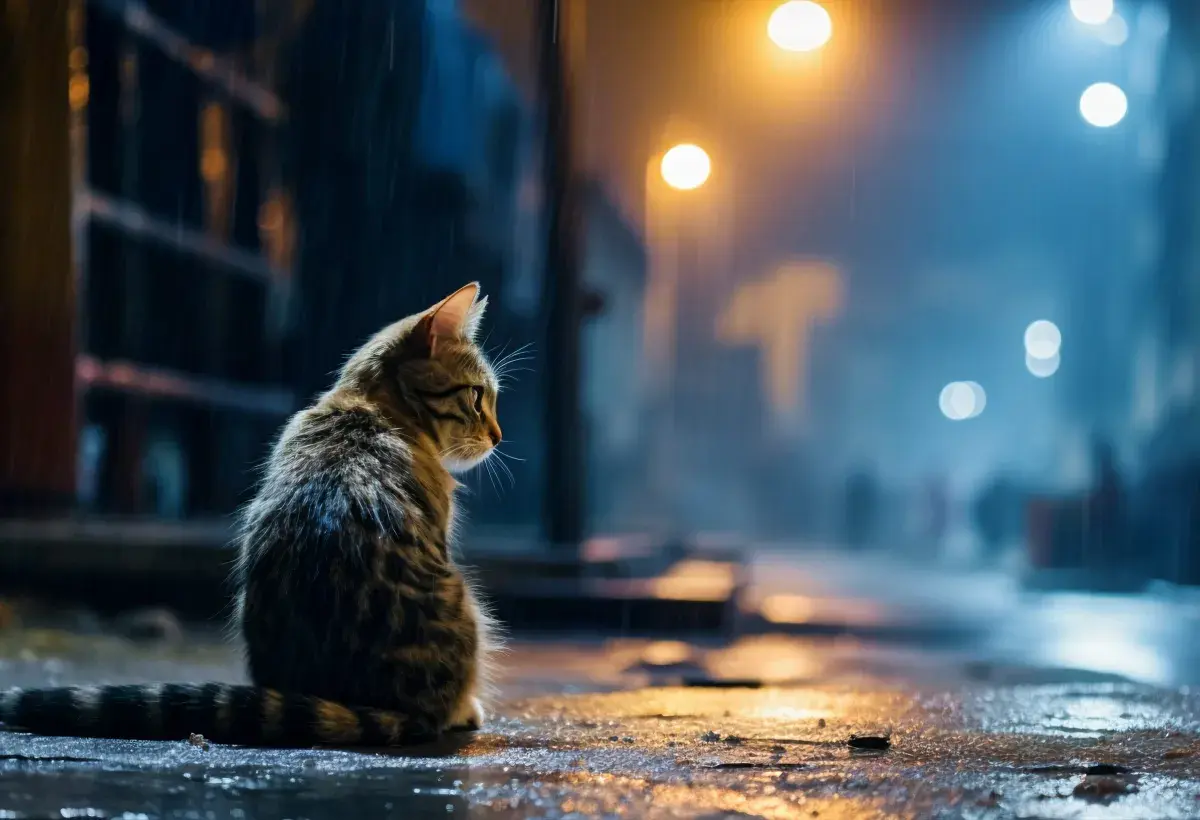
The day compassion knocked on my door. One evening, we noticed a couple walking nearby, they were holding an adult cat in their arms. What caught my attention was not the cat itself, but the way the couple behaved. They looked uneasy, glancing around repeatedly, almost as if they were making sure no one was watching them. For a brief moment, a thought entered my mind; are they trying to leave that cat here?
But the thought felt too harsh, too suspicious. Surely people would not do that so easily, so I dismissed the idea and continued with my evening walk routine. The next afternoon, while walking back home, we saw a cat in the upper area where we live. It had a blue collar on its neck. The cat was pacing back and forth, crying in a way that was hard to ignore. Not the usual sound of a roaming street cat, but a cry that sounded anxious, almost desperate. It looked lost, and when we tried to approach it, the cat ran away, still crying.
It was clear that this cat was not used to the streets, this was a domesticated animal suddenly placed in a world it did not understand. And then the thought returned to me… “could this be the same cat the couple had been carrying the night before?” the idea sat in my mind.
On the third day, while doing my exercise, I saw another cat. White, with spots, still wearing a collar. Again, the same anxious cry, and at that moment, something inside me felt heavy. It seemed very possible that the couple had brought their cat here and simply left it. Maybe because the cat had grown older, or maybe because it was no longer as cute as it once was, or maybe because life had become too busy, too complicated, too demanding and maybe, the cat had become an inconvenience but the story did not end there.
Yesterday, as we were walking home from the grocery store, we heard a tiny sound. A very soft meow.
Image
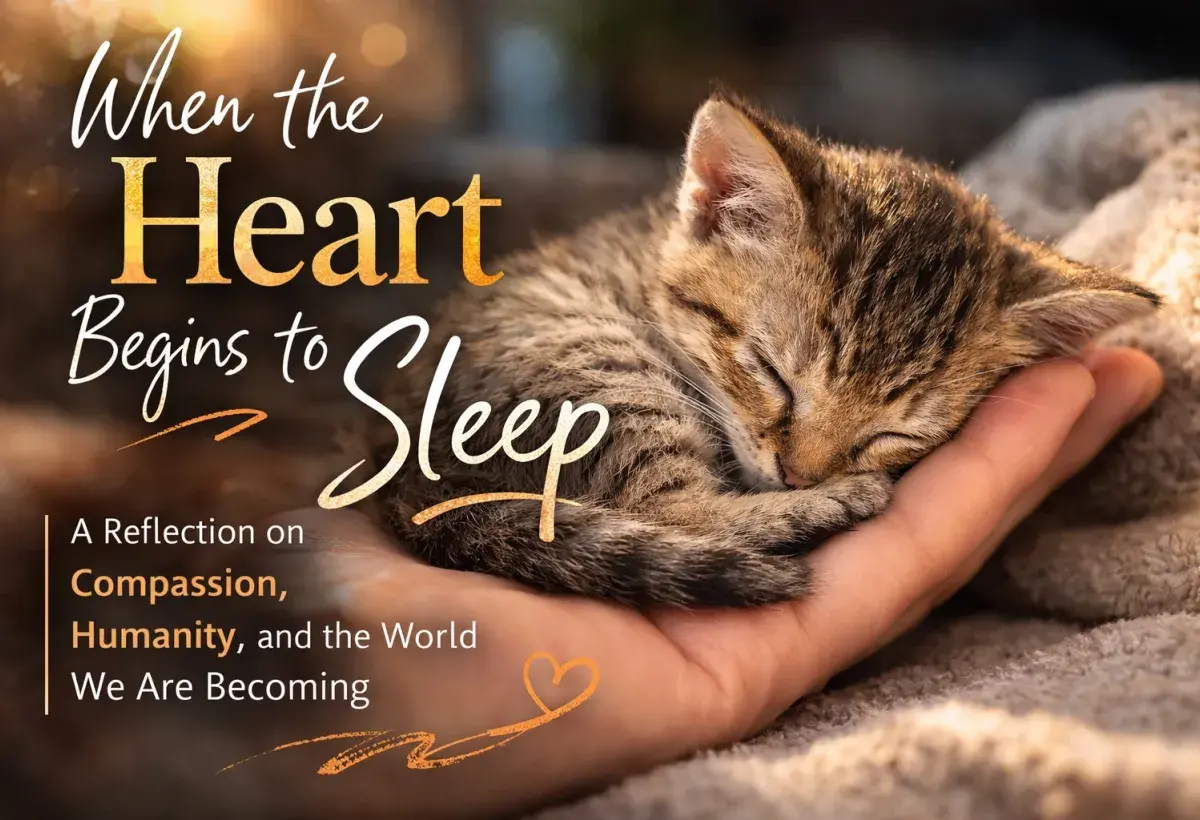
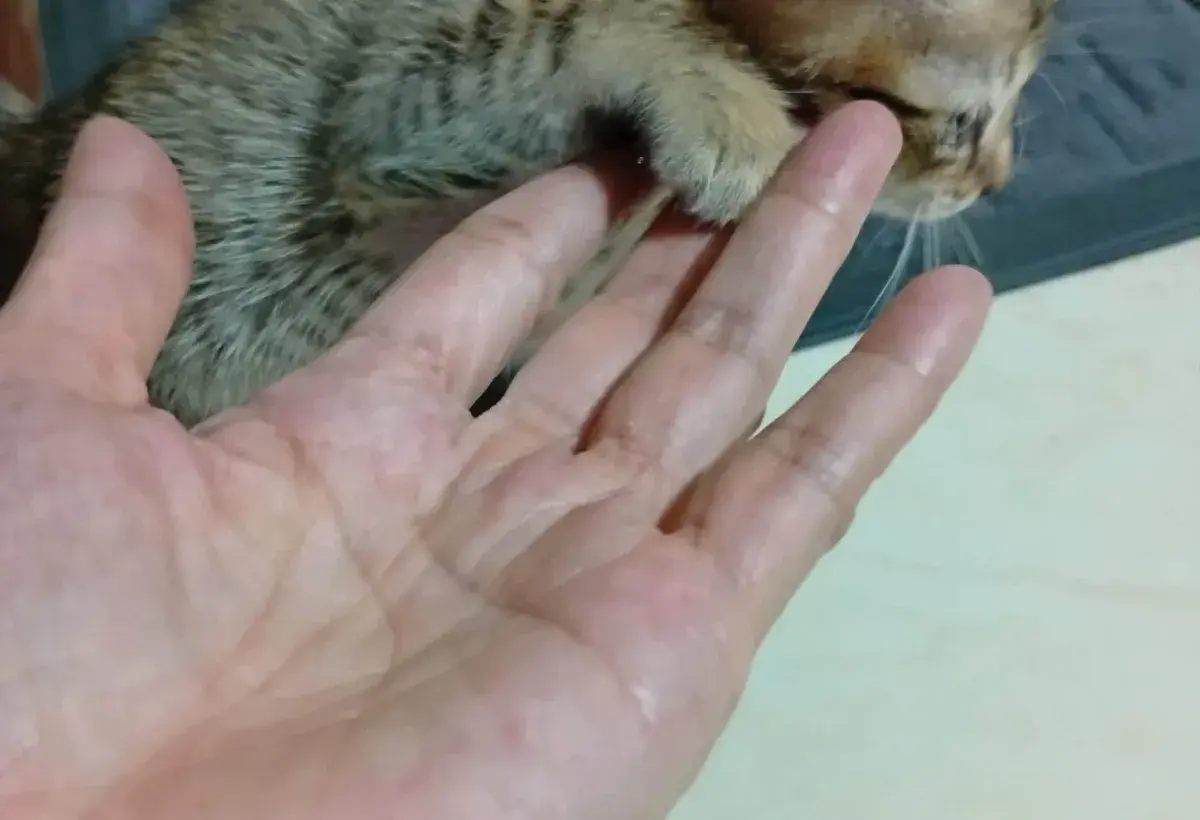
At first we could not see anything. Nearby were three large trash barrels placed beside the road, so we continued walking, but then we heard the sound again, this time more constant. So we looked closer, inside one of the trash barrels, something small was moving. A tiny kitten, probably a month old, was struggling to lift its head above the garbage.
Someone had thrown it there.
Not on the street where someone might notice, not in a place where it had a small chance to survive… but into a container meant for waste. Of course, we took the kitten home. It is now our third rescued kitten. But since that moment, I have found myself reflecting.
“ Why would someone keep a pet for years, feed it, care for it, watch it grow, and then suddenly abandon it when it grows older? Why not bring it to an animal shelter? Why not ask someone else to adopt it? Why leave it in a strange place where it will wander in confusion, crying for the people it once trusted?” were questions running in my head.
And the kitten, “Why throw it into a trash barrel? Why not leave it somewhere visible, where someone might find it?”
These questions are simple yet they reveal something deeper about the time we are living in. It could be that the real question is not about the cats but about us. What is happening to the human heart? Is compassion something we are slowly losing? Or has it simply fallen asleep inside us?
The modern world asks so much from each of us. Work moves faster than it used to, technology fills every moment, deadlines, responsibilities, financial pressure, constant information, therefore, everything seems to compete for our attention. Unknowingly, we learn to move quickly, to be efficient, to solve problems and move on. And in that process, something subtle can happen.
Our hearts begin to harden, not out of cruelty, but out of exhaustion. We start to look at things in terms of usefulness, what is productive, what is convenient, or what fits into our schedule. And when something no longer fits into that structure, it becomes a burden. And that burden could be a a pet, an aging object, or even another human being. It is uncomfortable to admit this, but history has shown us where this way of thinking can lead.
When we stop seeing life as something worthy of care, we begin to see it as something disposable.
Human trafficking, exploitation, abandonment, these things do not begin with evil plans, they begin with a simple shift in perspective. When someone stops seeing another living being as a life, and begins seeing them as an object, something useful and profitable or something convenience or disposable.
The same pattern can appear in small moments, a cat left on a street corner, a kitten thrown into a trash container. And the most troubling part is not the act itself. It is how easily it can happen when the heart becomes numb. But here is the hopeful truth.
Image
Compassion has not disappeared.
It simply waits for someone to wake it up. Compassion is not just a feeling of sadness when we see suffering but a decision that says:
“This is not right, and I cannot walk away.”
That decision is rarely convenient as it takes time, it takes effort, and it also asks us to carry a burden we did not plan for. But something interesting happens when we choose compassion, the decision may feel heavy in the moment. Yet later, it becomes the lightest thing we carry because compassion protects something essential inside us.
Our humanity.
Without it, the world may continue to move forward faster, more efficient, more productive. But it slowly becomes colder, and this is the challenge of our time. Not just to build smarter technology, not just to move faster or achieve more but to remember that we are still human.
Human in flesh and human in heart. The modern world may demand that we move like machines, but we must be careful not to become them. Because the moment the heart becomes steel, compassion begins to disappear. And once compassion disappears, the world changes in ways we may not even notice at first, until one day we find ourselves walking past suffering without hearing the cry.
Without seeing the struggle, without stopping, that is why these small moments matter. A wandering cat, a frightened animal, a tiny kitten trying to lift its head from a trash barrel. These moments ask a question.
Is your heart still awake?
And maybe the answer begins in the smallest decision to notice, to care, and to act. Because the future of compassion begins with something as simple as refusing to walk away. But compassion does not disappear all at once, it fades slowly. One ignored cry, one small indifference, one turning away at a time and this is why the smallest moments matter more than we realize.
A wandering animal.
A fragile life struggling to survive.
A cry that could easily be ignored.
These moments are not interruptions to our busy lives, they are an invitations, a gentle reminders, asking whether something inside us is still awake. Because the world does not lose compassion all at once, it loses it one person at a time. And it is restored in the same way.
One person who still notices.
One person who still cares.
One person who refuses to walk away.
Maybe that is how humanity protects its heart
… through ordinary people who choose, even in the smallest moments,
to remain human. ❤️
Image